Sign for BROWN MANE in ASL | 🐴 ASL Dictionary

Definition: A mane that is brown in color.

Sign for BROWN MANE in ASL

YouTube player

Practice Activities:

To get comfortable with the sign for BROWN MANE in ASL, begin with isolated practice. Sign each word separately—first BROWN, then MANE—making sure your handshapes and movement paths are precise. Repeat the sign sequence slowly in front of a mirror and then increase speed while maintaining clarity.

Next, try using the sign in simple descriptive phrases. For example, sign “HORSE BROWN MANE” or “LION HAVE BROWN MANE.” This helps associate the sign naturally with animals commonly recognized for their manes. Practice creating five unique phrases describing animals or mythical creatures, such as unicorns, with brown manes.

Work on storytelling exercises. Create a short story in ASL about a horse living in a magical forest with a shiny brown mane. Incorporate additional signs like RUN, FAST, or BEAUTIFUL to expand vocabulary and keep the story visually engaging. Record your story using a phone or webcam and review it to improve clarity and fluidity.

Partner activities can also boost comfort with the sign for BROWN MANE in ASL. Sit with a partner and take turns describing different animals, while the other guesses which animal is being described based on your signs. For example, one might sign “BIG CAT, BROWN MANE, ROAR” and the partner should guess “LION.”

Use visual aids like flashcards or images of animals with manes to trigger spontaneous signing. When you see an image of a galloping horse with a flowy mane, quickly use the correct sign. This improves speed and real-world readiness. Try incorporating emoji prompts in messages or text to remind yourself to review the sign for BROWN MANE in ASL throughout the day.

Cultural Context:

In American Sign Language (ASL), signs are deeply influenced by cultural context, societal norms, and visual relevance. Understanding how to sign terms like sign for BROWN MANE in ASL helps bridge gaps between Deaf culture and the broader world. This particular phrase combines color and descriptive imagery, often used when talking about animals or specific characters in storytelling.

When using the sign for BROWN MANE in ASL, context matters. Mane typically refers to the long hair around the neck of animals like lions or horses. In narratives, especially in children’s stories or educational videos, the word “mane” serves as a vivid visual cue. Pairing it with the color brown adds another layer of specificity, which is essential in expressive signed storytelling.

ASL is a completely visual language, which means descriptions often contain more detail than in spoken languages. Using the sign for BROWN MANE in ASL is not just about translating words; it’s about conveying meaning using facial expressions, gestures, and classifiers. This enriches communication, especially when describing animals, fantasy characters, or even people with distinctive hairstyles.

Describing features like a brown mane is common in ASL stories, particularly in folklore or in the educational context involving animals. Multicultural storybooks that are translated into ASL often use this visual language to bring characters to life. The sign for BROWN MANE in ASL may vary slightly depending on regional dialect or the signer’s personal style, which is typical of descriptive signing.

In Deaf culture, storytelling is a cherished tradition used for entertainment, education, and cultural transmission. Signs such as the one for BROWN MANE play a role in making characters and descriptions more engaging. The color brown is signed using a simple hand movement near the face, while mane is usually represented with movements that mimic the shape and flow of hair around the neck.

The sign for BROWN MANE in ASL may also be used in educational settings, such as zoos, nature centers, or classrooms. Children learning about animals through ASL benefit from clear and descriptive signs that help them connect concepts to visuals. This shows how integral such signs are in creating accessible learning environments.

This sign may also be used when describing animals in fictional universes, such as animated movies or fantasy stories. The sign for BROWN MANE in ASL thus becomes a useful tool in translating those rich worlds into visual language for Deaf audiences. It preserves the imagery while ensuring accessibility in storytelling.

Because ASL is ever-evolving, new signs

Extended Definition:

The sign for brown mane in ASL combines two visual elements to express both color and a descriptive feature of hair. In American Sign Language, individual signs are often combined to convey more specific descriptions, and in this case, the signs for “brown” and “mane” are used together.

To break it down, the sign for brown uses the letter “B” handshape, moving down the side of the face, typically along the cheek. This sign focuses on identifying the color. When paired with the concept of a mane, it vividly describes hair that is both brown in color and flowing or voluminous, resembling a lion’s mane.

The gesture for mane usually involves mimicking the shape or motion of long, flowing hair. This is often done by using both hands to frame the sides of the head and move them downward, representing the fringe of thick, full hair found on a lion or a person with a similar hairstyle. When you add the color sign before or after, you create the full meaning with spatial grammar and visual cues.

The sign for brown mane in ASL is especially useful in conversations where someone is describing another person’s appearance. This can include storytelling, giving descriptions to help identify someone, or adding colorful detail for expressive communication. ASL is a very visual language, and this phrase paints a picture that is immediately understood by the Deaf community.

When combining signs, facial expression plays a major role. To accurately sign a descriptive phrase such as brown mane, the signer should also use non-manual signals that support the expressive nature of the sign. Eye gaze, mouth morphemes, and the tilt of the head can all give further context and emotion to the message.

Children learning ASL may first learn the sign for “brown” and the shape that represents “mane” separately. Over time, they’ll learn to combine signs like these to form more complex expressions. Context is always important, and because a “mane” usually refers to long or thick hair, the sign makes more sense when used in culturally appropriate or story-based settings.

You might see the sign for brown mane in ASL when describing fantasy characters, animals, or people with dramatic or eye-catching hair. It can also be useful in theater, storytelling, and visual descriptions where expressiveness is key. This layered approach to signing is part of what makes ASL so rich and detailed.

In the Deaf community, descriptive signs like the sign for brown mane in ASL help maintain clarity in communication. Especially in group settings

Synonyms: golden hair, auburn mane, chestnut coat, caramel locks, tawny fur

Educational resources: Find related learning materials in our course bank!

Want more? Check out some of our popular learning activities on the homepage!

Need to look up a sign? Use our highly rated dictionary: https://aslinteractive.com/best-asl-dictionary/

Follow us on tiktok: https://www.tiktok.com/@aslinteractive. More social media links at the bottom of this page!

Long-tail Keywords: what is the sign for brown mane in ASL, how do you sign brown mane in ASL, ASL sign for brown mane

Categories:

tags: Colors, Language Learning, Describing Objects, Basic Vocabulary, Adjectives

Parameters

*Handshape*:

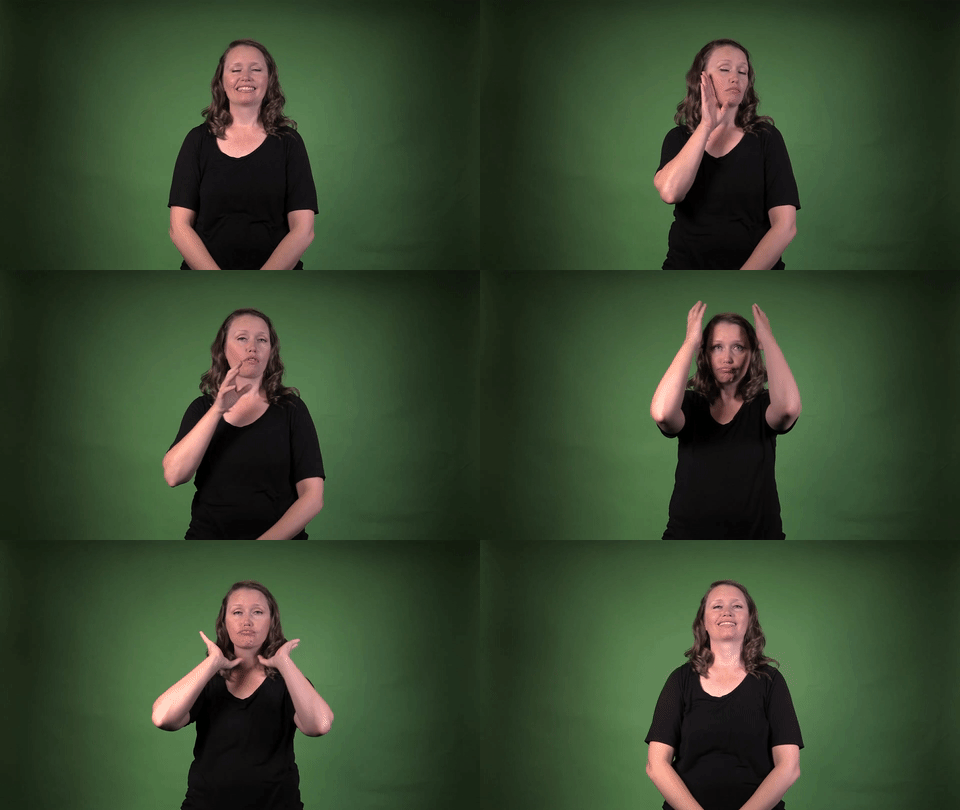
The handshape for the sign for BROWN MANE in ASL begins with the right hand forming a “B” handshape. The palm faces in and brushes down the side of the face, representing the color brown.

To show “mane,” both hands often adopt clawed “5” handshapes, moving downward from the sides of the head in a wavy motion to mimic flowing hair. The sign for BROWN MANE in ASL combines color and texture in one fluid expression. ‍♂️

*Palm Orientation*:

For the sign for BROWN MANE in ASL, the palm orientation starts with the dominant hand in an open “B” handshape with the palm facing sideways, lightly turned toward the face. This position is used as the hand moves down the side of the face to represent the color brown.

To express mane, both hands typically use curved “5” handshapes with palms facing down and slightly outward. These hands simulate the flow of hair by moving downward and outward from the head, mimicking a mane. The sign for BROWN MANE in ASL clearly differentiates the color from the texture and placement of hair.

*Location*:

The sign for BROWN MANE in ASL is performed in two parts. The sign for “brown” typically takes place at the lower side of the face, near the cheek or jawline, using the dominant hand in a “B” handshape. This movement generally glides across the cheek area to indicate the color brown.

The sign for “mane” involves depicting long flowing hair, so the location shifts to near the head. Both hands move downward from the top or sides of the head in a motion that mimics hair flowing or draping. Combined, the sign for BROWN MANE in ASL visually connects color and hair near the face and head. ‍

*Movement*:

To sign the sign for BROWN MANE in ASL, begin by making the letter B handshape for “brown” and move it downward along the side of your face, near your cheek to jawline, representing the color. Then transition to the sign for “mane” by opening both hands with fingers spread and moving them down from the top sides of your head, mimicking the flow of a horse’s mane or long hair.

This combination clearly conveys the meaning of the sign for BROWN MANE in ASL by combining the color and descriptive motion. Facial expressions can enhance the sign, emphasizing the lush or flowing nature of a mane.

*Non-Manual Signals*:

When demonstrating the sign for BROWN MANE in ASL, keep a neutral yet descriptive facial expression that emphasizes the texture and color. Slight eyebrow raises can help convey detailed descriptors, especially when referring to color or specific features like a mane.

Use your mouth to mimic the word “brown” slightly while forming the sign, which can help reinforce clarity. Maintain eye contact and use a focused gaze to show accuracy when discussing the sign for BROWN MANE in ASL .

*Prosody, Dominant/Non-Dominant Hand*:

The sign for BROWN MANE in ASL combines the sign for “brown” and a descriptive gesture for “mane.” Use the dominant hand in a “B” handshape to make a downward stroke along the side of the face for “brown.” Then, with both hands in open-fingered claw shapes, move them down from the sides of the head to indicate flowing hair or mane.

The dominant hand conveys primary meaning in the sign for BROWN MANE in ASL, especially during the “brown” portion. Both hands work symmetrically for “mane,” but the dominant hand often initiates the movement. This keeps the sign visually clear and expressive. ‍♂️✨

Tips for Beginners:

When learning the sign for BROWN MANE in ASL, it’s important to understand that you’re combining two distinct concepts: the color brown and the idea of a mane, typically referring to the long hair around the neck of an animal like a lion or even stylized long hair on a person. Start by mastering the individual sign for BROWN, which involves using the dominant hand in the letter “B” handshape and brushing it down the side of the face near the cheek. Accuracy in location and movement will ensure the sign is easily recognizable.

Next, work on the concept of MANE. Since “mane” is not a common standalone ASL sign and often ties to visual description, this part usually involves using classifier handshapes. Use both open five hands alongside the head to mimic the shape or flow of a lion’s mane or long, thick hair. Move the hands down and outward in a curved motion from the top of the head to interpret the look of a mane. This movement helps convey the fullness and length associated with the term.

When combining the sign for BROWN with the classifier or descriptive movement of MANE, make sure your facial expression supports the meaning—it could indicate size, texture, or even a majestic quality. Don’t rush; clearly separate the color from the mane concept to avoid confusion. Practice in front of a mirror to ensure both portions of the Sign for BROWN MANE in ASL are distinct but fluid.

Avoid the pitfall of treating “mane” like a generic sign for hair. Think visually and descriptively. The use of classifiers is crucial here, as it adds depth and accuracy to your signing. With repetition and awareness of context, you’ll gain confidence using the sign for BROWN MANE in ASL in storytelling, conversation, or even creative signing contexts ✨.

Connections to Other topics:

The sign for BROWN MANE in ASL connects closely to both color and descriptive signs used in everyday conversation. The sign for “brown” uses the “B” handshape sliding down the side of the face, which is also foundational for other color signs starting from the forehead or cheek. Combining it with “mane,” which may be conceptualized as a flowing or thick head of hair, builds on classifiers and descriptive signs that portray texture, volume, and shape.

This compound sign shares similarities with signs like “long hair,” “curly hair,” or “lion,” which also involve motioning around the head to convey the concept of a mane or hair type. In ASL, using classifiers like CL:4 or CL:5 to show thick or flowing hair helps express variations of appearance with rich visual detail. The application in the sign for BROWN MANE in ASL relies on these depictions to show more than just color—emphasizing fullness and motion.

In narrative or storytelling, the sign for BROWN MANE in ASL might be used to describe a person, especially someone with thick, striking brown hair, or to portray an animal like a lion. This is especially useful in children’s stories, theatrical interpretation, and visual descriptions. When combined with facial expressions and directional cues, it enhances the signer’s ability to build vivid imagery.

The sign also contributes to discussions in topics like identity, aesthetics, and representation, particularly in creating accurate portrayals of people and animals. Its ties to the visual-gestural nature of ASL allow users to creatively combine known signs into new, descriptive terms. Exploring compound phrases like this helps learners gain deeper fluency and appreciate the flexibility of ASL’s descriptive potential.

Summary:

The sign for BROWN MANE in ASL involves layering two concepts: color and imagery. First, the sign BROWN is used by forming the hand into the letter B and sliding it down the side of the face.

To depict MANE, native signers might utilize a descriptive classifier to show flowing hair around the head or fingers fluttering down from both sides of the crown. This visually captures the cascade of thick, wild hair associated with a mane.

The combination of BROWN and a descriptive or classifier-based expression for MANE creates an image-centric sign. It conveys not just the color but the texture, volume, and shape relevant to the image of a mane.

In colloquial or artistic ASL, depiction of hair or fur often relies on visual metaphors. The sign for BROWN MANE in ASL follows this tradition, using both established signs and illustrative features.

BROWN, as a color sign, is basic and widely taught early in ASL instruction. MANE, however, is not a standardized ASL sign and is generally represented through classifier constructions or visual description.

Classifiers in ASL play an essential role in describing bodily features such as hair, fur, or textures. To sign MANE, puffed cheeks, extended hands wiggling around the head, or semi-circular motions emphasize fullness and movement.

The integration of classifiers with traditional signs elevates the sign for BROWN MANE in ASL into a rich visual narrative. This process mirrors how ASL often builds complex meanings through layers of visual-spatial expression.

The cultural imagery associated with a mane—power, wildness, natural beauty—is often implied in the sign. When used metaphorically or literally, the sign retains a sense of expressive grandeur.

ASL often draws from gestural storytelling, especially in images involving animals or vivid natural details. When signing BROWN MANE in ASL, the signer taps into this tradition, creating a moving picture in physical space.

The sign for BROWN MANE in ASL could appear in poetic or storytelling contexts. In these instances, the sign is not only functional but becomes performative—infused with rhythm and emphasis.

In visual storytelling, describing characters with expressive features is key. The sign for BROWN MANE in ASL helps bring such characters to life when narrating tales involving lions, wild horses, or even humans with voluminous brown hair.

In Deaf culture, detailed physical representation often compensates for lack of spoken descriptors. The sign for BROWN MANE in ASL is an example of how this visual richness manifests linguistically.

Linguistically, this sign is an instance of iconicity—where the sign visually resembles its referent. The thick, flowing motion used for MANE parallels real-life hair movement, enhancing understanding.

Applied linguistics intersects here with the sign’s form and function. In educational settings, teaching color and descriptive classifiers together helps learners make sense of abstract and stylistic choices in ASL.

The sign isn’t indexed in standard ASL dictionaries as a single unit. Rather, it’s assembled individually through established elements. This shows ASL’s modular and generative nature—building meaning through composition.

In ASL discourse, personalization is key. Therefore, the sign for BROWN MANE in ASL may slightly vary depending on the animal or person being described, allowing for increased specificity.

Forming the sign requires non-manual signals as well—perhaps puffed cheeks or widened eyes to signify the largeness or majesty of the mane. These facial cues are essential in giving depth to the visual imagery.

Related signs include HAIR, LONG, CURLY, and LION, all of which share visual features with elements of MANE. Knowing these enhances the understanding and fluency when articulating BROWN MANE in ASL.

The expression is also useful in dramatic play, camping skits, or discussions about animals among Deaf children. It becomes an educational and entertainment tool in equal parts.

The sign promotes semantic layering—color plus shape plus movement. Such combinatorial syntax supports theories in linguistic typology that examine the compound structure of sign languages.

From a semiotic perspective, BROWN MANE in ASL illustrates the third tier of meaning construction—indexical, iconic, and symbolic—all existing at once in a single sign expression.

In narrative linguistic analysis, the use of such signs supports plot and character visualization. ASL storytellers, whether in folklore or modern films, skillfully employ these for audience immersion.

There is also a deeper historical thread in visual construction. Storytelling with signs depicting animals dates back generations in Deaf storytelling traditions, and BROWN MANE in ASL offers continuity within that legacy.

Signers may also add dramatic flair—swaying the body side to side as they trace the mane—creating not just a sign but an enacted performance. This illustrates the embodied nature of ASL.

Discussions involving a ‘mane’ can be literal or figurative. Someone with large,

Want more? Check out some of our popular learning activities!

ASL Interactive Resources

ASLInteractive YouTube Channel

Follow us on tiktok: @aslinteractive.com

Follow us on Instagram: aslinteractive

Facebook page: aslinteractive

Facebook group: aslinteractive

LInkedIn: ASL Interactive LLC

Twitter: @ASL_interactive

*Some information on this page is AI-generated. AI can make mistakes. Please check the information.

Sign for BROWN MANE in ASL

Responses