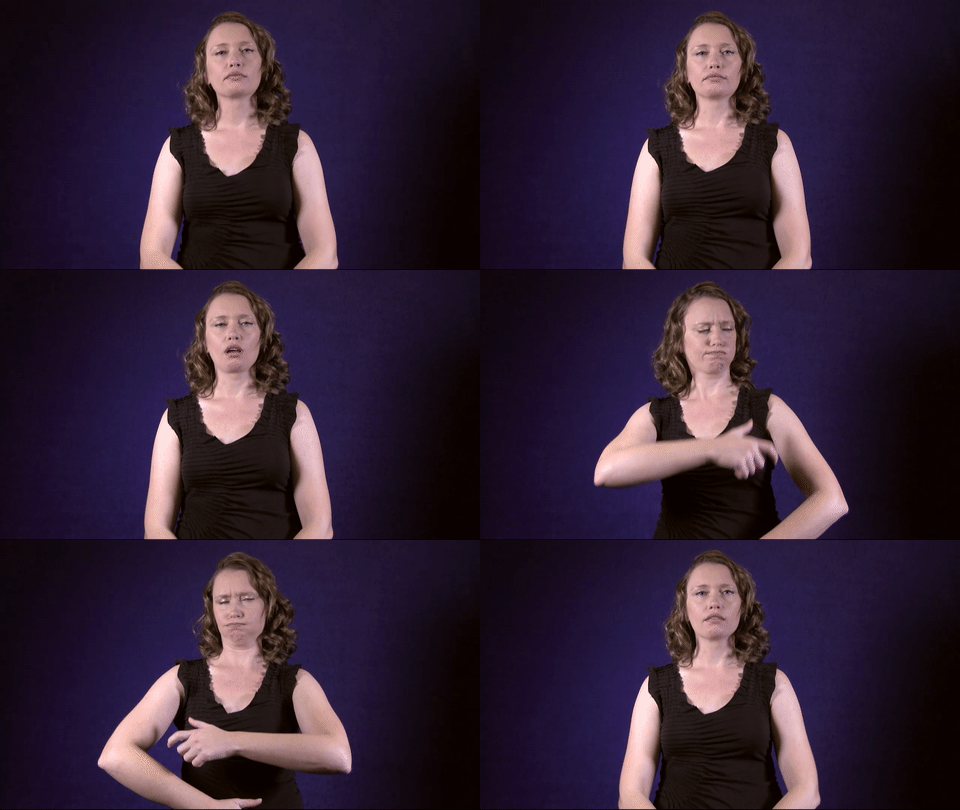
Definition: Strong and muscular.
Sign for BUFF in ASL

Practice Activities:
To practice using the sign for BUFF in ASL, begin with isolated repetition. Stand in front of a mirror and produce the sign while focusing on handshape, movement, and facial expression. Try doing this in sets of ten to build confidence and muscle memory. Say the English word “buff” silently in your head each time to reinforce meaning.
Next, try integrating the sign into short phrases. Use examples like “He is buff,” “I want to be buff,” or “She looks really buff.” Sign each sentence slowly at first, then increase speed as you become more fluid. Use expressive facial grammar to emphasize tone—pride, admiration, or surprise.
Practice with storytelling prompts, such as describing a superhero or athlete. Tell a short story about someone training hard and becoming buff. Add other vocabulary like STRONG, WORK-OUT, GYM, and SWEAT to build context around the sign for BUFF in ASL. Narrating improvements over time adds depth to the description.
In partner activities, take turns describing friends or public figures using the sign for BUFF in ASL. One learner describes a picture or character while the other guesses who it is. You can also play a role-play game where one person is a personal trainer giving compliments to a client after a hard workout.
Make a video log describing fitness goals or your favorite form of exercise, focusing on correct use of the sign for BUFF in ASL. Watch your recording to self-correct and improve clarity. You can also swap videos with a classmate for feedback. Use emojis like or ️ to add visual support while signing on digital platforms. Keep practice fun, consistent, and focused on both meaning and expression.
Cultural Context:
The sign for buff in ASL is more than just a simple description of physical strength. It connects to cultural expressions within the Deaf community that mirror trends in the larger hearing world. In ASL, signs like this often take on more than literal meaning—they carry shared humor, admiration, and storytelling.
When someone uses the sign for buff in ASL, it usually refers to someone who is clearly muscular or very fit. This can be a compliment or part of a playful exchange during casual conversations. Deaf culture, like many cultures, values body language and visual context, so emphasizing someone’s physique with strong visual signs fits naturally.
In the gym or athletic settings, the sign for buff in ASL is used just as it would be in spoken English conversations. Picture a group chatting after a sporting event or while lifting weights—this sign becomes part of how people recognize and admire hard work and dedication. It ties into a shared understanding of body image and fitness culture.
The sign for buff in ASL blends well into narratives and jokes. For example, someone might exaggerate the sign to tease a friend who has only started working out. These moments reflect the expressive, interactive nature of ASL and its ability to mirror emotions and group dynamics through visual space and movement.
In Deaf storytelling traditions, visually descriptive signs like the sign for buff in ASL add depth to character development. A storyteller might use this sign to introduce a tough or heroic character. This creates vivid imagery that engages the audience while also maintaining cultural fluency.
The sign for buff in ASL can also appear in social media videos, especially fitness or lifestyle content created by Deaf influencers. These creators often use visually strong signs to convey their message clearly and attract more engagement. The popularity of workout challenges and gym footage makes this sign even more relatable and widely recognized across audiences.
Understanding the cultural value of visual communication helps reflect on why signs like the sign for buff in ASL are more than translations—they’re embedded in how people express pride, goals, or even envy. Cultural norms in the Deaf community value expressive storytelling, where physical traits and gestures often speak louder than words.
Because ASL thrives on visual cues, gestures like the sign for buff in ASL might vary slightly depending on emphasis or tone. Someone might sign it with extra motion to joke or brag, or sign it more subtly in a serious conversation. That flexibility makes ASL uniquely responsive to context.
In general conversations, the sign for buff in ASL gives Deaf individuals a clear way to
Extended Definition:
The sign for BUFF in ASL is a visually descriptive sign used to indicate someone who is very muscular or has a well-defined, toned physique. This can refer to bodybuilders, athletes, or anyone with noticeable muscle mass. In American Sign Language, describing body types often involves classifiers or gestures that mimic what the body looks like, and BUFF is no exception.
To produce the sign for BUFF in ASL, both hands are typically used, forming bent 5-handshapes. The hands are brought up to the chest or upper arms and then pulled slightly outward, as if outlining large muscles. This motion mimics the shape and space that bulky muscles occupy and gives a visual cue to the person’s physical condition .
Context is important when using the sign for BUFF in ASL. For example, using facial expressions to show admiration, surprise, or attraction can add layers of meaning. This sign is often used informally to compliment someone’s fitness or to describe someone’s appearance in casual conversation.
The sign for BUFF in ASL can also function metaphorically in some cultural contexts. It might be used to describe someone who’s capable, strong, or ready to handle a tough task, not just someone with a muscular appearance. These subtleties depend on the situation, the signer’s intent, and the ongoing conversation.
In storytelling or descriptive conversation, ASL users can pair the sign for BUFF with role-shifting or classifiers to show someone lifting weights, working out, or flexing. These visual tools make American Sign Language especially effective for describing people and actions in detail.
Unlike some static vocabulary signs, the sign for BUFF in ASL includes a natural spatial aspect, showing how ASL is a language rich in 3D communication. The sign also varies slightly from region to region in the Deaf community, so you may see small differences depending on where the signer learned ASL.
Adding the sign for BUFF in ASL to your vocabulary helps with everyday conversations about fitness, body image, and even pop culture. When watching sports or talking about favorite athletes or movie stars, this sign comes in handy for sharing opinions and reactions quickly and clearly.
When teaching ASL or learning new signs, the sign for BUFF is often introduced in lessons about physical descriptions or adjectives. It’s also included in beginner-level lessons focused on talking about appearance or introducing people. Its expressive form makes it enjoyable to learn and easy to remember.
If you want to describe someone who’s fit or impress
Synonyms: fan, enthusiast, aficionado, devotee, admirer
Educational resources: Find related learning materials in our course bank!
Want more? Check out some of our popular learning activities on the homepage!
Need to look up a sign? Use our highly rated dictionary: https://aslinteractive.com/best-asl-dictionary/
Follow us on tiktok: https://www.tiktok.com/@aslinteractive. More social media links at the bottom of this page!
Long-tail Keywords: what is the sign for buff in ASL, how to sign buff in American Sign Language, ASL sign for buff
Categories:
tags: Clothing, Colors, Objects, Language Learning, Verbs
Parameters
*Handshape*:
The handshape for the sign for BUFF in ASL uses open number 5 handshapes on both hands. The fingers are spread and slightly curved as if outlining the shape of the chest muscles.
In the sign for BUFF in ASL, both hands start near the center of the chest and move outward toward the shoulders. This motion mimics the display of muscular build, reinforcing the meaning visually .
*Palm Orientation*:
The palm orientation for the sign for BUFF in ASL typically features both hands in “claw” shapes with palms facing inward toward the chest. The movements emphasize muscle definition, so the hands start near the chest and move slightly outward to show an expanded chest area, mimicking a bodybuilder stance .
In the sign for BUFF in ASL, palms remain upright and face the body throughout the motion. This inward orientation reinforces the idea of muscular size and chest emphasis, central to the meaning of this sign.
*Location*:
The sign for BUFF in ASL is typically produced in the upper chest area, near the shoulders. Both hands shape into fists (or modified C-hands in some variations) and are placed on each side of the upper chest, then moved slightly forward and downward to show muscularity or define a toned physique.
This location near the upper body emphasizes strength and physical fitness, which aligns with the meaning behind the sign for BUFF in ASL. Keeping the movement close to the body helps convey the idea of muscles and a strong build.
*Movement*:
The sign for BUFF in ASL is made by forming both hands into “S” handshapes, then placing them on the chest near the shoulders. From there, move the hands slightly outward and down in a firm, quick motion, showing off large or strong muscles.
This movement emphasizes physical strength, often mimicking bodybuilders flexing. The sign for BUFF in ASL directly reflects the concept of being muscular or fit .
*Non-Manual Signals*:
The non-manual signals used in the sign for BUFF in ASL include a confident or proud facial expression , often accompanied by slightly raised eyebrows and a tightened mouth or subtle smirk. This expression helps convey strength or muscularity, enhancing the visual impact of the sign.
Eye gaze is direct and steady, sometimes paired with a slight head tilt or nod to emphasize the physical presence implied by the sign for BUFF in ASL . These non-manual signals reinforce the meaning and give the sign its full contextual weight.
*Prosody, Dominant/Non-Dominant Hand*:
The sign for BUFF in ASL involves both hands, with the dominant and non-dominant hands forming open “5” handshapes. Begin with the hands placed just below the shoulders, palm facing down but slightly angled inward toward the chest. In a quick and controlled motion, both hands move outward and slightly up, mimicking the shape of muscular arms or a strong chest.
This sign clearly embodies the concept of someone being well-built or muscular. The use of both hands contributes to the visual symmetry, reinforcing the sign for BUFF in ASL. The dominant hand leads slightly depending on individual fluidity, but both hands remain essential in expressing the sign accurately.
Tips for Beginners:
When learning the sign for BUFF in ASL, it’s important to understand that this sign emphasizes physical strength or muscular build. Typically, the sign involves both hands forming bent “5” handshapes (open, slightly curved fingers) and showing off an imaginary set of biceps as they are moved slightly away from and then toward the chest. It’s a very visual and descriptive sign, often associated with muscle or physique.
One beginner tip is to focus on using body language and appropriate facial expressions. When signing BUFF in ASL, your face should mirror the meaning—expressing admiration or exaggeration can match the concept. This helps make your signing more natural and easily understood. Physical reinforcement like a proud or impressed face enhances clarity in real conversations.
Common pitfalls include flat or stiff movements that don’t convey the bulk or prominence of muscles. This sign relies on visual exaggeration, so subtle motions won’t clearly get your point across. Also, failing to separate your hands outward enough from the chest can make the sign look like something else. Maintain consistent spacing and motion to prevent confusion.
Practice the handshape in front of a mirror to ensure fingers are properly curved and relaxed, not rigid or clawed. Remember to not overextend your arms—keep the motion subtle yet dynamic. Watching experienced signers demonstrate the sign for BUFF in ASL can really help with timing and size of movements.
Lastly, context matters. This sign is informal and can sometimes be playful. It’s helpful to pair it with situational cues when used in conversation. With regular practice and attention to expression, the sign becomes more intuitive. Reviewing videos or using it in ASL chats will solidify your confidence when using the sign for BUFF in ASL.
sign for BUFF in ASL, ASL sign for muscular, how to sign strong body in ASL, ASL sign for fit, American Sign Language word for BUFF, BUFF sign ASL, sign for physical strength in ASL
Connections to Other topics:
The sign for BUFF in ASL is frequently used to describe physical appearance, particularly in the context of an athletic or muscular build. This connects easily to other ASL signs related to the body, fitness, and health such as STRONG, MUSCLE, EXERCISE, or WORKOUT. These signs often appear together in ASL conversations discussing gym routines, personal fitness goals, or even compliments and observations about others.
The sign for BUFF in ASL shares similarities in body location and handshape with signs like STRONG or TOUGH, using fists to emphasize physical power or robustness . This can help learners see the visual metaphors ASL employs to represent physical characteristics, which are often highly iconic. When describing someone as BUFF and STRONG in a sentence, these signs can be stacked or signed in close sequence, deepening the meaning without needing more spoken words.
In storytelling or visual descriptions, the sign for BUFF in ASL may combine with facial expressions to add dimension—such as puffing the cheeks or flexing the arms a bit during the sign. This use of facial grammar and body posture links with other descriptive signs in ASL like BIG, ATTRACTIVE, or FIT. It’s useful in casual conversation but also plays a role in theatrical or narrative ASL performance to portray characters vividly.
There are also opportunities to connect the sign for BUFF in ASL to personality descriptors. Within a cultural or humorous setting, one might say a person is BUFF but SILLY, combining descriptive and personality traits in the same phrase. In these contexts, learners can explore how physical qualities and emotions are woven together naturally in ASL.
The sign for BUFF in ASL also fits into broader concepts like masculinity or image-related vocabulary. It can appear when discussing body image, identity, or social standards, and contrast with signs like SKINNY or WEAK. This provides a pathway for advanced learners to explore representation, stereotypes, and cultural norms within ASL dialogues.
Summary:
The sign for BUFF in ASL commonly refers to someone who is muscular, fit, or well-toned. It conveys not just physical strength but a certain admiration for a well-developed physique or physical condition. To produce the sign, both hands are placed on either side of the upper chest, in a clawed or curved shape, then pulled slightly outward with a subtle puffing of the chest, as if flexing.
This sign mimics the movement of flexing one’s muscles—highlighting the idea of a toned body visually and kinesthetically. The sign incorporates non-manual signals like tightening of the facial muscles to reinforce the sense of strength. Often, the expression includes a proud or confident look, aligning with the social idea of someone being attractive or strong.
The sign for BUFF in ASL is generally used informally and is more colloquial in nature. It’s commonly found in conversational ASL, especially among younger signers or communities focused on fitness and health. It can also be used in playful or humorous contexts.
Grammatically, this sign functions as an adjective and comes before or after the noun it modifies, depending on ASL sentence structure. Someone might sign “HE BUFF” to describe an individual as being physically fit. The context usually makes the meaning clear, supported by body language and facial expression.
Like many ASL signs, the concept of BUFF can overlap with other signs, such as STRONG, MUSCULAR, or TOUGH. These related signs may share similar handshapes or movements but vary slightly in form and meaning. The choice among these signs depends on context and intended nuance.
In terms of applied linguistics, the sign for BUFF in ASL demonstrates how signs often embody iconicity—the resemblance between a sign and its meaning. Unlike arbitrary symbols in spoken language, many ASL signs visually mimic their referents. In this case, the act of puffing out the chest and pulling the hands away from the body closely parallels showing off one’s muscular build.
The evolution of the sign for BUFF in ASL reflects shifts in popular culture and language borrowing. As the English term “buff” gained popularity to describe fitness culture, the visual representation emerged in ASL, evidencing the dynamic and adaptive nature of the language. ASL does not shy away from borrowing ideas as long as they can be represented in visual form.
The cultural significance of the sign for BUFF in ASL aligns with broader American culture’s fascination with athletic bodies and idealized physical standards. Invitations to describe someone as BUFF can carry admiration, awe, or flirtation depending on delivery. The sign helps reveal cultural narratives about beauty, strength, and desirability in the Deaf community as they intersect with mainstream influences.
While BUFF is generally a positive descriptor, interpersonal context and facial grammar dictate whether the sign is complimentary, envious, or even mocking. Deaf art and storytelling sometimes incorporate this sign to critique or celebrate physical ideals. In these settings, the sign acts as a stand-in for deeper themes of identity and self-image.
Analyzing the sign through a sociolinguistic lens, usage often shifts based on age, region, and community norms. Young Deaf adults in urban centers may use the sign differently compared to older signers or those from rural settings. Attitudes toward fitness, self-presentation, and even humor all weigh into how and when the sign appears.
Despite being informal, the sign for BUFF in ASL solidly captures a visual and cultural phenomenon through minimal movement. Because ASL is event-rich and spatially based, signs like BUFF utilize the body space in meaningful ways. This direct embodiment of meaning helps ASL expressions remain intuitive and engaging for users.
The adaptability of the sign also allows for playful exaggeration or subtle downplaying. A signer can amplify the movement or facial signals to indicate someone is extremely BUFF or just mildly fit. In this way, degree modifiers are communicated naturally through space and motion, rather than additional words.
The semantics of BUFF can also extend metaphorically in ASL. Someone might use the sign to describe an object, like a car or device, to indicate its high power or performance. This metaphorical extension parallels trends in English and shows the fluidity of ASL concepts.
From a psycholinguistic viewpoint, interpreting the sign for BUFF in ASL involves multisensory processing. Watchers must understand the handshape, motion, location, and facial grammar simultaneously. This reflects the complexity and richness of ASL’s spatial-temporal modality.
Interactional discourse in ASL frequently uses signs like BUFF to build rapport and exchange compliments. Such signs hold socio-pragmatic weight—how they’re used says something about the relationship between communicators. A peer might teasingly call another person BUFF during a friendly chat, reinforcing social bonds.
The sign can also be a focus in ASL poetry, especially in works that deal with identity or body image. Creative artists use the
Want more? Check out some of our popular learning activities!
ASL Interactive Resources
ASLInteractive YouTube Channel
Follow us on tiktok: @aslinteractive.com
Follow us on Instagram: aslinteractive
Facebook page: aslinteractive
Facebook group: aslinteractive
LInkedIn: ASL Interactive LLC
Twitter: @ASL_interactive
*Some information on this page is AI-generated. AI can make mistakes. Please check the information.


Responses