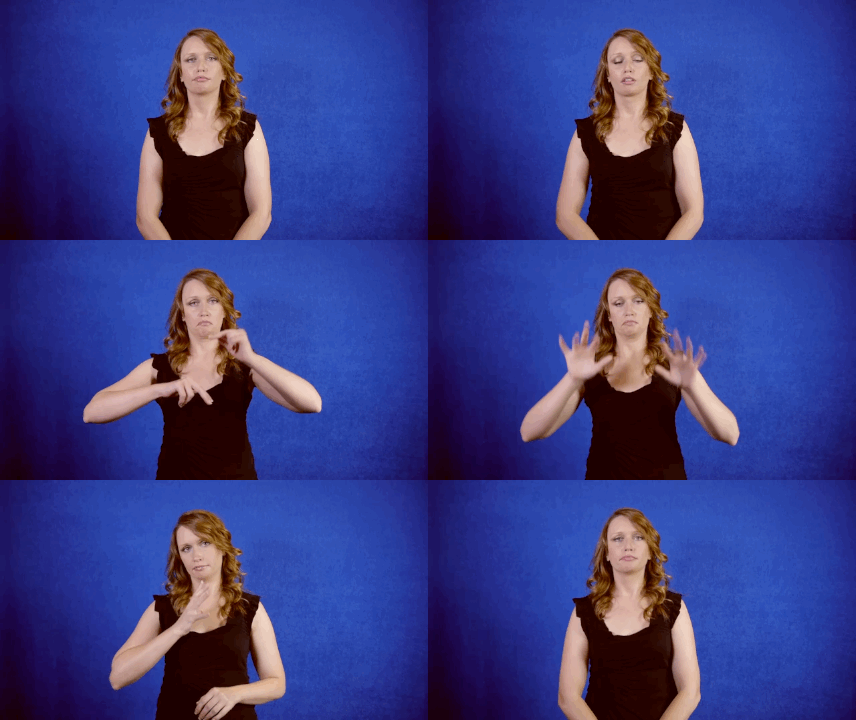
Sign for BUILD SNOWMAN in ASL | ☃️ ASL Dictionary

Definition: To create a snowman.

Sign for BUILD SNOWMAN in ASL 

YouTube player

Practice Activities:

To practice the sign for BUILD SNOWMAN in ASL, start by rehearsing each component sign separately. Use a mirror to check your facial expressions and hand movements as you sign “build” using a constructing motion and “snowman” by signing “snow” followed by indicating body parts of a snowman. Break it down into parts and gradually increase speed and fluidity.

Once comfortable, begin using the sign in short phrases. Practice sentences like “I want to build a snowman” and “Let’s go outside and build snowman together.” Add time signs like “tomorrow” or “yesterday” to change context. This helps reinforce grammar and vocabulary while using the sign for BUILD SNOWMAN in ASL.

Create a short weather-themed story about a snowy day. Include signs like “cold,” “snow falling,” “gloves,” and finally, “build snowman.” Signing the story to a friend or recording yourself will improve fluency and give visual feedback on accuracy.

Practice with a partner by playing a winter charades game using ASL. Take turns signing activities such as “drink hot chocolate,” “go sledding,” and “build snowman.” The partner guesses the activity and then switches roles to continue the game.

Use ASL flashcards with pictures of winter scenes. When you see a card with snow or a snowman, pause and sign the appropriate sentence using build and snowman together. Hypothetical examples like “If it snows tomorrow, I will build snowman” help bring deeper meaning to the phrase.

Lastly, create a daily sign journal. Each day, sign two different sentences involving the concept of building something, then include the specific action to build snowman. This regular exposure will make the sign for BUILD SNOWMAN in ASL become easier to recall and more automatic during conversation.

Cultural Context:

In Deaf culture, the sign for build snowman in ASL carries more than just a literal translation. It captures shared experiences from childhood winters, family time, and creative play that resonate deeply across generations in the Deaf community. Signing this phrase brings vivid memories to life, emphasizing connection and seasonal joy.

The sign for build snowman in ASL often appears in storytelling, Deaf poetry, and everyday conversations during winter months. When discussing favorite winter activities or retelling snow day adventures, this sign naturally becomes part of the narrative. It helps bridge generational gaps, allowing older signers to share memories with younger ones, reinforcing family bonds.

Community events in Deaf spaces, such as snowman-building contests or winter holiday gatherings, commonly include references to this playful activity. The sign for build snowman in ASL turns into a visual celebration of winter, representing not just the creation of a snow figure but also the excited collaboration and teamwork that goes into the process. It’s a symbol of seasonal fun and togetherness.

Signing the phrase accurately matters in ASL, as each part holds specific meaning. The sign for build snowman in ASL uses classifiers and descriptive signs that show how the snowman is physically formed, reflecting the step-by-step process of rolling snowballs and stacking them. This makes the sign visually engaging and context-rich, which is central to ASL communication.

Parents and educators in Deaf schools integrate the sign for build snowman in ASL during winter-themed lessons, roleplay, and interactive language development activities. It not only teaches vocabulary, but also supports cultural immersion within the context of visual learning. Signing about seasonal activities gives students the chance to express their own creativity and experiences.

This cultural connection is even stronger during holidays when many families, both Deaf and hearing, come together. Using the sign for build snowman in ASL is a way for Deaf children to fully participate in group stories, games, or songs related to snow and winter. It keeps them involved, acknowledged, and connected to shared traditions.

Online vloggers and ASL creators also frequently highlight the sign for build snowman in ASL in holiday content. Whether sharing winter routines, teaching kid-friendly signs, or demonstrating seasonal vocab for beginners, this term often appears to help signers expand their expressive range during the colder months. Its visibility in ASL digital content reinforces its cultural relevance.

By using the sign for build snowman in ASL, the Deaf community celebrates winter visually, preserving traditions through frequent usage. The sign

Extended Definition:

The sign for build snowman in ASL combines two separate signs: one for “build” and one for “snowman.” This phrase is commonly used during the winter months when describing fun outdoor activities or making holiday expressions. Learning how to sign build snowman in ASL is helpful for conversations about cold weather, recreational play, or storytelling about winter experiences.

To sign “build,” start by mimicking the act of stacking objects. Use both hands in a repeated motion, one on top of the other, to show layers being placed. This visual representation reflects the process of constructing or assembling something, which fits perfectly with the idea of building a snowman out of snow.

The sign for “snowman” in ASL usually involves combining elements of the sign for “snow” with a descriptive shape that outlines the snowman’s body. Begin by signing “snow” using fluttering fingers moving downward, representing snowfall. Then, use your hands to outline three round shapes in a vertical line, resembling the three stacked snowballs that form the traditional shape of a snowman.

Together, the full sign for build snowman in ASL paints a clear picture of the winter activity. It conveys both the action of assembling and the form of the figure being built. This makes it especially great for classroom settings, story time, or casual discussion when talking about seasonal plans.

Parents and educators often use the sign for build snowman in ASL when teaching kids about winter traditions. The sign can be especially useful in deaf classrooms or speech therapy sessions, helping children build vocabulary while connecting language to real-life activities. Incorporating visuals and movement supports memory and makes learning fun.

Children’s books and holiday songs that include snowmen can be enriched with the sign for build snowman in ASL. Adding signs while reading or singing enhances engagement and supports bilingual learning. It also fosters inclusion for deaf or hard of hearing students in group settings.

Using this phrase in ASL is not limited to children. Adults sharing stories, making plans for winter trips, or discussing childhood memories might also incorporate this sign. It’s a simple and practical way to express a beloved cold-weather activity.

Whether you’re using it in storytelling, classroom lessons, or just chatting with friends about favorite snowy pastimes, the sign for build snowman in ASL is expressive and easy to learn. Since it combines two highly visual and action-based concepts, it’s made up of movements that are intuitive even for beginners.

When learning new seasonal signs, including the sign for

Synonyms: build a snow figure, create a snow sculpture, make a snowman, form a snowman, assemble a snow figure

Educational resources: Find related learning materials in our course bank!

Want more? Check out some of our popular learning activities on the homepage!

Need to look up a sign? Use our highly rated dictionary: https://aslinteractive.com/best-asl-dictionary/

Follow us on tiktok: https://www.tiktok.com/@aslinteractive. More social media links at the bottom of this page!

Long-tail Keywords: What is the sign for Build Snowman in ASL, How do you sign Build Snowman in American Sign Language, ASL sign for Build Snowman

Categories:

tags: Build Snowman: Activities, Weather, Winter, Commands, Everyday Activities

Parameters

*Handshape*:

The handshape for the sign for BUILD SNOWMAN in ASL incorporates a combination of stacked hand movements and spherical shaping. For “build,” use flat open hands (B-handshape) that alternate while stacking upward, mimicking the action of layering blocks or snow.

Transitioning to “snowman,” use open curved hands (C-handshape) to outline the round sections of a snowman’s body in a vertical motion. The sign for BUILD SNOWMAN in ASL captures both the act of construction and the familiar shape of a snowman ⛄.

*Palm Orientation*:

For the sign for BUILD SNOWMAN in ASL, the palm orientation begins with both hands in flat “O” shapes, palms facing each other as if stacking blocks. This represents the “build” portion of the sign.

For the “snowman” part, the hands shift to a cupped “C” shape, stacked one above the other, mimicking the shape of snowballs forming a snowman body. Throughout the sign for BUILD SNOWMAN in ASL, the palms generally face inward toward the body.

*Location*:

The sign for BUILD SNOWMAN in ASL uses a location primarily in the neutral space in front of the torso. For “build,” both hands are stacked like bricks building upward at chest level. To sign “snowman,” the hands move slightly lower and mimic forming round snowballs stacked along the body line, from mid-torso down to the lower stomach. The sign for BUILD SNOWMAN in ASL remains centered without touching the body, allowing clear space for gesturing shapes. ⛄

*Movement*:

Start by showing the sign for “build” using both hands in flat “B” handshapes. Tap the fingertips of one hand against the other alternately, in an upward stacking motion, as if stacking blocks. This action mimics the concept of building.

Next, transition into “snowman.” First show “snow” by wiggling fingers down from chest height to represent snow falling. Then sign “man” by touching the forehead with a 5-handshape and moving downward to the chest. Combine both parts smoothly for the full sign for build snowman in ASL ⛄.

*Non-Manual Signals*:

The non-manual signals for the sign for BUILD SNOWMAN in ASL include a focused and slightly playful facial expression, often with raised eyebrows to show engagement or enjoyment. Because building a snowman is an enjoyable winter activity, a light smile can enhance the overall meaning.

When performing the sign for BUILD SNOWMAN in ASL, your head might slightly tilt as if observing or assembling the snowman, adding more realism to the concept. Using eye gaze to follow the imagined stacking of snowballs can bring clarity and context to the sign. ⛄

*Prosody, Dominant/Non-Dominant Hand*:

The dominant hand mimics scooping or layering motions, as if stacking snowballs from bottom to top. The non-dominant hand remains stationary in some variations or mirrors the dominant hand in building motion.

To convey the sign for build snowman in ASL, start with the dominant hand tapping or stacking atop the non-dominant hand to show “build,” then create the shape of a snowman by outlining round segments. Both hands are critical in representing the entire concept accurately. ⛄

Tips for Beginners:

The sign for BUILD SNOWMAN in ASL is a combination of two distinct signs: BUILD and SNOWMAN. For beginners learning this compound sign, it is helpful to break it down into parts. Start with the sign for BUILD, which often uses a stacking motion of dominant and non-dominant hands with flat palms, mimicking the way things are built brick-by-brick. Practice this movement slowly and clearly to avoid confusion with other similar signs like HOUSE or MAKE.

Next, for SNOWMAN, you’ll want to illustrate the concept of a snowman in the air using mime and indexing. First, sign SNOW by wiggling your fingers while moving your hands downward to represent falling snow. Then, use two rounded-hand motions downward to represent the snowman’s body: large base, medium middle section, and a small top. Try not to rush this part—each round shape should be distinguished to properly suggest the stacked snowballs.

A common pitfall in the sign for BUILD SNOWMAN in ASL is blending the two parts too quickly, which can make the meaning hard to follow. Make sure there’s a clear transition between BUILD and SNOWMAN. Position your body slightly forward and engage facial expressions to add context—pretend the snow is really falling or show excitement on your face as if you’re actually building the snowman.

Consistency in movement and handshape is key. Practicing in front of a mirror can boost your confidence and help you refine awkward transitions. Also, observe how native signers express this concept. YouTube or Deaf content creators are great resources for repeated exposure.

Finally, remember that the sign for BUILD SNOWMAN in ASL is as much about visual storytelling as it is about technical formation. Be expressive ⛄ and don’t be afraid to exaggerate the building action slightly when storytelling with children or in fun contexts.

sign for BUILD SNOWMAN in ASL, how to sign build snowman in asl, asl sign for build snowman, build snowman in american sign language, learn sign for build snowman in asl

Connections to Other topics:

The sign for BUILD SNOWMAN in ASL is a compound sign that brings together the concepts of construction (build) and winter-related imagery (snowman). Understanding this compound helps learners see how ASL combines base signs to form more complex ideas. For example, the sign for BUILD often uses a stacking motion similar to placing blocks, while SNOWMAN can be shown by referencing the round shape of the body parts, which also connects to how snowballs are rolled and stacked.

This compound sign relates to other weather and seasonal signs in ASL, such as SNOW, WINTER, and COLD. Learning the sign for BUILD SNOWMAN in ASL can lead learners to explore related vocabulary like HOLIDAY, CHRISTMAS, or even OUTSIDE, which often show up in conversations about wintertime activities. These clustered signs help expand a signer’s vocabulary around a central theme.

ASL often uses contextual storytelling, so the sign for BUILD SNOWMAN in ASL is typically seen in narratives or descriptions of experiences, especially when recounting events around snowfall or childhood memories. This makes it an excellent example for practicing narrative structure in sign language, connecting it to ASL classifiers that describe body movement to show who is doing what.

The components of this sign link well with other compound signs such as BUILD HOUSE or BUILD TOWER, where the same stacking or constructing motion can be modified to suit different contexts. Similarly, SNOWMAN relates to signs like MELT or SUN when discussing what happens to snow over time, further connecting learners to cause-and-effect expressions in ASL.

In a classroom or storytelling setting, the sign for BUILD SNOWMAN in ASL can be used as a stepping stone into broader discussions of winter traditions, reinforcing temporal concepts and sequence words like FIRST, NEXT, THEN, and FINALLY ⛄.

Summary:

The sign for BUILD SNOWMAN in ASL beautifully combines two distinct concepts: the act of constructing (BUILD) and the iconic winter figure (SNOWMAN). To sign it, users typically break it into two parts, starting with the sign for BUILD and then transitioning smoothly into the compound sign for SNOWMAN. This coordination mimics the chronological crafting of a snowman, providing a visually rich grammar that aligns with how the concept is experienced in real life.

For BUILD, the dominant hand stacks its fingers on the non-dominant hand, one above the other in alternating movements as if placing bricks in a layered form. This part represents the idea of constructing or assembling something over time. The motion has a constructive metaphor, often expanded with facial expressions to show effort or progression.

Following the BUILD part, the transition to SNOWMAN often begins with the sign for SNOW. This is done by wiggling fingers downward from an elevated position to represent falling snow. It’s soft and flowing, conveying the light, gentle descent of snowflakes from the sky.

The second half of SNOWMAN then visualizes the “man” part by stacking two hands in circular shapes, mimicking snowballs placed one on top of the other. The bottom hand forms the base of the snowman, and the upper hand outlines the smaller section as the head. The sign visually echoes how snowmen are built with varying-sized snowballs.

When combined to create the sign for BUILD SNOWMAN in ASL, these individual signs form an iconic structure-based concept. ASL relies heavily on representing physical concepts with visual structures, and this compound sign is a perfect example of how discreet signs merge into broader, more complex meanings.

The use of spatial referencing in the sign adds depth, especially when the signer uses body space to demonstrate the stacking and layering. This gives the sign for BUILD SNOWMAN in ASL a three-dimensional impression. It’s particularly engaging for children and learners, as it replicates an actual tactile experience through manual storytelling.

Culturally, the snowman is a significant winter figure in American imagery. From holiday movies to seasonal traditions, snowmen represent joy, creativity, and community interaction. This background enriches the sign’s functionality and makes the sign for BUILD SNOWMAN in ASL not just a literal description but also a referent to shared cultural moments.

In grammatical usage, the sign for BUILD SNOWMAN in ASL also includes affective facial expressions. When someone is excited about building a snowman, their eyebrows may raise, and the movement may become exaggerated, reflecting emotion. ASL grammar incorporates non-manual markers in ways that are linguistically equivalent to tone or inflection in spoken English.

This sign serves as an educational anchor for younger signers or students who are learning how to break down complex ideas into smaller lexical units. The separation into BUILD and SNOWMAN provides a stepping stone to understanding ASL classifiers and the compositional grammar that powers them.

Related signs include SNOW, WINTER, COLD, and PLAY. Adding these to the sentence with appropriate time concepts, like YESTERDAY or TOMORROW, enables a fluent signer to describe entire experiences. This gives the sign for BUILD SNOWMAN in ASL a functional range beyond mere labeling.

ASL linguistics shows that signs like this are compound structures—where BUILD and SNOWMAN are not merely sequential, but morph together to create a single visual narrative. This linguistic compression reflects the depth of ASL’s grammar and economy. Signs that operate as sequential bundles are common in ASL, and the snowman sign benefits from this structure.

Applied linguistics often credits such compound signs with cognitive anchoring. When learners associate visual patterns with real-world events, their language acquisition is accelerated. The sign for BUILD SNOWMAN in ASL, therefore, becomes a linguistic event tied directly to sensory and seasonal memory.

There’s also the social and environmental aspect embodied in the sign. Building a snowman is generally done in collaboration—often with friends or family. That social nuance can be reinforced in ASL through directional signs or role-shifting, showing who is building with whom and how they interact.

For Deaf culture, shared activities like making snowmen represent communal joy and accessible experiences. The visual storytelling embedded in signs like these supports inclusion and participation in family or classroom settings. The sign for BUILD SNOWMAN in ASL is a gateway into seasonal narratives often recounted in stories, games, and performances.

The sign also plays a role in ASL poetry and storytelling, where visual richness is essential. Because of its visual accessibility and evocative imagery, it may be used in winter-themed poems or holiday plays, especially in school settings or community gatherings. The fluid motion and clear metaphor make it ideal for expressive repetition and dramatic flair.

In terms of language development, compound signs such as BUILD SNOWMAN help children understand the sequence of actions. They learn to recognize individual concepts within

Want more? Check out some of our popular learning activities!

ASL Interactive Resources

ASLInteractive YouTube Channel

Follow us on tiktok: @aslinteractive.com

Follow us on Instagram: aslinteractive

Facebook page: aslinteractive

Facebook group: aslinteractive

LInkedIn: ASL Interactive LLC

Twitter: @ASL_interactive

*Some information on this page is AI-generated. AI can make mistakes. Please check the information.

Sign for BUILD SNOWMAN in ASL 

Responses