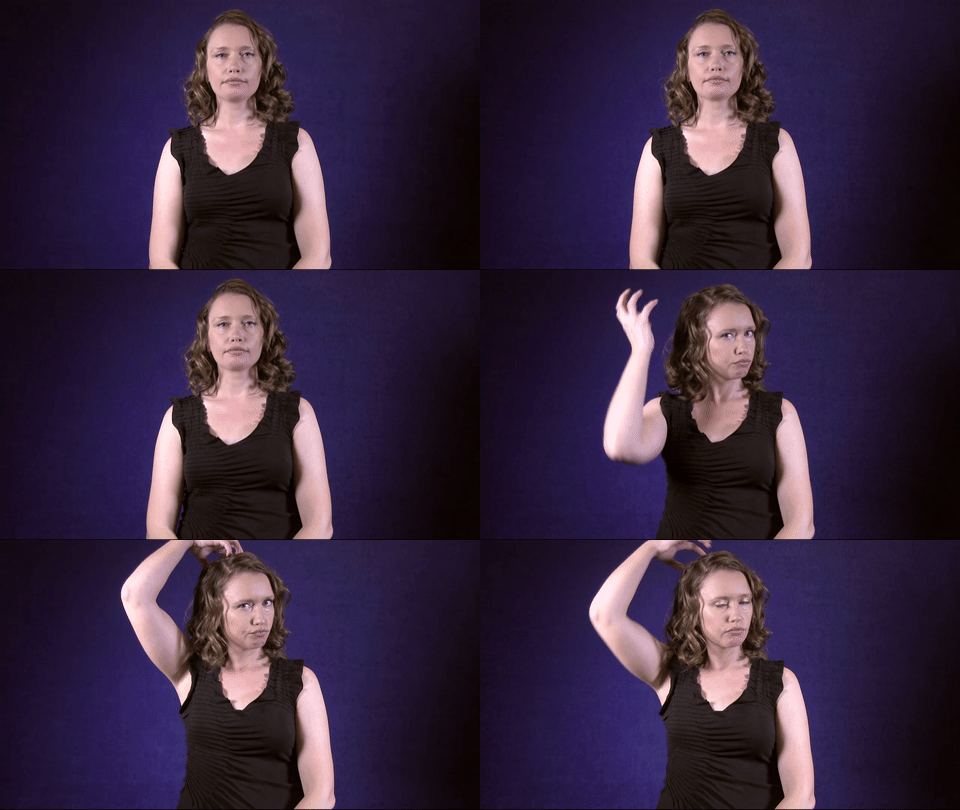
Definition: A small round roll of bread.
Sign for BUN in ASL

Practice Activities:
Begin by practicing the sign for BUN in ASL in isolation. Stand in front of a mirror and repeat the sign multiple times while checking handshape, location, and movement. Focus on using both non-dominant and dominant hands correctly and maintain a relaxed face for fluid signing.
Next, create flashcards with related food signs like BURGER, SANDWICH, and BREAD to build vocabulary context. Alternate between these and the sign for BUN in ASL to reinforce recognition and recall. Try mixing them up and signing each one quickly after viewing the card to simulate real conversations.
Use the sign for BUN in ASL in simple sentences. For example, sign “I EAT BUN,” “I LIKE HAMBURGER BUN,” or “BUN HOTDOG SAME.” This helps reinforce grammar structure and natural ASL phrasing. Practice saying these with different emotions: happy, confused, or hungry to bring expressive signing into your practice.
Work with a partner and take turns describing meals using the sign for BUN in ASL. One person can describe a picnic plate while the other identifies what’s on it using ASL signs. For instance, one signs “HAMBURGER BUN TOMATO CHEESE,” and the partner responds with their preferences using signs for YES or NO.
Write a short story using five signs including the sign for BUN in ASL. A fun theme could be building a sandwich or preparing food at a barbecue. Sign the story out loud while recording yourself, then review to self-correct and improve fluency.
Use role-play activities like ordering a burger at a restaurant. One student acts as the customer and another as the cashier. Include the sign for BUN in ASL to request modifications like “NO BUN” or “WHEAT BUN.”
Lastly, watch ASL cooking videos and identify whenever the sign for BUN in ASL appears. Try copying the signs at the same speed to boost real-time comprehension skills.
Cultural Context:
The sign for BUN in ASL is used in multiple cultural contexts, both in everyday conversations and specific social settings. In American Deaf culture, food-related signs such as the sign for BUN in ASL are commonly used at social gatherings, family dinners, and community events. This makes learning the correct sign for BUN in ASL essential for clear communication about food preferences and meal planning.
The sign for BUN in ASL varies slightly depending on context. When referring to a hamburger bun, the sign often includes classifiers to show size or shape. If the conversation is about a hair bun, a different sign may be used. Understanding the cultural distinction between these meanings helps ASL users avoid confusion and connect more effectively in everyday discussions.
Learning the sign for BUN in ASL is especially important for Deaf children in school settings. Talking about lunch, food allergies, or school meals requires accurate vocabulary. Educators, parents, and peers who know the correct sign for BUN in ASL create more inclusive environments where students feel seen and supported.
In Deaf-friendly restaurants and cafes, knowing how to sign simple food items like bun, cheese, or lettuce contributes to smooth communication with staff and other customers. The sign for BUN in ASL becomes part of a larger cultural experience where language fosters equal access. This empowers Deaf individuals to relax and enjoy food-focused interactions without barriers.
When visiting cultural festivals or county fairs, the sign for BUN in ASL comes up frequently when discussing popular foods like hot dogs or burgers. In these public spaces, ASL interpreters often use the most recognizable version of the sign for BUN in ASL, reinforcing a shared standard that makes communication universally understood.
The sign for BUN in ASL is also significant in discussions about dietary choices and health. Whether someone is opting for gluten-free buns or tracking carbs, having the right sign helps underline the speaker’s preferences. In group chats or health forums within the Deaf community, the sign for BUN in ASL plays a supportive role in advocating for personal wellness.
Social media has further elevated the use of food signs, including the sign for BUN in ASL. Influencers sharing ASL cooking tutorials, recipes, or meal hacks often demonstrate this sign, making it more visible and widely adopted. As a result, younger generations pick up on these food-related signs more naturally, integrating them into digital communication.
In home settings, parents teaching their children ASL include simple and familiar
Extended Definition:
The sign for BUN in ASL refers to a small, round bread roll often used for sandwiches, burgers, or served as a side with meals. It can also describe a specific hairstyle where the hair is gathered into a round shape at the back or top of the head. This word has both culinary and style-related meanings, so the ASL interpretation can depend on the context of the sentence.
In American Sign Language, the sign for BUN in ASL is typically expressed using a classifier or a descriptive sign to represent its shape and characteristics. For the food-related meaning, the sign often shows the round, soft form of a bread bun. It may be signed alongside a gesture or sign indicating sandwich or bread to add clarity.
When discussing hair, the sign for BUN in ASL shifts to describe the circular shape or positioning of hair gathered into a bun. This is usually placed near the head, mimicking where the hairstyle would sit. Facial expressions can enhance the meaning in both contexts to show whether it’s food or hair being referenced.
Context plays a big role in ASL, and the sign for BUN is a great example of how the same English word can be visualized differently depending on what you’re talking about. ASL users rely on classifiers, handshape, and space to provide additional meaning. So if you’re referring to a hamburger bun , your signs would differ from those used to talk about a ballet bun hairstyle .
Regional variations may also exist for the sign for BUN in ASL, especially depending on whether you’re talking about food in a diner or fashion on a dance floor. Some communities may use a more iconic or descriptive sign while others prefer a standard, established form. Exposure to different signers and local usage helps learners pick up these subtle differences.
New learners often find the sign for BUN in ASL an interesting example of how diverse a single sign can be. It offers the chance to practice classifiers and descriptive techniques. Teachers often recommend using physical or visual aids when introducing vocabulary like this to reinforce understanding.
Because ASL is a visual and spatial language, the sign for BUN in ASL taps into the expressive nature of signing. You might mimic the shape with your hands or use direction and size to indicate a small bread bun or a large updo. The face, posture, and even mouth morphemes can help indicate size or nature of the bun you’re referencing.
When creating sentences or practicing conversations, it’s helpful to set up clear context
Synonyms: roll, pastry, bread roll, sweet roll, baked roll
Educational resources: Find related learning materials in our course bank!
Want more? Check out some of our popular learning activities on the homepage!
Need to look up a sign? Use our highly rated dictionary: https://aslinteractive.com/best-asl-dictionary/
Follow us on tiktok: https://www.tiktok.com/@aslinteractive. More social media links at the bottom of this page!
Long-tail Keywords: What is the sign for bun in ASL, How do you sign bun in American Sign Language, ASL sign for bun
Categories:
tags: Objects, Language Learning, Food, Daily Life, Kitchen Items
Parameters
*Handshape*:
The handshape used in the sign for BUN in ASL typically involves forming both hands into closed “O” shapes, resembling the rounded shape of a bun. These handshapes are then brought together near the side of the head in a circular motion, mimicking the placement of a hair bun ♀️.
This circular, compact motion reinforces the visual concept for the sign for BUN in ASL. The handshape and position help clearly convey the idea of a small, rounded object, similar to a hairstyle or a bread bun.
*Palm Orientation*:
The palm orientation for the sign for BUN in ASL typically involves both hands in a rounded “O” or “C” shape, resembling the shape of a bun. The palms generally face each other or inward slightly, mimicking the form of a round bun, and are positioned near the side of the head if referencing a hair bun.
When referring to a food bun, the palm orientation might vary slightly depending on regional differences, typically with one palm facing up and the other down to show the shape of a sandwich bun. To clearly convey the sign for BUN in ASL, focus on maintaining the rounded handshape and consistent inward or forward-facing palms.
*Location*:
The sign for BUN in ASL is produced in the neutral space near the lower face or chest area, depending on the context. If referring to a hairstyle, the location is typically at the back or top of the head, mimicking where a bun would sit.
For a food bun, the sign is made in front of the body, around chest level, where both hands outline the shape of a round bun. The placement makes it clear and visually represents the idea behind the sign for BUN in ASL.
*Movement*:
To perform the sign for BUN in ASL, bring one hand into a loose “O” shape or slightly open “C” shape to mimic the round form of a bun. Place it near the head if referring to a hair bun, or keep it at chest level for a food bun, depending on context.
Then use the other hand to lightly pat or circle the “bun” shape, adding a small bouncing or outlining motion. The sign for BUN in ASL may vary slightly depending on regional usage, so facial expression and context help clarify the meaning ♀️.
*Non-Manual Signals*:
When demonstrating the sign for BUN in ASL, maintain a neutral or slightly pleasant expression to suggest the small, soft, and often warm nature of a bun. A gentle head tilt or subtle smile can help convey the context, especially if referring to something like a bread roll or hairstyle.
The non-manual signals should remain consistent to support the clarity of the sign for BUN in ASL, ensuring it isn’t mistaken for a similar sign. Keep eye contact and a relaxed brow for better communication.
*Prosody, Dominant/Non-Dominant Hand*:
The sign for BUN in ASL typically uses both hands to show the round shape of a bun. The dominant hand forms a flattened “O” handshape, mimicking the top curve of the bun, while the non-dominant hand mirrors or supports beneath to show size and shape, as if sandwiching a bun.
When describing a hairstyle bun, the dominant hand may make a circular motion at the back of the head, depicting the twist or gathered portion of hair. The sign for BUN in ASL varies slightly depending on whether it’s about food or hair, but the dominant hand usually leads the motion.
Tips for Beginners:
When learning the sign for BUN in ASL, it’s important to understand the concept behind the sign. Buns, like hamburger buns or dinner rolls, are small, round breads, and most regional signers depict this shape and context visually. The handshape and movement often mimic slicing or placing a bun, so clarity in movement is key. Watch for subtle differences when describing a hamburger bun versus a hair bun, as the shape concept differs.
Start by practicing in front of a mirror to ensure your hand movements are smooth and easily understood. Common mistakes include using unclear handshapes or placing hands too low, which makes the sign hard to see. Facial expressions and slight head movements help reinforce the meaning and match the natural flow of sign language. Use relaxed but purposeful motions to make the sign readable and not mechanical.
If the sign for BUN in ASL involves visualization, such as mimicking placing the top of a bun on a burger, exaggerate the shape slightly to clarify your message. This is especially helpful when signing with people who are still building their vocabulary. Signing buns in the context of food or cooking will typically help the recipient understand more quickly, especially if they’re familiar with food-based ASL vocabulary.
Recording yourself can help spot any sloppy or rushed motions. Clean transitions between signs help preserve meaning and clarity. For example, when combining BUN with signs like HAMBURGER or SANDWICH, a pause or small shift in hand position can avoid visual blending of signs.
The sign for BUN in ASL may also vary slightly based on context, such as differentiating a bread bun from a hair bun. When in doubt, fingerspelling B-U-N can clarify your message. Mastery comes with repeated exposure, feedback, and careful observation. Keep practicing with supportive signers or join a signing group for regular interaction .
Connections to Other topics:
The sign for BUN in ASL is closely connected to other signs in the food category, especially baked goods like BREAD, ROLL, DONUT, and CAKE. Many of these signs share a similar use of classifiers or handshapes to show shape and size, which helps learners recognize patterns. By seeing how the sign for BUN in ASL fits into this group, students can more easily learn related signs by understanding shared movements and concepts.
In ASL, compound signs such as HAMBURGER BUN or HOT DOG BUN are formed by combining classifiers or base signs referring to either the shape or function of the object. For example, the sign for HAMBURGER may be used first, followed by a descriptive sign to represent the bun portion. This makes it easier to modify the base sign depending on the context or type of bun, such as a sweet bun or a sandwich bun.
The visual-spatial nature of ASL allows signs for foods like buns to be represented by their round or slightly oblong appearance. This approach is helpful when expressing concepts like “I ate a bun for breakfast” or “I need two buns for the burgers,” where classifiers may describe either quantity or shape. Learning the sign for BUN in ASL in this context strengthens understanding of descriptive classifiers and number incorporation as used in everyday communication.
This sign also connects well with signs for preparation and serving actions, like SLICE, ADD, or TOAST. In cooking or dining contexts, the sign for BUN in ASL can be part of a larger sentence incorporating verb sequences and directional signing. By learning how to navigate between food locations, preparation verbs, and nouns like BUN, signers achieve richer, more fluent expression.
Summary:
The sign for BUN in ASL can vary slightly depending on context. One common version involves forming a “C” shape with the dominant hand and placing it just above the chest to indicate the rounded shape of a bread bun. The movement may suggest the small, compact size and circular shape commonly associated with buns.
When referring specifically to a food item such as a burger bun or sandwich bun, the sign often mimics the motion of enclosing something between two circular shapes. The dominant hand hovers over the non-dominant hand to simulate the top and bottom of a bun. This interpretation emphasizes the layered structure of a food bun.
If referring to a hair bun instead of a food bun, the sign changes to involve a circular motion on or near the back of the head. This version typically uses one hand in a curved “O” or “C” shape motioning around a spot where the hair would be gathered. It represents the common style of gathering hair into a tight roll on the back or top of the head.
The difference in signs illustrates how ASL is deeply rooted in visual representation. Because the word “bun” may mean different things, the signs are adapted accordingly to maintain clarity in communication. ASL often relies on iconic descriptions for food or hairstyles to express specific meanings.
ASL uses classifiers and space in ways spoken English does not. When signing about buns in different contexts—hair, bread, or otherwise—the signer may modify handshape, placement, or movement for added specificity. This fluid use of space enhances both accuracy and expression.
Classifiers are especially useful when storytelling. For example, if someone is describing a person eating a hamburger, the use of the sign for BUN in ASL becomes part of a broader visual narrative. Handshape and movement vividly simulate interaction with the food.
Regarding body language and facial expression, the portrayal of the sign for BUN in ASL may include puffed cheeks to denote something soft or bready. In contrast, a more stylized and precise motion indicating arrangement might signal a hairstyle bun. Body cues support the primary hand movements.
ASL is a contextual language, and concepts are presented visually rather than phonetically. The sign for BUN in ASL lends itself to adaptation because it is not fixed in phonetics but rather formed through visual concepts. This makes it richer but also demands more from the signer in terms of awareness and precision.
Deixis, or pointing, is often employed in ASL to root the imagery of the bun in physical space. Signers may indicate where the bun is in relation to another object: on a plate, in a lunchbox, on someone’s head. This relationship builds vivid spatial maps that mirror the grammatical structure of ASL.
In cross-linguistic terms, the sign for BUN in ASL reveals much about how different languages encode concrete versus abstract information. While English simply says “bun,” ASL must immediately commit to either a food or a hair concept. This reveals a strength in visual grammar unmatched by alphabetic systems.
When fingerspelling is used, particularly for brand names or specialty food items, the signer might FS “B-U-N” as an alternative. Fingerspelling often comes in when the specific cultural item doesn’t yet have an established sign. This happens more in niche culinary or fashion discussions.
Culturally, buns as food items appear in a wide range of ASL conversations. They show up in contexts like nutrition, school lunchroom signs, or ordering at a restaurant via ASL. In these situations, the sign for BUN in ASL adapts to include ordering context or food choice classifiers.
Linguistically, this sign is remarkable because it involves a compound—bread components and rounded shape. The visual morphing of concepts is something not easily replicated in spoken language. You can’t compress the idea of “round bread” into one mouthword as easily as ASL can into one fluid sign.
With hair buns specifically, the form and location of the sign on the head becomes iconic. The visual suggestion of winding or swirling hair upward is a direct representation. ASL is particularly effective for referencing hairstyles in real time because the combing, lifting, or tying actions can be animated quickly.
Sociolinguistically, the word “bun” changes in ASL communities based on region and age. Younger signers might interpret bun more often as a hairstyle, especially amid trends. Older signers or those connected to culinary topics may default to bun as a food item first.
The multilingual home often sees the sign for BUN in ASL surrounded by code-switching. A bilingual child might switch from spoken word to fingerspelling depending on audience comprehension. In these homes, the sign may get innovated more quickly due to cross-language influence.
Within Deaf culture, food is a topic of social and communal value. Describing meals is a frequent part of communication. The sign for BUN in ASL would regularly feature in meal prep
Want more? Check out some of our popular learning activities!
ASL Interactive Resources
ASLInteractive YouTube Channel
Follow us on tiktok: @aslinteractive.com
Follow us on Instagram: aslinteractive
Facebook page: aslinteractive
Facebook group: aslinteractive
LInkedIn: ASL Interactive LLC
Twitter: @ASL_interactive
*Some information on this page is AI-generated. AI can make mistakes. Please check the information.


Responses