Sign for BUNK BEDS in ASL | 🛏️ ASL Dictionary

Definition: Beds arranged one above the other.

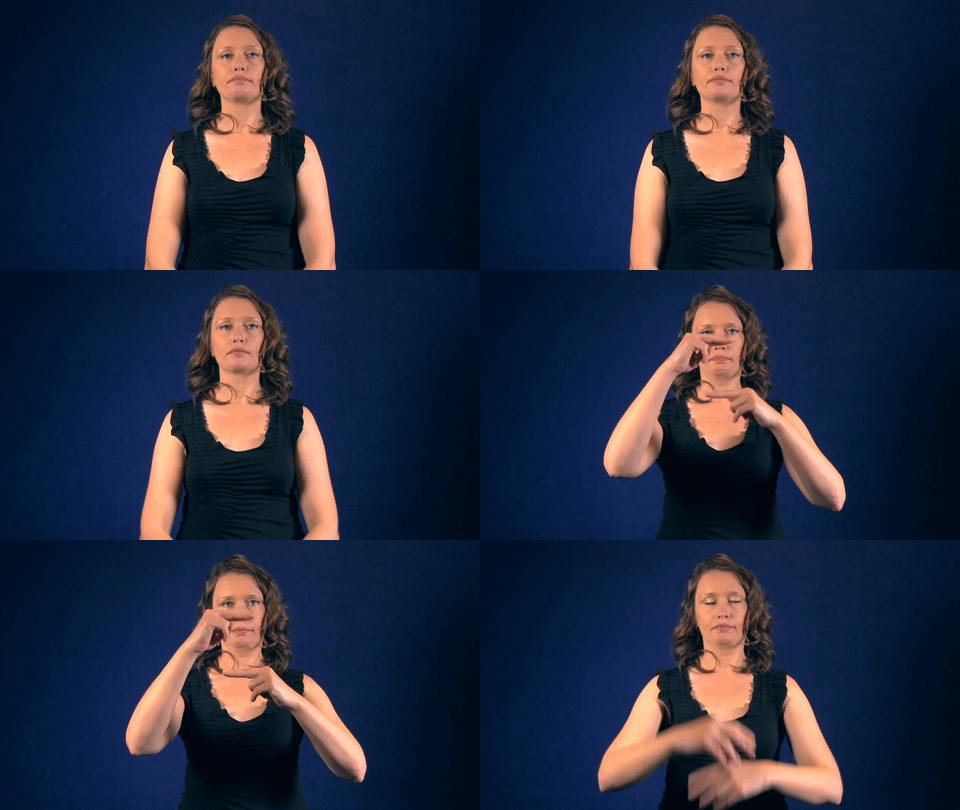
Sign for BUNK BEDS in ASL

YouTube player

Practice Activities:

Start by practicing the sign for bunk beds in ASL in front of a mirror. Pay attention to the spatial aspect of the sign, since bunk beds involve showing both the top and bottom bed. Repeat the sign slowly and clearly multiple times until it feels smooth and natural.

Next, use the sign in simple sentences like “My brother sleeps on the top bunk bed” or “The room has bunk beds for guests.” Practice signing the location of the bunk beds in the room using indexing and classifier structures. Try walking around and signing the sentence while gesturing to imaginary beds stacked vertically to help reinforce spatial relationships.

Use flashcards or a whiteboard to draw pictures of different bedroom setups, including bunk beds, and sign a description of what you see. For storytelling, create a short scene where a child moves into a new room with bunk beds and chooses where to sleep. Focus on using transition signs like “then,” “next,” and “after” along with the sign for bunk beds in ASL to add flow and structure to your story.

Pair up with a classmate or friend and take turns describing bedroom layouts that include bunk beds, asking each other questions like “Who sleeps on the top?” or “How many people share the room?” Practice switching roles and use rich facial expressions and classifiers to make your conversation more vivid.

For advanced practice, watch videos or read simple stories involving sleepovers or summer camp environments where bunk beds are common. Retell what you understood in ASL, incorporating the sign for bunk beds in ASL and adding details using location setup and body shifting. Repeating this type of immersive contextual use will help solidify the sign in your everyday vocabulary.

Cultural Context:

Bunk beds are a common feature in homes, dormitories, and summer camps, where maximizing space is important. When learning the sign for bunk beds in ASL, it’s helpful to understand its relevance in American culture and how it’s often tied to shared living environments.

The concept of bunk beds conveys the idea of stacking beds vertically to save space. In the Deaf community, the sign for bunk beds in ASL is typically taught early, especially when discussing home structures or living arrangements. Children and adults alike use this sign when talking about their rooms or travel accommodations.

ASL often prioritizes visual-spatial understanding, and the sign for bunk beds in ASL reflects this approach. It shows both the physical layout and positioning of two beds placed one over the other. This visual-spatial element supports clearer communication, especially in shared community spaces.

Learning the sign for bunk beds in ASL is especially useful when interpreting or participating in conversations involving children, siblings, or group housing. It’s not just a word—it conveys an everyday living arrangement many Deaf and hearing people experience. When teaching vocabulary to kids, parents and teachers use signs like bunk beds to foster connection through shared life experiences.

Culturally, this sign is also common in narratives or stories. When discussing camping, sleepovers, or family vacations, the sign for bunk beds in ASL often appears to describe scenes accurately. These contexts help children and adults alike connect with real-life experiences and use the vocabulary authentically.

Because community and sharing are highly valued in many aspects of Deaf culture, knowing how to express shared sleeping spaces like bunk beds is meaningful. The sign for bunk beds in ASL allows fluent and engaging conversation about living conditions, traditions, or even sleep preferences. These conversations promote connection and shared understanding.

In residential schools or Deaf summer camps, bunk beds are often part of the dorm room setup. Learning ASL vocabulary like this helps prepare students for those environments and builds confidence in their communication skills. It makes transitioning to group living settings smoother and more inclusive.

The visual clarity of the sign for bunk beds in ASL plays a major role in helping learners engage with everyday situations. Deaf educators often incorporate spatial signs like bunk beds into lessons to support early language learners. This ensures that practical vocabulary is both retained and applied in daily life.

Creating accessible signs for common items, such as bunk beds, strengthens ties within Deaf and hearing communities. The shared use of signs across cultures helps bridge gaps and grow awareness about daily communication in ASL. Knowing

Extended Definition:

The sign for bunk beds in ASL is a descriptive visual representation that mimics the appearance of two beds stacked on top of each other. In American Sign Language, spatial awareness and iconic gestures are often used to depict physical objects, and this sign follows that pattern. It’s commonly used when talking about bedrooms, children’s furniture, and sleeping arrangements in shared spaces.

To create the sign for bunk beds in ASL, you typically use your hands to show the levels of the beds. One hand represents the bottom bunk, and the other hand is placed above it to indicate the top bunk. The motion and placement help clearly establish the concept of stacked beds, making the sign both intuitive and easy to remember.

This sign is especially useful when communicating about sleepovers, dorm rooms, or cabin camping situations where bunk beds are commonly found. Parents often use the sign when teaching children the different furniture in their room or preparing for travel. It’s a helpful gesture for explaining shared spaces and understanding sleeping arrangements in families with multiple children.

The sign for bunk beds in ASL is not standardized across all regions, so you might encounter variations depending on the signer’s background. However, most versions rely on clearly showing the two bed levels to convey the idea. This visual emphasis makes it easier for people of different signing backgrounds to understand what is being discussed.

In Deaf culture and classrooms, the sign for bunk beds in ASL can be used during lessons about furniture, home vocabulary, or when setting up a skit or play featuring a bedroom. It supports broader language development and contextual understanding by tying form to function. Educators may also pair it with other related signs like sleep, bed, and room to build vocabulary.

Understanding the sign for bunk beds in ASL supports better communication in a variety of practical situations. For instance, hotel staff or camp counselors familiar with ASL might use it when assigning sleeping spots. It also helps children and adults feel included, especially in group settings where verbal explanations aren’t ideal.

If you’re learning ASL for caregiving or working with children, mastering how to sign bunk beds in ASL helps reinforce visual communication. It shows attention to detail and cultural awareness, especially important when creating inclusive environments. Using the correct sign also promotes independence for Deaf children exploring options for where they sleep.

For digital content creators or ASL learners sharing vocabulary lessons online, the sign is a useful inclusion in themed videos or flashcards about home and furniture. Visual demonstrations that include the sign for bunk beds in ASL can

Synonyms: loft beds, stacked beds, tiered beds, double-decker beds, twin-over-twin beds

Educational resources: Find related learning materials in our course bank!

Want more? Check out some of our popular learning activities on the homepage!

Need to look up a sign? Use our highly rated dictionary: https://aslinteractive.com/best-asl-dictionary/

Follow us on tiktok: https://www.tiktok.com/@aslinteractive. More social media links at the bottom of this page!

Long-tail Keywords: What is the sign for Bunk Beds in ASL, How do you sign Bunk Beds in ASL, ASL sign for Bunk Beds

Categories:

tags: Housing, Describing Residence, Objects in the Home, Bedrooms, Furniture

Parameters

*Handshape*:

The handshape for the sign for bunk beds in ASL typically uses two flat hands in a “B” handshape. Both palms face toward the signer’s body, imitating the stacked structure of a bunk bed. The dominant hand is placed above the non-dominant hand at about shoulder height, maintaining consistent spacing to represent the upper and lower beds.

This visual layout clearly conveys the concept of the sign for bunk beds in ASL. The flat “B” handshapes correspond with the shape of a bed, reinforcing the meaning through both position and structure.

*Palm Orientation*:

In the sign for BUNK BEDS in ASL, the palm orientation begins with both hands in a flat-B handshape. The palms are typically facing each other, held vertically in front of the body to represent the structure of bunk beds.

As the sign progresses, one hand is placed above the other to illustrate the stacked frame. The palm orientation stays consistent, with both palms facing inward toward the center, helping to depict the bunk bed layout clearly.

*Location*:

The location for the sign for bunk beds in ASL is primarily in the neutral space in front of the torso. The hands move vertically to indicate the stacked nature of the beds. This sign takes place slightly away from the body, using that space to visually represent the arrangement of multiple beds built one above the other.

Because the sign for bunk beds in ASL involves depicting levels or structures, the positioning in the air helps convey the spatial relationship. Hands typically stay at chest level or just above and below to show the upper and lower beds clearly.

*Movement*:

To sign the concept for bunk beds in ASL, start by forming both hands into flat B-handshapes, representing the structure of beds. Position one hand at chest level to indicate the lower bunk, then move the other hand directly above it, about head level, to mimic the positioning of a top bunk.

The hands stay horizontal and aligned, visually stacking to reflect the double bed format. The sign for bunk beds in ASL uses spatial movement to convey the relationship between the upper and lower beds.

*Non-Manual Signals*:

When using the sign for bunk beds in ASL, the facial expression should stay neutral or slightly informative, reflecting clarity rather than emotion. Raise your eyebrows slightly if explaining or clarifying for someone unfamiliar with the term.

Eye gaze should follow hand movement to help visually anchor the vertical stacking concept of the sign for bunk beds in ASL ️. Maintain a calm face and slight nod when emphasizing spatial placement.

*Prosody, Dominant/Non-Dominant Hand*:

The sign for bunk beds in ASL typically uses both hands to show the stacked structure. The dominant and non-dominant hands are held flat with palms facing each other, spaced apart to represent the top and bottom beds. Move them vertically to switch levels, indicating the layout of bunk beds.

In the sign for bunk beds in ASL, the hands remain parallel throughout the movement. This visual spacing mimics how real bunk beds are arranged and helps clearly communicate the concept.

Tips for Beginners:

When learning the sign for BUNK BEDS in ASL, it’s helpful to visualize the layout of a bunk bed and how the hands represent the two stacked beds. Typically, this sign involves using the dominant hand and non-dominant hand in a flat position, one placed above the other, mimicking the shape of bunk beds. You’ll move both horizontal hands slightly up and down or stack them to emphasize the layered nature of the beds ️.

For beginners, be sure to keep your hands flat and parallel. Palm orientation and space between your hands are key details that provide clear context. Keeping your hands too close together or angling them awkwardly can confuse the viewer or change the meaning of the sign. Practicing in front of a mirror can help you see if your hands are clear and aligned.

A common mistake when trying to sign the sign for BUNK BEDS in ASL is making the signs too quick or letting your fingers droop. Keep your hands firm and steady for best visibility. Also, make sure to use a neutral facial expression unless the context of your conversation calls for emotion. Over-exaggerating your movements can reduce clarity.

When first learning ASL, people sometimes rush through multi-part signs. With bunk beds, it’s important to separate the concept visually from just “bed.” Show the “bunk” structure with a spatial relationship using your hands to add clarity. Consistent repetition at a calm pace will help the sign become more natural over time.

Lastly, be patient with yourself. The sign for BUNK BEDS in ASL might feel a bit abstract at first, but with every practice session, you’ll get better at conveying the spatial difference between beds. Watching videos or working with fluent signers can offer helpful feedback and reinforce your accuracy ✅.

Connections to Other topics:

The sign for bunk beds in ASL connects closely to the signs for BED, SLEEP, and STACK. The core concept behind the sign involves layering or positioning two beds, one over the other, which makes it relevant to the spatial elements frequently used in ASL. This spatial awareness is also vital when describing furniture and room layouts using classifiers.

The sign also draws similarities with compound or descriptive signs that use role-shifting or spatial referencing. For example, in signing something like “kids sleeping in bunk beds,” you may show different children in different positions using indexing or classifiers to indicate separation and spatial organization. This overlaps with how ASL expresses concepts like DUPLEX, HOUSE-TOP-BOTTOM, and even FLOOR v1, which involve layering and spatial distinction.

Related signs like BED are often used as building blocks in more complex signs, as with bunk beds. The idea of creating compound meanings is seen elsewhere in ASL, such as combining EAT and TABLE to show dining arrangements or using CHAIR and TWO to indicate “a pair of chairs.” Understanding the sign for bunk beds in ASL thus encourages learners to think about how to break down and convey layered, physical relationships in space.

Moreover, the use of classifiers in the sign for bunk beds opens opportunities to explore how ASL visualizes stacked objects or confined spaces, which is essential in describing rooms or living conditions. For example, if someone is talking about a room with multiple bunk beds, classifiers and spatial referencing will help clearly present that setup.

Learning how to sign furniture items like the sign for bunk beds in ASL also aids in developing vocabulary for travel, home description, and childcare topics. This sign is especially useful when discussing accommodations, sleepovers, or family dynamics such as multiple siblings sharing a small room. It supports cultural conversations about living environments and space-sharing in Deaf community contexts ️ .

Summary:

The sign for BUNK BEDS in ASL is typically made by using a flat B-handshape, held upright to represent the side profile of a bunk bed. Then, the signer taps or shows two horizontal levels—one hand representing the upper bed, the other the lower bed. This spatial representation reinforces the concept of stacking, which is the visual essence of bunk beds.

This sign reflects ASL’s foundation in visual-spatial grammar. Instead of vocal labels, ASL uses space, direction, and iconic shape to convey meaning. The structure of the sign for BUNK BEDS in ASL aligns with how these beds function in the real world: one on top of the other.

The cultural context of bunk beds resonates in American settings, particularly in homes with shared bedrooms, summer camps, military settings, or universities. The ASL community includes this relevance, often adjusting the sign for BUNK BEDS in ASL depending on the context, such as indicating who sleeps on which bed or gesturing toward actual furniture.

Grammatically, the sign for BUNK BEDS in ASL is generally used as a noun. However, it can be incorporated into larger ASL sentences with classifiers, directional verbs, and spatial referencing. For example, a signer could use Classifier:CL:3 representing a person climbing to show action involving the bunk beds.

In signed conversations, pointing above and below after the sign can enhance clarity. These added location markers help identify specific usage or refer to real objects, which is a foundational feature of space in ASL. For example, if siblings share a room, a signer may establish their location then indicate who sleeps where.

The sign for BUNK BEDS in ASL offers a view into iconicity—where the visual form resembles the object it represents. This kind of sign supports language acquisition and processing, especially for new learners or younger children. By default, signs that carry visual resemblance are easier to remember and link with real-world experiences.

Teachers of Deaf children often use this sign within routines or classroom narratives especially in dormitory settings or classroom discussions involving living spaces. The concreteness of the bunk bed concept makes it an ideal word to demonstrate multiple ASL features including spatial logic and referential indexing.

The sign has limited inflection but adapts through size and orientation. For example, to describe very tall bunk beds or stacked beds more than two high, the signer may adjust the vertical space of the sign. This demonstrates ASL’s agility in expressing exaggerated or nuanced forms through physical variation.

Linguistically, the sign for BUNK BEDS in ASL shows an intersection of morphology and semantics. While it is not composed of separate morphemes that indicate “bed” and “bunk,” the overall formation carries embedded meaning that goes beyond the surface. This echoes ASL’s compound formation, where multiple concepts blend into a single sign without spoken language equivalents.

From a sociolinguistic view, bunk beds may also carry class and lifestyle associations. In ASL stories and narratives, references to purposefully chosen or necessary use of bunk beds may mirror familial or communal life. This draws a cultural map that includes Deaf families, dorm life at residential Deaf schools, and Deaf camps where bunk beds are routine.

Language variation can affect how the sign appears across regional dialects in ASL. Some signers may prefer to fingerspell “bunk” and then sign “bed,” especially if they sense the viewer might not be familiar with the visually-motivated sign. Others may combine fingerspelling with classifiers to mimic wooden frames or mattress positioning.

The sign for BUNK BEDS in ASL may also appear in storytelling, particularly in childhood anecdotes or horror-themed stories that take place in sleepovers and camps. This setting can heighten narrative tension and spatial movement, with signers using the bunk levels to describe events happening above or below the sleeper.

In Deaf camp environments, bunk beds are often more than furniture—they symbolize group bonding or pranking opportunities. Thus, the sign for BUNK BEDS in ASL can carry thematic weight in anecdotal stories, representing all the experiences associated with camp sleepovers and shared spaces.

The syntax used around the sign varies depending on purpose. Casual conversations may use the noun independently, while more descriptive statements may assign subject and action. For instance, a child crawling into the top bunk may trigger an elaborate visual-spatial phrase with multiple role shifts and location indexing.

Iconicity also aids second-language acquisition. Hearing individuals learning ASL recognize how crucial the visual form is. Signs like the one for bunk beds ease the learner into the richness of ASL’s depictional strategies. The visual metaphor creates quick bridges between languages.

For interpreters, especially in real-time classroom or children’s contexts, the sign for BUNK BEDS in ASL must be recognized instantly to maintain narrative flow. Misinterpreting hands used to show levels for something else could derail understanding. Therefore, clear separation of space, shape, and motion

Want more? Check out some of our popular learning activities!

ASL Interactive Resources

ASLInteractive YouTube Channel

Follow us on tiktok: @aslinteractive.com

Follow us on Instagram: aslinteractive

Facebook page: aslinteractive

Facebook group: aslinteractive

LInkedIn: ASL Interactive LLC

Twitter: @ASL_interactive

*Some information on this page is AI-generated. AI can make mistakes. Please check the information.

Sign for BUNK BEDS in ASL

Responses