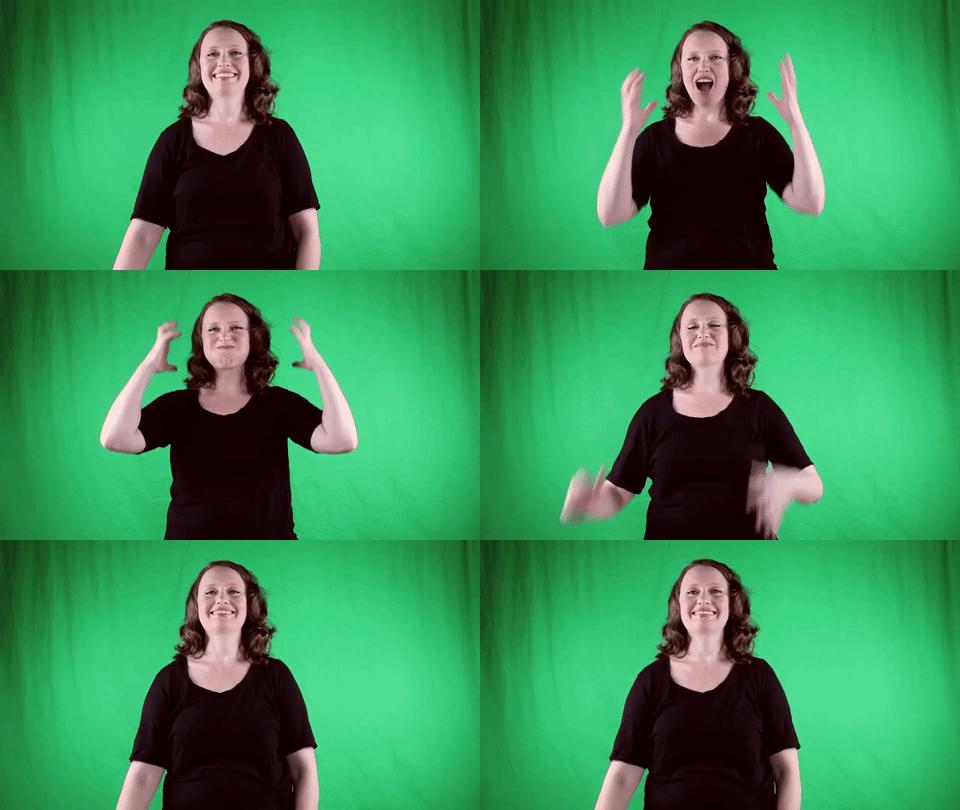
Definition: Thick and bushy.
Sign for BUSHY in ASL

Practice Activities:
To practice the sign for BUSHY in ASL, begin by practicing in front of a mirror. Focus on handshape, movement, and facial expressions that match the sign’s meaning. Use objects or images of bushy hair, eyebrows, or plants as visual prompts to strengthen your connection between the sign and the concept.
Next, work with flashcards. Show a picture of something bushy—like a squirrel’s tail or an overgrown hedge—and sign the word immediately after identifying it. Try to increase speed and accuracy without sacrificing clarity.
For sentence-level practice, start with basic descriptive phrases. Sign “That man has bushy eyebrows,” or “The bush is very bushy.” Gradually increase complexity with variations like “After summer, the garden looked really bushy” or “I saw a dog with a bushy tail running down the street.”
Use storytelling to add depth to your practice. Create a story about a walk in the forest where you saw a variety of bushy plants and animals. Describe the textures and appearances using the sign for BUSHY in ASL throughout the narrative. This will help reinforce how and when the sign is used naturally.
Partner activities are also useful. Take turns describing objects and scenes to each other using descriptive signs. One person says or signs a phrase, such as “Describe the man’s beard,” and the other uses the sign for BUSHY in ASL to build a sentence. Give each other feedback on clarity and expression.
Finally, watch ASL story videos or Deaf vloggers and identify when and how they sign BUSHY. Imitate what you see, noting regional style or slight variations. This exposure builds confidence and helps refine your expressive skills in natural contexts.
Cultural Context:
In American Sign Language, the sign for bushy in ASL can reflect more than just a literal description. ASL is deeply tied to visual imagery, and the concept of something being bushy draws directly from how Deaf culture expresses texture and form through handshape and movement. Within ASL, it’s common to use spatial referencing and classifiers to show how bushy something is, whether it’s hair, a plant, or even a beard.
The sign for bushy in ASL may vary slightly based on what is being described. For instance, describing a bushy beard will use different movements or handshapes than describing a thick, bushy tree. This flexibility is a distinct feature of ASL and is shaped by the values and communication norms of the Deaf community, where vivid visual description is key.
Cultural context is essential for understanding the nuance behind the sign for bushy in ASL. Deaf individuals tend to focus on clarity and specificity, especially when describing visual features. This makes the repetition and exaggeration of certain signs perfectly natural, particularly when trying to express the extremes of bushiness or density.
In ASL storytelling, which is a rich tradition within Deaf culture, the sign for bushy in ASL might come up when describing wild environments or characters with exaggerated features. This enhances the visual storytelling experience and aligns with ASL’s inherently descriptive nature. These signs are not static but are shaped by the conversation’s tone, intention, and cultural framework.
There is a close relationship between physical description and personality in ASL use, especially in narratives. When using the sign for bushy in ASL to describe a character’s hair or beard, it might suggest something about their personality—wild, unkempt, eccentric, or vibrant. Such interpretations rely heavily on body language and facial expressions, making the cultural aspect of the sign even more impactful.
Children in Deaf households often learn the sign for bushy in ASL through exposure to daily interactions and visual storytelling. These moments help kids understand not just the vocabulary, but also the deeper cultural associations attached to signs. This experiential learning reinforces how ASL users view the world through a detailed visual lens.
The Deaf community values creativity in communication, so the sign for bushy in ASL can be personalized in real-time. A signer might adjust the intensity, speed, or use of classifiers to better suit what they’re describing. These dynamic elements are encouraged and understood without needing further explanation.
Understanding the sign for bushy in ASL also requires awareness
Extended Definition:
The sign for bushy in ASL refers to something that appears thick, full, or abundant, typically relating to hair, fur, foliage, or other items that have a dense and overflowing appearance. To properly sign bushy in American Sign Language, handshapes and movements are used that reflect the visual nature of fullness or thickness, making it intuitive and expressive for the Deaf and signing communities.
In ASL, visual characteristics are often conveyed with classifier handshapes, facial expressions, and spatial cues. The sign for bushy in ASL can vary slightly depending on what object you’re describing—such as bushy eyebrows, a bushy beard, or a bushy plant. Each variation still focuses on illustrating volume and density through hand movement and shape.
When signing something like a bushy beard, your hands might mimic the shape and growth pattern of thick facial hair, moving outward from the chin with expanded fingers to show fullness. This works similarly for describing bushy eyebrows, with hands positioned near the forehead and emphasizing the thickness and texture of unkempt or abundant brow hair. These signs are designed to help the viewer visualize the bushy characteristic without needing spoken words.
The sign for bushy in ASL also uses facial expressions to enhance meaning. When emphasizing just how bushy something is, you may widen your eyes, raise your eyebrows, or give a puffed cheek gesture, all of which amplify the descriptive quality of the sign. These nuanced details allow for richer communication and make ASL an especially expressive language.
In other contexts, the sign for bushy in ASL could describe animals with thick fur, like a bushy-tailed fox, or landscape features like a bushy hedge or tree. In those situations, the handshape and movement could involve swaying hands with fingers spread, simulating the bushy shape of foliage. Again, the specific variation depends on what the signer wants to describe, but the core idea remains: showing visual abundance.
Learning how to use the sign for bushy in ASL appropriately often involves watching fluent signers and practicing the variation in context. Videos and ASL-heavy environments are incredibly helpful for seeing how signs adapt in real-life conversation. Because ASL is a visual and spatial language, watching the movement and expression along with the signed concept improves comprehension and accuracy.
It’s important to note that ASL signs grow and adapt with cultural and regional influences. The way someone signs bushy may differ slightly based on their location or the community they are in.
Synonyms: Thick, full, dense, shaggy, luxuriant
Educational resources: Find related learning materials in our course bank!
Want more? Check out some of our popular learning activities on the homepage!
Need to look up a sign? Use our highly rated dictionary: https://aslinteractive.com/best-asl-dictionary/
Follow us on tiktok: https://www.tiktok.com/@aslinteractive. More social media links at the bottom of this page!
Long-tail Keywords: What is the sign for Bushy in ASL, How do you sign Bushy in ASL, ASL sign for Bushy
Categories:
tags: Bushy, nature, plants, outdoors, environment
Parameters
*Handshape*:
The handshape used in the sign for BUSHY in ASL typically involves open spread fingers on both hands, resembling “5” handshapes. The fingers may wave slightly or move outward and upward to depict full, dense, or thick qualities, especially with reference to hair, foliage, or texture.
In the sign for BUSHY in ASL, this expressive handshape helps visually convey volume or density. This portrayal supports the visual-spatial nature of ASL when describing fluffy or thick characteristics .
*Palm Orientation*:
The palm orientation for the sign for BUSHY in ASL typically begins with both hands open and fingers spread slightly apart, palms facing down. As the sign progresses, the hands move upward and slightly outward while the fingers wiggle to suggest fullness or a thick texture, like dense hair or foliage.
The sign for BUSHY in ASL emphasizes wild or poofy characteristics by maintaining outward-facing palms during the movement. This palm direction helps convey the visual concept of something being full and flaring outward.
*Location*:
The sign for BUSHY in ASL is typically produced in the area around the top or sides of the head, or just above the forehead, depending on the context of what is being described as bushy, such as hair, eyebrows, or a beard. The hands are often shaped in a clawed or loose 5-hand configuration and are moved outward from the head to indicate volume or thickness.
This location allows the sign for BUSHY in ASL to visually represent something full or dense, like thick hair or foliage. The hands stay relatively close to the body, emphasizing how the bushiness is connected to a specific area like the head or face.
*Movement*:
To show the sign for BUSHY in ASL, begin with open hands facing downward at about chest level, with fingers spread apart. Move your hands upward and outward simultaneously in loose, wavy motions to suggest fullness or density.
This movement mimics the visual texture of something bushy, like a thick beard or dense foliage. The sign for BUSHY in ASL emphasizes volume and spread, so your hand movement should be light and flowing to capture that texture visually.
*Non-Manual Signals*:
The non-manual signals for the sign for BUSHY in ASL generally involve puffed cheeks and slightly raised eyebrows to emphasize volume or thickness. The lips may be loosely pursed, and the eyes can widen slightly, especially when conveying exaggerated fullness or fluffiness.
These facial expressions help indicate that something is dense, furry, or full, such as a bushy beard or bushy tail. Using the correct non-manual signals with the sign for BUSHY in ASL enhances clarity and visual impact.
*Prosody, Dominant/Non-Dominant Hand*:
The sign for BUSHY in ASL typically uses both hands to visually represent thickness or fullness, such as hair, eyebrows, or foliage. The dominant and non-dominant hands are usually open and spread, starting near each other and moving outward with a slight fluttering or wiggling motion to indicate volume or density.
This movement provides a visual metaphor for something big and full, matching the meaning of the sign for BUSHY in ASL. Facial expressions also intensify the concept, enhancing the visual description.
Tips for Beginners:
When learning the sign for BUSHY in ASL, it’s important to understand that this sign is often visual and depicts the shape or fullness of something like hair, eyebrows, or a tail. Use both hands with open fingers and move them outward from the center of the area you’re describing, such as above your upper lip for a bushy mustache. Making the movement look full and exaggerated can help convey that “bushy” feel.
New learners should pay close attention to the context in which they use the sign for BUSHY in ASL. Because “bushy” can describe various things in English, like plants or body hair, the location and clarity of the sign matter. Always be sure to establish what you’re describing beforehand if the object isn’t visually obvious.
Handshape and movement in this sign are key. Some students make the mistake of using too small or stiff movements, which can make the description unclear or look like another sign entirely. Keep your fingers nicely spread and move with purpose to create that sense of thickness and volume. Practice in front of a mirror to get a visual sense of the full effect.
One helpful trick is to think about the visual metaphor in play—how would you show something being big or fluffy with your hands? That approach can guide your movements naturally. The sign for BUSHY in ASL is very descriptive, so matching facial expressions can also boost its effectiveness if, for example, you’re describing a wild hairstyle or unkempt beard.
Don’t be afraid to exaggerate a little. ASL often uses space and movement to its advantage, and being expressive helps. Watching native signers demonstrate the sign for BUSHY in ASL on video can be a great supplement to in-person practice for reinforcing the natural fluidity of the sign.
Connections to Other topics:
The sign for BUSHY in ASL connects closely to signs that describe texture, volume, and shape. It is often used when describing physical characteristics of things like hair, beards, or plants. This sign shares visual elements with signs such as HAIR, BEARD, and TREE, especially when emphasizing thickness or fullness ✨.
In conversation, the sign for BUSHY in ASL can appear in compound forms or descriptive classifiers. For example, when talking about a bushy mustache or bushy eyebrows, signers often pair facial classifiers or descriptive signs with the BUSHY sign to create a vivid mental image. These combinations help express not just the object but its lush, full texture.
The structure of the sign for BUSHY in ASL emphasizes outward movement, which links it to other signs about growth or abundance. Signs like THICK, GROW, or CURLY sometimes echo similar handshapes or directions. Understanding these visual and linguistic relationships enhances your ability to use classifiers and modifications when signing woven or natural textures .
Learners also benefit from understanding sign modifications when applying the concept of bushiness across differing contexts. For example, a bushy tail versus a bushy beard may use the same core sign but will be shaped by directional or locational changes in the body. This adaptability is key in expressive signing and storytelling.
Additionally, signs involving body adornments or animals frequently employ the sign for BUSHY in ASL to enhance visual imagery. In storytelling, pairing it with gestures for animals like a bushy-tailed fox or a thick forest scene creates richer narratives. These examples show the value of the sign both descriptively and metaphorically across ASL communication.
Summary:
The sign for BUSHY in ASL typically involves showing a shape or exaggerated form of volume with the hands to indicate fullness or thickness. This applies especially when describing something like bushy hair, a bulky beard, or a dense shrub. The handshape and movement communicate the idea of something puffed or abundant, and the context determines the variation.
The dominant hands, typically in clawed 5-hands or open curved 5-hands, begin near the scalp, cheeks, or the area being described. The fingers may move outward in a puffed, exaggerated manner, showing the volume of whatever is bushy. Often, the movement involves a slight puffing or bouncing motion outward away from the body.
Facial expressions are crucial when signing bushy to convey meaning accurately. Raised eyebrows or widened eyes can signal surprise or intensity, while puffed cheeks may emphasize thickness or density. In ASL, non-manual signals never serve a decorative purpose; they add to the grammatical depth of the sign.
Context largely determines the exact execution of the sign for BUSHY in ASL. When referencing bushy eyebrows, the signer may gesture toward the brow line with curved fingers moving outward. For a bushy mustache or beard, the movement might start at the upper lip or chin and expand outward visibly.
When referring to landscape or vegetation, such as a bushy tree or shrub, both hands may show a rounded or outward growth pattern. The hands may start close or overlap and then open or blossom into a bunched form. This conveys the natural density and expansiveness of growth.
The sign for BUSHY in ASL is heavily reliant on classifiers and descriptive recombination. Classifier handshapes such as clawed 5s and bent 5s can be used to establish the shape, movement, and texture of what is being described. This allows a wide range of expressions for different bushy objects.
Grammatically, the concept of bushy is used in ASL similarly to how descriptive adjectives are employed in English. It often follows a noun or is integrated into a broader signed sentence with other classifiers or modified role shifts. The sign fits naturally into the ASL syntax, whether it is a simple phrase or a more complex narrative.
The visual iconicity of this sign affords a clear associative link between the movement and physical traits. The viewer can almost see the puffiness or volume emanating from the point of reference. This visual architecture of the sign enhances comprehension and retention.
From a cultural standpoint, ASL places great value on vivid and efficient visual description, and the sign for BUSHY in ASL reflects that ethos. Deaf culture strongly values creative but accurate expression, especially in storytelling. Whether in tales, humor, or life stories, describing something as bushy can evoke strong visual imagery.
In storytelling, using the sign for BUSHY in ASL can bring humor or detail depending on usage. Imaginary characters with big bushy beards or animals with bushy tails are examples where this sign enhances visual storytelling. The sign can also be exaggerated for comedic or dramatic effect.
The precision of the sign for BUSHY in ASL encourages exploration of size, texture, and shape. In educational contexts, especially for learners new to classifiers, this sign helps reinforce spatial awareness and visual representation. It’s a great entry point for teaching descriptive expansion in ASL.
ASL’s descriptive depth often sees the “bushy” concept combined innovatively with spatial referencing. For example, describing an overgrown bush might include bushy movements followed by size classifiers and locative markers. These combinations help narrate spatial relationships and visual density.
Applied linguistically, the sign for BUSHY in ASL reveals ASL’s use of iconic morphology. The existence of conceptually driven gestures helps map the actual trait (like fullness or tousledness) onto a visual schema. This builds a bridge between real-world phenomena and symbolic linguistic representation.
One unique feature of this sign is its adaptability to a wide range of situations. It’s not just restricted to living things like beards or tails—it’s also used for plants, designs, or fabric textures. This illustrates ASL’s flexibility and its focus on expressive physical traits over rigid lexical categories.
The frequency of visual imagery in daily conversation in Deaf culture makes signs like BUSHY very significant. Rather than using a general adjective, signers prefer creating a complete mental picture. This artistic communication practice makes concepts like bushy particularly rich grounds for expressive variety.
In terms of variation, some signers may include puffed cheeks to represent extreme bushiness, especially in children’s stories or jokes. Others may incorporate directional movement to point toward exactly *what* is bushy and *how*—such as vertical volume or spreading width. These variations show regional and individual perspectives.
The sign for BUSHY in ASL shows the interplay of movement, handshape, and placement, each element modifying meaning slightly. A higher gesture may imply
Want more? Check out some of our popular learning activities!
ASL Interactive Resources
ASLInteractive YouTube Channel
Follow us on tiktok: @aslinteractive.com
Follow us on Instagram: aslinteractive
Facebook page: aslinteractive
Facebook group: aslinteractive
LInkedIn: ASL Interactive LLC
Twitter: @ASL_interactive
*Some information on this page is AI-generated. AI can make mistakes. Please check the information.


Responses