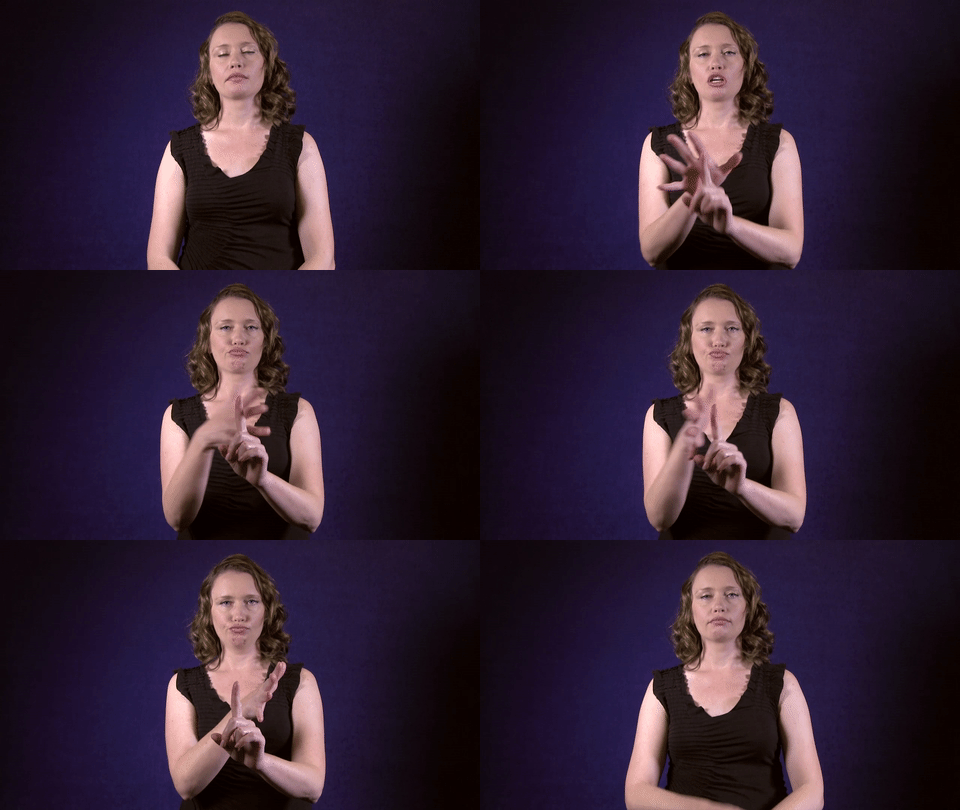
Definition: Idiomatic expression meaning to flatter someone excessively.
Sign for BUTTER-UP in ASL

Practice Activities:
Start by practicing the sign for BUTTER-UP in ASL in front of a mirror to focus on handshape and facial expressions. This sign involves a subtle movement and often uses an exaggerated or playful facial expression, so mirror practice can help you develop fluency and accuracy.
Try using the sign in different short phrases to build comfort. For example, sign “He always BUTTER-UP the teacher” or “She tries to BUTTER-UP her boss.” Repeat these sentences slowly at first, then increase your speed as you become more confident. Focus on incorporating matching facial expressions that show flattery or manipulation.
Create your own mini-dialogues or role-play scenarios where characters might try to flatter someone for personal gain. For instance, practice signing lines like “Why are you BUTTER-UP me now?” or “You can’t BUTTER-UP everyone to get your way.” These practice sentences help reinforce both the vocabulary and the context in which it’s typically used.
Storytelling activities are particularly useful for emotional signs like this one. Come up with a short story about a student who tries to get out of homework by complimenting the teacher nonstop. Narrate the story using ASL and incorporate the sign for BUTTER-UP in ASL every time the action of flattering occurs.
Work with a partner to create back-and-forth skits where one person flatters someone and the other reacts. This could include jobs, school settings, or relationships. Partners can give feedback on clarity, signing fluidity, and expression.
For solo practice, try watching a TV commercial or political speech and pick out moments where the speaker might be trying to butter someone up. Pause and sign those moments using the sign for BUTTER-UP in ASL. This will help build awareness of real-world applications and strengthen your storytelling skills.
Cultural Context:
In the Deaf community, the sign for BUTTER-UP in ASL carries both literal and figurative meanings. While some signs may describe actual actions, this one often plays a colorful role in conversational storytelling and everyday interaction. It reflects the nuanced way Deaf culture expresses humor, sarcasm, and subtle manipulation.
The sign for BUTTER-UP in ASL usually conveys the idea of someone being overly flattering, often to get what they want. It’s not just about compliments—it hints that the praise may not be entirely sincere. This makes the expression playful and often lighthearted, depending on context and facial expressions.
Facial grammar and tone are essential when signing the phrase. ASL relies on these elements to distinguish whether someone is joking, being serious, or exaggerating. The sign for BUTTER-UP in ASL is a great example of how body language and face cues deliver a complete message—much more than hands alone.
In ASL storytelling, using the sign for BUTTER-UP can add personality to characters. It helps narrators show that someone is trying to manipulate a situation in a humorous or clever way. This enriches stories and allows Deaf individuals to explore relatable social situations with expressive, visual language.
This sign is also used in casual conversations among friends or in community events where teasing and jokes are part of bonding. When someone uses the sign for BUTTER-UP in ASL, it can signal friendly sarcasm or social awareness. It’s a shared understanding within the culture that enhances communication.
Deaf culture values authenticity, so using the sign for BUTTER-UP in ASL can sometimes carry a warning or light criticism. It tells others that someone may be trying too hard or isn’t being genuine. In this way, the sign serves as a social tool to call out certain behaviors in a clever, often humorous way.
Children in Deaf households may learn this sign early on as part of social education. It teaches them how to recognize insincere praise or performative kindness, giving them important social skills. Parents and adults use the sign in a context that encourages emotional awareness and cultural understanding.
In Deaf comedy or social commentary, the sign for BUTTER-UP in ASL can be especially powerful. Performers use it to exaggerate situations, mimic characters, or express critique in a way that’s both visual and accessible. It becomes a symbol for more than just words—it tells a story that resonates with the community.
Social media trends within the Deaf community also feature this sign. Whether in a meme, a short video
Extended Definition:
The sign for BUTTER-UP in ASL is an expressive and visual sign that conveys the idea of flattering someone excessively to get what you want. It is commonly used in social situations where someone is clearly trying to win favor or approval. This sign can often carry a humorous or sarcastic tone, depending on the context and facial expression.
When using the sign for BUTTER-UP in ASL, facial expressions play a major role in delivering the right meaning. Exaggerated expressions help emphasize the sarcastic undertone often associated with the phrase. Without the appropriate facial cues, the sign may be misunderstood or lack the intended impact.
This sign is especially useful in conversations that involve persuasion, manipulation, or flattery. You might see it used when describing someone’s behavior before asking a favor or during storytelling to highlight a character’s intentions. The sign typically mimics the motion of physically spreading butter, which visually reinforces the metaphor behind the phrase.
Learners often encounter the sign for BUTTER-UP in ASL during intermediate lessons, as it draws from more figurative and idiomatic language use. It adds color and character to your signing, especially when discussing personality traits or motives. This makes it a valuable sign when expanding beyond basic vocabulary.
The sign for BUTTER-UP in ASL is not a literal sign related to food, though it may appear similar at first. It uses gestures and expressions to depict the idea of sweet-talking or flattering someone. It’s important to distinguish between literal and idiomatic meanings while learning ASL to avoid confusion.
In Deaf culture, humor and storytelling are rich with idiomatic signs like the sign for BUTTER-UP in ASL. These signs enhance narratives and connect the signer with the audience through shared understanding. Knowing how to use figurative expressions like this one can help you become a more fluent and relatable signer.
Practice is key to using the sign for BUTTER-UP in ASL effectively. Watching native signers, either in person or through video, can help you grasp the right movement and timing. You’ll also get a better sense of the facial expressions that are essential when using idiomatic signs.
There may be slight regional variations in how the sign for BUTTER-UP in ASL is performed. These differences are natural in any language and are shaped by local signers and communities. Always be open to learning alternate forms and understanding the meaning behind them.
The sign for BUTTER-UP in ASL adds flavor to your communication and allows you to express more nuanced ideas. Whether you’re
Synonyms: flatter, praise, sweet-talk, fawn over, compliment
Educational resources: Find related learning materials in our course bank!
Want more? Check out some of our popular learning activities on the homepage!
Need to look up a sign? Use our highly rated dictionary: https://aslinteractive.com/best-asl-dictionary/
Follow us on tiktok: https://www.tiktok.com/@aslinteractive. More social media links at the bottom of this page!
Long-tail Keywords: what is the sign for butter-up in asl, how do you sign butter-up in asl, asl sign for butter-up
Categories:
tags: Compliments, Actions, Verbs, Language Learning, Everyday Activities
Parameters
*Handshape*:
The handshape for the sign for BUTTER-UP in ASL typically involves both hands using modified flat-O handshapes . The dominant hand moves in a circular or dabbing motion over the non-dominant hand, suggesting a flattering or overly kind gesture. This expressive sign mimics the concept of smearing or spreading, aligning with the figurative meaning behind the sign for BUTTER-UP in ASL.
This sign often uses a fluid, exaggerated movement to amplify the gesture, emphasizing the meaning of ingratiating oneself. The handshapes and motion work together to visually convey the social nuance captured in the sign for BUTTER-UP in ASL.
*Palm Orientation*:
In the sign for BUTTER-UP in ASL, the palm orientation typically faces upward or slightly inward depending on the specific context and how the signer is stylizing the expression. The dominant hand, often mimicking a buttering or caressing motion, moves with the palm angled toward the chest or diagonally up.
This expressive sign reflects the figurative meaning behind buttering someone up, and the palm orientation helps exaggerate the emotional tone. When using the sign for BUTTER-UP in ASL, maintaining the correct palm angle conveys charm or flattery effectively ✨.
*Location*:
The sign for BUTTER-UP in ASL typically takes place in the neutral space in front of the body, roughly at chest level. This area allows for clear visibility of the hand movements that suggest the idea of flattering or sweet-talking someone.
The location is key in conveying the figurative meaning behind the sign for BUTTER-UP in ASL, as it needs to remain visible while allowing expressive non-manual markers like facial expressions to support the context . The motion may extend slightly forward to indicate the action of laying it on thick.
*Movement*:
The sign for BUTTER-UP in ASL uses an exaggerated motion resembling the act of flattering or schmoozing. Start with your dominant hand in a flat “B” handshape and gently brush it upward along the flat back of your non-dominant hand, palm down. Repeat the brush a couple of times in a smooth, almost theatrical manner .
This expressive movement captures the idea of trying too hard to win favor. The sign for BUTTER-UP in ASL is often used in a humorous or sarcastic context, and facial expressions play an essential role in enhancing its meaning.
*Non-Manual Signals*:
When conveying the sign for BUTTER-UP in ASL, the facial expression is exaggerated to reflect insincerity or flattery. Puff out the cheeks slightly, raise the eyebrows, and show a cheeky or playful smile to reflect exaggeration or excessive praise. A slight head tilt or side glance can emphasize the manipulative tone often associated with the sign for BUTTER-UP in ASL.
*Prosody, Dominant/Non-Dominant Hand*:
The dominant hand uses a flat handshape and gently brushes upward along the non-dominant hand multiple times, mimicking a flattering or smooth-talking gesture. The non-dominant hand remains stationary with the palm facing inward or slightly bent, representing the person being flattered.
In the sign for butter-up in ASL, the motion is light and repetitive, showing exaggerated charm or insincerity. This expressive sign captures the figurative meaning of trying too hard to please someone.
Tips for Beginners:
When learning the sign for BUTTER-UP in ASL, it’s important to understand the context in which the phrase is used. This idiomatic expression generally refers to someone overly flattering or sweet-talking another person to gain favor. Since this isn’t a literal action, the sign for BUTTER-UP in ASL is typically conveyed through a combination of gestures and facial expressions that emphasize exaggeration or charm.
Start by observing native signers or fluent interpreters using the sign in real conversations or storytelling. Facial expressions are absolutely key with this sign—it often involves a smirking or exaggerated look to show insincerity or flattery. Think of over-the-top praise, and let that guide your non-manual signals. They make the difference between a clear, expressive sign and one that seems flat or confusing.
Be aware that beginners often sign it too literally, like referring to actual butter or spreading motion. That misinterpretation can make your intent unclear. The sign for BUTTER-UP in ASL usually requires a blend of concepts like PRAISE, FLATTER, or even SUCK-UP, depending on regional or community norms. It might involve signs like COMPLEMENT excessively followed by eyebrow raises or scoffing face to show the exaggeration.
Practice using the sign in different sentences. Role-play scenes where someone wants a favor and starts flattering a boss or a friend. This helps connect the motion and expressions to real-life usage, boosting memory and fluency. Use a mirror or record yourself to evaluate how natural your facial expressions are.
Lastly, don’t rely on a single version. The sign for BUTTER-UP in ASL can vary across deaf communities. Stay open to variation, but master one clear, expressive version with strong facial grammar for better communication. Keep watching, keep signing, and don’t be afraid to ask Deaf signers for feedback .
sign for BUTTER-UP in ASL, ASL sign for butter up, how to sign butter-up in ASL, butter-up idiom ASL sign, ASL slang butter-up
Connections to Other topics:
The sign for BUTTER-UP in ASL is deeply connected to the broader category of idioms and figurative language within sign language. Just like in English, ASL uses expressive gestures and facial expressions to convey sarcasm, exaggeration, or insincerity, all of which are common nuances in the concept of buttering someone up. This sign can resemble actions of flattery, often shown with an exaggerated or dramatic motion to reinforce its nonliteral meaning.
This sign connects well with other idiomatic expressions in ASL such as SUCK-UP or KISS-UP, which similarly describe someone who tries to gain favor through flattery. Although the directional movement and palm orientation may differ, these signs all belong to the same semantic field that expresses manipulation or overly complimentary behavior. Learners who understand the sign for BUTTER-UP in ASL will more easily grasp these related expressions and how they shift depending on context and facial expression.
In conversational ASL, the sign is sometimes paired with signs like BOSS, TEACHER, or PARENT to indicate who someone is trying to impress. For example, someone might sign STUDENT BUTTER-UP TEACHER to describe a classmate trying to get a better grade by being overly kind. This kind of inflection helps students develop more authentic expression patterns in ASL.
Facial expressions are crucial when using the sign for BUTTER-UP in ASL, as they indicate the speaker’s attitude—such as disapproval, amusement, or sarcasm. Comparing this sign to its motion-based relatives like POUR-IT-ON or SHOW-OFF can also help learners distinguish between types of exaggeration or attention-seeking behavior. The sign therefore supports broader learning about depicting attitude and tone, which are essential in building expressive fluency in ASL.
Summary:
The sign for BUTTER-UP in ASL is expressive, playful, and visually engaging. It typically involves a gesture that mimics flattering or overly gracious behavior, much like the spoken idiom suggests. The sign often mimics someone “coating” or “smoothing” over something with exaggerated niceness, highlighting its metaphorical roots.
In practice, the sign for BUTTER-UP in ASL varies slightly depending on the signer’s region or community. One common version features dominant hand motion in a circular or spreading gesture on the non-dominant hand, resembling spreading butter. Facial expression is crucial—raised eyebrows, a sly smile, or a knowing grin helps emphasize the manipulative or flattery-driven nature behind the action.
This sign holds rich cultural significance within Deaf communities. It reveals how ASL expresses figurative language just like English, but with visual grammar and cinematic flair. For Deaf signers, idioms like this one are enjoyable to watch and often cue humor or sarcasm when used in conversation.
The grammatical function of the sign for BUTTER-UP in ASL is similar to its English counterpart—it acts as a verb. It’s used in the context of someone trying to gain favor, often preceding or following a sign like ASK, REQUEST, or FAVOR. The sign can also appear in storytelling when setting up a character who is acting with insincere charm.
Among related signs, FLATTER and SUCK-UP may come close in meaning. However, each carries different connotations in ASL. While the sign for FLATTER has a more neutral to positive tone, the sign for BUTTER-UP in ASL implies a more strategic or manipulative edge.
The visual metaphor of spreading butter makes the idiom accessible even to non-signers once explained. This strengthens cross-linguistic understanding and showcases the brilliance of ASL’s visual structure. It’s an example of how metaphor and gesture merge to create signs that are both expressive and precise.
Children and learners of ASL often delight in learning idiomatic expressions like this. The physicality and opportunity for expressive facial grammar transform the learning experience into something memorable. Educators teach these signs to foster cultural integration and deepen linguistic understanding of ASL beyond basic vocabulary.
Applied linguistics insights show signs like BUTTER-UP are excellent case studies for analyzing signed metaphor. These signs illustrate how ASL uses iconicity and body space to convey layered meaning. Linguists often examine signs like this to explore how gesture and metaphor interplay across signed languages.
Code-switching between literal and idiomatic language is an advanced skill in ASL. When a signer uses the sign for BUTTER-UP in ASL during casual narrative or storytelling, native signers immediately pick up on the non-verbal subtleties. Non-native signers often struggle with this nuance, which highlights the importance of cultural immersion in learning.
ASL students are encouraged to observe use of idioms in Deaf social contexts to grasp appropriate usage. A sign like this may seem simple in form, but its meaning is bound to context and intent. Facial expressions can cause the same sign to read either humorous, critical, or even mocking.
In narrative or performance ASL, artists use the sign for BUTTER-UP vibrantly. It’s often exaggerated for theatrical effect, signaling obsequious characters or comic interactions. Theatrics draw on the metaphor of spreading, softening, and cloaking one’s true intentions—all metaphoric extensions viewed through movement.
ASL poetry or storytelling sometimes includes this sign for visual contrast. For example, a character might BUTTER-UP before betraying someone, combining the sign with dramatic irony. This showcases the narrative potential of the sign and its emotional depth when paired with spatial storytelling techniques.
Deaf culture treasures metaphoric richness, and idiomatic signs like this are part of that heritage. The sign allows Deaf individuals to explore human psychology—motives, emotions, manipulation—with powerful visual cues. In doing so, it becomes a linguistic and cultural bridge to deeper conversation.
Sociolinguistic research points to interesting variations in how BUTTER-UP is signed. Some signers might use alternate gestures or expand the metaphor with additional classifier constructs. These variations preserve core meaning while revealing dialectical beauty within ASL’s grammar.
In terms of classifier use, a signer might depict “buttering” someone physically using classifiers that represent people. For example, placing a human classifier in space and “coating” them shows the depth of the metaphor. These techniques are learned within nuanced, higher-level ASL proficiency.
Facial grammar cannot be overstated when talking about the sign for BUTTER-UP in ASL. A flat or neutral expression removes the metaphor. Correct usage includes a raised eyebrow, puckered lips, or widening of eyes—small adjustments that add layers of sarcasm, irony, or humor.
Emoji use in digital ASL translation sometimes tries to capture the meaning of signs like BUTTER-UP. You might see or
Want more? Check out some of our popular learning activities!
ASL Interactive Resources
ASLInteractive YouTube Channel
Follow us on tiktok: @aslinteractive.com
Follow us on Instagram: aslinteractive
Facebook page: aslinteractive
Facebook group: aslinteractive
LInkedIn: ASL Interactive LLC
Twitter: @ASL_interactive
*Some information on this page is AI-generated. AI can make mistakes. Please check the information.


Responses