Sign for CABIN in ASL | 🏚️ ASL Dictionary

Definition: A small house or shelter.

Sign for CABIN in ASL

YouTube player

Practice Activities:

To build comfort with the sign for CABIN in ASL, start by practicing it in front of a mirror. Focus on handshape, movement, and facial expressions to ensure clarity. Sign the word five times slowly, then five times quickly to develop speed and fluency while keeping accuracy.

Use flashcards with outdoor-related vocabulary such as forest, mountain, lake, and tent. Mix in the sign for CABIN in ASL and practice identifying and signing them at random. Then, sign two or three-word phrases like “small cabin” or “log cabin” to begin using the sign in simple contexts.

Create example sentences like “My family has a cabin in the woods” or “She rented a cabin for the weekend.” Sign these slowly and repeat until they feel natural. Try switching roles with a partner and take turns signing the sentences while the other provides feedback or guesses the meaning.

Use storytelling to reinforce usage. Tell a short story about a trip to a cabin, including elements like how you got there, what you did, and describing the scenery. Include signs like fire, forest, food, and quiet to support the sign for CABIN in ASL within context. Be expressive, especially when describing emotions or the physical environment.

Roleplay asking and answering questions using the sign. Ask a partner, “Do you like staying in cabins?” or “Have you slept in a cabin before?” Practice both asking and responding to make it feel more conversational.

Finally, record yourself signing about a favorite cabin memory or an imagined cabin getaway. Play it back to check for clarity and accuracy. Repeat this activity weekly to track progress and build confidence using the sign for CABIN in ASL in natural storytelling situations.

Cultural Context:

The sign for cabin in ASL connects deeply with the cultural and environmental experiences of Deaf communities, especially in rural or nature-rich areas. This sign often comes up in conversations about travel, vacations, or peaceful retreats in the woods. When someone uses the sign for cabin in ASL, it evokes the sense of escaping everyday life for a quiet break, which is a shared value across many Deaf and hearing communities.

Many Deaf individuals and families cherish time spent at cabins, whether for personal getaways or community events such as Deaf camps or outdoor retreats. These locations provide a space for connection through visual communication and shared experiences. The sign for cabin in ASL becomes especially valuable in planning and reminiscing about these moments.

The concept of a cabin goes beyond just a physical structure. In ASL culture, the sign for cabin in ASL often carries emotional meaning, representing a safe space or someplace away from the demands of city life ️. It’s common to see this sign used in storytelling, vlogs, or social media posts created by Deaf users when describing time spent in nature.

Because cabins are often located in remote areas, they align closely with Deaf culture’s appreciation for environments that support clear visual communication. Open spaces and natural light enhance the use of ASL, making cabins an ideal topic in both informal chats and educational settings. When learners discover the sign for cabin in ASL, they’re also learning about these deeper lifestyle connections.

During summer months, Deaf camps become a big part of cultural life, and many are hosted in or near cabins. These camps offer immersive signing environments where Deaf youth and adults build skills, friendships, and cultural awareness. The sign for cabin in ASL is used frequently at these events, reinforcing its importance in social and communal contexts.

Storytelling plays a critical role in Deaf culture, and cabin settings often feature in group narratives shared through sign language. Whether it’s a ghost story by the fire or a tale about a family trip, the sign for cabin in ASL helps set the scene. It allows the storyteller to immediately establish a location that listeners can visualize clearly .

When used in an educational context, the sign for cabin in ASL is a great way to introduce vocabulary centered around nature, leisure, and different types of dwellings. ASL instructors may pair it with other related signs like forest, fire, or lake to build a broader understanding of recreational topics. This interconnected learning approach supports cultural literacy within the Deaf community.

In social media posts and video

Extended Definition:

The sign for cabin in ASL represents a small house often found in the woods or mountains, typically associated with nature, simplicity, and rustic living. When using this sign in American Sign Language, it helps convey the idea of a lodge, cottage, or remote shelter that offers a cozy and quiet retreat from urban life.

To create the sign for cabin in ASL, you combine signs that represent the basic structure and concept of a house or wooden building. Usually, this involves first signing “house” or “home,” followed by a movement or sign that expresses a log-style or rustic building. The sign looks different depending on regional variations or personal signing style, but it always visually connects back to the characteristics of a cabin.

This sign is especially useful in conversations about travel, camping, vacations, or outdoor adventures. If you’re telling someone that you will be staying in a cabin for the weekend, the sign for cabin in ASL delivers that meaning clearly and effectively in natural, fluid conversation. It’s common when discussing family trips, seasonal rentals, or holiday accommodations far from the city.

Cabins are often linked to peaceful scenery, cozy fireplaces, and a connection to nature, and this imagery can be easily complemented by facial expressions or more descriptive signs in ASL. When signing about your experience or memories of a cabin stay, you might include additional signs such as “wood,” “trees,” “quiet,” or “mountain” to give a fuller picture.

Many learners wonder about the usage of the sign for cabin in ASL when used metaphorically or to describe lifestyle choices like tiny house living or off-grid homes. While the basic sign relates to a traditional log-style cottage, it can also be adapted in context to fit these more modern or minimalist uses by further describing location or features.

Deaf storytellers and sign language interpreters often employ the sign for cabin in ASL in narratives involving rustic settings, folktales, or descriptive imagery. Using this sign adds visual interest and helps convey a rich sense of atmosphere in storytelling, making it a valuable sign for creative communication.

When learning the sign for cabin in ASL, it’s important to practice handshape, location, and movement to ensure clarity. Watching videos or learning from native signers is a great way to see the proper usage in everyday conversations. Adding the correct facial grammar will also enhance the meaning and accuracy of your communication.

Understanding cultural and regional nuances in ASL can influence how you learn and use the sign for cabin in ASL

Synonyms: hut, cottage, lodge, shack, chalet

Educational resources: Find related learning materials in our course bank!

Want more? Check out some of our popular learning activities on the homepage!

Need to look up a sign? Use our highly rated dictionary: https://aslinteractive.com/best-asl-dictionary/

Follow us on tiktok: https://www.tiktok.com/@aslinteractive. More social media links at the bottom of this page!

Long-tail Keywords: What is the sign for Cabin in ASL, How do you sign Cabin in American Sign Language, ASL sign for Cabin

Categories:

tags: Housing, Describing Residence, Facilities and other locations/needs, Vacation, Objects in the Classroom

Parameters

*Handshape*:

The handshape used in the sign for CABIN in ASL typically starts with both hands in a flat “B” shape, palms facing down. These hands represent the roof structure and walls of a small house or cabin.

To complete the sign for CABIN in ASL, the hands may outline the shape of a small structure, emphasizing its compact size. The flat “B” handshape is essential to convey the concept of a building, specifically one like a cabin.

*Palm Orientation*:

The palm orientation for the sign for CABIN in ASL typically begins with both hands in a flat “B” handshape, palms facing each other. The hands mimic the structure of a log cabin by outlining overlapping logs or planks, starting from the top and then forming the body of the cabin.

During the movement, the palms generally remain facing inward toward each other. This orientation helps visually represent the construction of a cabin, enhancing the meaning of the sign for CABIN in ASL .

*Location*:

The sign for CABIN in ASL is typically produced in the neutral space in front of the body, at chest level. This location allows both hands to move comfortably while forming the components of the sign, often combining concepts like “wood” or “small house.”

When signing the concept behind the sign for CABIN in ASL, keeping the hands at chest height ensures clear visibility and accurate interpretation. This space is ideal for illustrating spatial or structural components like walls or building shapes.

*Movement*:

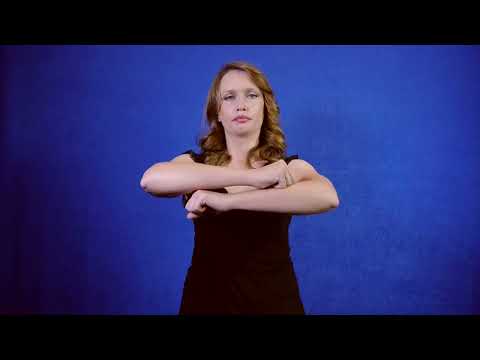
To show the sign for CABIN in ASL, form both hands into flat “B” handshapes. Hold your non-dominant hand in front of your chest, palm facing in. With your dominant hand, start at the top edge of the non-dominant hand and arc it downward and over in a square-like motion, mimicking the roof and walls of a small structure .

This motion represents the simple construction of a cabin. The sign for CABIN in ASL visually outlines the basic shape of a wooden, box-like building, emphasizing its rustic and compact form.

*Non-Manual Signals*:

While producing the sign for CABIN in ASL, maintain a neutral or slightly focused facial expression to indicate the descriptive nature of the term. Avoid exaggerated emotional expressions unless the context of the conversation calls for it.

Use raised eyebrows slightly if explaining or clarifying what a cabin is, especially in storytelling or locational context. Slight head tilts can enhance the spatial or placement reference when showing the layout or location related to the sign for CABIN in ASL ️.

*Prosody, Dominant/Non-Dominant Hand*:

The sign for CABIN in ASL typically involves both hands. The dominant hand, open and curved like a “C” shape, starts by mimicking the shape or structure of a small wooden house. The non-dominant hand may support this shape or stay stationary while the dominant hand outlines a simple roof and walls.

This visual construction matches the meaning of the sign for CABIN in ASL, giving the impression of a small enclosed dwelling. Movements are deliberate to emphasize the structure, using spatial prosody to convey size and form.

Tips for Beginners:

When learning the sign for CABIN in ASL, it’s crucial to remember that this sign is often conceptual. It typically involves combining key signs such as HOUSE and WOOD, using classifiers or mime to depict a rustic structure. Finger placement, handshape, and movement need to match the meaning clearly. Watch native signers or reputable video resources to see how it can vary slightly depending on regional signing or context.

One challenge for beginners is overcomplicating the sign with unnecessary motions. Stick to clean, deliberate movements. If you’re using the combination of HOUSE and WOOD, make sure the HOUSE sign shows the outline of a peaked roof and walls, then follow with the sign for WOOD, mimicking a cutting motion across the palm. Smooth transitions between the two parts make your meaning clearer.

Facial expressions and role shifting can greatly enhance the sign for CABIN in ASL. For example, slight facial emphasis can convey whether the cabin is cozy, small, or a bit rough. Practice these variations in front of a mirror or with a signing partner to enhance clarity and expression.

Avoid mixing up the sign with similar ones like HOUSE or HOME by ensuring each component is correct. The sign for CABIN in ASL should distinctly show the concept of a rural or wooden dwelling. If you’re not confident yet, fingerspelling “C-A-B-I-N” is always acceptable and understood, especially in more technical or academic settings.

Focus on timing and flow. If your transitions between signs like HOUSE and WOOD are too choppy, the meaning might be lost. Practicing with short repetitions daily helps build muscle memory, and using the sign in sentences helps reinforce context. Don’t be discouraged by early mistakes—accuracy improves with consistent practice.

Connections to Other topics:

The sign for CABIN in ASL is closely related to signs for types of buildings and dwellings, such as HOUSE, COTTAGE, and HOME. It shares visual and conceptual elements with these signs, often using classifiers or descriptive structures to indicate size, shape, and construction materials. This makes it an excellent vocabulary term for learners exploring ASL architecture or describing locations in rural or forested areas.

In compound signs, the sign for CABIN in ASL may be combined with descriptors such as WOOD, MOUNTAIN, or LAKE to provide more context. For example, combining CABIN with MOUNTAIN can communicate a mountain cabin or vacation spot. These combinations are useful in storytelling and dialogues about travel, nature, and leisure activities ️.

Learners exploring the sign for CABIN in ASL will also find it beneficial when discussing camping and other related outdoor activities. For instance, CABIN can be conceptually related to signs like TENT, CAMP, and FOREST. These related signs help create a rich narrative environment in ASL and give learners the language tools needed for full situational descriptions.

CABIN can also be integrated into locative and directional expressions. Using spatial referencing, users can describe the layout of a group of cabins or contrast it with nearby houses or lodges. This connection enhances the spatial grammar that is essential in fluent ASL communication.

For ASL users engaged in education or work regarding history or culture, the sign for CABIN in ASL can be used when talking about historical buildings or pioneer life. This includes richer discussions involving log cabins, settlers, or early American dwellings. Understanding its place in narrative sequences supports timelines and cultural storytelling .

Overall, the sign for CABIN in ASL connects well with many thematic centers in ASL, including construction, nature, rural life, and vacationing, making it a highly functional and versatile vocabulary word.

Summary:

The sign for CABIN in ASL generally begins with the base sign for “house” or “home” and layers on additional context or descriptive classifiers to communicate that the structure is rustic, detached, and usually associated with nature. You start with both flat B-hands outlining the rooftop and walls of a house, then add features like trees or simulate wood textures with directional movements across the chest or arms. This combination provides both lexical and visual specificity needed to communicate a cabin versus a regular house.

In casual signing, you might see this sign initialized with the letter C to represent “cabin,” though this is somewhat uncommon and may vary by region or signer fluency. The movement, shape, and location of the hands are crucial in the sign for CABIN in ASL, not only to convey the idea of a residence but also its environmental context—often isolated and natural.

The visual-spatial elements of ASL shine in the sign for CABIN in ASL. When classifiers are used to show trees, a mountain, or a nearby lake, it showcases the language’s ability to holistically represent space. This aligns with the topic-comment syntax where the cabin may be established as a topic, followed by details on its setting, use, and occupants.

Culturally, cabins in American contexts symbolize retreat, solitude, and simplicity. This concept transfers powerfully in ASL, allowing the signer to add emotional overtones that describe the tranquil, rustic, or even romantic qualities of a cabin getaway. The physical signs often reflect these associations, such as using relaxed facial expressions when depicting a serene atmosphere.

Linguistically, the sign for CABIN in ASL highlights how signs can be built up using established root signs and then modified with movement and non-manual markers. The base sign carries the core meaning while classifiers and added facial expressions create nuance. These modifications illustrate ASL’s morphological richness where one concept can be modified infinitely for precision.

ASL’s use of space and classifiers makes it adept at describing static objects like buildings in relation to their surroundings. When describing a cabin, signers often use their signing space as a three-dimensional canvas. They might show a trail leading to the cabin or its location between trees, enriching the narrative.

In grammatical structure, the sign for CABIN in ASL can act as a noun and be used in both simple and compound sentences. For example, a signer may begin by placing the cabin in relation to other signs, such as “I visit cabin every summer” or “Cabin located near lake.” The word order respects ASL norms and emphasizes visual storytelling.

There are no formal ASL signs for many architectural structures, so signers frequently rely on classifiers to fill gaps. The sign for CABIN in ASL is a strong example of this behavior. Signers use general house classifiers, then add descriptive features like wooden exterior or chimney to distinguish a cabin.

Regional differences can affect how the sign for CABIN in ASL is used. In some Deaf communities, signers might default to fingerspelling C-A-B-I-N before clarifying with descriptive elements. In others, a conceptual sign built around the image of a wooden structure surrounded by nature is commonly used to avoid ambiguity.

Some related signs include HOUSE, COTTAGE, HUT, and BUILDING. These terms have overlapping features with the sign for CABIN in ASL, but each carries distinct connotations. HOUSE denotes residence generally, COTTAGE is smaller and cozier, while HUT implies an even more rustic or primitive dwelling.

Classifier constructions allow signers to emphasize aspects such as the cabin’s size, its architectural design, or how one interacts with the space—like walking toward it or entering. The classifier structure CL:3 (representing vehicles or large objects) might be used to show cars parked near the cabin, adding additional realism to the scene.

The sign for CABIN in ASL often includes affective elements, depending on the context. If the cabin serves as a place of childhood memory, the facial expressions may include nostalgia. If it is associated with isolation or fear, the non-manual signals can convey unease, showing ASL’s capability to carry emotional depth.

Because cabins tend to exist within nature, a signer might incorporate signs for MOUNTAIN, FOREST, or SNOW when discussing the setting. This semantic field creates a mental image that contextualizes the cabin in broader thematic terms, demonstrating how ASL can handle both specific and abstract concepts seamlessly.

In stories and visual media, the sign for CABIN in ASL often appears in scenes involving camping, hiking, or family vacations. Within Deaf film or storytelling circles, cabins are frequently used as metaphors for escape, solitude, or confrontation. These narrative uses highlight the depth and flexibility of the sign.

The pedagogical value of this sign is high for learners. Teaching the sign for CABIN in ASL involves multiple competencies including understanding classifiers, spatial grammar, and lexical roots. It

Want more? Check out some of our popular learning activities!

ASL Interactive Resources

ASLInteractive YouTube Channel

Follow us on tiktok: @aslinteractive.com

Follow us on Instagram: aslinteractive

Facebook page: aslinteractive

Facebook group: aslinteractive

LInkedIn: ASL Interactive LLC

Twitter: @ASL_interactive

*Some information on this page is AI-generated. AI can make mistakes. Please check the information.

Sign for CABIN in ASL

Responses