Sign for CAMELBACK MOUNTAIN in ASL | 🌄 ASL Dictionary

Definition: A mountain in Phoenix, Arizona.

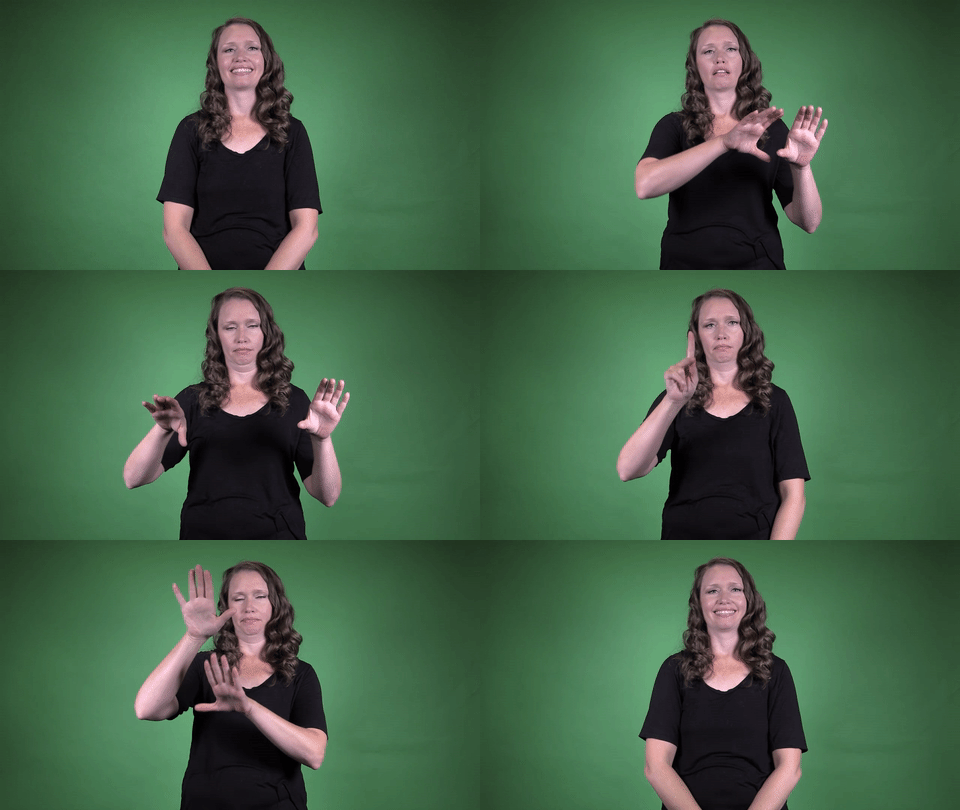
Sign for CAMELBACK MOUNTAIN in ASL

YouTube player

Practice Activities:

A good starting point for practicing the sign for CAMELBACK MOUNTAIN in ASL is to sign each component separately: CAMEL, BACK, and MOUNTAIN. Once comfortable with each sign, combine them smoothly to create the complete name. Stand in front of a mirror to check handshape accuracy and fluidity in transition between the signs.

To build fluency, try practicing the sign five times in a row with consistent timing. Use a timer and sign it once every three seconds. This helps develop muscle memory and increases confidence in using it in conversation. Record yourself signing and compare with videos of native signers for self-assessment.

Incorporate the sign for CAMELBACK MOUNTAIN in ASL into simple sentences like “I hiked CAMELBACK MOUNTAIN,” “CAMELBACK MOUNTAIN is in Arizona,” or “Have you visited CAMELBACK MOUNTAIN before?” Sign the full sentence slowly at first, then build up to conversational speed. Add facial expressions to convey how you felt about the mountain—was it beautiful, difficult to climb, or fun?

Role-play with a partner or in a study group. One person acts as a tourist asking about travel destinations, and the other recommends CAMELBACK MOUNTAIN. Use descriptors like “hot,” “sunny,” “steep,” or “great view.” You can also create a visual story describing a day at CAMELBACK MOUNTAIN: arriving, hiking, spotting a camel-shaped ridge, and enjoying the sunset.

Draw a location map and use it to talk through directions to CAMELBACK MOUNTAIN, using classifiers and directional signs. Practice short presentations about landmarks, including CAMELBACK MOUNTAIN, to build your expressive and receptive skills. Using the sign for CAMELBACK MOUNTAIN in ASL in these varied tasks will strengthen retention and meaningful use in real-life context. ️ ‍♂️

Cultural Context:

Camelback Mountain is a famous landmark located in Phoenix, Arizona. It’s a popular hiking destination and is known for its unique shape, resembling the hump of a kneeling camel. When describing this location in American Sign Language, understanding both the geographical and cultural significance is helpful.

The sign for Camelback Mountain in ASL usually incorporates two key ideas: the concept of a camel and the shape of the mountain itself. In ASL, locations with iconic shapes often get visual or descriptive name signs. For Camelback Mountain, the sign emphasizes the profile of the mountain that looks like a camel’s back. This visual similarity lends itself well to a descriptive ASL sign that reflects its hump feature.

Hiking culture is very strong in the Southwest, and Camelback Mountain is a central part of that. Many residents of Phoenix and tourists alike challenge themselves to hike up either the Echo Canyon or Cholla Trail. The sign for Camelback Mountain in ASL allows Deaf hikers and community members to easily reference this iconic location in conversation.

Many meetups and fitness groups in the Deaf community organize hikes and outdoor adventures. Camelback Mountain is often a featured hike because of its reputation and the physical challenge it offers. A distinct ASL sign for Camelback Mountain builds inclusivity and shared cultural experience in the region’s Deaf community.

Ensuring that the ASL sign for Camelback Mountain captures both the mountain’s physical shape and its importance in local culture makes it more meaningful. The sign helps preserve the way the Deaf community connects with natural landmarks. Signing about locations like Camelback Mountain in ASL brings visibility to Deaf outdoor enthusiasts and highlights their place in Arizona’s active lifestyle scene.

Whether you’re planning to hike Camelback or simply admire its view from afar, knowing the sign for Camelback Mountain in ASL helps create stronger connections. Local Deaf residents use the sign often in sightseeing discussions, directions, and storytelling. As Phoenix continues to grow, the visibility and usage of signs for regional landmarks like this one also increase.

Learning the correct way to sign Camelback Mountain in ASL isn’t just about vocabulary—it’s about honoring both language and place. For ASL users living in or visiting Arizona, this sign makes conversations about local geography smoother and more inclusive. It also supports cultural literacy in ASL, deepening the understanding of how signs can reflect community values and shared spaces.

Integrating the sign for Camelback Mountain in ASL into your conversation opens a broader appreciation of Deaf culture, geography, and the ways landmarks are represented visually

Extended Definition:

The sign for Camelback Mountain in ASL is a location-specific sign that may vary slightly depending on the signer’s familiarity with Phoenix, Arizona. Since Camelback Mountain is a well-known geographic feature, the sign often incorporates classifiers to show its unique shape, which resembles the hump of a camel. Classifier handshapes and directional movement are key to conveying the mountainous terrain in American Sign Language.

In casual conversation among Deaf locals or those familiar with Arizona landmarks, the sign for Camelback Mountain in ASL may be simplified. Someone might use the general sign for “mountain” followed by a camel-like shape or gesture with their hand to indicate the recognizable hump. The iconic silhouette of Camelback makes it a good candidate for a descriptive or visual classifier rather than a strict fingerspelled name.

When teaching the sign for Camelback Mountain in ASL to students or those learning sign language, it’s important to first teach the components: the general sign for “mountain” and optionally how to show or describe a camel’s hump. Some signers may choose to fingerspell C-A-M-E-L-B-A-C-K and then follow with the mountain sign. This method allows for clarity, especially if signing with someone unfamiliar with the area.

Using visual description in ASL is essential for easily understood communication, especially with location-based terminology. The shape of the mountain plays a big role in how Deaf signers choose to represent Camelback Mountain. The ability to depict natural features visually makes ASL ideal for sharing information about places and landmarks.

If you’re looking to include the sign for Camelback Mountain in ASL in educational resources or lesson plans, it’s best to provide both the fingerspelled version and the more visual classifier-based sign. A picture of Camelback Mountain can also help illustrate why the hump feature is important when selecting the classifier. This encourages students to think about how physical features influence sign choices.

Local context also plays an important part in determining if someone will use the sign for Camelback Mountain in ASL regularly. Residents of Arizona or frequent visitors may develop a personalized sign based on the location. When traveling or visiting Phoenix, including this sign in your vocabulary can be useful in communicating with the local Deaf community.

Online ASL dictionaries such as ASLinteractive help make it easier to learn unique signs like the sign for Camelback Mountain in ASL by providing video examples and detailed descriptions. These resources are valuable for both new learners and experienced signers. Understanding how classifiers work and how geography affects signing

Synonyms: Camelback Peak, Camelback Summit, Camelback Butte, Camelback Elevation, Camel Hump Mountain

Educational resources: Find related learning materials in our course bank!

Want more? Check out some of our popular learning activities on the homepage!

Need to look up a sign? Use our highly rated dictionary: https://aslinteractive.com/best-asl-dictionary/

Follow us on tiktok: https://www.tiktok.com/@aslinteractive. More social media links at the bottom of this page!

Long-tail Keywords: what is the ASL sign for camelback mountain, how to sign camelback mountain in american sign language, camelback mountain in sign language

Categories:

tags: Arizona landmarks, Cities, Facilities and other locations/needs, Animals, Vacation

Parameters

*Handshape*:

The handshape used in the sign for CAMELBACK MOUNTAIN in ASL starts with both hands in a bent “B” handshape, representing the ridgeline of the mountain. The dominant hand makes a small hump-like motion over the top, mimicking the camelback shape ⛰️.

This movement visually conveys the iconic shape of Camelback Mountain. The handshape and motion together make the sign for CAMELBACK MOUNTAIN in ASL both clear and geographically symbolic.

*Palm Orientation*:

For the sign for CAMELBACK MOUNTAIN in ASL, the palm orientation typically faces downward during the depiction of the mountain’s shape. Hands form a curved or pointed motion to represent the ridge or hump-like form, with palms angled slightly toward the ground.

When incorporating the camel reference in the sign for CAMELBACK MOUNTAIN in ASL, the dominant hand may have the palm facing sideways or in toward the body, mimicking a hump. The combination of these orientations helps visually create the distinctive outline of the mountain .

*Location*:

The Sign for CAMELBACK MOUNTAIN in ASL is performed in the neutral space directly in front of the chest. This location allows for clear visibility and articulation of both the mountain and camel concepts, often combining the sign for “mountain” with a motion or handshape suggesting a camel’s hump .

Since the Sign for CAMELBACK MOUNTAIN in ASL may include iconic representations, maintaining the sign in this central area ensures expressiveness while allowing space for compound elements. This position makes it easy to mirror the terrain shape and blends linguistic clarity with visual storytelling.

*Movement*:

To show the sign for CAMELBACK MOUNTAIN in ASL, begin by signing CAMEL with your dominant hand in a bent-B handshape, palm facing side, tracing the shape of a camel’s hump in the air . This shows the distinctive curved hump of a camel’s back.

Next, transition into the sign for MOUNTAIN by forming both hands into S-handshapes, touching the knuckles together, then moving upward and outward into bent B-handshapes to show the slope of a mountain ⛰️. The combination clearly symbolizes the visual of Camelback Mountain. The sign for CAMELBACK MOUNTAIN in ASL ties both elements together to reflect its unique shape.

*Non-Manual Signals*:

While signing the Sign for CAMELBACK MOUNTAIN in ASL, the face should reflect a sense of place or geography—raise your eyebrows slightly to show specificity, as if indicating a known location. A slight squint or head tilt can be used to mimic the shape or scale of the mountain itself ️.

Use deliberate eye gaze toward the directional movement of the sign to visually anchor the location. Overall, the facial expression should convey a natural, calm awareness that matches the iconic image evoked by the Sign for CAMELBACK MOUNTAIN in ASL.

*Prosody, Dominant/Non-Dominant Hand*:

The dominant hand forms a slightly curved flat hand (like a hump), while the non-dominant hand stays steady and flat to represent the base. The movement mimics the shape of a camel’s back, rising and falling smoothly. This visual metaphor is key when expressing the sign for CAMELBACK MOUNTAIN in ASL, emphasizing the iconic profile of the mountain ️.

To complete the sign for CAMELBACK MOUNTAIN in ASL, the sign for “mountain” follows directly. Both hands, made into “bent” 5-handshapes, start at shoulder height and move outward and upward diagonally. The dominant hand leads slightly to show the slope and shape of mountainous terrain.

Tips for Beginners:

When learning the sign for CAMELBACK MOUNTAIN in ASL, start by breaking it into manageable parts. CAMELBACK is often fingerspelled, so practice finger fluency to maintain a steady rhythm while spelling each letter. Make sure your hand is clearly visible at shoulder level to improve readability, especially in group or noisy settings.

Next, focus on MOUNTAIN, a common ASL concept sign. Typically, MOUNTAIN is signed by placing both hands palm-down in front of you, then stacking one hand above the other in a rising motion to illustrate the contours of a mountain. Try to keep your movements broad and deliberate to convey the physical shape clearly. Combining the fingerspelled CAMELBACK with the conceptual sign for MOUNTAIN helps create an accurate representation of the location.

A common mistake when practicing the sign for CAMELBACK MOUNTAIN in ASL is rushing the fingerspelling portion. It’s important to remain calm and deliberate, especially with less familiar names. Keep your hand steady and close to your dominant side—don’t let your fingers trail off or bounce around, which can cause confusion.

Another tip: familiarize your audience with fingerspelled city or landmark names. Pausing slightly after completing CAMELBACK will signal that you’re moving on to a conceptual sign like MOUNTAIN. This minor beat gives clarity without breaking the flow of communication .

Recording your own signing in the mirror or on video can highlight areas needing improvement. Check your palm orientation, speed, and non-manual markers—such as raised eyebrows or head tilts—for accuracy. Also, don’t hesitate to ask for real-time feedback from fluent signers or your ASL instructor.

Repetition and muscle memory are key when mastering the sign for CAMELBACK MOUNTAIN in ASL. The more often you practice signing proper nouns with follow-up conceptual signs, the more confident and natural your delivery will become.

Connections to Other topics:

The sign for CAMELBACK MOUNTAIN in ASL connects deeply with geographic and descriptive signs used in visual storytelling. It utilizes the concept of iconic representation, where signs mimic the shape or feature of what they represent—such as mimicking the hump shape of a camel’s back to convey the distinct shape of the mountain. This approach is often used for topographical features like mountains, valleys, or hills that have unique visual identifiers.

In ASL, the sign for CAMELBACK MOUNTAIN also relates to compound signs such as ARIZONA-MOUNTAIN or CITY-MOUNTAIN, where a proper noun is combined with a general location or landscape term to specify a place. This mirrors how classifier usage allows for creative and clear expressions of spatial relationships. In this case, a classifier for the shape of the mountain may be used alongside the sign for MOUNTAIN to emphasize the natural landmark’s iconic profile.

This sign is also a good example of how regional or culturally specific landmarks are introduced in ASL narratives. When introducing unfamiliar terms, a signer might initially fingerspell CAMELBACK and then follow it with the MOUNTAIN sign to establish the complete concept. Once established, the sign can be used in storytelling or giving directions, just like other named locations.

The sign for CAMELBACK MOUNTAIN in ASL shares similarities with how we treat signs for landmarks like DEVIL’S TOWER or HALF DOME. These are often introduced with fingerspelling followed by a descriptive sign that conveys their characteristic shape or feature through classifiers or gestural representation. This layered, creative approach builds a visual vocabulary that allows fluent signers to easily describe landscapes and places.

In conversations about travel, hiking, or living in Phoenix, using the sign for CAMELBACK MOUNTAIN in ASL helps bridge cultural and geographic knowledge, anchoring shared experiences in visual language. This makes it an essential expression for those discussing local identity in the Deaf community.

Summary:

The sign for CAMELBACK MOUNTAIN in ASL is usually expressed through a combination of signs and classifiers that capture the mountain’s unique shape and location. Since CAMELBACK is a specific place name, the sign typically includes either fingerspelling or descriptive classifiers that indicate the mountain’s distinctive humpbacked silhouette. ASL users often rely on visual-spatial storytelling to convey geographic landmarks, making CAMELBACK MOUNTAIN a perfect example of localization in sign.

The most common way to express CAMELBACK, referencing the camel hump-like mountain shape, uses a CL: Bent V or CL: Bent B initialized movement to mimic the twin peaks or curved hump. This visual metaphor helps contextualize the sign when fingerspelling isn’t preferred or widely known. Some signers accompany the shape-based sign with the common sign for MOUNTAIN, which is two flat hands (B-hands) moving outward in a slope to show elevation.

CAMELBACK MOUNTAIN is iconic in Phoenix, Arizona, and has strong ties to local identity and tourism. Its cultural significance adds weight to the choice of sign and motivates users to keep its recognizable form intact. In ASL, signers often combine context, landmark features, and fingerspelling for lesser-known or regional locations to maintain precision.

For example, if a signer is unfamiliar with CAMELBACK MOUNTAIN, they may fingerspell CAMELBACK before proceeding to sign MOUNTAIN. Through repetition and community familiarity, a localized classifier may eventually take the place of or accompany the fingerspelling. This is a common linguistic evolution in ASL, especially for geographical names.

The sign for CAMELBACK MOUNTAIN in ASL is also affected by grammatical topic-comment structure. A signer might establish the mountain as a location using spatial referencing first, then place details about activities, weather, or hiking with subsequent descriptive signs. This fits with ASL’s syntactic norms and enhances communication clarity.

When representing CAMELBACK’s famous humpback shape, signers might use non-manual signals such as raised eyebrows or mouth morphemes to emphasize steepness or grandeur. These additional linguistic tools support a richer, more expressive storytelling experience. This is vital when no universally agreed-upon sign exists, as meaning relies heavily on visual accuracy and clarity.

ASL’s use of space and iconicity plays a central role in conveying the topography of CAMELBACK MOUNTAIN. The mountain’s sandstone ridges and two peaks resemble the silhouette of a resting camel, and this translates beautifully into ASL through visual classifiers. These types of signs reflect ASL’s high visual-spatial modality, essential when describing landmarks.

In educational settings, the sign for CAMELBACK MOUNTAIN in ASL gives Deaf students an opportunity to engage with geography in a visually resonant way. Teachers might introduce the sign using images or topographic maps and then guide students to depict the mountain using classifiers. This pedagogical method strengthens both content learning and ASL fluency.

Culturally, the mountain serves as a sacred site for various Native American tribes, including the Akimel O’odham and the Salt River Pima-Maricopa Indian Community. In ASL translation, context and respect for cultural relevance might prompt inclusion of cultural content or description beyond the geographical form. Interpreters must be sensitive to nuance when facilitating discussion that includes CAMELBACK MOUNTAIN.

The mountain is also a popular hiking destination. Signing about activities like “HIKE” or “CLIMB” in relation to CAMELBACK MOUNTAIN enriches the narrative content. The sign for CLIMB often uses alternating bent-V hands to simulate walking upward on an incline, which can be spatially positioned in conjunction with the mountain’s classifier.

As more Deaf hikers and nature lovers share experiences, the sign for CAMELBACK MOUNTAIN in ASL may evolve through community consensus. This is a common feature of ASL lexicon development, where need, usage, and visibility affect sign adoption and modification. Communities often generate variations until a dominant form wins out through use.

From a linguistic standpoint, this showcases language in action—new signs emerge, old signs adapt, and meaning is negotiated in real time. This highlights the dynamic nature of sign languages relative to community knowledge and shared experience. CAMELBACK MOUNTAIN adds another case study to the adaptive traits of ASL vocabulary.

Related signs include MOUNTAIN, HIKE, CLIMB, DIRT, ROCK, and ARIZONA (often fingerspelled or signed with an “A” brushing down the cheeks). These add layers of semantic content that enrich how one might discuss or describe the mountain. Combining appropriate descriptors enhances fluency and comprehension.

In social media and visual storytelling platforms, Deaf creators often pair the sign for CAMELBACK MOUNTAIN in ASL with video footage of hikes or drone shots of the mountain. This multi-sensory storytelling mirrors the mountain’s grandeur while keeping accessibility

Want more? Check out some of our popular learning activities!

ASL Interactive Resources

ASLInteractive YouTube Channel

Follow us on tiktok: @aslinteractive.com

Follow us on Instagram: aslinteractive

Facebook page: aslinteractive

Facebook group: aslinteractive

LInkedIn: ASL Interactive LLC

Twitter: @ASL_interactive

*Some information on this page is AI-generated. AI can make mistakes. Please check the information.

Sign for CAMELBACK MOUNTAIN in ASL

Responses