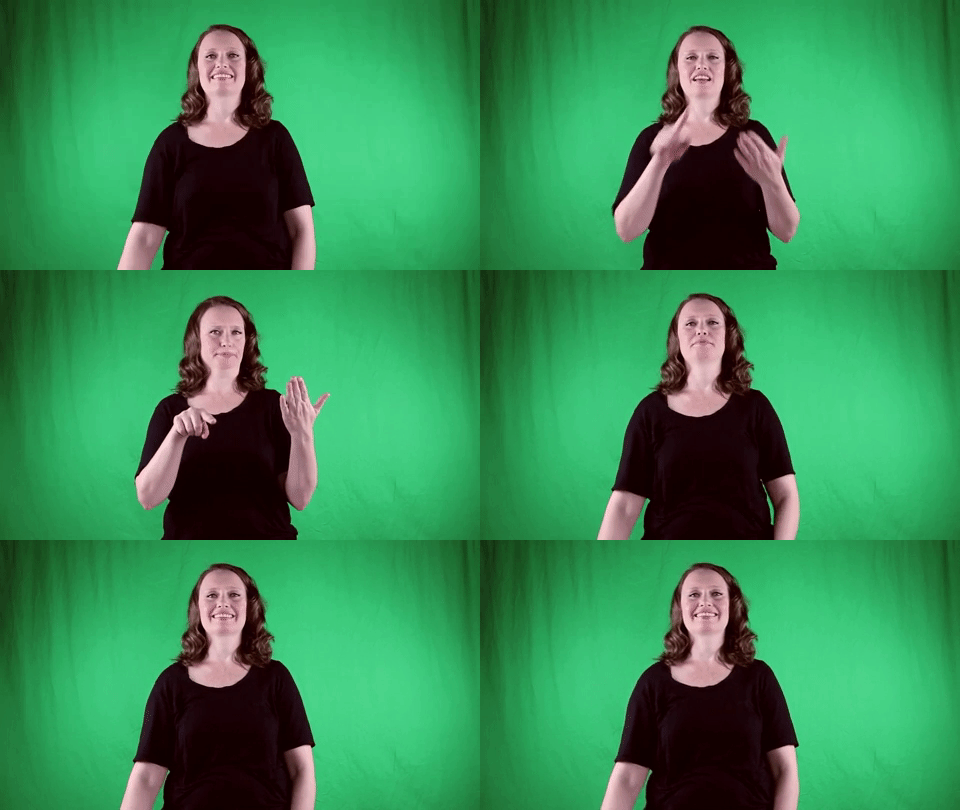
Definition: To decide that an event will not happen.
Sign for CANCEL in ASL

Practice Activities:
Start your practice by signing in front of a mirror, focusing on the handshape and movement of the sign for CANCEL in ASL. Repeat the sign multiple times to gain muscle memory. Watch videos of fluent signers using the sign and mimic their pace and style to build accuracy and fluency.
Incorporate the sign for CANCEL in ASL into simple daily phrases, such as “I CANCEL meeting” or “Appointment CANCEL.” Practice translating sentences from English to ASL, using signs you know along with CANCEL. Create a list of common scenarios where one might use the sign—like canceling a trip, a meal reservation, or an event—and sign them in full sentences.
With a partner, try a question-and-answer exercise. One person asks: “What did you CANCEL yesterday?” and the other replies using a full sentence in ASL. Switch roles and use different contexts: school, work, or home activities. Add speed and fluidity as you get more confident.
Use storytelling as another method to practice. Create a short story that includes a cancelled event—like planning a concert trip that gets interrupted by bad weather. Use the sign for CANCEL in ASL every time the theme of the story calls for it. Keep retelling the story, first slowly, then with more natural flow.
Play interactive games where one person acts out a plan and the other has to sign CANCEL at the right time during the plan. This builds understanding of when and why to use the sign appropriately in context. These activities will reinforce both individual use and contextual understanding of the sign for CANCEL in ASL.
Cultural Context:
Understanding the sign for CANCEL in ASL requires recognizing how Deaf culture often visually frames concepts. In American Sign Language, the sign for CANCEL is not just about stopping events or deleting mistakes—it also communicates intent, responsibility, and timing. In Deaf conversations, the context makes this sign more layered than it might seem in English.
When someone uses the sign for CANCEL in ASL, it can refer to canceling plans, appointments, or even taking something back. The meaning aligns closely with how the Deaf community values direct and clear communication. Transparency and respect for others’ time and expectations influence how and when the sign is used.
Deaf culture tends to prioritize visual and timely communication. So when the sign for CANCEL in ASL is used, it’s often paired with explanations or additional signs that make things clear. For example, if an event is being canceled, the signer might use expressions and signs to show regret or explain why, preventing misunderstanding.
Nonverbal cues like facial expressions play a big role when signing CANCEL. A furrowed brow or a shake of the head can shift the meaning or emotional tone, signaling disappointment, urgency, or even relief. This highlights how meaning in ASL is constructed through both hand movements and visual expression.
In school or work settings, the sign for CANCEL in ASL might be used when a class is dismissed, an assignment is retracted, or a meeting is removed from the schedule. This use helps emphasize how schedule changes are communicated visually and responsibly within the Deaf community. It reinforces the importance of community awareness and shared understanding.
There is also a social dimension to using the sign for CANCEL in ASL. If someone cancels plans multiple times, the consistency of using this sign may reflect patterns of behavior that are noticed in Deaf spaces. Continued cancellations without context might be seen as rude or dismissive, especially in close-knit communities that value face-to-face interaction.
The sign for CANCEL in ASL is also used in digital contexts, such as when erasing a mistake or undoing something on a screen. This reflects how ASL evolves with technology use in daily life. Fingerspelling and related signs can extend the meaning to match the modern uses of “cancel” in English, whether that’s a canceled file or a canceled subscription.
Deaf culture honors directness, so the sign for CANCEL in ASL supports that approach. It’s not just about opting out—it can reflect setting boundaries, changing plans thoughtfully, or correcting errors in a clear manner. The sign
Extended Definition:
The sign for cancel in ASL is a useful and frequently used sign in daily conversation. It represents actions such as deleting, erasing, revoking, or stopping something from happening. This sign can be used in a variety of contexts, whether you’re making an appointment, ordering something, or changing your plans.
To produce the sign for cancel in ASL, use your index finger like a writing tool and draw an X shape on the palm of your non-dominant hand. It visually mimics the idea of crossing something out, similar to how someone might cancel a check or mark out a mistake. This movement symbolizes the idea of stopping or undoing an agreement or action.
The sign for cancel in ASL can be used when canceling events like meetings, classes, or social plans. For example, if a class gets called off due to weather, the teacher might announce it using the sign for cancel in ASL. It’s also commonly used when referring to subscriptions, memberships, or plans that someone decides to end.
In a more abstract sense, the sign for cancel in ASL can also symbolize rejecting an idea or withdrawing permission. For instance, if someone changes their mind after agreeing to something, this sign communicates that the decision is no longer valid. It marks the reversal of a previous choice or intention.
This sign is practical for both formal and informal settings. Whether in a school, workplace, or casual conversation, the concept of canceling something is universally needed. ASL users become very familiar with this term due to its broad application and consistent use.
Learning how to use the sign for cancel in ASL improves conversational clarity. It helps convey time-sensitive or urgent changes efficiently. Especially when communicating through video calls or in noisy environments, this visual sign becomes even more valuable.
The sign for cancel in ASL also gives insight into how the Deaf community expresses digital and modern concepts. For example, someone might sign cancel when talking about deleting a text message or clearing a notification. It adapts well to new technology-based situations while retaining its original core meaning.
Developing a clear understanding of how and when to use the sign for cancel in ASL offers benefits for students, interpreters, and casual learners alike. It supports smoother communication and helps avoid misunderstandings in both English and ASL contexts. Being confident with this sign enhances your ability to express a range of cancellations, both spontaneous and planned.
Remember that facial expressions matter when using this sign. A serious or disappointed look can emphasize the reason
Synonyms: void, revoke, annul, terminate, invalidate
Educational resources: Find related learning materials in our course bank!
Want more? Check out some of our popular learning activities on the homepage!
Need to look up a sign? Use our highly rated dictionary: https://aslinteractive.com/best-asl-dictionary/
Follow us on tiktok: https://www.tiktok.com/@aslinteractive. More social media links at the bottom of this page!
Long-tail Keywords: what is the sign for cancel in ASL, how do you sign cancel in ASL, cancel in American Sign Language
Categories:
tags: Cancel, Commands, Negation, Verbs, Everyday Activities
Parameters
*Handshape*:
The handshape for the sign for CANCEL in ASL uses the dominant hand in the index finger (1-handshape). The finger moves in a quick motion to draw an “X” or mark a spot on the palm of the non-dominant open hand, which faces upward.
This gesture mimics the action of crossing something out or erasing a mistake. The handshape plays a critical role in visually expressing the concept behind the sign for CANCEL in ASL. ️
*Palm Orientation*:
In the sign for CANCEL in ASL, the palm orientation is open and generally faces downward or slightly inward during the motion. The dominant hand uses the index finger to draw a short X-shape on the palm of the non-dominant hand, which is open and facing upward or slightly diagonal.
Throughout the sign for CANCEL in ASL, the non-dominant palm remains steady, while the dominant index finger lightly traces over it with precision. This palm orientation helps visually represent the concept of canceling or marking out something.
*Location*:
The sign for CANCEL in ASL is typically made in the neutral space in front of the body, slightly above waist level. The non-dominant hand is held flat, palm facing up, representing a surface or paper, while the dominant hand uses the index finger to draw an “X” shape across the palm.
This neutral area allows for clear visibility and contrasts with the movement of the dominant hand. The sign for CANCEL in ASL is effective in conveying the concept of deletion, correction, or cancellation.
*Movement*:
To perform the sign for CANCEL in ASL, start with your non-dominant hand held flat, palm facing up, as if presenting a paper surface. Using your dominant hand, form the tip of the index finger and make a quick “X” mark across the flat palm, mimicking the action of canceling or crossing something out ✖️.
The movement is small and deliberate, often made once or twice for clarity. The sign for CANCEL in ASL visually represents editing, erasing, or negating something previously written.
*Non-Manual Signals*:
When demonstrating the sign for CANCEL in ASL, your facial expression should show displeasure, annoyance, or correction—such as a slight frown or a firm look. Eyebrows may pull together slightly to enhance the intention behind the action.
The sign for CANCEL in ASL often carries a tone of invalidation or withdrawal, so your face should match that sentiment. Using appropriate non-manual signals helps clearly convey the purpose of canceling or crossing something out.
*Prosody, Dominant/Non-Dominant Hand*:
The sign for CANCEL in ASL uses the dominant hand to draw an X on the palm of the non-dominant hand, as if crossing out a mistake. The non-dominant palm faces up with fingers extended. The dominant index finger, pointing down, moves smoothly to trace an X ️ on the open palm, mimicking correction or cancellation.
This motion effectively captures the meaning behind the sign for CANCEL in ASL. It’s often used when referencing corrections, voids, or negations in conversation.
Tips for Beginners:
When learning the sign for CANCEL in ASL, start by practicing the handshape carefully. This sign typically uses the dominant hand’s index finger to draw an “X” motion across the palm of the non-dominant flat hand. Ensure both hands stay steady and the movement is clean—this helps convey the message clearly ️.
One common mistake beginners make when learning the sign for CANCEL in ASL is making the X-shape too vague or rushing through the motion. It’s important to keep the movement deliberate and controlled so it looks intentional. Watch your pacing—fast motions may cause the sign to be misunderstood.
Practicing in front of a mirror is a great way to refine your technique. Make sure your facial expression aligns with the concept of cancellation or rejection, which can help reinforce the meaning of the sign. In ASL, non-manual signals are as crucial as hand movements for full communication .
Another helpful tip is to practice the sign for CANCEL in ASL in context. For example, use it in phrases like “cancel the plan” or “the event is canceled.” This makes the sign more memorable and helps you internalize how to use it naturally in conversation.
Avoid using too much arm movement—focus on keeping the motion centered and small. Exaggerated moves can make the sign look sloppy or distract from its meaning. Keep your hands relaxed but purposeful.
Use ASL video dictionaries or trusted online signing platforms to compare your sign to that of native signers. Repetition and exposure are key, so aim to use the sign for CANCEL in ASL during everyday dialogues or practice sessions. Stay consistent and review frequently to keep it fresh in your memory.
Connections to Other topics:
The sign for CANCEL in ASL is conceptually connected to signs such as ERASE, DELETE, and REMOVE. These signs share the idea of negating or eliminating something previously established, making them semantically related. Learners can better understand the sign for CANCEL in ASL by comparing it with these similar signs, especially in academic or technological contexts.
In conversation, the sign for CANCEL in ASL can be incorporated into compound ideas like CANCEL-APPOINTMENT or CANCEL-MEETING, where contextual classifiers or directional verb incorporation can be used. For example, one might sign MAKE-APPOINTMENT and then follow with CANCEL, reinforcing the sequence of events. This naturally helps learners to understand temporal context and causality in ASL grammar.
Another useful connection is with the sign for MISTAKE or WRONG, especially in situations where something must be canceled due to an error. While CANCEL communicates intentional dismissal, MISTAKE suggests inadvertent need for cancelation. Awareness of such distinctions helps signers choose between signs for accurate communication.
In educational or business settings, when discussing schedules or plans, signs like PLAN, RESCHEDULE, and POSTPONE frequently co-occur with the sign for CANCEL in ASL. For example, the sign sequence CANCEL-PLAN or NEED-CANCEL-MEETING shows how compound meaning is constructed. This understanding emphasizes how signs interact based on context and communicator intent.
The handshape in the sign for CANCEL in ASL resembles a written X on the palm, linking it to the idea of “crossing out” in English-speaking contexts. This visual metaphor aligns with signs like X, MARK, or SIGNATURE, illuminating how written concepts influence ASL vocabulary. Learners can expand their recognition of visual symbolism in signed expressions through such associations.
Summary:
The sign for CANCEL in ASL typically involves drawing an X on the palm of the non-dominant hand using the index finger of the dominant hand. This motion mimics the act of crossing something out, resonating with the common written gesture for negation or invalidation.
This sign visually represents negation, deletion, or invalidation. Just as one would cross out a word on paper, the sign conveys the idea of removing or withdrawing something previously agreed upon or intended.
The palm of the non-dominant hand is usually held flat and faces upward. The index finger of the dominant hand traces a small X or cross shape over this flat palm.
This sign carries strong visual-motor correlation, enhancing its ability to be quickly recognized and understood by both signers and non-signers. The clear visual metaphor gives the sign cognitive accessibility across language barriers.
The cultural weight of the sign for CANCEL in ASL extends into various domains of American Deaf life. In group settings or formal discussions, signing CANCEL can indicate cancellation of events, plans, or obligations without needing extended explanation.
Grammatically, the sign is a verb and functions similarly to its English counterpart. It is generally used with direct objects, such as cancel class, cancel meeting, or cancel appointment.
It also aligns with ASL subject-verb-object (SVO) or topic-comment word orders. For example, someone might sign CLASS CANCEL to express that the class has been canceled, using topic-comment structure.
Expanding the usage, the sign fits into broader negation patterns in ASL. It can be used with expressions like NOT or NONE to reinforce levels of rejection or withdrawal.
There are related signs such as DELETE or ERASE that bear some conceptual and physical similarities to the sign for CANCEL in ASL. These signs can interchange in casual contexts, but CANCEL usually carries a more formal or planned sense of withdrawal.
The sign is often employed in classroom settings, administrative contexts, and even in expressive storytelling functions. For instance, a person relating a tale might show a canceled vacation as part of a larger narrative arc.
Because ASL is a visual-spatial language, the motion in the sign mirrors the act of removal, linking the physical movement directly with conceptual meaning. This connection grounds the sign linguistically within the embodied nature of ASL communication.
Within applied linguistics, the sign for CANCEL in ASL exemplifies how non-verbal gestures can solidify language through shared cultural references and familiar physical actions. Signing an X on the palm becomes an intuitive way to convey the abstraction of cancellation.
Functionally, this sign is also employed in real-time digital or interpersonal interactions. If someone is video-signing and wants to stop a planned step — like ending a shared virtual meeting early — they might sign CANCEL to communicate the intent with clarity and brevity.
This efficiency reflects ASL’s capacity for immediacy and precision in time-sensitive or emotionally nuanced exchanges. CANCEL could express disappointment, urgency, or a matter-of-fact statement depending on facial expression and contextual cues.
Emotionally, the sign can carry resonance. A heavy, slow drawing of the X might suggest reluctance or sadness in the cancellation. Meanwhile, a briskly made sign could indicate sudden urgency or a decisive end.
Facial expressions accompanying the sign can range widely, from neutral to frowning or even eyebrow tilts. These expressions further guide interpretation and add layers of meaning that go beyond the lexical motion.
In broader themes, the sign for CANCEL in ASL touches on decision-making, self-agency, boundaries, and shifting commitments. In Deaf culture, where communication is a right and resource, the ability to visually and clearly retract consent or plans is vital.
Technology and design have begun reflecting signs like CANCEL in automated inputs and interfaces made for Deaf users. The simplicity of signing cancel on a touchscreen, for instance, is forming new intersections between language and assistive tech.
The sign is also often compared and contrasted with fingerspelled (FS) CANCEL in formal contexts. In some cases, like legal or academic settings, FS-CANCEL might be preferred to emphasize clarity or match registered terminology.
When speaking about events or plans being tentatively uncertain, some signers may blend CANCEL with future tense markers or modal expressions. This creates nuanced meaning such as might cancel or likely to cancel.
Within conversational ASL, signs companioning CANCEL include REJECT, POSTPONE, CHANGE, or STOP. All of these form a network of related concepts that help express nuanced decisions or transitions in intent.
Phonologically, the sign for CANCEL in ASL involves handshape, movement, and location parameters that work harmoniously. The use of the index finger doing a sharp, brief movement emphasizes determination or clarity of withdrawal.
Variations in dialects or regional ASL usage may modify this sign slightly. Some might use a more arc-like motion or smaller X, but the intention and foundational form remain consistent.
This consistency helps preserve mutual intelligibility among ASL users across regions, despite
Want more? Check out some of our popular learning activities!
ASL Interactive Resources
ASLInteractive YouTube Channel
Follow us on tiktok: @aslinteractive.com
Follow us on Instagram: aslinteractive
Facebook page: aslinteractive
Facebook group: aslinteractive
LInkedIn: ASL Interactive LLC
Twitter: @ASL_interactive
*Some information on this page is AI-generated. AI can make mistakes. Please check the information.


Responses