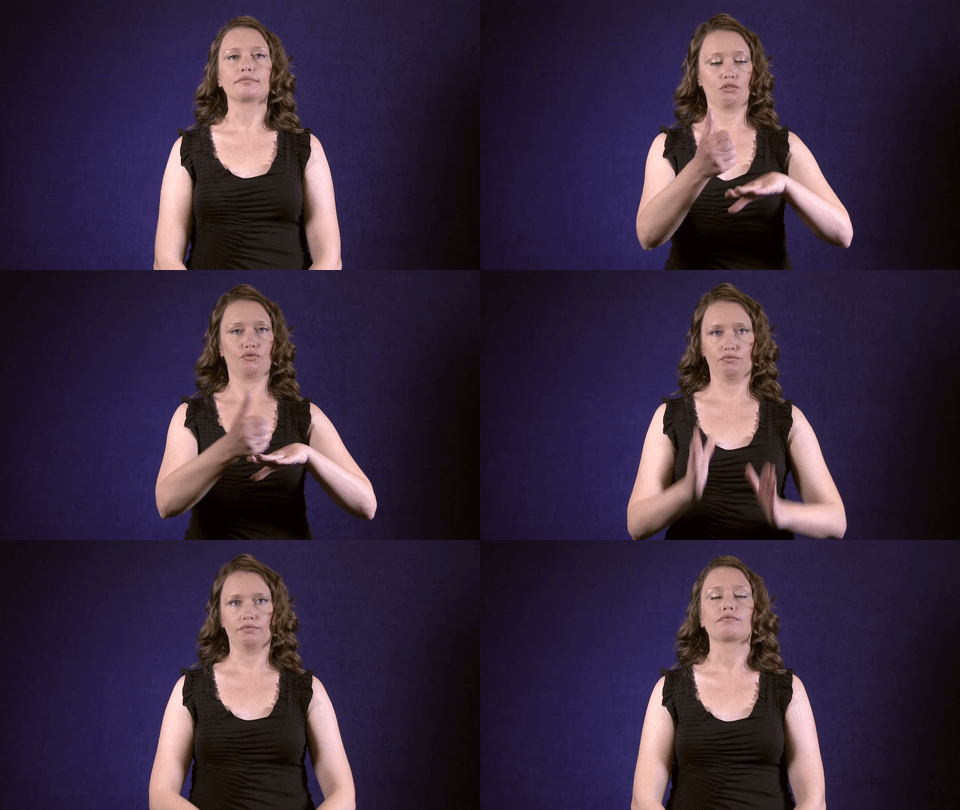
Sign for CARPENTER in ASL | 🪚 ASL Dictionary

Definition: A person who makes and repairs wooden objects.

Sign for CARPENTER in ASL

YouTube player

Practice Activities:

To build fluency with the sign for CARPENTER in ASL, start by practicing the sign in isolation in front of a mirror. Repeat the movement several times, focusing on the proper non-manual markers and handshape. You can record yourself signing to check accuracy later or compare with a fluent signer.

Next, use the sign for CARPENTER in ASL in short sentences. Examples include: CARPENTER BUILD HOUSE, CARPENTER USE HAMMER, or MY UNCLE CARPENTER. Practice both expressive (signing) and receptive (understanding) forms with a partner or by watching video clips that include the sign. Try signing the sentences with varying emotions to build confidence in more natural conversation.

For more practice, create a list of related vocabulary like tools, construction sites, buildings, or professions. Sign these words and combine them into short narratives. For example, tell a story about a carpenter building a treehouse, or describe a day in the life of a carpenter. This helps reinforce context and vocabulary expansion.

Partner activities work well at this stage. Take turns describing a profession while the other person guesses using only signs. When you use the sign for CARPENTER in ASL, include supporting signs like WOOD, BUILD, or NAIL to provide context. This encourages fuller sentence development and improves receptive understanding.

You can also draw from real life. Think about who you know that might be a carpenter or where you have seen one. Then, sign a few sentences talking about that person or situation. Adding personal connection improves recall and fluency.

End each practice session with a self-assessment to check if you’re using the correct handshape and motion for the sign for CARPENTER in ASL. Hearing feedback from others or watching instructional videos can further refine your skills.

Cultural Context:

In Deaf culture, showing respect for professions through American Sign Language is an important aspect of communication. The sign for carpenter in ASL reflects both the identity of the profession and the hands-on nature of carpentry work. This sign connects to cultural values, emphasizing the visual and physical labor that carpenters perform.

The sign for carpenter in ASL typically uses classifiers that resemble the action of sawing or hammering. These iconic movements make the sign easy to understand, especially in a cultural community that relies on visual expression. Because ASL is a rich, visual language, many signs for professions, including the sign for carpenter in ASL, are deeply rooted in practical imagery.

Deaf carpenters have been part of the skilled labor force for many generations. Many members of the Deaf community have worked as carpenters, builders, and manual laborers, making the sign for carpenter in ASL a relevant and respectful representation of their skills. The deaf community values recognition through accurate and meaningful signs, and this sign is no exception.

Throughout history, trades like carpentry represented economic independence for many Deaf individuals. This adds cultural depth and meaning to the sign for carpenter in ASL. By preserving these signs in digital dictionaries, we honor the experiences of Deaf professionals and support language access for all learners.

In Deaf schools and technical programs, carpentry is often one of the vocational skills taught. This reinforces the everyday use and importance of the sign for carpenter in ASL among students and educators. The transmission of this sign from teacher to student is a strong example of cultural and linguistic sharing at work.

ASL is not just a translation of English—each sign holds its own cultural and visual meaning. The sign for carpenter in ASL showcases how the Deaf community creates linguistically accurate terms based on real-world experience. When using the sign, context is key, as it may vary slightly depending on region or signing style.

Sign language interpreters often use the sign for carpenter in ASL in educational or professional settings when discussing careers. Understanding these signs adds depth and clarity to conversations around job titles and workplace roles. This supports inclusive communication for Deaf individuals in any setting ️.

The vocabulary used in ASL, including the sign for carpenter in ASL, highlights the adaptability of the language. It can evolve with society while staying connected to traditional forms and meanings. This highlights how ASL is both modern and deeply cultural.

Deaf culture emphasizes the use of ASL as a primary form of identity

Extended Definition:

The sign for carpenter in ASL represents a skilled trade that involves building or repairing wooden structures. In American Sign Language, this sign visually mimics the motion of using a hammer, which is often associated with a carpenter at work. It’s a clear and iconic depiction that helps convey meaning even to those just beginning to learn ASL.

To make the sign for carpenter in ASL, you begin by signing “wood” and then follow it with the sign for “person.” The “wood” sign is made by mimicking a cutting or sawing motion with one hand placed flat and the other hand moving across it, imitating sawing a piece of wood. When followed by the “person” sign, which uses both hands to represent a human figure, the full phrase becomes “wood person” – a visual and conceptual match for carpenter.

ASL is a visual-spatial language, and the sign for carpenter in ASL is a great example of how descriptive gestures are used. Many occupational signs in ASL follow this same structure: a noun or related action followed by the person sign. This method helps learners understand how to build new vocabulary by using familiar components.

The sign is intuitive once you recognize the importance of hands-on labor in the role of a carpenter. It may also be useful to pair the sign with facial expressions or context clues while communicating in ASL, especially to reinforce the idea of someone working with tools or wood. Non-manual signals can help add emphasis or clarity to the sign, especially in longer conversations.

The sign for carpenter in ASL is often used in conversations about careers, construction, skilled trades, or home improvement. You’ll see the term used in job settings, educational discussions, and day-to-day conversations about building or repairing things. It’s helpful for both deaf and hearing individuals who interact in the workplace or community where trades like carpentry are common.

When teaching the sign for carpenter in ASL, it’s helpful to show examples of it being used in full sentences. This allows learners to see how it fits grammatically into ASL syntax. For instance, phrases like “My father is a carpenter” give learners a real-world application of the sign.

️ In some cases, regional variations may exist in how the sign for carpenter in ASL is performed. These differences are a normal part of language development and often reflect local influences or evolving trends in the community. It’s always good practice to observe how native ASL users in your area sign specific

Synonyms: builder, woodworker, craftsman, joiner, cabinetmaker

Educational resources: Find related learning materials in our course bank!

Want more? Check out some of our popular learning activities on the homepage!

Need to look up a sign? Use our highly rated dictionary: https://aslinteractive.com/best-asl-dictionary/

Follow us on tiktok: https://www.tiktok.com/@aslinteractive. More social media links at the bottom of this page!

Long-tail Keywords: what is the ASL sign for carpenter, how do you sign carpenter in ASL, carpenter in American Sign Language

Categories:

tags: Activities, Employment status, People, Car descriptions, Tools

Parameters

*Handshape*:

The dominant hand in the sign for CARPENTER in ASL uses a flat B handshape, representing a saw. The non-dominant hand, also in the B handshape, is held palm-down to symbolize a piece of wood or a surface being worked on. The dominant hand performs a sawing motion across the non-dominant hand.

This deliberate and clear handshape mimics the motion of a carpenter cutting wood. The sign for CARPENTER in ASL visually references basic carpentry work, making the meaning easily recognizable. ️

*Palm Orientation*:

The palm orientation for the sign for CARPENTER in ASL begins with the dominant hand holding an imaginary saw, palm facing downward, as if sawing across the non-dominant flat hand. The non-dominant hand is held palm down and horizontal, representing a piece of wood.

In the sign for CARPENTER in ASL, the motion mimics a sawing action, emphasizing craftsmanship. The positioning keeps both palms generally facing downward, creating a clear visual metaphor for carpentry work.

*Location*:

The sign for carpenter in ASL is located primarily in the neutral space in front of the body, around chest level. One hand represents a flat surface, like a piece of wood, while the other mimics a tool such as a hammer or saw making contact with it. This location reflects the typical working space of a carpenter, helping visually convey meaning.

In the sign for carpenter in ASL, placement in the horizontal plane mimics real-world carpentry tasks. The use of this mid-body area keeps the sign clear and easy to see, aligning well with how most manual profession signs are based near the torso where hands typically work.

*Movement*:

The movement for the sign for carpenter in ASL mimics the action of sawing wood. The non-dominant hand is held flat and horizontal, palm facing down, representing a plank of wood. The dominant hand forms an “S” or gripping shape as if holding a saw, and makes a back-and-forth sawing motion across the edge of the non-dominant hand.

This gesture visually represents the concept of carpentry through action. The sign for carpenter in ASL is iconic, illustrating the function of a carpenter using clear, descriptive movement .

*Non-Manual Signals*:

When using the sign for CARPENTER in ASL, the non-manual signals should reflect the concept of craftsmanship or construction work. Maintain a neutral to slightly focused facial expression, as if demonstrating seriousness or concentration related to the profession. Slight eyebrow furrowing can help convey the idea of specificity or occupation.

Keeping good eye contact and a composed demeanor supports the meaning behind the sign for CARPENTER in ASL. Avoid exaggerated emotions unless contextually necessary, such as storytelling or emphasis.

*Prosody, Dominant/Non-Dominant Hand*:

The sign for CARPENTER in ASL typically mimics the motion of sawing with a dominant hand. The dominant hand, shaped like a flat B-hand, moves back and forth on the flat palm of the non-dominant hand, representing a piece of wood. This simulates the action a carpenter makes when using a hand saw .

In the sign for CARPENTER in ASL, the non-dominant hand remains stationary and horizontal to represent the wood. The dominant hand does the movement, emphasizing the concept of skilled manual work. This visual metaphor helps clearly convey the profession in a culturally appropriate way.

Tips for Beginners:

When learning the sign for CARPENTER in ASL, begin by familiarizing yourself with the two-part structure of the sign. This sign typically combines the sign for WOOD or SAW followed by the agent marker (a downward movement of flat hands), which indicates a person who does a certain job. Practicing both components separately can help you perform the combined motion with more confidence.

Don’t rush the motions, especially the first part. The sign for cutting or sawing wood requires proper handshapes and directional movement to convey the correct meaning. Beginners often exaggerate the movement or confuse it with similar signs like CUT or KNIFE. Use deliberate, smooth motions and always double-check your hand orientation.

Facial expressions play a supporting role in conveying clarity in ASL, even for job-related signs. Although the sign for CARPENTER doesn’t rely heavily on exaggerated expressions, maintaining a neutral and confident facial expression can ensure the sign isn’t misinterpreted as something else. Avoid overly stiff or robotic movements—natural ease comes with practice.

A helpful trick is to watch native signers use the sign for CARPENTER in ASL across different contexts. Videos from reputable ASL learning channels or live observation of Deaf communities can provide context, help with timing, and solidify the flow between the two parts of the sign.

Practice in a mirror to align your positioning, especially when using the space in front of your body accurately. Learning how far apart your hands should be during the “sawing” motion will help make the sign more recognizable. Lastly, ensure both elements of the sign happen smoothly in sequence. The key to mastering the sign for CARPENTER in ASL is thoughtful repetition and visual feedback.

sign for CARPENTER in ASL, how to sign CARPENTER job in ASL, ASL sign CARPENTER, CARPENTER occupation sign ASL, sign for woodworker in ASL

Connections to Other topics:

The sign for CARPENTER in ASL draws heavily from classifier and occupational signs, linking it to broader themes in job-related vocabulary. It typically incorporates the sign for WOOD or BOARD, followed by a motion that mimics sawing, showing the connection between the trade and its tools. This method of showing occupation through mimicking action is also seen in signs like PLUMBER, ELECTRICIAN, and MECHANIC, which all integrate tools or job-specific actions into the sign structure.

By using visual connections to tools and materials, the sign for CARPENTER in ASL helps learners associate physical movements with specific roles. This approach works well in other contexts, such as the sign for ARTIST or PAINTER, which incorporates the flat object used (a canvas or board) and a drawing movement. It reinforces how classifiers and descriptive motion build meaning.

In compound signs, the sign for CARPENTER in ASL can be expanded into phrases like HOUSE + CARPENTER to refer to a construction worker focused on residential buildings. Similarly, connecting CARPENTER to SCHOOL (as in CARPENTER SCHOOL or TRAINING) can indicate vocational education. This mirrors how ASL often builds larger ideas from core noun signs combined with context-related additions.

Understanding the sign for CARPENTER in ASL also opens pathways to discussing tools, such as SAW, HAMMER, or NAIL, which are signed individually but often paired with occupational signs. These combinations train learners to build nuance and specificity when communicating about skilled trades. Furthermore, the roots of the sign for CARPENTER reinforce how ASL incorporates pantomime and visualization, a concept applicable to many other signs related to professions and daily activities.

This sign also serves as an introduction to spatial grammar and depicting verbs when explaining how a carpenter builds, assembles, or alters objects. It encourages learners to think dynamically about how movement and space contribute to meaning in ASL.

Summary:

The sign for CARPENTER in ASL combines two concepts into one clear visual. It involves mimicking the motion of using a saw, followed by a movement that represents a person. This compound sign reflects both the tool and the worker behind it.

To form the sign, start with one hand flat sideways, palm down—this represents a board or plank. With your dominant hand shaped like an “S” or holding an invisible saw, move it back and forth across the flat hand’s edge, simulating a sawing motion.

After the sawing action, follow it with the sign for PERSON or AGENT. You complete this by forming two flat hands and sliding them downward in a straight line at your sides. The full sequence expresses the profession, emphasizing action and identity.

The sign for CARPENTER in ASL is built on the broader principle of compound signs. Many profession-related ASL terms combine an object or action with the PERSON sign. This helps reduce ambiguity and efficiently communicates specific job titles.

This method of sign formation is commonly used in other professions, such as TEACHER or DOCTOR. The tools or actions associated with the role lead into the sign for a person, grounding the abstract role in its physical context.

Culturally, the sign for CARPENTER in ASL offers insight into how Deaf culture values clear, visual narrative. The sign allows interpreters and signers to convey profession-based identity and also respect the manual labor heritage associated with carpentry.

Historically, carpentry has deep connections in American labor tradition. The sign for CARPENTER in ASL not only identifies the profession but often gestures toward pride in craftsmanship. It resonates strongly in working-class cultural narratives.

An interesting aspect of the sign is the incorporation of mime, which is an embedded trait of many ASL signs. The visual mimicry of cutting wood appeals to natural gesturing tendencies and reinforces the sign’s meaning intuitively.

The linguistic structure of the sign draws from both spatial and classifier principles in ASL. The non-dominant hand acts as a placeholder or surface, while the dominant hand becomes an instrument. This visual-gestural grammar enriches the sign’s clarity.

In ASL morphology, creating a compound sign like CARPENTER involves blending semantics and movement. This process creates signs that are efficient yet rich in meaning. It also makes them easier to remember and use organically in conversations.

In applied linguistics, signs like CARPENTER are excellent examples of multimodal communication. The accuracy of visual storytelling is key. It reflects the way spatial-temporal cues and body enactment are integral to ASL’s structure.

The use of tools in sign formation reflects a conceptual metaphor often seen in ASL—tools representing professions. This aligns with theories in cognitive linguistics where the embodiment of tools or practices highlights identity.

Common associated signs include HAMMER, BUILD, WOOD, and WORK. These help connect ideas during more complex narratives. Using them in context with the sign for CARPENTER in ASL gives depth to both conversation and storytelling.

In an educational context, teaching the sign for CARPENTER offers more than vocabulary—it introduces students to how professions are visually inflected in ASL. It sparks discussions on careers, labor, and tool-based jobs.

The sign’s structure has room for variation depending on regional dialects. Some people may use slightly different movements for the sawing motion, reflecting the diversity within the Deaf community. Visual approximations are still mutually understood.

In conversation, the sign for CARPENTER in ASL is often used alongside gestures indicating the building of a house, creating furniture, or specific project types. It blends seamlessly into broader themes of creation and physical skill.

With the growth of Deaf entrepreneurship, especially in trades, this sign finds relevance in business contexts. It is a term that is both work-specific and identity-anchored. Understanding and using it correctly fosters communication in vocational settings.

In media, interpreters may use the sign for CARPENTER in ASL to clarify professions being discussed in news stories or documentaries. Its immediate visual clarity makes it ideal for rapid comprehension. Media literacy in ASL relies on such visually rich terms.

The sign is also important in interpreting biblical references or religious stories. CARPENTER is often used when referencing historical or religious figures, notably Jesus Christ. This adds spiritual nuance when interpreting sermons or religious texts.

When discussing workplace injuries, insurance, or union representation in ASL-using contexts, having a strong visual sign like this supports discourse involving workers’ rights. It becomes a symbol of labor and community strength.

From a narrative perspective, the sign supports storytelling about career progression and mentorship. It helps frame stories around learning the trade, apprenticeships, and intergenerational skill passing. This is meaningful in educational and social settings.

Pedagogically, using the sign in roleplay or career-themed ASL classes promotes engagement. Students benefit from acting out practitioner roles, enhancing memorization and understanding. It highlights how language

Want more? Check out some of our popular learning activities!

ASL Interactive Resources

ASLInteractive YouTube Channel

Follow us on tiktok: @aslinteractive.com

Follow us on Instagram: aslinteractive

Facebook page: aslinteractive

Facebook group: aslinteractive

LInkedIn: ASL Interactive LLC

Twitter: @ASL_interactive

*Some information on this page is AI-generated. AI can make mistakes. Please check the information.

Sign for CARPENTER in ASL

Responses