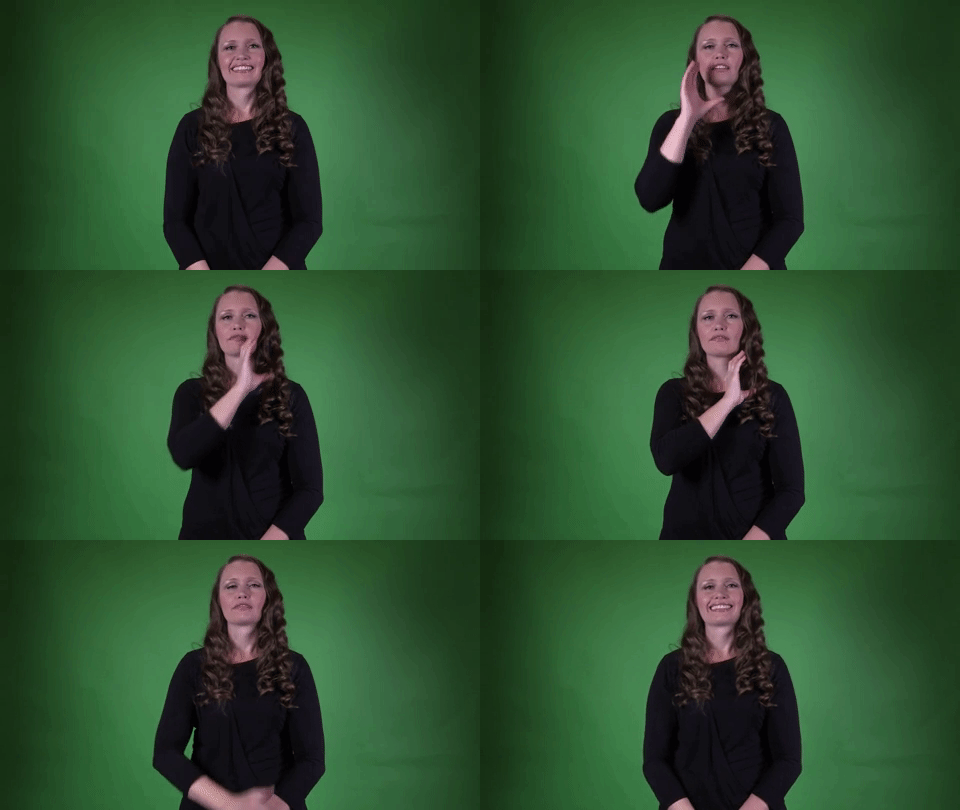
Sign for CHANDLER in ASL | 🌆 ASL Dictionary

Definition: A city in Arizona.

Sign for CHANDLER in ASL

YouTube player

Practice Activities:

To practice the sign for CHANDLER in ASL, begin with fingerspelling drills to build handshape fluency and speed. Since CHANDLER is typically fingerspelled, use a mirror and practice each letter in the name while maintaining a natural rhythm. Say the letters silently as you sign to help with muscle memory.

Use flashcards with different names and pull one at random to fingerspell, focusing particularly on CHANDLER to increase recognition. Set a timer and challenge yourself to fingerspell the name within a specific time limit to improve fluency under pressure. You can also record yourself signing the name and compare it with videos of fluent signers to catch and correct errors.

Incorporate the sign for CHANDLER in ASL into short introduction sentences such as “MY FRIEND NAME CHANDLER” or “CHANDLER LIVE WHERE?” Practice adding facial expressions and appropriate pauses between signs to make the sentences fluid and natural. Try replacing CHANDLER with other names, then switch back to reinforce memory.

For a partner activity, have one person describe different fictional people, inserting the sign for CHANDLER to identify them. Example: “CHANDLER, HE TALL, BROWN HAIR, GO SCHOOL NEAR HERE.” The other person draws or describes the character as comprehension practice. Use a similar script to create your own mini-story about someone named Chandler to present in class or to friends.

To expand beyond names, create a story involving CHANDLER in a common situation, such as going to the store, helping a friend, or joining a new class. Practice retelling that story in ASL, fingerspelling CHANDLER each time the character is mentioned. Include time markers like “YESTERDAY” or “NEXT WEEK” to enhance clarity.

In casual conversations during practice sessions, insert CHANDLER when talking about hypothetical scenarios. This repeated exposure helps reinforce the sign for CHANDLER in ASL while building general fluency.

Cultural Context:

The sign for CHANDLER in ASL takes on special cultural meaning depending on the context in which it is used. In American Sign Language, place names, popular first names, and surnames like Chandler often need to be fingerspelled unless a specific, commonly accepted sign has developed within the Deaf community. The sign for CHANDLER in ASL can vary slightly if it refers to a person, a city, or even a fictional character recognized within pop culture.

When referring to the city of Chandler, Arizona, the sign for CHANDLER in ASL may be fingerspelled or represented through initialized location signs when communicating with someone familiar with the area. However, because many cities don’t have standardized name signs, fingerspelling CHANDLER is the most culturally accepted default in most ASL conversations. This ensures clarity especially for audiences who may not know localized regional signs.

For first names, the sign for CHANDLER in ASL usually involves fingerspelling unless the individual is known within the Deaf community and has been given a name sign. These personalized name signs often reflect the individual’s characteristics and are given by others as a form of social recognition. This means the sign for CHANDLER in ASL as a name can carry a unique cultural identity, especially when used consistently in Deaf social circles.

Popular culture also plays a role in shaping the sign for CHANDLER in ASL. With characters like Chandler Bing from television programs becoming internationally recognized, some in the Deaf community have developed a contextual sign rather than fingerspelling when referring to that character. Still, in formal settings or among people unfamiliar with the character, the sign for CHANDLER in ASL reverts to traditional fingerspelling.

The development of specific signs for names or places like CHANDLER depends on how embedded they are in Deaf culture. The sign for CHANDLER in ASL may be different in a classroom setting compared to everyday conversation. Teachers may fingerspell it to reinforce spelling and language comprehension, while fluent signers may adopt shortcuts or use initialized name signs depending on need and familiarity.

In Deaf culture, the sign for CHANDLER in ASL may evolve as individuals and places become more prominent in shared discourse. Naming conventions reflect how integrated something is into the community. So whether CHANDLER is known as a friend, a city, or a famous character, its sign in ASL is influenced by visibility and communal recognition.

Across different regions, the sign for CHANDLER in ASL

Extended Definition:

The sign for CHANDLER in ASL may vary depending on whether the name refers to a person, a city, or even a television character. In American Sign Language, proper nouns like names are often fingerspelled. This means each letter in the word is signed individually using the ASL manual alphabet.

When referring to the name Chandler as a first name, commonly seen in pop culture, it is typically fingerspelled. Many ASL users will spell it out as C-H-A-N-D-L-E-R. Because it’s a less common everyday word and not a generic noun, there isn’t a single standardized sign for CHANDLER in ASL that replaces fingerspelling.

If CHANDLER is being used in a specific context, like referring to the city in Arizona, people often still fingerspell it. But in a conversation among locals or frequent travelers, there might be a localized or initialized sign used after context is given. These signs are usually agreed upon in small communities or regional groups.

When teaching the sign for CHANDLER in ASL to beginners, educators will often rely on fingerspelling. Fingerspelling helps students become familiar with the manual alphabet and the flow of spelling names clearly and smoothly. It’s also essential to match the rhythm and placement of the fingerspelling in the natural signing space.

Facial expressions play a big role in signing proper nouns as well. When signing the name, a signer should maintain a neutral or slightly engaged expression depending on the tone of the conversation. This keeps communication clear and direct and respects the norms of grammar in ASL structure.

It’s important to note that ASL often adapts to the context and may develop regional variations over time. If a deaf community commonly discusses the city of Chandler or a person named Chandler, a shortened or initialized variation of the sign could organically emerge. However, standard teaching and dictionaries will continue to encourage fingerspelling unless a widely accepted sign becomes standard.

ASL students learning the sign for CHANDLER in ASL can improve their fluency by practicing fingerspelling at a moderate pace. It’s also beneficial to practice with others or through video resources to observe finger movement, handshapes, and timing. Repetition helps with confidence and clarity, especially for longer names like Chandler.

Some name signs may be created with permission in a deaf community for people named Chandler, especially when they have strong connections in the deaf world. These personalized name signs reflect characteristics, personality, or unique qualities, but they are

Synonyms: Chandler, Chandlar, Chandeler, Chandlerr, Chandlaer

Educational resources: Find related learning materials in our course bank!

Want more? Check out some of our popular learning activities on the homepage!

Need to look up a sign? Use our highly rated dictionary: https://aslinteractive.com/best-asl-dictionary/

Follow us on tiktok: https://www.tiktok.com/@aslinteractive. More social media links at the bottom of this page!

Long-tail Keywords: what is the sign for Chandler in ASL, how do you sign Chandler in ASL, ASL sign for Chandler

Categories:

tags: People, Name, Television, Entertainment, Pop culture

Parameters

*Handshape*:

The handshape for the Sign for CHANDLER in ASL uses fingerspelling, so each letter in the name is represented individually. The handshapes include the C-hand, H-hand, A-hand, N-hand, D-hand, L-hand, E-hand, and R-hand. Each letter is shown clearly with a slight pause between them to distinguish the name.

When signing the Sign for CHANDLER in ASL, maintain steady eye contact and present each handshape at shoulder height. Fingers should be precisely positioned and transitions between letters should flow smoothly with clear articulation.

*Palm Orientation*:

The palm orientation for the sign for CHANDLER in ASL, which is fingerspelled, requires an upright position for each handshape. Each letter of CHANDLER is formed sequentially with the palm generally facing forward or slightly to the side, depending on the signer’s comfort.

When producing the sign for CHANDLER in ASL, your dominant hand smoothly transitions through each letter, keeping your wrist steady and fingers clearly shaped. Make sure your hand stays at about shoulder height, and each palm orientation is adjusted slightly to maintain clarity and fluidity in the sequence.

*Location*:

The location for the sign for CHANDLER in ASL is generally in the neutral signing space in front of the torso, centered around the upper chest area. Since CHANDLER is often fingerspelled, the hand remains in front of the body at a natural height, roughly between the shoulders and upper chest.

When performing the sign for CHANDLER in ASL, keep the elbow relaxed and close to the body to maintain a comfortable signing position. This common space enables clear visibility for fingerspelling, which is essential when communicating proper nouns like CHANDLER.

*Movement*:

The sign for CHANDLER in ASL is usually fingerspelled, as it is a proper noun. To perform the sign, use your dominant hand and spell out each letter of the name C-H-A-N-D-L-E-R clearly. Keep your hand at shoulder height and make smooth transitions between each letter.

Maintain consistent speed and spacing, ensuring that each letter is distinct for legibility. The movement in the sign for CHANDLER in ASL should flow naturally from your fingers with minimal wrist motion. ️

*Non-Manual Signals*:

When producing the sign for CHANDLER in ASL, maintain a neutral facial expression if you’re simply identifying a name. If the context requires emphasis or clarification, raise your eyebrows slightly to indicate a yes/no question or furrow them for a wh-question. Slight head nodding may also accompany the sign, especially in introductions.

The sign for CHANDLER in ASL is typically fingerspelled, so focus is often on mouth neutrality unless used in a sentence. Keep eye contact with the person you’re communicating with to ensure clarity .

*Prosody, Dominant/Non-Dominant Hand*:

The sign for CHANDLER in ASL is typically fingerspelled, which means each letter of the name is shown using individual handshapes from the ASL alphabet. The dominant hand is used to produce each letter of the name CHANDLER in a smooth, flowing motion from left to right in the signer’s neutral space.

When performing the sign for CHANDLER in ASL, maintain consistent eye contact and clear articulation of each letter. Make sure your dominant hand remains relaxed and steady to ensure each fingerspelled letter is easily understood.

Tips for Beginners:

When learning the sign for CHANDLER in ASL, it’s important to understand that proper names like this one are often fingerspelled. Fingerspelling requires knowing the ASL alphabet and being confident in handshape accuracy and fluid movement between letters. Practice slowly at first, making sure each letter is clear and well-formed, especially letters like “C,” “H,” and “R” which can be tricky for beginners.

A vital tip when using the sign for CHANDLER in ASL is to maintain a steady rhythm and avoid bouncing your hand between letters. Keep your hand in the signing space in front of your dominant shoulder and try not to move it excessively. Maintain consistent eye contact if possible, as this shows engagement and helps the other person better follow your fingerspelling.

Many new learners make the mistake of signing too fast, thinking it shows fluency. Instead, take your time and emphasize clarity. If someone does not understand initially, it’s fine to repeat the sign for CHANDLER in ASL more slowly or even finger it again with a slight pause between letters. Accuracy always matters more than speed.

Make sure to practice fingerspelling the name in everyday situations to build muscle memory. Try spelling CHANDLER while watching TV or saying the name out loud as you spell it with your hand. Daily repetition helps build confidence and reduces the hesitation that often accompanies names and uncommon words.

Finally, watching native ASL users fingerspell names like CHANDLER can be extremely helpful. Pay attention to their letter transitions and how relaxed they keep their hands. Observing good technique and applying it to the sign for CHANDLER in ASL will help you learn faster and communicate more effectively. Remember, fluent fingerspelling is a journey—be patient and consistent!

Connections to Other topics:

The sign for CHANDLER in ASL is typically fingerspelled, especially when referring to a proper noun such as a personal name or the name of a place like Chandler, Arizona. Because of this, it connects closely with other signs that rely on fingerspelling to represent proper nouns, such as names of cities, streets, or people. Understanding the rhythm and flow of fingerspelling for place names helps reinforce fluency and receptive skills in conversation.

Fingerspelling the sign for CHANDLER in ASL reinforces the connection between geography, identity, and communication. Learners who master fingerspelling can transition more smoothly between introducing names and locations while maintaining clarity in context. This ties into learning classifiers and directional verbs, which may be used after the fingerspelled sign to convey movement or placement related to the location.

When CHANDLER refers to a name rather than a place, it may be associated with introductions or self-identification phrases in ASL. For example, after signing “MY NAME,” one would fingerspell “CHANDLER.” This aligns with common usage scenarios such as introductions, roll call, or formal presentations where name signs may follow if the person is a frequent member of the signing community.

Fingerspelled words like the sign for CHANDLER in ASL also relate to other names that are spelled manually due to lack of standardized signs. Many names later develop personalized name signs, which involve assigning a symbolic handshape and location based on unique features or first letters. This process teaches how ASL incorporates both lexical and cultural norms.

Additionally, spatial referencing can enhance communication when talking about locations like Chandler. This means the sign for CHANDLER in ASL, though fingerspelled, could be placed in a spatial context for storytelling or descriptions. Learners benefit by blending these techniques to express narratives naturally and clearly. ️

Summary:

The Sign for CHANDLER in ASL is typically expressed using fingerspelling. Since CHANDLER is a proper noun, specifically a name, American Sign Language users would most often spell it out letter by letter using the manual alphabet. Fingerspelling is common when referring to names, especially if the name does not have a widely recognized sign based on an existing person or context.

When signing CHANDLER, your dominant hand forms each letter of the English word sequentially. The palm typically faces outward for most letters, and the signer ensures clear, smooth articulation so each letter is distinct. Clarity is particularly important in names to prevent misinterpretation.

Names like CHANDLER have no standardized sign unless associated with a well-known figure who has a personally assigned name sign. For instance, if someone named CHANDLER had interacted within the Deaf community regularly, there might be a custom or localized sign that uniquely identifies them. Otherwise, the Sign for CHANDLER in ASL remains spelled manually.

Cultural significance often plays a role in how names are signed. CHANDLER, historically meaning candle maker, can evoke certain images or occupational references, but in ASL, that etymology does not usually inform the fingerspelled version. However, if CHANDLER is used as a last name or a business name, that context may impact how signers approach it visually.

From a grammatical perspective in ASL, fingerspelled names like CHANDLER typically function as nouns. They’re often introduced at the beginning of a sentence with name identification, like ME NAME CHANDLER. This structure helps establish referents that can be pointed back to throughout a conversation.

Name signs in ASL often replace fingerspelling when the person’s presence is frequent and repeated in discourse. If someone named CHANDLER becomes familiar to a group of Deaf individuals, a unique gesture derived from a personal trait or initial might be assigned. This would reduce the need for continuous fingerspelling in conversation.

The fingerspelling of names like CHANDLER allows for linguistic flexibility within ASL. For example, integrating CHANDLER into a sentence along with an action verb provides a complete narrative unit, maintaining both grammatical cohesion and clarity. This technique supports nuanced storytelling and formal introductions.

In applied linguistics, the treatment of CHANDLER through fingerspelling illustrates the adaptability of ASL’s lexicon. While the base vocabulary of ASL differs from English, fingerspelling bridges that gap by incorporating English-based names into the visual-spatial modality of signing. The process ensures proper nouns are included, even without inherent signs.

Linguistic research has explored how proper names like CHANDLER are stored mentally by Deaf signers. Rather than visualizing separate letters, some experienced users recognize the overall shape of the name in motion. This form of lexical chunking aids fluency and speed in conversation.

In community discourse, the use of the Sign for CHANDLER in ASL connects to broader topics of identity and representation. Within Deaf culture, names hold symbolic value, and how a person’s name is signed can reflect their relationship to the community, their characteristics, or even shared memories.

The act of fingerspelling CHANDLER also emphasizes the importance of legibility and register. In formal settings or when speaking to new acquaintances, signers attempt to articulate each letter clearly. In contrast, casual environments may allow more fluid, abbreviated forms of fingerspelling, especially among fluent signers.

Another consideration for the Sign for CHANDLER in ASL is regional variation. While fingerspelling is fairly standardized, factors like rhythm, movement speed, and hand dominance can vary slightly from area to area. These variations add richness to the linguistic landscape of ASL.

In educational settings, teaching the Sign for CHANDLER in ASL involves instruction on proper handshapes for each alphabet letter. Teachers often stress the need for consistent practice so students can build muscle memory and recognize names at conversational speed. CHANDLER serves as a common example due to its moderate length and distinct letters.

Tech tools and language-learning platforms may provide visual animations or video demonstrations for names like CHANDLER. These resources support learners in mastering each letter’s movement and understanding the interplay between spelling and finger positioning.

Fingerspelling CHANDLER also aligns with strategies for teaching name recognition in Deaf education. Fingerspelled names foster early literacy through visual identification and alphabet sequencing. Assigning personal name signs to children named CHANDLER is also common in Deaf schools, often based on their personality or physical trait.

In tandem with fingerspelling, classifiers and indexing are vital when referencing someone named CHANDLER in ASL storytelling. After spelling the name once, the signer might point to a specific location in signing space to refer back to CHANDLER. This indexing mirrors grammatical subject tracking in spoken language.

Studies in sociolinguistics note that some Deaf communities might adapt a culture-specific sign for CHANDLER if the name gains significance.

Want more? Check out some of our popular learning activities!

ASL Interactive Resources

ASLInteractive YouTube Channel

Follow us on tiktok: @aslinteractive.com

Follow us on Instagram: aslinteractive

Facebook page: aslinteractive

Facebook group: aslinteractive

LInkedIn: ASL Interactive LLC

Twitter: @ASL_interactive

*Some information on this page is AI-generated. AI can make mistakes. Please check the information.

Sign for CHANDLER in ASL

Responses