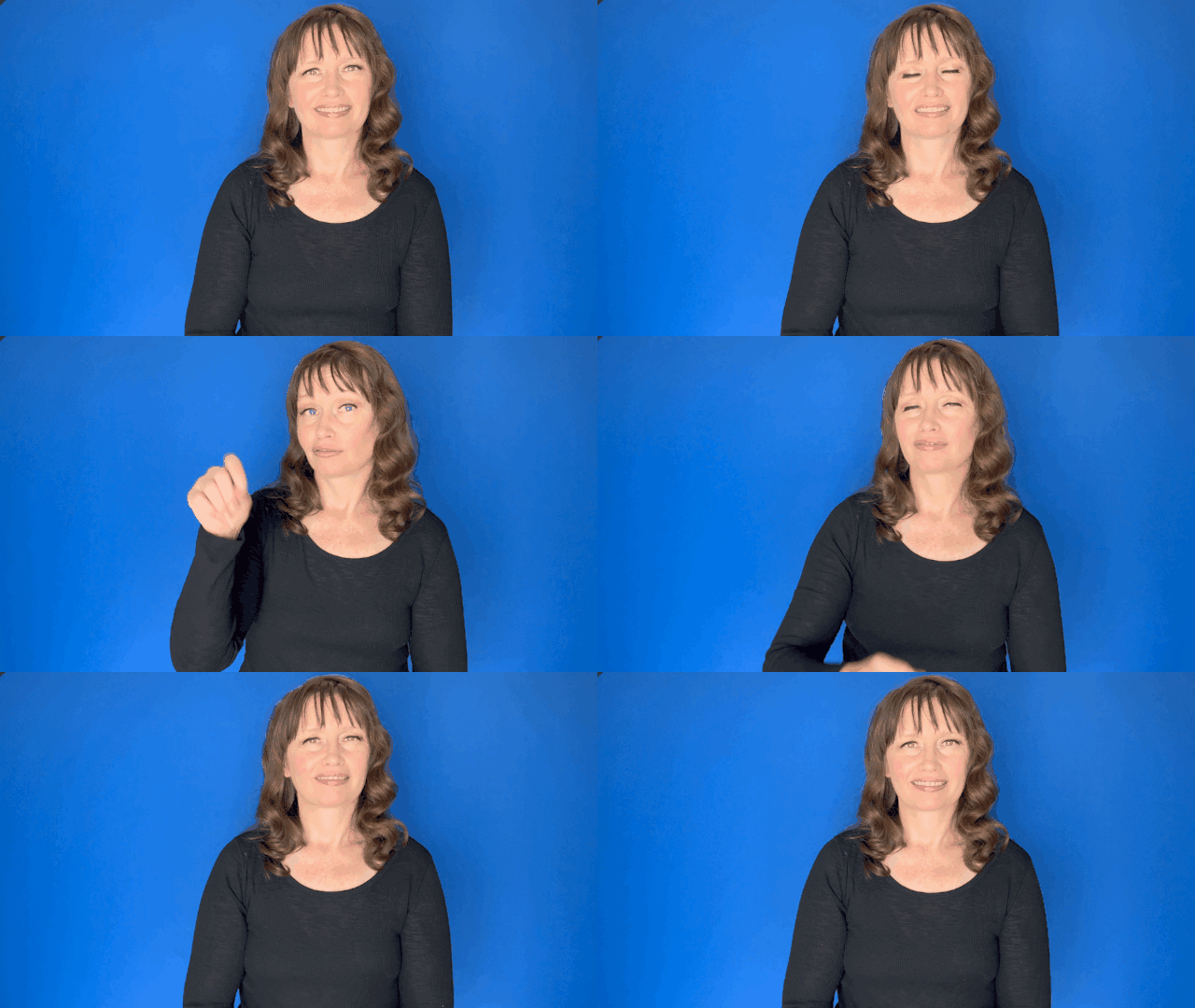
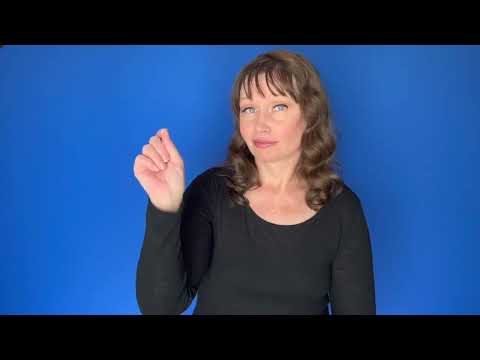
Definition: A mark indicating verification.
Sign for CHECK MARK 1 in ASL

Practice Activities:
Start by practicing the sign for CHECK MARK 1 in ASL in front of a mirror to ensure your handshape and movement are correct. Repeat the sign slowly, then speed up as you get more comfortable. Use it five times in a row while focusing on clarity and direction of motion.
Next, incorporate the sign into simple phrases like “check mark finish,” “I need check mark,” or “check mark important.” This helps with flow when using the sign in common contexts. You can also create affirmation-type statements such as “homework check mark” or “goal check mark” to simulate real-life situations.
With a study partner, engage in a back-and-forth game where one gives a task and the other responds with either a thumbs-up and the sign for CHECK MARK 1 in ASL or a different appropriate sign like “not yet.” This helps reinforce comprehension and usage in a dialogue format. You can turn it into a classroom checklist activity, where the teacher signs a series of items and students respond with CHECK MARK if completed.
Storytelling is another helpful practice. Create a short story about preparing for an important event, such as a trip or school project. Use the sign for CHECK MARK 1 in ASL each time you “complete” an item in the story. For example, “pack clothes, check mark… get tickets, check mark.”
Flashcard exercises can be useful too. Make cards with tasks written in English and flip them over to respond in ASL using the correct signs including check mark. Incorporating emojis like ✅ while signing can also make the experience fun and engaging for kids or visual learners.
Rehearse the sign in ASL practice journals by writing the sentences and recording yourself signing them. Re-watch the video to evaluate your accuracy and fluency. Regular use of the sign for CHECK MARK 1 in ASL in practical situations will help commit it to memory.
Cultural Context:
In American Sign Language (ASL), the sign for check mark 1 in ASL is used in both academic and everyday settings. Whether you’re marking an assignment, checking off a task, or indicating correctness, this sign appears in many real-life contexts. Deaf communities frequently use it as a visual representation of approval or completion.
The use of a check mark is deeply tied to organization and clarity. In classrooms, teachers might use the sign for check mark 1 in ASL to show that a student answered correctly. Similarly, students might sign it in response to peer-assigned tasks or group activities. It’s a fast way to acknowledge right answers or finished work without interrupting a conversation.
In professional and home life, the sign for check mark 1 in ASL shows up in similar ways. It can be used during meetings to track agenda items or confirm decisions. In casual tasks, people might use it to indicate a completed grocery list or chore. With so much visual communication in the Deaf community, gestures like the check mark help keep everyone informed efficiently.
The check mark itself has symbolic meaning. It stands for correctness, success, and action completed. When someone uses the sign for check mark 1 in ASL, they’re often expressing satisfaction or finality. This simple sign carries weight in many social and educational interactions.
The gesture reflected in this specific ASL sign draws on visual shapes that resemble the actual check mark symbol ✅. It helps learners connect the symbol with the movement, reinforcing meaning both visually and conceptually. This makes it especially useful for educators and interpreters working with visual learners.
Cartoons, sign language books, and classroom materials often include the sign for check mark 1 in ASL to support structured feedback. When grading papers or monitoring behavioral charts, using this sign makes the interaction clear for young Deaf students. It strengthens understanding of positive feedback in both academic and social environments.
In storytelling or informal conversation, people sometimes use signs like check mark 1 to punctuate a plot point or acknowledge the end of a list. Nonverbal cues like this help maintain rhythm and flow in visual storytelling. These signs create a sense of timing and structure needed to keep listeners engaged.
Digital spaces have also embraced signs such as the check mark. Video chats, vlogs, and TikTok posts often include the sign for check mark 1 in ASL to express agreement or verification without relying on sound. It aligns with the broader culture of visual affirmation across platforms.
Understanding the cultural context of
Extended Definition:
The sign for check mark 1 in ASL is commonly used to indicate correctness, completion, or verification of something. In American Sign Language, check marks represent an action or result, rather than just a symbol. The sign for check mark 1 in ASL visually portrays the motion of writing or marking a check, which makes it easy to associate with validating information.
When using the sign for check mark 1 in ASL, the signer typically mimics the motion of drawing a check mark in the air. This visual cue helps reinforce the idea of something being approved, done, or confirmed. Depending on the context, this sign may be used in everyday conversations, classroom settings, work environments, or casual checklists.
This ASL sign is especially common in educational settings, where teachers and students regularly use it to show that a task has been completed accurately. Even young learners can grasp the sign quickly because the concept of a check mark is visually familiar to them. The sign for check mark 1 in ASL helps bridge communication by making clear what has been reviewed and accepted.
Different situations might call for varied intensity or repetition of the sign. For example, someone might emphasize the motion more strongly to show excitement about completion. Alternatively, a quick, small sign can suggest something was checked in a routine or casual way. Still, the sign for check mark 1 in ASL remains clear in its purpose: to show that something meets the mark ✅
It’s also useful when organizing information visually. For Deaf and hard of hearing individuals, using the sign for check mark 1 in ASL adds a layer of confirmation in group or solo tasks. Whether used with a list, during a presentation, or in agreement with another signer, this sign highlights clarity and understanding.
The gesture is not tied to any spoken word but carries strong meaning on its own. The simplicity of the motion conveys affirmation without needing further clarification. That’s one reason the sign for check mark 1 in ASL is so widely adopted—it’s a quick and effective way to finalize or accept what’s been said or written down.
In some contexts, this sign can also designate choices that have been selected among several options. Think of voting, taking tests, or selecting products in a catalog. Signing a check mark helps pin down an individual decision among many possibilities, showing exactly which item or answer has been approved.
The sign for check mark 1 in ASL works well alongside other signs that represent organization, assessment, and reviews
Synonyms: tick, check, checkmark, tick mark, checked box
Educational resources: Find related learning materials in our course bank!
Want more? Check out some of our popular learning activities on the homepage!
Need to look up a sign? Use our highly rated dictionary: https://aslinteractive.com/best-asl-dictionary/
Follow us on tiktok: https://www.tiktok.com/@aslinteractive. More social media links at the bottom of this page!
Long-tail Keywords: What is the sign for check mark in ASL?, How do you sign check mark in ASL?, ASL sign for check mark
Categories:
tags: Checkmark, Commands, Language Learning, Classroom, Everyday Activities
Parameters
*Handshape*:
The handshape used in the sign for CHECK MARK 1 in ASL typically begins with the dominant hand forming an index finger point, resembling the “1” handshape . This finger makes a quick motion that mimics the visual appearance of drawing a check mark, starting high and moving diagonally down and to the side.
In producing the sign for CHECK MARK 1 in ASL, the rest of the fingers stay curled into the palm while the index finger traces a short, precise ✔️ motion. The movement and handshape combine to suggest the act of making a check mark on paper.
*Palm Orientation*:
The palm orientation for the sign for CHECK MARK 1 in ASL typically begins with the dominant hand in a “1” handshape, palm facing down or slightly outward depending on signer preference. The hand moves in a downward-stroke followed by a quick upward tick, mimicking the motion of drawing a check mark ✅.
In the sign for CHECK MARK 1 in ASL, the palm may subtly shift angle during movement but generally stays facing outward or down. The fingertips lead the motion, ensuring clarity and precision in how the sign visually resembles a written check mark.
*Location*:
The sign for CHECK MARK 1 in ASL is typically produced in the neutral space directly in front of the signer, about mid-chest level. This location allows clear visibility for the quick and deliberate movement that mimics drawing a check mark.
Most often, the dominant hand performs the motion away from the body while the non-dominant hand remains stationary or unused. The placement ensures that the sign is easily understood and leaves room for expressive clarity when signing the full phrase, sign for CHECK MARK 1 in ASL. ✅
*Movement*:
To show the sign for CHECK MARK 1 in ASL, use the dominant hand in the index finger handshape. Begin near the palm of the non-dominant open hand, which serves as a surface. Move the index finger in a quick, downward-diagonal stroke followed by an upward-diagonal motion, mimicking the shape of a check mark ✅.
This movement should be smooth and intentional, clearly forming the visual of a check. The sign for CHECK MARK 1 in ASL visually represents validation or confirmation.
*Non-Manual Signals*:
When demonstrating the sign for CHECK MARK 1 in ASL, keep a neutral facial expression with a slight nod to affirm the concept of confirmation or correctness ✅. Eye gaze should follow the movement of the dominant hand as it makes the “check” motion, emphasizing completion. Light eyebrow raise can indicate assurance or emphasis when using the sign for CHECK MARK 1 in ASL during explanations or affirmations.
*Prosody, Dominant/Non-Dominant Hand*:
The sign for CHECK MARK 1 in ASL uses the dominant hand to mime the motion of drawing a check mark. The dominant index finger touches an imaginary point in the air, then quickly moves down and diagonally to the opposite side, emulating the shape of a check ✔️. The non-dominant hand is not used for this sign and remains at rest.
To emphasize the concept in the sign for CHECK MARK 1 in ASL, facial expression or slight head nod can emphasize completion or confirmation. The prosody supports a clear and intentional motion that matches the action of verifying or approving something visually.
Tips for Beginners:
The sign for CHECK MARK 1 in ASL is typically represented by mimicking the motion of drawing a check mark with your dominant index finger. Begin with a small downward and rightward stroke, followed by an upward slant to the right, as if you’re physically making a check on paper. This sign is mostly visual and conceptual, so precision in direction and motion is crucial.
For beginners learning the sign for CHECK MARK 1 in ASL, one helpful tip is to visualize writing a check mark as you practice. This mental image will help align hand movements correctly. Practicing in front of a mirror can also assist in refining the shape and angle of your motion.
Many beginners struggle with making the movement too large or too small. Keep it compact and smooth to resemble an actual check mark and ensure visual clarity. Over-exaggerated signs may confuse observers or distort the intended meaning. ❌✔️
Consistency in direction is key. The proper motion is a short diagonal down-right, followed by a longer upward sweep to the top right. If you reverse these steps, it could be misinterpreted or misunderstood in conversation, especially in rapid dialog.
Another tip is to pair the sign for CHECK MARK 1 in ASL with a facial expression or context clue, such as nodding to confirm something is correct or complete. This reinforces understanding, especially in communicative settings like classrooms or meetings.
Avoid using the fingerspelled “C-H-E-C-K” unless you’re referring to a bank check or a different context. Keep focused on the check mark as a symbol. The visual aspect of this sign makes it universally comprehensible within the Deaf community when executed correctly.
Practice in common contexts such as checking off lists or confirming completion can help reinforce fluency. Using the sign for CHECK MARK 1 in ASL during real-life interactions boosts memory and confidence over time. ✅
Connections to Other topics:
The sign for CHECK MARK 1 in ASL is closely connected to the visual nature of ASL, especially when depicting abstract symbols. This sign often incorporates a tracing motion that resembles the shape of a check mark, linking it to signs used in education, assessments, and daily planning where checking off items is common. It relies on classifiers and directional movement, making it similar in structure to signs like CORRECT or APPROVE.
This sign is frequently used in compound expressions related to accomplishment or completion. For example, when combined with FINISH, it can emphasize that a task has been completed and marked as done. In classroom settings, the sign for CHECK MARK 1 in ASL may be used alongside signs such as HOMEWORK, TEST, or GRADE to indicate that an assignment has been reviewed or scored positively ✅.
In professional or scheduling contexts, CHECK MARK 1 can be connected with signs like MEETING, PLAN, or LIST. Signing CHECK MARK 1 in conjunction with these allows for conveying ideas like “I confirmed the appointment” or “This item was checked off the list.” The visual clarity of this sign supports discussions about organization and productivity, linking it to concepts of efficiency and goal-tracking.
The sign also parallels signs like CORRECT, TRUE, or RIGHT, sharing the notion of affirmation or validation. It’s often contrasted with signs for WRONG or INCORRECT, offering learners a chance to explore opposites and consistent directional movements. This interplay of signs supports broader understanding of evaluation and confirmation in ASL.
The sign for CHECK MARK 1 in ASL is a meaningful tool when discussing validation, completion, or confirmation across different settings. Its relevance in both casual and formal interactions gives it a versatile role in vocabulary development and contextual fluency, especially when conveying feedback or tracking accuracy.
Summary:
The sign for CHECK MARK 1 in ASL is typically expressed through an iconic movement that visually resembles a check mark being drawn in the air. It’s a concept sign, which means it conveys an idea more than a specific word-for-word match with English. The handshape most commonly used is the index finger extended, while the rest of the hand remains in a closed position.
In the sign for CHECK MARK 1 in ASL, the signer uses a short downward stroke followed by an upward diagonal motion. This mimics the check mark’s familiar visual representation. It’s a relatively simple but highly effective sign due to its iconicity.
This sign is often used in educational settings, especially when talking about assignments or grading. Teachers use the sign for CHECK MARK 1 in ASL to indicate a task has been completed or approved. It provides a visual equivalent to the written check mark that students see on their papers.
Grammatically, the sign for CHECK MARK 1 in ASL is used similarly to affirmative or action-confirming verbs. It can be placed at the end of a sentence to indicate completion. For example, “homework finish” followed by the sign signals it’s been checked or approved.
This sign can also function as a reaction or response. In conversation, it could mean “that’s right” or “confirmed,” depending on context. The context-dependent nature of the sign fits within the broader framework of ASL’s use of facial expression and body language for additional meaning.
While the sign for CHECK MARK 1 in ASL does not have an established one-to-one lexical equivalent in English, it’s understood by most fluent signers. It is related to visual conventions and relationships with written English symbols. This blending is a common characteristic of modern sign languages using symbolic adaptations.
This sign can be related to other signs like CORRECT, APPROVE, or YES depending on conversation tone. However, it’s more symbolic rather than purely linguistic, providing a bridge between concrete visuals and abstract confirmation. It perches on the brink between gestural visual language and formal lexicon.
The use of the sign for CHECK MARK 1 in ASL reflects cognitive linguistic principles, especially as related to conceptual metaphor. It translates the abstract idea of correctness or acknowledgement into a spatial, visual representation. This conversion showcases how ASL taps into visual space for meaning-making.
In Deaf and signing communities, symbols like the check mark have significant cultural traction due to their ubiquity in mainstream education and communication. Thus, the sign for CHECK MARK 1 in ASL integrates a shared understanding of visual culture. It is inherently cross-linguistic and conceptual in nature.
The increasing use of this sign is part of broader trends in iconicity and contact with English. As Deaf students and professionals engage with paperwork, documents, and forms, the necessity for such signs grows. The sign for CHECK MARK 1 in ASL often appears during explanations and walkthroughs of written content.
From a morphology perspective, this sign consists of a single movement and does not modify for aspects like number or intensity unless combined with other signs or expressions. It is inherently non-inflected but flexible. Its simplicity enables variation when needed through use of facial grammar or spatial indexing.
In terms of phonological components in ASL, the sign for CHECK MARK 1 in ASL is composed of a specific handshape, a succinct motion, and a neutral or front-of-body location. The handshape remains constant, but the motion communicates most of the intended meaning. This reliance on movement is crucial to the sign’s intelligibility.
Another fascinating feature is how new learners adapt to using this sign. Beginners often rely on approximation, drawing a full check shape in the air. Fluent users shorten the motion to express confidence and efficacy, reflecting natural linguistic economy.
Culturally, the sign for CHECK MARK 1 in ASL may carry associations with affirmation, validation, or acknowledgment. It reflects values like correctness, completion, and validation in a communicative culture that heavily relies on visual affirmation. For Deaf professionals, its prevalence mimics how spoken or written cultures use affirmatives like “done” or “right.”
Since this sign reflects visual information, it epitomizes the link between symbolic visual literacy and ASL. Educators and interpreters often use it when interpreting tests, evaluations, or performance feedback. This shows how ASL adapts to academic discourses and workplace needs.
From a sociolinguistics view, the sign for CHECK MARK 1 in ASL also points to language change through contact. It arises at the intersection of visual culture, written English, and signed language. It embodies how ASL users adapt new symbols into established grammar and syntax.
ASL users incorporate such signs creatively, utilizing them as part of broader storytelling or informational narratives. For example, while describing a project, a signer may flash this sign to indicate milestones completed. The use emphasizes progression and success.
In interpreting settings, the sign for CHECK MARK 1 in
Want more? Check out some of our popular learning activities!
ASL Interactive Resources
ASLInteractive YouTube Channel
Follow us on tiktok: @aslinteractive.com
Follow us on Instagram: aslinteractive
Facebook page: aslinteractive
Facebook group: aslinteractive
LInkedIn: ASL Interactive LLC
Twitter: @ASL_interactive
*Some information on this page is AI-generated. AI can make mistakes. Please check the information.


Responses