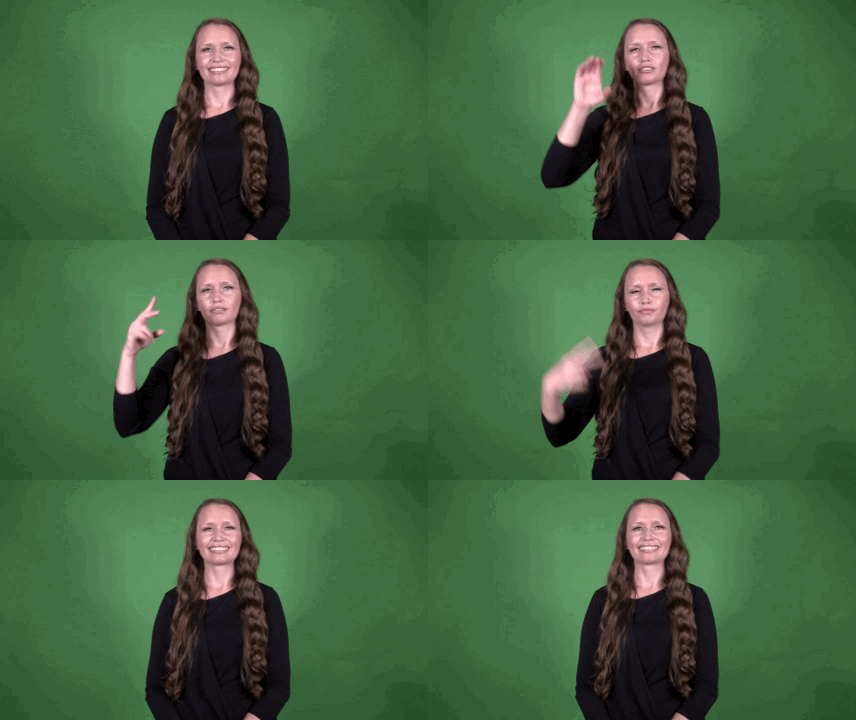
Sign for CHEMICAL COMPOUND CL2 in ASL | ⚗️ ASL Dictionary

Definition: Chlorine (Cl2) is a greenish-yellow gas used as a disinfectant, bleaching agent, and in water purification processes.

Sign for CHEMICAL COMPOUND CL2 in ASL

YouTube player

Practice Activities:

Start your practice by fingerspelling the chemical compound. Since the sign for CHEMICAL COMPOUND CL2 in ASL involves fingerspelling “C-L-2,” begin by forming each letter clearly and fluidly. Practice controlling your handshape and spacing for the “CL2” portion, ensuring it’s easy to read. Use a mirror or record yourself to check accuracy and speed.

Next, integrate the sign into basic sentences using conceptually accurate ASL structure. Try sentences like: “SCIENCE CLASS, WE STUDY CHEMICAL COMPOUND CL2” or “CHEMICAL COMPOUND CL2 DANGEROUS, MUST BE CAREFUL.” This helps reinforce grammar and fluency in conversation. Vary your topics to include different subject areas like lab safety, science experiments, or environmental discussions.

Work with a partner to quiz each other on different chemical compounds. One person fingerspells a compound such as CL2, and the other responds with details or signs related to its use or safety. This promotes two-way interaction and reinforces comprehension of both fingerspelled terms and related signs.

Storytelling is another useful tool. Create a short narrative about a science experiment involving the chemical compound CL2. Include signs for lab, chemicals, mix, reaction, explosion, or danger. Rehearsing the story strengthens your ability to maintain context while fingerspelling and signing smoothly.

Flashcard drills are helpful too. Mix cards with different chemical names—like CL2, H2O, CO2—and practice quickly fingerspelling them when drawn. Time yourself for a fun challenge with accuracy.

Use visual aids like a periodic table or science textbook. Point to elements or compounds like CL2 and produce their corresponding signs. Doing this helps form direct associations between English print words and the sign for CHEMICAL COMPOUND CL2 in ASL.

Lastly, record a short video of yourself explaining an experiment and upload it to share with classmates or a mentor for feedback.

Cultural Context:

In the world of science, chemical compounds play a fundamental role in daily life, research, healthcare, and industry. Understanding and communicating these compounds in American Sign Language (ASL) is essential for accessibility and inclusion, especially in academic and professional settings. The sign for CHEMICAL COMPOUND CL2 in ASL helps integrate the Deaf community into science conversations by providing a clear and consistent visual language.

The compound CL2, known chemically as chlorine gas, is a yellow-green gas with a strong odor used in water purification and various industrial processes. Having an established sign for CHEMICAL COMPOUND CL2 in ASL allows Deaf professionals, students, and educators to engage in scientific discussions more effectively. Science fields require precise language, and standardizing signs ensures accuracy in instruction and comprehension.

Deaf scientists, chemists, and students rely on accurate signs to discuss experiments, research findings, and safety protocols. The sign for CHEMICAL COMPOUND CL2 in ASL enables them to communicate technical details without confusion. As scientific literacy increases in the Deaf community, the availability of signs for specific compounds like CL2 becomes increasingly important.

The chemistry classroom is one place where this sign is essential. Teachers and interpreters can enhance learning for Deaf students by using the sign for CHEMICAL COMPOUND CL2 in ASL when introducing the compound’s properties and uses. It supports both understanding and engagement, allowing students to explore science more confidently.

As more ASL dictionaries include specialized signs, the capacity to support STEM education grows. The sign for CHEMICAL COMPOUND CL2 in ASL bridges the communication gap between hearing and Deaf individuals in science-focused environments. This inclusion promotes equity and empowers members of the Deaf community to pursue careers in chemistry and related disciplines.

In professional contexts, scientists and technicians may need to discuss CL2 during conferences, lab meetings, or safety briefings. Having a consistent sign for CHEMICAL COMPOUND CL2 in ASL ensures that even in fast-paced or high-stakes situations, communication remains clear and efficient. It prevents misunderstandings that could arise from fingerspelling or unclear substitutions.

Online platforms, video lectures, ASL-accessible science blogs, and educational content are all improved by the availability of technical signs. The sign for CHEMICAL COMPOUND CL2 in ASL supports creators and educators who strive to make their content Deaf-friendly. This helps expand reach and enrich the learning experience for a more diverse audience.

Culturally

Extended Definition:

The sign for chemical compound Cl2 in ASL represents the gaseous chlorine molecule. In American Sign Language, scientific terms such as chemical compounds are typically fingerspelled or represented through a combination of initialized signs and classifiers. The sign for chemical compound Cl2 in ASL may involve fingerspelling “C-L-2” or use context-based gestures to represent the molecular structure or function.

When discussing the sign for chemical compound Cl2 in ASL, it’s important to recognize the influence of educational context. In science classrooms or presentations, signs for chemical elements like chlorine and compounds such as Cl2 are more likely to follow consistent visual representations. This ensures clarity for students and others familiar with technical ASL vocabulary.

ASL often adapts to scientific concepts by using initialized signs that pair with lip movements or by relying on descriptive classifiers that demonstrate the properties of the element. For instance, Cl2 is known for being a pale green gas with a strong odor, and that might be reflected in the descriptive nature of the sign. Someone interpreting or teaching about this specific compound would likely use space and visualization to emphasize the two atoms of chlorine involved.

The sign for chemical compound Cl2 in ASL may not be standardized across all regions or communities. Because ASL is a live and evolving language, technical signs often differ depending on the interpreter, regional influences, or the level of detail needed. This variability reinforces the importance of providing context when discussing scientific terms like Cl2, especially in academic or educational settings.

In chemistry discussions, knowing how to sign molecular formulas such as Cl2 helps Deaf students and professionals communicate effectively. The sign for chemical compound Cl2 in ASL supports the broader effort to bridge gaps in science education and create accessible content for Deaf learners. Teachers and interpreters are encouraged to familiarize themselves with science-specific signs or standardized resources when introducing complex concepts.

In some cases, classifiers might be used to show how Cl2 behaves as a gas, emphasizing visual-spatial properties. For example, a classifier could describe its movement or how it binds in chemical reactions. These descriptive tools help enhance the understanding of Cl2’s role in chemical processes, providing richer context beyond fingerspelling.

When using the sign for chemical compound Cl2 in ASL, it’s also helpful to consider the setting. In an informal environment, fingerspelling might be more common. In contrast, formal environments like universities and laboratories might use more developed sign representations or standardized signs from ASL-based science glossaries.

Online platforms and AS

Synonyms: chlorine gas, dichlorine, molecular chlorine, Cl2 gas, elemental chlorine

Educational resources: Find related learning materials in our course bank!

Want more? Check out some of our popular learning activities on the homepage!

Need to look up a sign? Use our highly rated dictionary: https://aslinteractive.com/best-asl-dictionary/

Follow us on tiktok: https://www.tiktok.com/@aslinteractive. More social media links at the bottom of this page!

Long-tail Keywords: What is the sign for chemical compound CL in ASL, How do you sign chemical compound CL in ASL, ASL sign for chemical compound CL

Categories:

tags: chemical compound, science, chemistry, education, language learning

Parameters

*Handshape*:

The handshape used in the sign for CHEMICAL COMPOUND CL2 in ASL begins with both hands forming the “C” handshape to represent the molecular elements involved. The fingers are curved while the thumbs extend forward, creating a clear visual cue for identifying the molecular composition.

This handshape helps convey the scientific nature of the sign for CHEMICAL COMPOUND CL2 in ASL. The use of the “C” handshape also assists in visually referencing the chemical element chlorine within the compound.

*Palm Orientation*:

For the sign for CHEMICAL COMPOUND CL2 in ASL, the palm orientation varies depending on how you establish the concept. When signing “chemical,” both hands typically face inward with palms slightly angled toward each other, mimicking mixing or reacting substances. For the fingerspelled portion “CL2,” the palm generally faces outward, allowing clarity for each letter and number.

When combining the full sign for CHEMICAL COMPOUND CL2 in ASL, the transition from the conceptual sign to fingerspelling maintains a natural flow. The shift from inward-facing palms to outward-facing for the fingerspelling ensures visibility and precision .

*Location*:

The sign for CHEMICAL COMPOUND CL2 in ASL is typically formed in the neutral space in front of the upper torso, close to chest level. Because this includes a chemical symbol, the signer first fingerspells C-L-2 clearly and deliberately in the air using dominant hand.

The rest of the sign for CHEMICAL COMPOUND CL2 in ASL may incorporate the sign for “chemical” near the chest, where scientific or academic terms are often signed. The location stays within central signing space to maintain clarity and visibility of the fingerspelling and conceptual sign components.

*Movement*:

The sign for CHEMICAL COMPOUND CL2 in ASL begins with the dominant hand forming the letter “C” and the non-dominant hand forming an “L” shape. The hands move slightly apart to indicate separation or interaction between elements.

Following this, fingerspell “C-L-2” using the standard ASL alphabet. The movement for the numbers is fluid, with a slight pause after each letter or number to ensure clarity. This fingerspelled portion distinguishes the specific nature of the chemical compound.

*Non-Manual Signals*:

When showing the sign for CHEMICAL COMPOUND CL2 in ASL, the signer typically maintains a neutral or slightly inquisitive facial expression, suggesting analytical focus . Eyebrows may raise subtly when introducing the compound, emphasizing its specific scientific nature.

Mouth movement may reflect the structure or clarity of the compound name while fingerspelling CL2. The non-manual signals play a key role in conveying the specificity and precision needed for the sign for CHEMICAL COMPOUND CL2 in ASL.

*Prosody, Dominant/Non-Dominant Hand*:

The sign for CHEMICAL COMPOUND CL2 in ASL typically involves both hands. The dominant hand starts in a C-shape, suggesting “chemical,” and may mimic a pouring or mixing motion over the non-dominant hand, which remains steady in a flat orientation. This movement reflects the idea of combining elements.

To indicate CL2, the fingerspelling C-L-2 is used clearly with the dominant hand, fingerspelling each letter in sequence. Since CL2 is a formula, clarity and pacing are emphasized. The sign for CHEMICAL COMPOUND CL2 in ASL captures both the conceptual and scientific elements .

Tips for Beginners:

When learning the sign for CHEMICAL COMPOUND CL2 in ASL, it’s important to remember that individual chemical symbols like “CL” and numbers like “2” are fingerspelled. This means you’ll need to improve your fingerspelling fluency to spell out C-L-2 smoothly and clearly. Practice your transitions between letters and numbers to avoid wobbling or pausing unnaturally, which can make your sign confusing.

It’s helpful to keep your signing area in a steady, neutral zone slightly below your chin and in front of your chest. Try not to drift too far to either side, which can cause visual disruption. When fingerspelling a chemical compound, keep your palm facing out slightly and make sure your hand movement is fluid but not fast—speed should come after accuracy.

The sign for CHEMICAL, depending on the context, is often made using the sign for SCIENCE with a slight modification—hands in an alternating circular motion in front of the body, as though mixing solutions. Don’t rush through this part; ensure the circular motion is intentional and not just shaking your hands. If you’re unsure whether a classifier is required in scientific discussions, consult a fluent ASL user or resource.

One common mistake when signing the sign for CHEMICAL COMPOUND CL2 in ASL is not distinguishing clearly between the individual fingerspelled components. Make sure there’s a brief pause after spelling CL before signing the number 2, or repeat the “CL” if clarity is needed. Watching videos of fluent signers using similar scientific terms can greatly assist in mastering pacing and non-manual markers.

The sign for CHEMICAL COMPOUND CL2 in ASL is especially useful in academic or STEM settings. Incorporate it into mock presentations or study groups to make it second nature. Repetition, confidence, and visual clarity are key .

Connections to Other topics:

The sign for CHEMICAL COMPOUND CL2 in ASL connects closely with broader scientific and academic vocabulary in the language. It illustrates how ASL can adapt to highly specific topics like chemistry by combining lexical signs with fingerspelling and visual classifiers to convey complex ideas. This approach supports a growing need for scientific literacy in ASL and mirrors the structure used in signs related to biology, physics, and mathematics.

Many scientific terms—especially in chemistry—are expressed in ASL through a combination of standard signs, classifiers, and fingerspelling. The sign for CHEMICAL COMPOUND CL2 in ASL typically uses the sign for CHEMICAL and then fingerspells the compound symbol CL2. This structure is similar to how signs for other compounds, such as H2O or CO2, are formed. These compound signs are context-sensitive and often depend on how familiar the audience is with the material.

This sign also links to broader topics in ASL like molecules, atoms, and reactions. Learners who understand the sign for CHEMICAL will more easily incorporate related concepts such as ACID, BASE, and MOLECULE. These signs often exist in thematic groupings, making it easier to build vocabulary around a core subject . When discussing reactions or scientific demonstrations, using the sign for CHEMICAL COMPOUND CL2 in ASL allows for more precise and visually descriptive communication.

In classrooms or academic interpretation, this kind of sign structure helps ensure clarity. Interpreters may switch between the core concept and more detailed fingerspelled inputs like CL2, depending on context . This flexibility introduces students to multiple advanced ASL features, including indexing and spatial referencing, that support abstract content comprehension. Mastering the sign for CHEMICAL COMPOUND CL2 in ASL builds a strong foundation for communicating about other compounds and scientific processes.

Summary:

The sign for CHEMICAL COMPOUND CL2 in ASL involves both manual and conceptual layers. This sign is often constructed using a combination of classifiers, abbreviations, and fingerspelling to properly denote the scientific specificity required.

To communicate CL2 effectively, CL is generally fingerspelled, emphasizing clarity in each letter. This is followed by the number 2, visually signed using the appropriate handshape to denote the numerical quantity tied to the molecule.

The sign for CHEMICAL COMPOUND can be presented in multiple ways depending on the context. In academic or scientific settings, it’s often constructed through signs for CHEMISTRY and COMBINE, then integrated with the formula.

The sign for CHEMISTRY uses the letter C in a circular motion near the shoulder, referencing scientific activity. When paired with the sign for MIX or COMBINE, it conveys the idea of bonded substances.

The number 2 in CL2 is not just a numeral but signifies the molecular structure of chlorine diatomic elements. It’s signed with the index and middle fingers extended, held steady to show the molecule’s stable bond.

Precision is essential in the sign for CHEMICAL COMPOUND CL2 in ASL due to its highly technical nature. This kind of specificity mirrors the discipline of ASL and its robust capacity for domain-specific vocabulary.

Typically, students or professionals using this sign will ensure it’s part of a broader dialog in chemistry. It may be necessary to explain the full concept using classifiers and spatial mapping, especially when discussing electron arrangements or reactions.

Classifiers (CL) in ASL are not to be confused with the CL in CL2. This overlap can create confusion, but context helps. For clarity, when referring to the chemical compound, fingerspelling CL ensures proper meaning.

There’s often a shift in facial expression or body movement to indicate technical communication is occurring. Such subtle changes bring focus to the gravity of scientific dialog, especially when discussing chemical safety or reactions.

The linguistic connection of signs like this to English terminology highlights an important part of ASL’s adaptive nature. Scientific terms that lack pre-existing signs need to be translated creatively using visual logic and shared understanding.

The sign for CHEMICAL COMPOUND CL2 in ASL aligns with a broader theme of STEM access in Deaf education. Many schools and universities specializing in STEM fields promote standardized ways of discussing chemistry to ensure equal participation.

The sign’s use often varies between casual education settings and professional scientific environments. In a classroom, a teacher might expand the sign to include illustrative gestures showing the molecular bond or electron distribution.

In professional settings like research labs or scientific conferences, the sign becomes more minimal, relying on shared knowledge. This is when fingerspelling CL quickly followed by 2 becomes the shorthand, functioning like jargon.

Applied linguistics supports this evolution of signs as natural. ASL, being a living language, adapts to changing areas of knowledge, especially those like chemistry, which require consistent and reliable communication.

From a cultural perspective, the sign for CHEMICAL COMPOUND CL2 in ASL represents more than just a molecule. It reflects the importance of language equity in the sciences and how information must be equally accessible to Deaf scientists and students.

As more Deaf scholars enter STEM fields, contributions to technical vocabulary in ASL grow. The sign for CHEMICAL COMPOUND CL2 in ASL is part of that expanding lexicon that supports professional discourse in science.

Educators often spend time ensuring students are fluent not just in individual vocabulary but in the grammar and structure of scientific ASL communication. This includes directional signs, syntactic ordering, and cooperative facial grammar.

The grammatical placement of the formula within ASL conversation is also important. It usually follows the topic-comment structure, where the type of substance is introduced, followed by its specific formula like CL2.

This is why signing CHEMICAL COMPOUND CL2 often begins with establishing the concept of compound or chemical before detailing the formula. The signer must balance both conceptual understanding and morphological accuracy.

Hand dominance also influences clarity when signing multi-part scientific terms. Right-handed signers typically fingerspell with the dominant hand, ensuring visual clarity when forming CL and following with the number 2.

The spatial component also plays a role. Signers often identify different molecules using placement in 3D space to anchor concepts, especially when comparing compounds or processes.

This ability to spatially organize content is a powerful feature of ASL, especially in scientific domains. It permits layered explanations and comparative visuals that spoken language can’t replicate as effectively.

There are ongoing discussions within the Deaf STEM community about standardizing chemical notation through ASL. The sign for CHEMICAL COMPOUND CL2 in ASL exemplifies the need for precise, reproducible signs for common chemical entities.

Although CL2 can be readily fingerspelled, longer or more complex formulas often require abbreviation strategies. These can include initialized signs, visual depictions, or referring back to a previously established space

Want more? Check out some of our popular learning activities!

ASL Interactive Resources

ASLInteractive YouTube Channel

Follow us on tiktok: @aslinteractive.com

Follow us on Instagram: aslinteractive

Facebook page: aslinteractive

Facebook group: aslinteractive

LInkedIn: ASL Interactive LLC

Twitter: @ASL_interactive

*Some information on this page is AI-generated. AI can make mistakes. Please check the information.

Sign for CHEMICAL COMPOUND CL2 in ASL

Responses