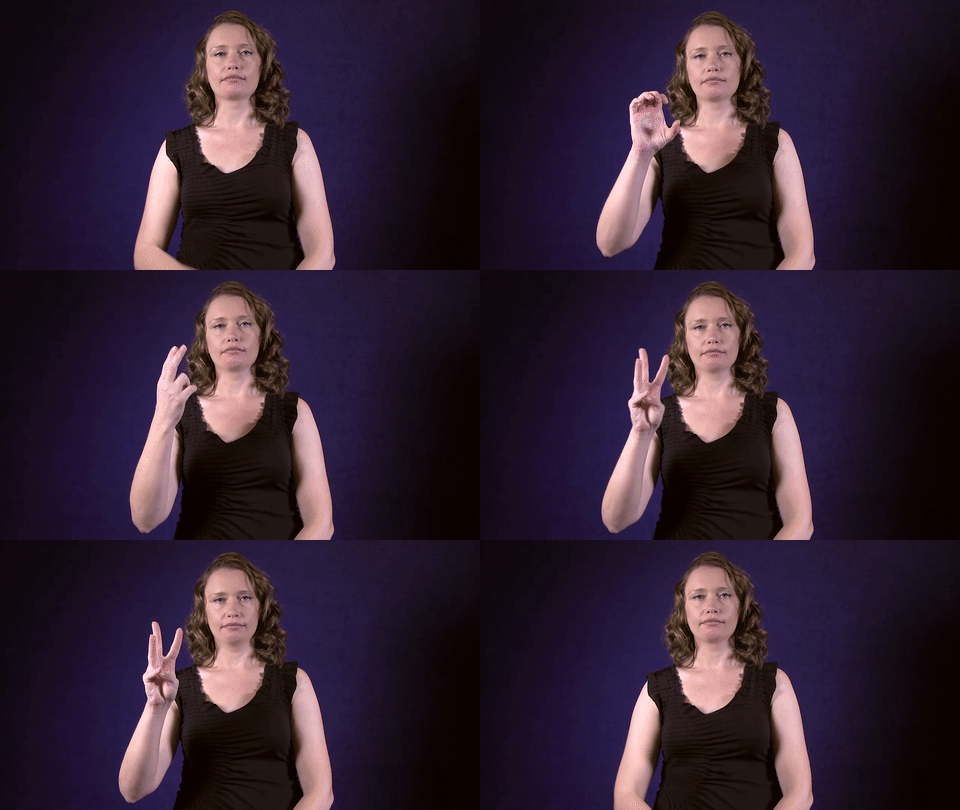
Definition: To chew something.
Sign for CHEW in ASL

Practice Activities:
Start by practicing the sign for CHEW in ASL in front of a mirror. Repeat the motion slowly and clearly, focusing on the position of your dominant hand and the rhythm of the movement. Say the English word in your head as you sign to help build the mental connection.
Next, use flashcards with images of people eating various foods. For each card, sign the type of food followed by the sign for CHEW in ASL. You might introduce a range of scenarios like someone chewing gum, meat, or cereal. This helps reinforce the use of the sign with different food contexts.
Try creating short phrases such as “I chew gum,” “The child chews bread,” or “She chews slowly.” Sign each sentence repeatedly and then mix them up to work on sentence fluidity. Practicing with everyday examples will improve your comfort with the sign.
For storytelling, describe a picnic scene. Talk about what each character is eating and how they chew their food. Include as many food-related signs as possible, returning often to the sign for CHEW in ASL. This encourages natural usage in longer narratives.
With a partner, play a mime and sign game. One person mimes chewing a specific food, and the other uses the appropriate food sign followed by the sign for CHEW in ASL. Switch roles to add variety and keep it fun.
Watch short ASL videos or vlogs related to eating and identify each time someone uses the sign for CHEW in ASL. Pause, repeat the sign you saw, then try using it in your own sentence or short story.
End your practice session by summarizing your day’s meals. Sign out what you ate and mime how you chewed each meal. This personal reflection helps deepen your recall and connection to the sign.
Cultural Context:
In American Sign Language, everyday concepts like eating, biting, and chewing are expressed through movement and facial expression. The sign for CHEW in ASL reflects the cultural importance of food, communication, and visual clarity in Deaf culture. Signing isn’t just about gestures—it’s about conveying meaning visually and naturally in daily interactions.
When Deaf individuals use the sign for CHEW in ASL, they usually incorporate it into broader conversations about meals, preferences, and social moments. Food is a central part of connection in every culture, and that’s no different in the Deaf community. The way people talk about eating or chewing in ASL can reflect shared experiences or routines.
The sign for CHEW in ASL mimics the jaw motion of chewing, making it visually iconic and easy to understand. This physical representation is key to how ASL communicates everyday actions. It also shows how ASL prioritizes clarity and mimics real-life gestures to help deliver meaning.
Within the cultural context, using the sign for CHEW in ASL may come up in situations like discussing what was eaten at a party, giving instructions to children during mealtime, or even describing a pet’s behavior. Because ASL is highly expressive, facial expressions often enhance the meaning when using the sign for CHEW. A slight change in expression can shift the tone from casual to humorous or serious.
In Deaf education, especially for young children, the sign for CHEW in ASL is taught alongside other food-related signs. This helps kids build vocabulary in a way that’s relevant to their daily lives. Using signs that represent real actions like chewing supports language growth and communication skills.
When a child is learning table manners or when someone is telling a story about eating something unusual, the sign for CHEW in ASL plays an important role. ASL storytelling often involves rich visual imagery, and actions like chewing are part of creating that vivid narrative. It makes the communication more engaging and relatable for both Deaf and hearing audiences familiar with ASL.
In a community where visual communication is essential, signing about actions like chewing helps to create shared understanding. Whether it’s a sign for CHEW in ASL or any food-related gesture, the visual nature of the language brings people together. It creates moments of cultural connection rooted in shared daily experiences.
Even in casual conversations, someone might describe how they slowly chewed a delicious meal or how a child chews with their mouth open, using appropriate facial expressions and timing to enhance the story. The sign for CHEW
Extended Definition:
The sign for CHEW in ASL describes the physical act of chewing food with your mouth. This sign is typically made using a repeated motion to mimic the movement of the jaw while eating. It’s a visual representation that is easy to recognize, even without knowing American Sign Language.
In American Sign Language, signs often rely on real-world references, and the sign for CHEW is no different. The handshape and motion reflect how we physically chew, making it an intuitive and expressive sign. This helps both beginners and fluent signers communicate clearly and naturally.
You may see slight variations in how the sign for CHEW in ASL is performed. Some signers use one hand while others may prefer a two-hand motion, depending on regional differences or personal style. These variations are widely accepted and still understood in context.
Using the sign for CHEW in ASL is common in conversations about meals, food textures, healthy habits, or even when talking about animals chewing. Parents might use it when communicating with young children, especially during snack or mealtime routines. It’s practical vocabulary that bridges daily life and expressive communication.
The facial expression and context can also give depth to meaning when using this sign. For example, if someone is chewing with exaggerated expressions, it might imply that the food is tough or requires extra effort. Combining this sign with others can create full sentences like “I’m chewing gum” or “The baby can’t chew yet.”
Signers may also use the sign for CHEW in ASL when discussing dental health or oral hygiene. For example, a teacher might use it in a classroom setting to talk about brushing teeth after eating. It also appears in health-related discussions about foods that are easy or difficult to chew for different age groups.
Learning the sign for CHEW in ASL is useful for everyday situations. It helps you understand and engage in basic conversation about eating and food preferences. Whether you’re learning ASL as a second language or teaching it to children, this sign is both functional and fun to learn.
Like many signs in ASL, body language plays a key role. While the hand motion indicates chewing, your facial cues help complete the message. This adds emotional meaning and makes interaction more natural and fluent.
When searching online for the sign for CHEW in ASL, it’s helpful to watch videos showing the correct movement. ASL is a visual language, and seeing the sign in action improves your ability to perform and recognize it. Practice helps build confidence and accuracy over time.
Adding
Synonyms: gnaw, munch, chomp, bite, nibble
Educational resources: Find related learning materials in our course bank!
Want more? Check out some of our popular learning activities on the homepage!
Need to look up a sign? Use our highly rated dictionary: https://aslinteractive.com/best-asl-dictionary/
Follow us on tiktok: https://www.tiktok.com/@aslinteractive. More social media links at the bottom of this page!
Long-tail Keywords: what is the sign for chew in ASL, how do you sign chew in ASL, chew in ASL
Categories:
tags: Actions, Verbs, Language Learning, Everyday Activities, Commands
Parameters
*Handshape*:
The handshape for the sign for CHEW in ASL typically uses a closed ‘O’ or flat ‘O’ hand, where the fingertips and thumbtouch to form an “O” shape, resembling a mouth in motion. This shape mimics a chewing action when moved repeatedly in front of the mouth area.
To express the sign for CHEW in ASL effectively, the fingers maintain a consistent rounded form. The motion and handshape combine to reflect the natural mastication of food.
*Palm Orientation*:
For the sign for CHEW in ASL, the palm orientation typically faces toward the side or inward toward the mouth, depending on the dialect or variation. The dominant hand, often in a flattened O or modified C handshape, simulates a chewing motion near the mouth with the palm angled inward.
In some regional versions of the sign for CHEW in ASL, both hands may be involved, with palm orientations angled slightly toward each other to mimic the motion of chewing food. Consistency in palm orientation helps convey the intended action clearly .
*Location*:
The sign for CHEW in ASL is located in front of the mouth, generally a few inches away from the face. This position represents the act of chewing food and mirrors where chewing naturally happens. When performing the sign for CHEW in ASL, the location remains centered near the lower part of the face to maintain clarity and visual connection with the concept. ️
*Movement*:
The sign for CHEW in ASL involves bringing your dominant hand to your mouth in a loose “C” handshape. Tap the fingertips near your mouth twice while mimicking the motion of chewing, as if you’re gently biting or working food between your teeth.
This sign visually represents the act of eating with chewing motions. The sign for CHEW in ASL is typically performed with a natural rhythm, and facial expression can enhance the meaning based on context. ️
*Non-Manual Signals*:
The non-manual signals for the sign for CHEW in ASL often include a slight puffing of the cheeks and rhythmic mouth movements that mimic natural chewing. These facial expressions reinforce the action and help clarify the meaning, especially when paired with the repeated hand movements of the sign.
Eyebrows remain in a neutral position unless used in a specific context like asking a question. A calm, casual expression supports the natural feel of the sign for CHEW in ASL .
*Prosody, Dominant/Non-Dominant Hand*:
The sign for CHEW in ASL uses the dominant hand in a flattened “O” or bent “V” handshape, depending on the variation. The dominant hand moves in a small circular motion in front of the mouth, mimicking the action of chewing. The non-dominant hand is typically not active during the sign.
When doing the sign for CHEW in ASL, facial expression can enhance the sign by mimicking chewing or thoughtful activity. This sign uses a clear, central signing space close to the mouth, increasing visibility and clarity.
Tips for Beginners:
When learning the sign for CHEW in ASL, begin by focusing on natural, deliberate hand movements to mimic the jaw motion of chewing. Position your dominant hand near your mouth with fingers together, then rotate your hand in small circular motions to show a chewing action. Keep your facial expression neutral or slightly engaged, depending on the context—exaggerated facial expressions are not typically required for this sign.
A common mistake is performing the motion too quickly or forcefully. This can make it less intelligible and might distract the viewer. Aim for a moderate pace and size so that the sign remains clear and easy to follow. Practicing in front of a mirror can help you refine the motion and ensure the movement resembles chewing rather than something else.
Give extra attention to your handshape and motion path. The palm often faces slightly inward or sideways, depending on your regional usage. These subtle nuances can affect how well your sign is understood. Consistency with hand positioning is key, especially when first mastering the sign for CHEW in ASL.
Watch fluent signers or review ASL videos to observe how native signers incorporate this sign in conversational usage. This can help you better understand how it integrates with sentence flow and body language. Signing in isolation is good for practice, but applying the sign for CHEW in ASL within real conversations is invaluable.
Lastly, don’t hesitate to ask for feedback from more experienced signers or instructors. They can point out small adjustments that make a big difference in clarity. Stay patient and remember that clarity is more important than speed. With regular practice and honest self-assessment, you’ll find your confidence growing as you add the sign for CHEW in ASL to your expressive vocabulary.
Connections to Other topics:
The sign for CHEW in ASL often draws from the concept of mimicking the jaw’s motion while chewing, connecting it visually and conceptually to other food-related signs. This connection to food opens up integration with signs like EAT, FOOD, HUNGRY, and SWALLOW, which are commonly used in everyday communication. Learners often find value in understanding how signs related to eating behavior share common linguistic and visual cues.
The sign for CHEW in ASL can also be linked to compound signs or expressive phrases, especially in children’s language development or storytelling. For example, you might combine it with an animal sign to describe behavior, like a DOG CHEW TOY or MONKEY CHEW BANANA. In these contexts, the sign helps portray vivid images and actions, supporting narrative clarity.
Another important connection is how the sign for CHEW in ASL can be modified for meaning or used metaphorically. In ASL storytelling or casual conversation, CHEW can be integrated into expressions like CHEW-OUT, referring to receiving verbal reprimands. This shows the flexibility of the sign in communicating abstract or non-literal ideas.
Additionally, the concept of chewing relates to texture and sensory descriptions in ASL. When describing food, signs for CHEW combine naturally with signs like CRUNCHY, SOFT, or GUMMY to create detailed meanings. This is especially helpful when discussing meal preferences, dietary needs, or cooking instructions.
In educational settings, the sign for CHEW in ASL is helpful for teaching about healthy habits, dental care, or food routines. It aligns closely with signs like BRUSH-TEETH, MOUTH, and TOOTH, providing a cluster of vocabulary essential for self-care discussions. Learning this sign within a broader topic area makes retention easier and enhances learner context.
Summary:
The sign for CHEW in ASL involves mimicking the mouth movement of chewing, typically represented through a repeated gesture near the mouth. This sign captures the physical action of masticating food and is visually iconic, making it easily understandable even to new signers.
To produce the sign for CHEW in ASL, one typically uses the dominant hand in a flat “O” or slightly open “C” handshape. The hand moves in small repeated circular or tapping motions near the mouth, symbolizing the motion of the mouth while chewing.
It’s a sign grounded in visual representation, or iconicity, a frequent linguistic feature in ASL. These signs closely resemble the concept they represent, allowing for a more intuitive bridge between language and meaning especially for concrete actions like chewing.
The sign for CHEW in ASL is used both literally and metaphorically depending on the context. Literally, it can describe the act of chewing food. Metaphorically or idiomatically, it may refer to processing information or thinking carefully, similar to how English uses “chew it over”.
Grammatically, the sign for CHEW in ASL often functions as a verb but can be adapted based on syntax. With ASL being a topic-comment language, CHEW can appear at different points in a sentence depending on what is emphasized.
Time markers, facial expressions, and body language often modify the sign to clarify tense or intent. For example, exaggerating the movement of the hand can suggest someone chewing aggressively or nervously.
There are a few related signs that connect semantically with the sign for CHEW in ASL. These include signs like EAT, BITE, SWALLOW, and FOOD. These signs allow for extended discussion of eating actions and experiences, showing the richness of ASL vocabulary around common activities.
Understanding the sign for CHEW in ASL also opens doors to exploring broader communicative and cognitive processes. Chewing is a sensory and bodily process, and its representation in ASL embodies the connection between physical action and symbolic representation through language.
Culturally, meals and food-habits hold strong social value in Deaf communities, just as they do more broadly. The sign for CHEW in ASL can thus frequently come up in descriptions of shared meals, preferences, allergies, or social gatherings involving food.
ASL storytelling and poetry often incorporate vivid, expressive signs like CHEW to convey action, emotion, or character. A character who chews nervously may be depicted through this sign, supported by exaggerated facial expressions and rhythmic sign adjustments.
Within applied linguistics, the sign for CHEW in ASL reveals how modes of physical gesture intersect with cognitive processes. Describing a sensory behavior through visual-gestural means demonstrates the unique affordances of signed languages.
Language acquisition studies suggest that signs with high iconicity, like the sign for CHEW in ASL, are often among the first learned by new signers. Their intuitive visual nature helps with retention and ease of use across learner demographics.
The biomechanics of producing the sign for CHEW in ASL also relate to broader themes in signed language production. Repeated gestures demand motor precision and temporal control, topics of interest in neurolinguistic and psycholinguistic research.
In narratives, the sign for CHEW in ASL often enriches depictions of characters or animals, especially when mimicking behaviors or exaggerating traits. One might use it to describe a cartoonish figure chomping on gum or an animal munching loudly.
Deaf Gain, a framework that views deafness as a cultural and cognitive advantage, highlights how signs like CHEW allow communication beyond spoken norms. The vividness of the gesture offers a rich storytelling tool unavailable in logosonic communication.
Classifiers can also be used alongside the sign for CHEW in ASL to provide additional detail. For example, a mouth classifier might illustrate how wide the mouth opens while chewing, or a hand classifier could mimic the shape of food being chewed.
Language documentation efforts often examine signs like CHEW to preserve cultural and communication practices. These signs reflect everyday life and help maintain linguistic richness across regional and generational variations in ASL.
Regional differences may affect how the sign for CHEW in ASL appears. Some communities might exhibit slight differences in handshape or motion, reflecting the geographical and social diversity inherent within ASL use.
Facial expression plays a vital role when signing CHEW. A neutral face may suggest casual eating, while puffed cheeks or scrunched brows can imply urgency, discomfort, or exaggerated chewing, altering the tone of communication.
The sign for CHEW in ASL also links to sensory language and embodiment in communication. It illustrates how ASL encodes bodily experience into language in ways that mirror gesture-based communication across cultures.
From a theoretical standpoint, the sign’s iconicity interacts with lexicalization over time. While iconic at first glance, such signs may become standard lexical items, moving beyond immediate visual clasp for native users.
When teaching AS
Want more? Check out some of our popular learning activities!
ASL Interactive Resources
ASLInteractive YouTube Channel
Follow us on tiktok: @aslinteractive.com
Follow us on Instagram: aslinteractive
Facebook page: aslinteractive
Facebook group: aslinteractive
LInkedIn: ASL Interactive LLC
Twitter: @ASL_interactive
*Some information on this page is AI-generated. AI can make mistakes. Please check the information.


Responses