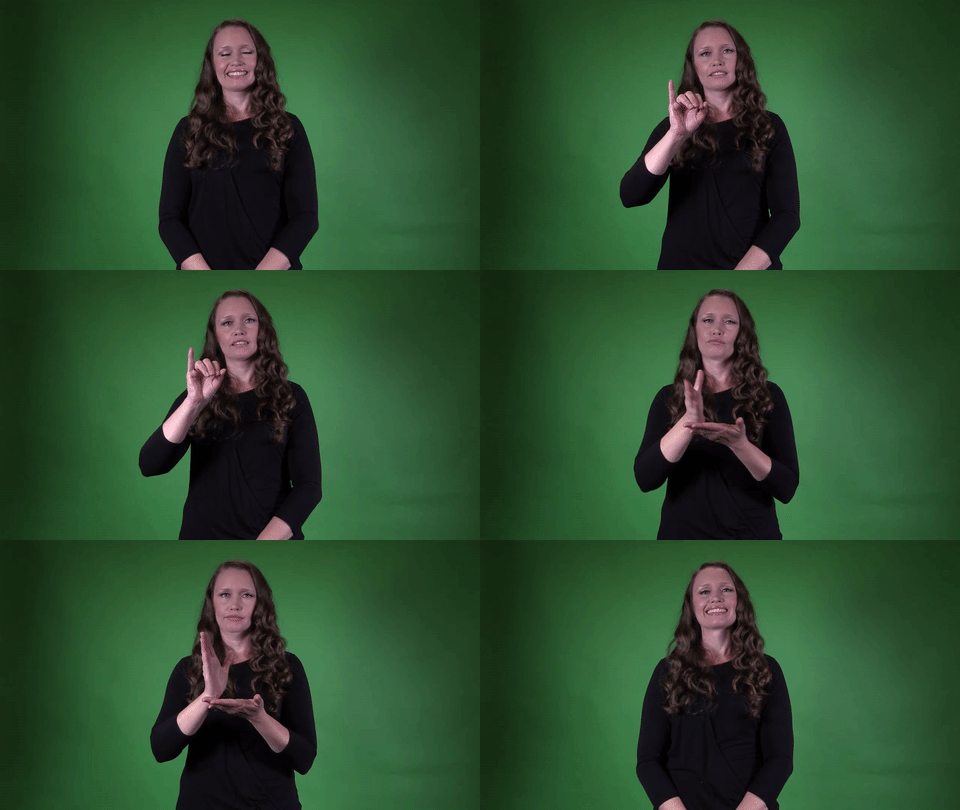
Definition: Rights of citizens.
Sign for CIVIL RIGHTS in ASL

Practice Activities:
Begin your practice by signing the individual concept words “civil” and “rights” in isolation. This helps reinforce handshapes and movements before putting them together. When rehearsing the sign for civil rights in ASL, stand in front of a mirror to watch both your facial expressions and the clarity of your movements.
Next, try using the sign for civil rights in ASL within short example sentences to build fluency. For example, sign sentences like: “Civil rights important,” “We learn about civil rights,” or “Civil rights protect people.” These provide opportunities to connect the sign to meaningful content while reinforcing basic ASL grammar structure.
Create visual flashcards using pictures or typed phrases related to civil rights themes. Practice signing each concept followed by civil rights, like “equality,” “justice,” or “march.” Match the term to a specific event and sign a short description using the sign for civil rights in ASL.
Use storytelling to strengthen expressive skills. Create a brief story about a historical civil rights figure or event, such as Rosa Parks or the March on Washington. Re-tell the story using ASL, incorporating the sign for civil rights in ASL at relevant points. This helps you not only remember the sign but place it in cultural and historical context.
Partner with another learner and role-play a classroom or interview setting discussing civil rights. One person asks ASL questions such as “Why are civil rights important?” and the other responds fully in sign. Rotate roles for extra practice and reinforce receptive skills.
Use ASL video clips featuring civil rights topics, then pause and repeat the sign when it appears. Reproduce the full sentence following the model. This builds vocabulary recognition and sign placement in real-world settings. Use these varied activities weekly to build confidence and skill.
Cultural Context:
The sign for civil rights in ASL carries powerful historical and cultural significance, especially for the Deaf community. Civil rights movements have long aimed to ensure equal access and fair treatment for all, including Deaf individuals who have had to fight for recognition, language access, and inclusion.
Throughout American history, the push for civil rights has overlapped with the fight for Deaf rights. The sign for civil rights in ASL is used when discussing social justice, legal equality, and the many movements that have sought to uplift marginalized groups. This term resonates deeply in conversations about law, opportunity, and advocacy.
In Deaf culture, communication access is closely tied to civil rights. The ability to use ASL in educational, medical, and legal settings is not just a preference—it is a right. The sign for civil rights in ASL often comes up in stories shared within the community about overcoming discrimination and advocating for change.
The concept of civil rights in ASL is more than a gesture; it’s a symbol of struggle and progress. It connects Deaf experiences with broader American movements like the Civil Rights Movement of the 1960s, highlighting parallels in the fight for visibility and equality. When used in ASL conversations, the sign for civil rights immediately brings recognition to this shared history.
Educational programs within the Deaf community often include discussions around the sign for civil rights in ASL. It’s common to teach students not only how to sign it but also to explain the meaning behind it. Understanding where the term originates from and how it’s been used reinforces cultural identity in a powerful way.
Advocacy groups within the Deaf community frequently use the sign for civil rights in ASL in rallies, campaigns, and informative sessions. This sign carries deep emotional meaning, connecting current generations with those who fought before them. Each use of this sign reflects a story of persistence and empowerment through language.
Media presented in ASL, including Deaf-led news outlets and social media accounts, often include topics related to civil rights. The sign for civil rights in ASL appears in these discussions when addressing issues such as voting access, interpreter services, and anti-discrimination laws. It’s also a keyword in educational videos aiming to spread awareness about social equity.
The sign for civil rights in ASL highlights a shared bond between the Deaf community and other groups pursuing justice. It’s used during heritage month events, awareness weeks, and public forums related to inclusion. This sign shows that language is not only a tool for expression but also a declaration of dignity and humanity.
ASL allows
Extended Definition:
The sign for civil rights in ASL represents an important concept tied to equality, freedom, and justice. In American Sign Language, this phrase is typically signed using a combination of signs that convey the idea of fairness, legal rights, and social justice. Because civil rights is a complex political and historical concept, the sign often depends on context.
To sign civil rights in ASL, most signers combine the sign for “rights” with cultural or legal concepts. The sign for “rights” often uses movements that show authority or entitlement. When talking about civil issues, you might include signs like “law,” “equal,” or “freedom” to give a fuller picture of the meaning.
The sign for civil rights in ASL is used in conversations about racial equality, voting, and social justice movements. It’s vital in educational settings, protests, historical discussions, and civil discourse. This sign has gained more visibility as social movements address inequality and promote awareness.
Because ASL is a visual language, the sign for civil rights can vary based on regional usage or the signer’s intention. Some communities may adapt the sign depending on whether they are discussing civil rights generally or a particular event, law, or group. Facial expressions and body language add to the accuracy and emphasis of the sign.
Teaching the sign for civil rights in ASL builds awareness of human rights issues and supports accessible communication on civil topics. Interpreters often use this sign during news broadcasts, speeches, and rallies to communicate important messages of equity and justice.
In ASL classrooms, learning the sign for civil rights helps students connect language with social studies. It encourages discussion about historical leaders, activism, and the ongoing fight for equal treatment. Knowledge of this sign allows Deaf individuals to fully participate in civic engagement and public debates.
Using the sign for civil rights in ASL also shows support for inclusivity within and beyond the Deaf community. Whether discussing civil rights acts or movements like Black Lives Matter, knowing this sign gives Deaf and hearing individuals the tools to talk about critical social issues clearly and respectfully.
Videos showing the correct usage of the sign for civil rights in ASL can help solidify understanding and prevent miscommunication. Observing the flow, hand shapes, and grammar used by fluent signers is key to mastering this concept. Online ASL dictionaries and educational platforms often include civil rights in their vocabulary lists because of its social importance.
The meaning of civil rights goes beyond legal definitions; it reflects personal freedom and dignity. The ASL sign captures this
Synonyms: equal rights, human rights, legal protections, constitutional rights, individual liberties
Educational resources: Find related learning materials in our course bank!
Want more? Check out some of our popular learning activities on the homepage!
Need to look up a sign? Use our highly rated dictionary: https://aslinteractive.com/best-asl-dictionary/
Follow us on tiktok: https://www.tiktok.com/@aslinteractive. More social media links at the bottom of this page!
Long-tail Keywords: what is the sign for civil rights in ASL, how do you sign civil rights in American Sign Language, ASL sign for civil rights
Categories:
tags: Civil rights, history, social justice, equality, movements
Parameters
*Handshape*:
The handshape for the sign for CIVIL RIGHTS in ASL typically involves both hands using the “F” handshape , where the thumb and index finger touch to form a circle, and the remaining fingers are extended. These “F” handshapes often represent concepts like fairness or equality in social context.
In signing the sign for CIVIL RIGHTS in ASL, the hands move in parallel, moving slightly forward and sometimes downward to symbolize shared or equal treatment. The specific handshape contributes to the meaning of justice and rights afforded to all people.
*Palm Orientation*:
The palm orientation for the sign for civil rights in ASL typically involves both hands in “F” handshapes, with palms facing each other and moving forward together. This shows unity or equal rights by keeping the hands parallel and balanced.
In some regional variations of the sign for civil rights in ASL, the palms may slightly angle upward to emphasize empowerment. Maintaining consistent palm orientation helps reinforce the concept of equal treatment and justice within the ASL community.
*Location*:
The sign for CIVIL RIGHTS in ASL is performed in the neutral space directly in front of the torso. The movement occurs at mid-chest level where both hands interact, keeping the sign centered and clear. This area allows for visibility and clarity without blocking facial expressions, which are important in ASL grammar.
The consistent location of the sign for CIVIL RIGHTS in ASL helps maintain fluid communication, especially when used in discussions about equality or legal matters. Using the neutral space ensures that the concept is easily understood and clearly visible.
*Movement*:
To form the sign for civil rights in ASL, start by signing “civil” using the letter C handshape. Place the dominant C hand at the side of the mouth and move it in a small downward arc toward the chest.
Then transition into the sign for “rights” by using both flat hands (B handshapes). The dominant hand taps the palm of the non-dominant hand, which is held horizontally. This sequence forms the complete sign for civil rights in ASL, emphasizing both personal identity and societal equality.
*Non-Manual Signals*:
When producing the sign for civil rights in ASL, maintain a serious facial expression to reflect the gravity and importance of the topic. Slight head nodding may be appropriate to emphasize affirmation or solidarity, especially when discussing historical or social justice contexts.
Eyebrows are typically neutral to slightly furrowed to show focus, and eye contact should be direct to convey sincerity. Using these non-manual cues enhances the clarity and intent behind the sign for civil rights in ASL .
*Prosody, Dominant/Non-Dominant Hand*:
The sign for civil rights in ASL typically uses both hands. The dominant hand shapes an “R” handshape and taps the non-dominant hand, also in an “R” shape, near the midsection or chest area in an alternating motion. This movement reflects equality or rights being applied across people. Both hands remain symmetrical, symbolizing balance.
To sign the concept fully, you may fingerspell C-I-V-I-L first, followed by the RIGHTS sign. This method clearly conveys the full meaning of the sign for civil rights in ASL while preserving cultural and linguistic accuracy.
Tips for Beginners:
When learning the sign for CIVIL RIGHTS in ASL, it’s helpful to understand the cultural weight behind the phrase. The concept involves justice, equality, and freedom, which the sign should convey clearly and confidently. Practice making your movements purposeful and dignified to match the importance of the meaning.
The sign for CIVIL RIGHTS in ASL typically combines signs like “PEOPLE” or “RIGHTS” depending on context. Sometimes, the fingerspelled version of CIVIL is used before signing RIGHTS. Make sure your fingerspelling is clear and precise—keep your hands visible in the signing space and angle them slightly toward the watcher, not directly at yourself.
One common beginner mistake is rushing through fingerspelling, especially with longer words like CIVIL. Take your time to form each letter accurately. For better flow, practice common fingerspelled words often used in political or historical contexts. You’ll become more confident and fluid over time.
Handshape is critical when signing RIGHTS. Whether you use the flat palm to represent the idea of rights or a movement symbolizing the granting or protection of them, ensure your fingers are fully extended and your movements are controlled. Sloppy handshapes reduce clarity in a formal sign like this.
Context also matters with the sign for CIVIL RIGHTS in ASL. In a legal or historical discussion, you may sign the full concept versus abbreviating it. Adjust based on your audience, formality, and whether they understand nuanced signs versus needing fingerspelling for clarity.
Lastly, watch native signers or trusted ASL instructors use the sign in different settings. This will give you insight into regional or generational preferences. Repetition and modeling are key to making your use of the sign for CIVIL RIGHTS in ASL both respectful and accurate.
Connections to Other topics:
The sign for CIVIL RIGHTS in ASL is often associated with the broader concept of rights, equality, and justice. It connects to other important social justice signs such as FREEDOM, EQUALITY, and JUSTICE, which are commonly used in conversations about activism and inclusivity. These signs create a thematic group that can help learners recognize patterns in how ASL expresses abstract sociopolitical ideas.
In compound signs or phrases, the sign for CIVIL RIGHTS in ASL might appear alongside signs like PROTEST, VOTING, or BLACK-LIVES-MATTER. Combining these signs allows users to discuss complex historical or current events, reinforcing vocabulary and grammatical structure used in civic discourse. For example, a signing sequence involving CIVIL RIGHTS, VOTE, and PROTECT breaks down a larger concept into accessible components.
The structure of the sign for CIVIL RIGHTS in ASL often mirrors that of other rights-related expressions, which usually involve movement toward the chest area, symbolizing personal agency or empowerment. Similar construction is found in signs like HUMAN RIGHTS and WORKERS’ RIGHTS, where the context or classifier shapes nuances of meaning. These parallels support semantic learning and deeper conceptual understanding.
Cultural context is also important in developing fluency. Discussions about figures such as Martin Luther King Jr., Rosa Parks, or the Americans with Disabilities Act may include the sign for CIVIL RIGHTS in ASL. This rooting of vocabulary in real-world context strengthens retention and provides learners with occasion-specific language.
From a linguistic standpoint, the sign for CIVIL RIGHTS in ASL also complements discussions about ASL literature, poetry, and performance. Visual storytelling about movements for justice often includes relevant signs like MARCH, FREEDOM, and DEMAND. Recognizing how the sign for CIVIL RIGHTS in ASL functions within narrative and persuasive forms can better equip learners to use the language with depth and authenticity.
Summary:
The sign for CIVIL RIGHTS in ASL combines concepts of fairness, justice, and people. It can often be expressed by using the sign for RIGHTS or EQUAL, followed by signs that indicate society or individual. In many cases, the signs for EQUAL and RIGHTS are used in compound form to express civil rights within cultural and grammatical context.
The concept of RIGHTS is often signed by tapping the “flat hand” (B-hand) against the palm of another flat hand, representing one group granting or acknowledging rights to another. For CIVIL RIGHTS, one may begin with this motion and combine it with people-centered or law-related signs. ASL relies heavily on context, and this is important when considering which classifiers or movements are appropriate.
CIVIL in the phrase sign for CIVIL RIGHTS in ASL is not typically signed directly using the English equivalent. Instead, it is conveyed indirectly through signs like PEOPLE, COMMUNITY, or those that imply civic life. This highlights the flexibility and conceptual nature of ASL where meaning supersedes English one-to-one word translation.
When signing CIVIL RIGHTS, facial grammar plays a significant role. The expression often projects seriousness or emphasis, signaling the importance or sensitivity of the topic. This facial affect aligns with the gravity of discussing human dignity and legal protections.
The concept of RIGHTS is abstract in English, and in ASL, it is grounded through culturally appropriate signs that visually represent justice or fairness. The sign EQUAL, using both hands facing each other with fingertips touching, represents balance and mutual respect. This sign is often part of the compound concept for civil rights, reinforcing equality as a cornerstone.
In the Deaf community, the sign for CIVIL RIGHTS in ASL carries deeper meaning due to the long history of fighting for equal access, education, and representation. Discussions involving this sign often invoke shared memories of events like the Deaf President Now movement or the push for captioning. These associations make the sign not only a lexical item, but also a cultural emblem.
The term civil rights is deeply rooted in the broader American narrative of social justice. Therefore, the sign for CIVIL RIGHTS in ASL often connects to other related signs like FREEDOM, JUSTICE, MOVEMENT, and PROTEST. Combining these signs in discussion allows signers to link personal experience to broader societal issues.
Some people choose to fingerspell CIVIL followed by the sign for RIGHTS, especially if clarity is needed or the conversation involves legal or academic settings. This method adds specificity and can differentiate the sign from related but distinct concepts like human rights or legal rights. Fingerspelling provides extra clarity in educational or legal contexts.
Another variation includes using the sign for LAW followed by the EQUAL or RIGHTS sign, depending on the context. This version emphasizes the legal structure that upholds civil rights. It is often used in courtroom interpreting or political discourse.
The sign for CIVIL RIGHTS in ASL can also be modified using directional movement. For example, by directing the sign for RIGHTS from a dominant hand outward, a signer could show the giving or recognition of rights. This directional use adds grammatical dimension to an already nuanced sign.
When discussing historical events, such as the Civil Rights Movement, users may add fingerspelling or time markers like PAST or TIME-PERIOD. This marks the discussion as historical rather than abstract. Such usage also adds educational value, important for classroom or narrative settings.
The morphology behind the sign for CIVIL RIGHTS in ASL reveals the intuitive logic of signed language. ASL constructs complex ideas by layering signs, modifying handshapes, and referring to visually grounded concepts like balance or judgment. This builds a tangible representation of abstract legal constructs.
Semantically, the sign for CIVIL RIGHTS in ASL taps into notions of equity, justice, and recognition. These signs are not just about the law; they’re about human existence and societal structure. In ASL, rights are seen as relationships between people and institutions, making them visible through sign interaction.
In grammatical positioning, the sign for CIVIL RIGHTS often occurs in object positions or is used as a topic marker. For instance, a signer might begin a statement with “CIVIL RIGHTS, need protect,” followed by further elaboration. This topic-comment structure is native to ASL and facilitates clarity.
There are regional and dialectical variations of the sign for CIVIL RIGHTS in ASL. Some communities utilize different classifiers or variations, especially within Black Deaf communities. This reflects the diversity and richness of signed languages, which evolve based on lived experience and cultural identity.
Sociolinguistically, discussions around civil rights in ASL spaces often intersect with issues like language deprivation, interpreter access, and educational inequality. The sign for CIVIL RIGHTS in ASL can thus open up multi-layered discourses tied to Deaf empowerment. It’s both a linguistic and sociocultural tool.
In public service announcements or advocacy campaigns, you will often see the sign for CIVIL RIGHTS in ASL used in tandem with powerful visual storytelling
Want more? Check out some of our popular learning activities!
ASL Interactive Resources
ASLInteractive YouTube Channel
Follow us on tiktok: @aslinteractive.com
Follow us on Instagram: aslinteractive
Facebook page: aslinteractive
Facebook group: aslinteractive
LInkedIn: ASL Interactive LLC
Twitter: @ASL_interactive
*Some information on this page is AI-generated. AI can make mistakes. Please check the information.


Responses