Sign for COLLECTIONS in ASL | 🧺 ASL Dictionary

Definition: A collection of items.

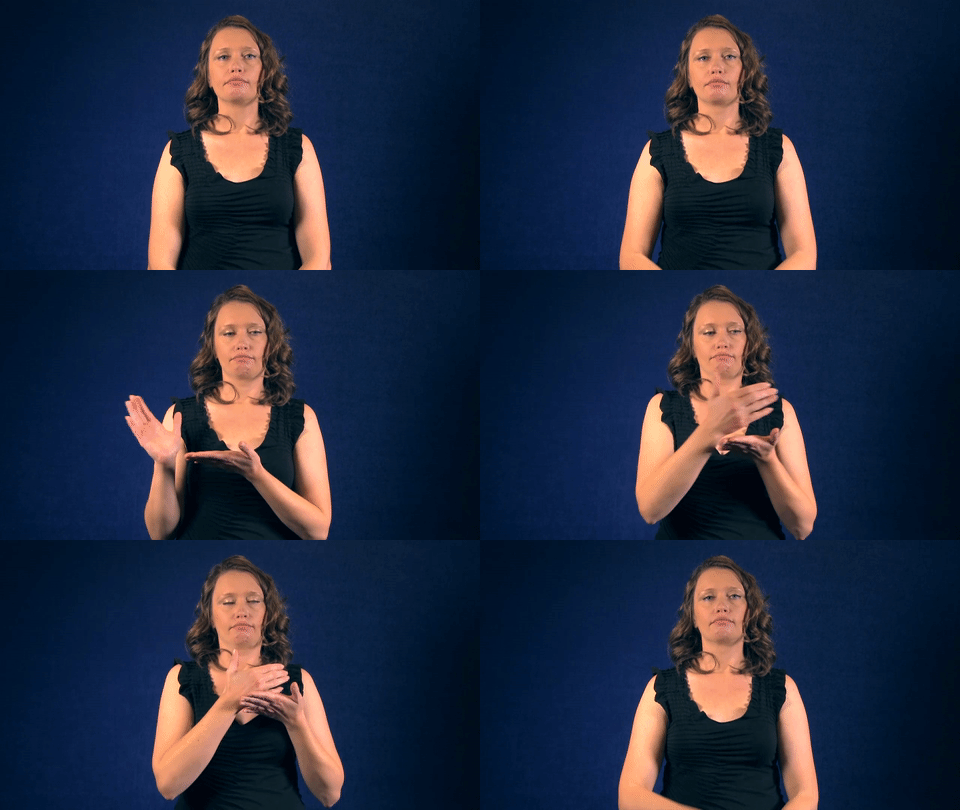
Sign for COLLECTIONS in ASL

YouTube player

Practice Activities:

Start by practicing the sign for COLLECTIONS in ASL on its own, making sure your handshape, palm orientation, and movement are accurate. Do this slowly in front of a mirror. Repeat the sign multiple times to build muscle memory and confidence in producing it smoothly.

Next, create short phrases using the sign for COLLECTIONS in ASL. Example phrases could include “stamp collections,” “art collections,” or “coin collections.” Practice saying these phrases aloud while signing to reinforce language pairing. Try signing them in a variety of emotional tones, such as excitement, pride, or curiosity. This helps with expressive signing.

Create simple sentences like: “I have many collections,” “My collection is in boxes,” or “She loves book collections.” Sign each at a conversational pace. Film yourself and watch it back to check for clarity and accuracy. Focus on transitions between signs to avoid choppiness in your signing.

For storytelling, create a short narrative about a personal or fictional collection. For instance, describe how you started your collection, what items are in it, and why it matters. Try using the sign for COLLECTIONS in ASL multiple times throughout your story. This helps reinforce the sign in context and aids in retention.

With a partner, take turns describing unique or imaginary collections using ASL without speaking. The other person should guess what type of collection is being described. This activity encourages creativity and application of related vocabulary.

Use real-world visual aids, such as pictures of collections or actual items, and describe them in detail using ASL. This bridges real objects with expressive language use.

Finally, create a mini-presentation about collections around the world using at least five variations of the sign for COLLECTIONS in ASL in context. Rehearse to improve fluency and presentation skills while strengthening understanding of this concept.

Cultural Context:

The sign for collections in ASL reflects both the conceptual meaning and the cultural importance of gathering and organizing things in Deaf culture. Whether referencing physical objects, curated sets, or digital archives, the idea of collections plays a significant role in communication and shared knowledge. The sign for collections in ASL conveys this idea through a visual representation of gathering parts into a whole.

In Deaf culture, collections may include personal items, such as books or artwork, but also shared community experiences. The way people talk about collections can vary depending on the context—like educational resources, historical artifacts, or even sign language data. The sign for collections in ASL helps convey this richness, making it easier for signers to describe complex ideas about ownership, gathering, and community.

Language preservation is deeply tied to the concept of collections. The Deaf community values the preservation of ASL stories, cultural traditions, and visual records. This makes the sign for collections in ASL especially meaningful when used to discuss archives, libraries, and data preservation. It represents more than just objects—it communicates legacy and continuity.

When the sign for collections in ASL is used in academic or institutional contexts, it often refers to structured holdings like research collections or museum exhibits. These are important not only for Deaf education but also for visibility and validation of Deaf history and experience. ASL users rely on signs like this to bridge cultural narratives with factual documentation.

The concept of collections can also be deeply personal. Many Deaf individuals or families create collections that capture their experiences, such as videos of storytelling in ASL or gatherings of signed poetry. The sign for collections in ASL supports these expressions of identity and helps people describe their efforts to maintain and celebrate their culture.

Technology adds another layer of relevance to the sign for collections in ASL. With the growth of online resources, accessible video libraries, and educational platforms, collections are more visual and inclusive than ever. The sign allows for smooth conversation around digital archives and curated streaming content, which are important tools in modern Deaf education and community engagement.

Community plays a huge role in the significance of collections. Events like Deaf cultural festivals or heritage months often highlight thematic collections of stories, films, and artwork. The sign for collections in ASL is essential for describing these events and promoting cultural pride. It’s often seen in community meetings, ASL classrooms, and even social media.

Deaf leaders, educators, and activists frequently use the sign for collections in ASL when organizing resources or educational content. It helps convey a message of

Extended Definition:

The sign for collections in ASL refers to a visual representation of gathering or grouping multiple items or objects together. In American Sign Language, this concept is typically expressed through hand movements that mimic the action of bringing things into a group or centralized space. It conveys the idea of things being accumulated or assembled, often with a sense of organization.

To express the sign for collections in ASL, the signer may begin with both hands open and move them in a scooping motion toward a central point. This mimics the idea of things being drawn together. As with many ASL signs, facial expressions and context play a significant role in conveying whether the collection is informal, such as a personal hobby, or formal, like a financial term related to debt or asset management.

This sign is flexible and can be adapted depending on the type of collection being referred to. For example, if talking about a collection of art or books, one might include classifiers or descriptive signs that give more detail about the type of items being gathered. For financial topics, the sign may be paired with terms like money, bill, or payment to be more specific.

Knowing the sign for collections in ASL is useful in many everyday conversations. It can come up when talking about personal hobbies like stamp or coin collections, or in professional contexts such as discussing museum exhibits, data collections, or legal collections. It’s a versatile sign that matches the wide range of meanings the English word collection can have.

For educational settings, students might use the sign for collections in ASL when presenting projects or talking about gathered research materials. In the workplace, employees may use it during presentations or team discussions involving grouped data or resources. It signifies not just the act of gathering, but also organizing and managing the gathered items.

Storytelling in ASL can also incorporate the sign for collections in a creative way. Since classifiers allow for dynamic descriptions of shape, size, and arrangement, the storyteller can emphasize how the collection was formed, where it’s kept, and how it affects the story. This adds richness to narration and makes the visual language even more impactful.

Context is important with the sign for collections in ASL. The same sign can be used across many situations, but its meaning changes depending on nearby signs and facial cues. For instance, financial collections require a more serious demeanor, while discussing a personal hobby with collections may involve excitement and a lighter expression.

When learning ASL vocabulary, it’s helpful to associate signs like collections with real-life objects or scenarios.

Synonyms: gatherings, groups, accumulations, assortments, assemblies

Educational resources: Find related learning materials in our course bank!

Want more? Check out some of our popular learning activities on the homepage!

Need to look up a sign? Use our highly rated dictionary: https://aslinteractive.com/best-asl-dictionary/

Follow us on tiktok: https://www.tiktok.com/@aslinteractive. More social media links at the bottom of this page!

Long-tail Keywords: what is the sign for collections in ASL, how do you sign collections in ASL, collections in American Sign Language

Categories:

tags: Clothing, Commands, Language Learning, Verbs, Everyday activities

Parameters

*Handshape*:

The handshape for the sign for COLLECTIONS in ASL typically uses curved “5” hands. Both hands start open and slightly curved, resembling the shape of a claw . As you make the sign for COLLECTIONS in ASL, the hands move inward as if gathering or scooping multiple objects into a single space, visually representing accumulation.

This handshape illustrates the gathering concept central to the sign for COLLECTIONS in ASL. The fingers remain relaxed and spread, offering a visual cue for collecting multiple items into one place, reinforcing the meaning of collection.

*Palm Orientation*:

For the sign for COLLECTIONS in ASL, the palm orientation plays a vital role in conveying the correct meaning. Both hands typically face inward, with palms facing toward the center of the body. This orientation helps emphasize the motion of gathering or bringing items together, which is central to the sign.

In the sign for COLLECTIONS in ASL, the hands may also shift slightly during the motion to reflect accumulation. This inward-facing palm position supports the concept of collecting multiple items into a central place.

*Location*:

The sign for COLLECTIONS in ASL is typically produced in the neutral space in front of the torso, slightly below the upper chest. Both hands start with bent palms facing up, positioned apart, and then move together as if gathering items into a centralized location. This centralizing motion emphasizes the idea of accumulating or collecting.

When performing the sign for COLLECTIONS in ASL, make sure the motion remains in front of the body without touching it. Facial expression can add emphasis, especially when signing in context.

*Movement*:

The sign for COLLECTIONS in ASL typically begins with both hands open and slightly curved, held in front of the chest with palms facing one another. The hands then move together in a scooping, inward motion, like gathering several items into one central point.

This movement symbolizes accumulating or grouping, which matches the meaning conveyed by the sign for COLLECTIONS in ASL. Sometimes the sign is repeated to emphasize plurality or accumulation over time.

*Non-Manual Signals*:

For the sign for COLLECTIONS in ASL, the facial expression should remain neutral or slightly inquisitive, depending on the context. Slight eyebrow raises may be used when emphasizing an accumulation or multiple-group concept.

Eye gaze typically follows the movement of the hands, supporting classifiers or directional movements used in the sign for COLLECTIONS in ASL. Mouth movements can include a silent “mm” to show amount or plurality, enhancing the concept of gathering or combining multiple items.

*Prosody, Dominant/Non-Dominant Hand*:

The sign for COLLECTIONS in ASL uses both hands. The non-dominant hand stays open, palm-up in front of the body, representing a surface or area. The dominant hand, in a flat “O” or cupped handshape, scoops in repeated motions toward the non-dominant hand, suggesting the gathering of items. This motion is done two or three times to emphasize the concept of multiple items being brought together.

The sign for COLLECTIONS in ASL focuses on accumulation, like assembling a set of stamps, debts, or art. It visually conveys the act of collecting into one centralized location using clear directional movement and hand coordination.

Tips for Beginners:

When learning the sign for COLLECTIONS in ASL, it’s essential to pay attention to the handshape and the motion used. This sign often involves a movement that mimics gathering or accumulating items together, usually executed with both hands in a curved or clawed shape moving toward a central point. Be sure your handshape is consistent and clearly formed so that the meaning of the sign doesn’t get confused with others like gather or group.

Practicing in front of a mirror can help you evaluate the clarity of your hand position and facial expressions. Since facial expressions are integral parts of ASL grammar, showing attentiveness or emphasis on the quantity can amplify the meaning of the sign for COLLECTIONS in ASL. Without the proper non-manual markers, your sign might appear flat or ambiguous.

Another tip is to vary the speed and intensity of the movement depending on the context. If you’re talking about a significant number of items, a broader motion might be appropriate. Flexibility and expressiveness are crucial because signs can slightly adjust based on context, especially in narrative or descriptive conversations involving multiple collections.

Avoid a common mistake many beginners make—confusing the sign for COLLECTIONS in ASL with those for set, group, or category. While they may look similar, especially to new signers, subtle differences in direction and hand configuration are what distinguish each sign. Watching native signers or fluent interpreters demonstrate the sign in actual conversations can be beneficial.

Finally, retain consistency in your dominant hand. Switching hands mid-sign can confuse your viewer and potentially change the meaning of your message. Repetition and practice are key—incorporate this sign into your daily vocabulary building exercises, and try creating visual associations to remember the concept easier .

Connections to Other topics:

The sign for COLLECTIONS in ASL is closely tied to the concept of grouping, gathering, or accumulating items, both tangible and intangible. It often relates semantically and visually to signs like GROUP, GATHER, and COLLECT, which involve movements that indicate pulling things together. These connections highlight the sign’s conceptual alignment with accumulation and organization.

This sign is also relevant in academic, financial, and artistic contexts. In discussions around finances, the sign for COLLECTIONS in ASL may be seen alongside signs like MONEY, BILL, and PAYMENT to describe scenarios involving debt or legal claims. When talking about art or books, the sign fits naturally with MUSEUM, LIBRARY, or EXHIBIT to explain stored or curated sets of works.

In compound signs or phrases, COLLECTIONS might appear with ADMISSIONS to represent a collections department in an institution, or with DATA to talk about data collection. These combinations help convey advanced or professional topics without relying on fingerspelling. The sign can also pair with PEOPLE or RECORDS to indicate collections of persons or documents, often seen in legal, archival, or administrative contexts.

From a grammatical perspective, classifiers can add depth when describing the nature of the collection—such as using CL:CL (representing stacks or lines) to show how the items are grouped or arranged. This further supports learners in using the sign for COLLECTIONS in ASL fluently across different scenarios. The base concept often expands through context, allowing users to frame complex narratives or presentations with a consistent core meaning.

Overall, the sign for COLLECTIONS in ASL enriches vocabulary related to organization, accumulation, and detail. It reveals structural links to both abstract and concrete signs, helping learners apply nuanced understanding in storytelling, education, and professional dialogues .

Summary:

The sign for COLLECTIONS in ASL primarily builds on the core idea of gathering, grouping, or compiling items into one. This sign often incorporates a motion that reflects accumulation or assembly, using flat or slightly curved hands that come together multiple times as if grouping objects. It’s representative of various physical or conceptual groupings, making it flexible and widely applicable across contexts.

This conceptually rich sign aligns closely with other ASL signs such as GATHER, GROUP, and ASSEMBLE, which share overlapping handshapes and directional movements. However, depending on the specific context—such as a stamp collection versus a data collection—the sign may shift or be clarified through fingerspelling or added signs to capture specificity.

Culturally, the sign for COLLECTIONS in ASL can express not just literal objects, but also abstract categories, like memories, experiences, or thoughts. Within the Deaf community, storytelling often includes references to personal collections, such as treasured Deaf artifacts or ASL literature. Using this sign in such narratives connects users emotionally and symbolically to their shared experiences.

Grammatically, the sign for COLLECTIONS in ASL is typically a noun, though it may be paired with a classifier system to show what is being collected. For instance, CL:1 can be used to represent people being grouped, while CL:3 might represent objects. This flexibility in classifier usage adds efficiency and visual richness to the sign’s deployment in discourse.

The directionality and spatial elements of the sign offer opportunities for syntactic layering in ASL. A signer can indicate from where the items are being collected and where the collection is stored by modifying the movement’s start and end points. This enhances the gesture with deeper linguistic nuance.

In everyday ASL usage, the sign for COLLECTIONS may refer to financial terms, such as debt collections, or more creatively to things like art collections. Because of this fluidity, context plays a key role in interpretation. If ambiguity arises, fingerspelling or descriptive framing often steps in to provide clarity.

Linguistically, the sign carries morphological efficiency by encapsulating the plural idea of assembled things. The repeated motion or added nonmanual signals may underscore size, value, or emotional tone of the collection. This shows how nonmanual markers can elevate a basic sign into a multidimensional linguistic construct.

Applied linguistics education around ASL often highlights the sign for COLLECTIONS in curriculum when teaching semantic fields. It’s shown to students as an example of a sign that grows in meaning depending on its contextual anchors. Through translation exercises, learners gain a deeper appreciation of contextual elasticity in ASL expression.

The sign is particularly interesting in sociolinguistic studies for how it’s adapted across regions and signer communities. Regional variations might use different motion repetitions or hand orientations. This variation emphasizes the diversity embedded in Deaf culture and regional ASL dialects.

Technology has further influenced how the sign for COLLECTIONS in ASL is represented in digital spaces. In signed video content or vlogs, this sign may be accompanied by visual cues like pointing, setting loci, or imagery to enrich viewers’ understanding. Interactive ASL platforms also often reinforce the sign with use-case examples in themed sentence drills.

When teaching ASL to hearing learners or working in interpreter training, the sign for COLLECTIONS serves as a touchpoint for exploring semantic range and syntactic use. Its plural, dynamic quality sparks discussion about quantification, enumeration, and physical versus abstract domains. Interpreters must maintain accuracy and nuance so that “collection of thoughts” is not misread as “collection of coins.”

From a cognitive viewpoint, signs like COLLECTIONS can be mentally mapped via embodied cognition principles. When executing the sign, people often feel they are physically “gathering,” which aids memory retention and pragmatic use. This is one of many signs that reinforce the embodied foundation of signed language.

The sign for COLLECTIONS in ASL is useful for describing everything from academic research data to memorabilia. This vast semantic load is mirrored in the Deaf community’s diverse communication needs. Whether describing a family’s recipe collection or an anthology of poetry, the sign serves as a bridge to shared values.

In Deaf education, particularly within bilingual (ASL-English) schools, this sign is helpful for project-based learning. Students use it when organizing personal artifacts for presentations or when doing thematic units on community history. It supports spatial reasoning as students map collections into visual graphs or charts while signing.

When incorporated into narratives or visual poetry in ASL, the sign for COLLECTIONS can take on performative beauty. The repetition and rhythmic movement allow for emotional layering, as the storyteller might increase intensity or size of the gesture. This artistic use underscores the sign’s potential beyond lexical communication.

Emerging ASL literature and digital storytelling projects now experiment with visual metaphor. The sign for COLLECTIONS might morph into symbolic gesture representing hoarding, memory, or resistance, depending on the surrounding grammar and storyline. This fluidity reflects modern creative ASL trends.

In health or therapeutic contexts, therapists and

Want more? Check out some of our popular learning activities!

ASL Interactive Resources

ASLInteractive YouTube Channel

Follow us on tiktok: @aslinteractive.com

Follow us on Instagram: aslinteractive

Facebook page: aslinteractive

Facebook group: aslinteractive

LInkedIn: ASL Interactive LLC

Twitter: @ASL_interactive

*Some information on this page is AI-generated. AI can make mistakes. Please check the information.

Sign for COLLECTIONS in ASL

Responses