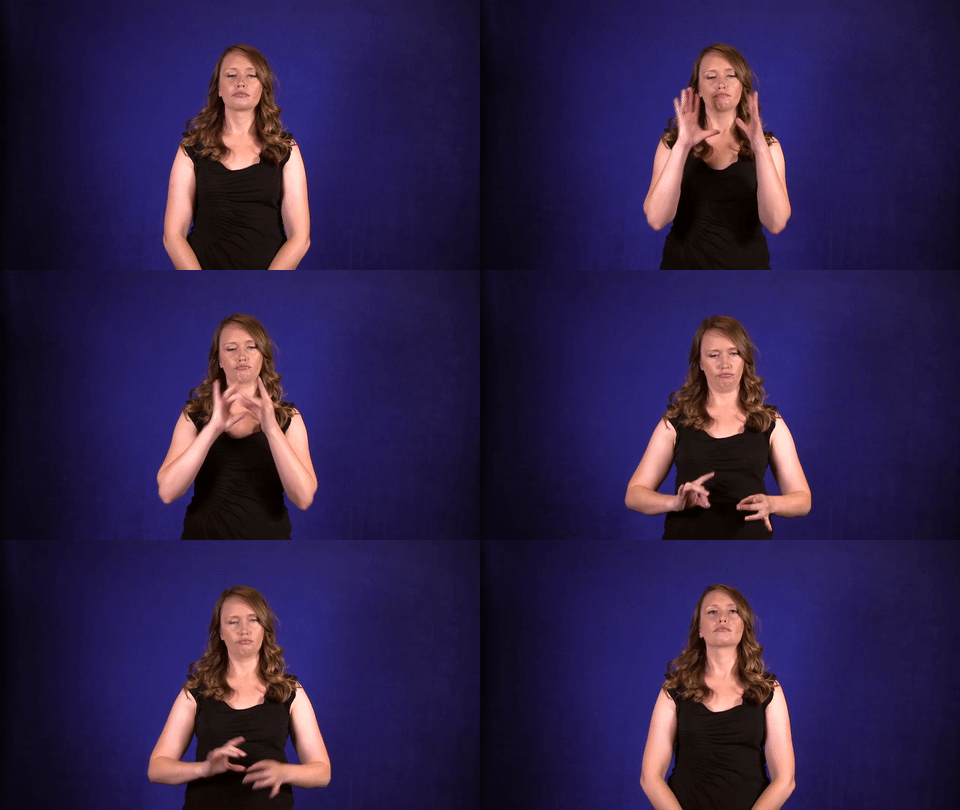
Definition: Comments.
Sign for COMMENTS in ASL

Practice Activities:
Start by practicing the sign for COMMENTS in ASL in front of a mirror to check your handshape and movement. Repeat the sign multiple times using both your dominant and non-dominant hands to get comfortable with the alternating finger motion between the hands. Make sure each hand takes a turn tapping the tip of the index finger to the opposite palm to simulate a back-and-forth idea exchange.
Next, try using the sign in isolation and then in phrases such as “your comments,” “leave a comment,” or “many comments.” Say those phrases aloud while signing to reinforce the meaning. Record yourself and check your fluidity and clarity to build confidence and precision in how you sign.
Use sample sentences like “She read all my comments,” “I posted helpful comments online,” or “Please leave comments after the meeting.” Practice signing each of these slowly, then again at normal speed. Focus on facial expressions that might accompany a positive, negative, or neutral tone based on the type of comments.
For storytelling, create a simple story where someone gives feedback or reviews a presentation. Describe how someone gives comments at school, during a work meeting, or after watching a performance. Include emotional expressions and introduce signs like FEEDBACK, SHARE, or OPINION to expand the vocabulary around the sign for COMMENTS in ASL.
Work with a partner to create a mini skit where one person signs a short presentation and the other gives comments using facial expressions and signing. Switch roles and aim to keep your feedback clear and expressive.
To challenge yourself, watch a short video clip and sign pretend comments about it afterward. This allows you to apply the sign for COMMENTS in ASL naturally and helps with receptive and expressive skills in a real-world setting.
Cultural Context:
In American Sign Language (ASL), the sign for COMMENTS reflects more than just language—it embodies the cultural values of the Deaf community. Communication through signs is rich in nuance, so the sign for COMMENTS in ASL helps users engage thoughtfully when sharing feedback, opinions, or participating in discussions.
Deaf culture emphasizes full inclusion and equal access to information. Using the correct sign for COMMENTS in ASL supports this goal, ensuring dialogue flows between Deaf and hearing individuals. It reinforces respect for linguistic access and autonomy within Deaf spaces.
In many Deaf settings, especially educational and community events, discussions happen in real-time using ASL. The sign for COMMENTS in ASL plays a key role during open forums, classroom participation, and public meetings. It allows everyone to contribute naturally and without interruption.
ASL is a visual language with its own grammar and structure, distinct from English. The sign for COMMENTS in ASL captures the intent of offering thoughts or input, including praise, suggestions, or questions. It helps shape meaningful conversations where each voice has value.
Understanding how to use the sign for COMMENTS in ASL also enhances cultural sensitivity when interacting with Deaf individuals. It shows commitment to inclusive dialogue, which is a core principle in Deaf culture. Whether you’re in-person or video chatting on platforms like Zoom or FaceTime, this sign keeps communication clear and respectful.
In Deaf storytelling or poetry, feedback and responses carry deep significance. The sign for COMMENTS in ASL may be used to solicit reactions or generate group interaction during performances. It invites expressive responses from the audience, reinforcing a collective sense of identity.
The sign for COMMENTS in ASL also appears in digital contexts, especially on social media and vlogs by Deaf creators. Using the appropriate ASL sign helps preserve the language and culture while navigating modern platforms. Communication stays vibrant, accessible, and rooted in visual expression.
In classrooms or interpreter-mediated settings, correctly using the sign for COMMENTS in ASL ensures students and educators remain engaged. It enables equal participation from Deaf students and aligns with inclusive learning practices. It’s more than a word—it’s a bridge to understanding and collaboration.
Learning the sign for COMMENTS in ASL is a small but powerful way to support accessibility and inclusion. Whether you’re a beginner in ASL or someone fluent, using it shows understanding of the language’s role in everyday interactions. It honors the visual-spatial dynamics that define ASL communication.
By incorporating the sign for COMMENTS in ASL in both personal and professional contexts, we help maintain linguistic integrity.
Extended Definition:
The sign for COMMENTS in ASL refers to the action of giving feedback, opinions, or input. In American Sign Language, this sign is used in both casual and formal situations when discussing opinions or making a statement about something. Knowing the sign for COMMENTS in ASL helps improve communication whether you’re discussing social media, giving feedback in a classroom, or sharing thoughts in everyday conversation.
To produce the sign for COMMENTS in ASL, use both hands in the handshape of the number one (index fingers extended). The dominant hand taps the mouth area and then moves forward while the non-dominant hand stays still. This movement reflects the idea of words or opinions coming from someone’s mouth and being shared outward, similar to leaving a comment.
This sign is useful when talking about online interactions , such as asking someone to leave a comment on a photo, video, or post. It also applies in discussions about written feedback on assignments, blog posts, or reports. When used in context, the sign for COMMENTS in ASL can also be part of phrases like blog comments, media comments, or user comments.
In the classroom, the sign for COMMENTS in ASL is important for encouraging student participation and sharing thoughts. Teachers can use this sign to prompt students for input or ask them to reflect on a lesson. Using ASL signs like this promotes inclusivity and allows Deaf or hard-of-hearing individuals to stay fully engaged in academic or group discussions.
On social media platforms like YouTube, Instagram, or Facebook, knowing the sign for COMMENTS in ASL makes it easier to discuss content reactions and feedback. Whether you’re talking about how many comments a post received or asking someone to read the comments section, using this sign bridges communication gaps. You can also pair this sign with other terms like LIKE or SHARE to create full phrases in ASL that relate to digital content.
This sign is often taught early in ASL learning because it’s commonly used in both in-person and digital interactions. From giving movie reviews to responding to surveys or polls, the sign for COMMENTS in ASL plays a significant role in expressing personal thoughts. It’s a foundational sign that supports deeper discussion and participation in any setting.
Understanding the context of the sign for COMMENTS in ASL helps learners use it appropriately. For example, using it in a stern tone during a meeting may indicate serious feedback, while casual use among friends might mean sharing fun or lighthearted opinions. ASL is a rich visual language, and facial
Synonyms: remarks, feedback, observations, responses, critiques
Educational resources: Find related learning materials in our course bank!
Want more? Check out some of our popular learning activities on the homepage!
Need to look up a sign? Use our highly rated dictionary: https://aslinteractive.com/best-asl-dictionary/
Follow us on tiktok: https://www.tiktok.com/@aslinteractive. More social media links at the bottom of this page!
Long-tail Keywords: What is the sign for comments in ASL?, How do you sign comments in ASL?, ASL sign for comments
Categories:
tags: Commands, Language Learning, Communication, Responses, Classroom Activities
Parameters
*Handshape*:
The handshape used in the sign for COMMENTS in ASL involves both hands in the “F” handshape . The index finger and thumb are brought together while the remaining fingers stay extended and relaxed.
To produce the sign for COMMENTS in ASL, you alternate tapping the tips of the index finger and thumb from one hand to the other, mimicking an exchange of information. This handshape emphasizes clarity and articulation, often used in signs involving precise input or dialogue.
*Palm Orientation*:
For the sign for COMMENTS in ASL, the palm orientation begins with both the dominant and non-dominant hands in the shape of the “flat O” or “pinched” handshape. The dominant hand taps the tips of the fingers against the center of the non-dominant palm.
The palm of the non-dominant hand faces sideways, usually towards the center of the body, while the dominant hand’s palm faces inward. This orientation supports the back-and-forth motion commonly seen in the sign for COMMENTS in ASL. ️
*Location*:
The sign for COMMENTS in ASL is produced in the neutral space in front of the upper torso, roughly at chest level and slightly away from the body. This location allows for clear movement between the two hands as one taps the other, resembling the idea of making a statement.
In the sign for COMMENTS in ASL, both hands stay in a centered, comfortable position that is easily visible to the viewer. The sign stays within the typical signing space, making it efficient and fluid to incorporate into conversation.
*Movement*:
The sign for COMMENTS in ASL involves both hands, typically using the index fingers. Start by forming an “F” handshape with your dominant hand and tap the tip of the thumb and index finger onto the palm of your non-dominant flat hand once or twice in a bouncing motion.
This movement represents making a point or adding a note, capturing the concept behind the sign for COMMENTS in ASL ️. Maintain steady, deliberate motion to clearly convey the idea of providing input or remarks in a conversation.
*Non-Manual Signals*:
When using the sign for COMMENTS in ASL, your facial expression should appear neutral to engaged, depending on context. Slight head nodding can indicate affirmation or attentiveness while signing.
Eyebrows may be slightly raised if requesting someone to leave comments or offering feedback. Eye contact is important to convey sincerity and interaction. Matching your expression with the tone of the message enhances the clarity of the sign for COMMENTS in ASL ️.
*Prosody, Dominant/Non-Dominant Hand*:
The sign for COMMENTS in ASL uses both hands in “F” handshapes. The dominant hand taps the tip of the thumb and index finger of the non-dominant hand, mimicking a back-and-forth motion like sharing or exchanging ideas. The motion is done in a controlled, clear manner indicating interaction.
Prosidy reflects an exchange of information, so the head may tilt slightly or shift side to side. The facial expression often shows attentiveness or engagement, reflecting the intent behind the sign for COMMENTS in ASL.
Tips for Beginners:
When practicing the sign for COMMENTS in ASL, begin by focusing on handshape and movement precision. The dominant hand uses the index finger and thumb to mimic a small pinching gesture, then taps forward twice on the non-dominant hand formed in the same shape. Make sure the motion is clear and deliberate without looking rushed, which helps the sign be more easily understood.
One common pitfall when learning the sign for COMMENTS in ASL is blending it too closely with signs like TALK or DISCUSSION. Keep your finger and thumb pinched rather than creating a flat palm, and avoid sliding motions that could confuse the meaning. Pay attention to how many times your hand taps—twice is generally the standard for this sign in conversational use.
Maintain proper body positioning and eye contact while you sign. This supports overall clarity when signing in real-life scenarios such as meetings, class discussions, or online content creation. If you’re unsure whether you’re doing the motion correctly, try learning in front of a mirror or recording yourself on video to self-correct.
Use facial expressions to reinforce your message when using the sign for COMMENTS in ASL. For example, if you want to express a surprised or enthusiastic reaction to a comment, couple the sign with widened eyes or a nod. These non-manual cues give more depth to your signing and assist with tone.
Lastly, be patient with yourself. Mastery doesn’t happen overnight. Try using the sign during everyday conversations when mentioning remarks, thoughts, or replies to make it a natural part of your ASL vocabulary. Practicing in context will accelerate your comfort and accuracy with the sign for COMMENTS in ASL.
sign for COMMENTS in ASL, how to sign COMMENTS in ASL, ASL sign for comment, comment sign ASL, American Sign Language COMMENTS sign
Connections to Other topics:
The sign for COMMENTS in ASL is closely related to the signs for FEEDBACK, OPINION, and DISCUSSION, as all involve communication and the exchange of ideas. These concepts often overlap in conversations about social interaction, digital communication, and professional dialogue. Understanding the sign for COMMENTS in ASL helps learners grasp how opinions and expressions are conveyed in various contexts, both in person and online.
When discussing online environments, the sign for COMMENTS in ASL frequently appears in compound phrases like LEAVE-COMMENTS, READ-COMMENTS, or DELETE-COMMENTS. These compound signs help convey digital behaviors and are useful for discussing social media, websites, and forums. This connection shows how ASL evolves to meet modern communication needs.
The sign can also be used in academic or formal settings tied to feedback and critique. For instance, in classroom discourse or during presentations, phrases such as CLASS-COMMENTS or TEACHER-COMMENTS let signers discuss evaluative responses. These layered meanings support deeper communication, especially during question-and-answer sessions.
In ASL storytelling or vlogs ♂️, the sign for COMMENTS in ASL plays a key role in prompting audience engagement. Content creators may encourage their viewers to COMMENT-BELOW or SHARE-COMMENTS, tapping into interactive elements. This use not only promotes communication but also fosters community through shared dialogues.
Learners will benefit from pairing the sign for COMMENTS in ASL with facial expressions to emphasize tone, whether the comment is positive, critical, casual, or surprised. Non-manual markers add depth to this sign, influencing how the comment is perceived. This interplay enhances overall signing fluency and clarity in interpretation.
Additionally, this sign links naturally with conversational signs like RESPOND, ASK, and SUGGEST. These associations offer a more dynamic range of vocabulary, allowing signers to navigate discussions more effectively and engage in meaningful exchanges in both formal and casual settings.
Summary:
The sign for COMMENTS in ASL centers around the concept of relaying opinion, feedback, or observations. This is typically executed using a directional sign that mimics the idea of sharing or stating something. It visually aligns with giving input or providing verbal notes in a spoken context.
To perform the sign for COMMENTS in ASL, you use both index fingers and thumbs in an open-G handshape. One hand starts at the mouth and moves forward to meet the other hand, suggesting the transfer of speech or spoken thought. The direction of this sign may vary depending on grammatical markers such as subject-object relationships.
This sign incorporates the idea of dialogue and community input, placing emphasis on the concept of shared thoughts. The motion of information moving from the speaker to the listener reflects ASL’s visual-spatial grammar. Emphasis can be altered by changing the speed or size of the movement to reflect tone or intensity.
In American Deaf culture, the sign for COMMENTS in ASL is often associated with engagement within the community. Feedback is seen as an important aspect of mutual understanding and connection. Whether in storytelling, performances, or discussions, commenting acknowledges attention and presence.
Linguistically, this sign belongs to a family of signs that involve interaction and communication. Similar signs include DISCUSS, SPEAK, and FEEDBACK, but each carries its own directional nuance or handshape. By modifying hand movement or orientation, related meanings can be derived, linking them semantically.
From a morphological standpoint, the sign for COMMENTS in ASL is a directional verb. Directional verbs in ASL are unique in that they incorporate information about subject and object directly into the movement. This allows for visually embedded syntax that reduces the need for adjacent signs.
Applied linguistics might investigate how learners interpret such signs, especially those rooted in metaphor. For COMMENTS, the metaphor of “talk going toward someone” is intuitive for native users but might require explanation for new signers. Understanding these conceptual metaphors bridges the gap between second-language learners and native fluency.
The sign patterns used in the sign for COMMENTS in ASL are consistent with classifier constructions in more advanced discourse. For instance, a signer might shift body position to represent different parties in a conversation, then use the sign in relation to those parties. This creates narrative fluidity.
Grammatically, COMMENT as a verb can be inflected to fit the subject-object agreement model in ASL. This enhances linguistic efficiency by removing the need for additional pronouns. One can also shift to a noun form through reduplication or context-driven usage.
In visual literature and ASL storytelling, the sign for COMMENTS in ASL takes on a performative element. Signers may exaggerate or dramatize it for clarity or emotional emphasis. This highlights the flexibility of ASL’s expressive potential beyond direct translation.
Within the digital age, using the sign for COMMENTS in ASL during social media discussions or online forums has become commonplace. Signers often use this sign to reference online comment sections or critiques in vlogs. It reflects the evolution of language concurrent with technological change.
The sign for COMMENTS in ASL contributes to classroom environments by facilitating student-teacher exchanges. Whether used in peer reviews or class discussions, it promotes inclusivity and accessibility. ASL educators often encourage its use to foster interaction.
When interpreting spoken English, the appropriate translation of words like “say”, “remark”, or “feedback” may often use the sign for COMMENTS in ASL. The context of the sentence dictates precise sign choice. Professional interpreters must navigate these subtle distinctions for accurate portrayal.
In cultural events such as Deaf poetry slams or community panels, giving and receiving comments becomes a vital part of ongoing dialogue. Signers might contextualize feedback by pairing the sign with facial expressions or topical markers. This aligns the sign with deeper social and communal values.
Historically, the concept of commenting has been ingrained in Deaf advocacy. Town halls and community decisions often depended on collective input, with COMMENT as a symbol of shared voice. This showcases how language intersects with civil engagement in Deaf spaces.
Neurolinguistics might study how directional signs like the sign for COMMENTS in ASL are processed. It involves spatial reasoning and motor planning, often using different neural pathways than auditory-based languages. This speaks to the bodily-visual nature of ASL cognition.
From a pedagogical perspective, teaching the sign for COMMENTS in ASL opens the door for lessons on respectful critique and feedback culture. Students learn not only language mechanics but also conversational ethics. It broadens their understanding of community interaction.
Comparison with other sign languages shows some parallels in signs for COMMENT or feedback. For instance, British Sign Language has a similar concept, though with different handshapes. This highlights both the uniqueness and universality of signed communication categories.
Emoji use in conjunction with the sign for COMMENTS in ASL adds a dual-layered communication strategy in digital spaces. Signs paired with visual symbols like or ️ help link signed messages to broader digital literacy trends
Want more? Check out some of our popular learning activities!
ASL Interactive Resources
ASLInteractive YouTube Channel
Follow us on tiktok: @aslinteractive.com
Follow us on Instagram: aslinteractive
Facebook page: aslinteractive
Facebook group: aslinteractive
LInkedIn: ASL Interactive LLC
Twitter: @ASL_interactive
*Some information on this page is AI-generated. AI can make mistakes. Please check the information.


Responses