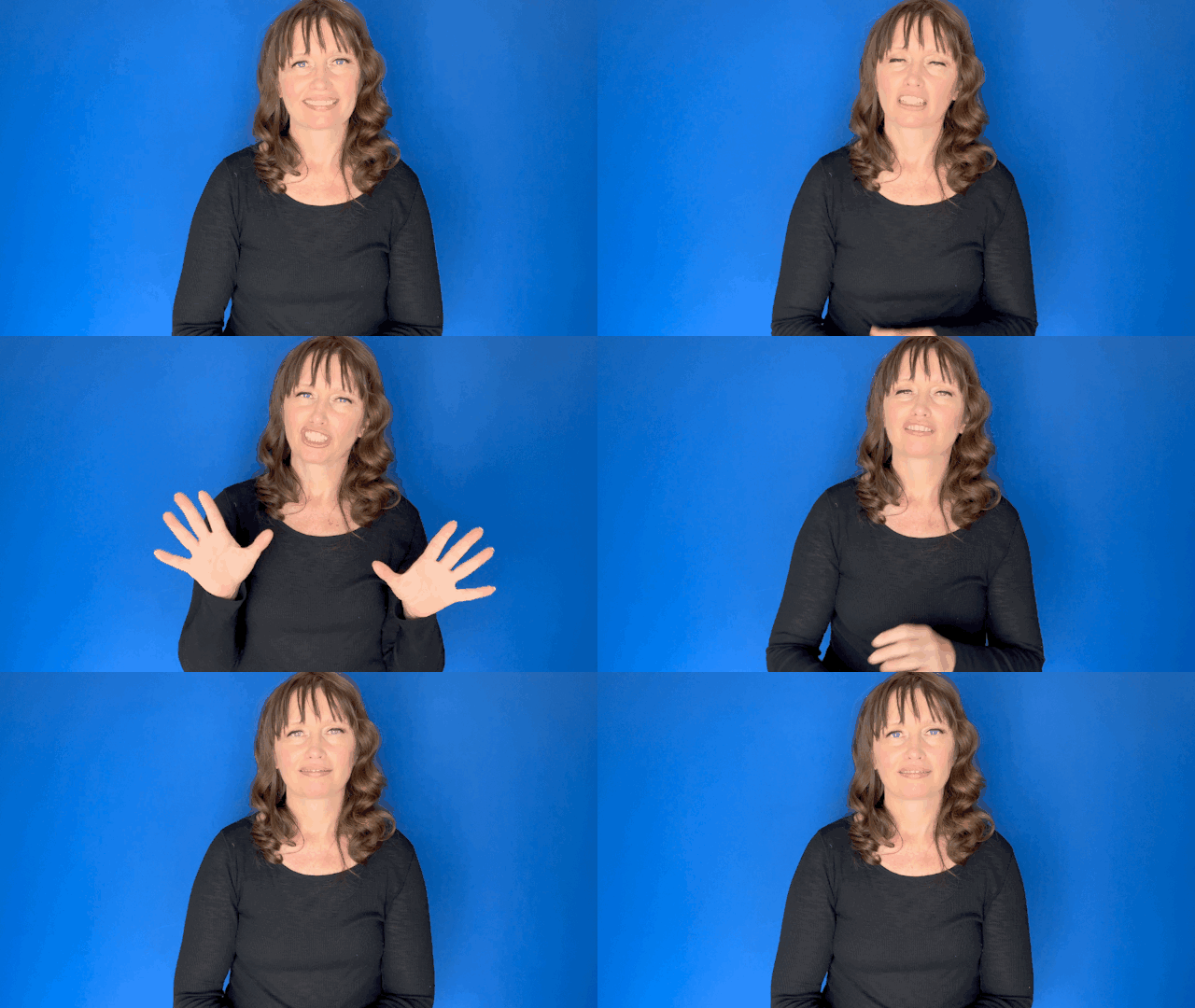
Definition: To complete finish.
Sign for COMPLETE FINISH in ASL

Practice Activities:
To get comfortable with the sign for COMPLETE FINISH in ASL, start by practicing it in front of a mirror. Sign it multiple times in isolation, paying attention to facial expressions and palm orientation. Use both quick and smooth motion as this sign conveys a sense of something being totally done.
Next, try using the sign in simple sentences. For example, sign “homework COMPLETE FINISH,” “chores COMPLETE FINISH,” or “project COMPLETE FINISH.” These will help you link the sign naturally with daily activities. Practice varying sentence topics, such as food, schoolwork, or trips, to get a feel for its versatility.
Pick a partner or classmate and alternate describing recent tasks you’ve finished, like “I clean kitchen COMPLETE FINISH” or “movie COMPLETE FINISH, I sleep.” This encourages conversational flow. Add facial expressions that match the idea of something being finalized or done.
Create a short story using five activities that end with the sign for COMPLETE FINISH in ASL. For instance, begin with waking up, eating breakfast, going to school, returning home, and finishing homework. Add the sign at the end of each task to reinforce its meaning visually.
Time-travel storytelling also works well. Describe your day from morning to night, each time ending with the sign for COMPLETE FINISH in ASL. This helps with sequencing and associating the sign with multiple real-life contexts.
Watch ASL videos or vlogs online, and identify when others use the sign for COMPLETE FINISH in ASL. Mimic what you see, using similar timing and expression. Practice retelling what you observed.
Use flashcards, showing daily tasks on one side and asking yourself to respond with a sentence using the sign on the other. This repetition will build confidence and reinforce memorization.
Cultural Context:
In American Sign Language, the sign for COMPLETE FINISH in ASL carries more than just a literal translation. It reflects cultural nuances that are deeply rooted in how Deaf signers express time, completion, and closure in a conversation or narrative. This sign encapsulates the idea of something being done thoroughly, beyond just being over.
The sign for COMPLETE FINISH in ASL often emphasizes finality and resolution. It’s commonly used at the end of stories or explanations to indicate that all relevant information has been given and nothing more needs to be said. This usage aligns with the highly visual and impactful nature of ASL communication.
When a signer uses the sign for COMPLETE FINISH in ASL, they aren’t just saying something is ended—they’re showing that it was fully carried out. Deaf culture values clarity and completeness in storytelling and conversation, and this sign helps convey that effectively. It serves as a transition point between topics or events.
ASL tends to avoid unnecessary repetition, so the sign for COMPLETE FINISH in ASL often replaces multiple English words or phrases. In spoken English, one might say totally finished, completely done, or all wrapped up. In ASL, a single, expressive sign covers all these meanings and more.
Using the sign for COMPLETE FINISH in ASL also signals mutual understanding between signers. It acts as a cue that both parties can move on to a new topic or task. This helps maintain the visual rhythm and natural flow of an ASL conversation.
In Deaf culture, body language and facial expressions play a major role. When signing COMPLETE FINISH, the facial expression reinforces the concept of being fully done. Raised eyebrows, a nod, or a head tilt often accompany the sign, amplifying its meaning beyond the hand movement alone.
ASL is visual and spatial, and the sign for COMPLETE FINISH in ASL is also spatially significant. It can show how time moves from one point to another. For instance, when telling a story, a signer might establish a timeline and use COMPLETE FINISH to indicate the end of one phase before moving on.
The sign for COMPLETE FINISH in ASL is also important in academic and instructional settings. Teachers and interpreters frequently use it at the end of an activity or lesson to signal closure. This visual cue helps students refocus and prepares them for what comes next.
In family and community interactions among Deaf people, signing COMPLETE FINISH plays a practical role. It may be used after chores, projects, or group discussions to indicate
Extended Definition:
The sign for complete finish in ASL is a powerful and expressive sign used to convey that something is entirely done or finalized. It’s more than just indicating an action is over; it adds emphasis and finality to the completion. This concept is common in many conversations where a speaker wants to stress that nothing remains unfinished or in-progress.
In American Sign Language, the sign for complete finish typically involves a quick movement of both hands, palm facing out, brushing away from the body. Often, it is accompanied by a facial expression that reinforces the idea of total completion. The movement is sharp and definitive, which helps convey the finality of the message being expressed.
This sign can be used in many different contexts. For example, someone might sign complete finish after completing a long project, finishing a meal, or ending a relationship. It adds emotional weight to the statement, letting the listener know that everything is truly done with nothing left lingering.
The sign for complete finish in ASL is often used in storytelling and casual conversation alike. It’s a highly visual way to stress that a task or event has truly ended. ASL users often combine this sign with body language and facial expression to enrich the meaning.
In some cases, the sign for finish alone might be used, but adding the concept of complete finish can underscore that the process or situation is 100% over. The use of this sign highlights how ASL conveys nuance through gesture intensity and clarity. Instead of just stating that something stopped, this sign communicates resolution.
Knowing the sign for complete finish in ASL can be useful for students, teachers, interpreters, and native users alike. It allows for greater fluency and expression when discussing past events or final decisions. It also helps in understanding ASL grammar and the cultural use of emphasis.
Because ASL is a visual language, the context in which you use the sign for complete finish can shift its meaning slightly. For instance, using it with a serious face can imply something very important has ended. In lighter conversations, it may just mean the task was totally wrapped up, and there’s a sense of satisfaction or relief.
The placement of this sign in a sentence can vary depending on the structure, but it often appears at the end to emphasize that everything previously discussed has been resolved. You might also see this sign repeated slightly to draw even more attention to the completeness of the action.
Understanding how to use the sign for complete finish in ASL also supports better comprehension when watching fluent signers. Seeing this
Synonyms: complete, finalize, conclude, wrap up, finish
Educational resources: Find related learning materials in our course bank!
Want more? Check out some of our popular learning activities on the homepage!
Need to look up a sign? Use our highly rated dictionary: https://aslinteractive.com/best-asl-dictionary/
Follow us on tiktok: https://www.tiktok.com/@aslinteractive. More social media links at the bottom of this page!
Long-tail Keywords: what is the ASL sign for complete finish, how do you sign complete finish in ASL, ASL sign for complete finish
Categories:
tags: Commands, Verbs, Everyday Activities, Language Learning, Completion
Parameters
*Handshape*:
The handshape for the sign for COMPLETE FINISH in ASL typically uses open “5” hands. Both hands start in a relaxed open position, with fingers spread apart and palms facing inward toward the body. This base handshape helps create the swift motion that emphasizes the sudden completion of an action. The sign for COMPLETE FINISH in ASL often includes a flicking motion to enhance the visual impression of finality.
Using this handshape, the sign conveys immediacy and totality, fitting the concept of something being completely done. Proper formation and movement of the “5” handshape is important for the sign for COMPLETE FINISH in ASL to be clearly understood. ✨
*Palm Orientation*:
The palm orientation for the sign for COMPLETE FINISH in ASL begins with both hands held in front of the body, palms facing inward toward the signer. As the motion occurs, the palms change orientation to face outward, away from the body, in a quick and deliberate flicking movement.
This transformation from inward to outward palm orientation helps convey the sense of completion or finality in the sign for COMPLETE FINISH in ASL. The movement is sharp and clear, emphasizing that something has been fully or completely done.
*Location*:
The sign for COMPLETE FINISH in ASL is produced primarily in front of the torso, slightly below the chest level. Both hands begin close to the body and then flick outward quickly, emphasizing a completed action. This location allows the sign to be clearly seen and aligns with other verbs that indicate finality or transitions. The movement and positioning together reinforce the full meaning behind the sign for COMPLETE FINISH in ASL.
*Movement*:
The sign for COMPLETE FINISH in ASL involves a two-part motion that clearly shows the idea of something being done or finalized. Start with both hands in a flat “B” or open-5 handshape, palms facing your chest, moving slightly forward while positioning your dominant hand slightly higher.
Then, quickly flick both hands outward, rotating the palms so they face away from you. This outward flick shows something being completely finished or over. The movement is swift and emphasizes finality, making it ideal for expressing the concept in the sign for COMPLETE FINISH in ASL.
*Non-Manual Signals*:
When using the sign for COMPLETE FINISH in ASL, the non-manual signals include a slight forward head movement and a clear, assertive facial expression to indicate something is thoroughly done. The eyebrows may raise slightly at the end of the sign to emphasize finality, and the mouth may form a shape like “pah” to show completion. ✨
These facial cues enhance the clarity of the sign for COMPLETE FINISH in ASL, adding emotional depth and helping to distinguish it from similar signs. Consistent use of these expressions ensures that the meaning is fully conveyed to the viewer.
*Prosody, Dominant/Non-Dominant Hand*:
The sign for complete finish in ASL uses both hands. The dominant hand is open with fingers spread, palm facing inward, and starts nearer the chest. The non-dominant hand mirrors the same shape and position. With a brisk motion, both hands flash forward and outward simultaneously, twisting slightly so palms end up facing out. This quick action conveys finality and totality, emphasizing the meaning behind the sign for complete finish in ASL.
Facial expression plays a key role in delivering the concept. A sharp head nod or intense eye focus often accompanies the movement, reinforcing that something is entirely concluded. The sign for complete finish in ASL can reflect a sense of abrupt or definite ending depending on the signer’s intent.
Tips for Beginners:
When learning the sign for COMPLETE FINISH in ASL, make sure to pay close attention to your facial expressions. This sign uses a sharp movement and a clear facial expression to communicate finality or totality. Without the proper non-manual signals, the meaning may not translate clearly, so practice with a mirror or record yourself to see how well you’re matching the intended emotion.
The sign for COMPLETE FINISH in ASL typically involves a quick outward flick of the dominant hand from a base position and is often paired with the word “finish.” Timing matters—if the movement is too slow or the hand lacks confidence, the sign may appear incomplete or confusing. A snappy, firm flick communicates the idea of completion more effectively.
Avoid blending the gestures for “complete” and “finish” too closely into a muddled motion. While the sign may incorporate both concepts, clarity is essential. Practice separating each meaning first before gesturing them together. Being deliberate with your motions will help clarify intent, especially for new learners.
A common mistake learners make when signing the sign for COMPLETE FINISH in ASL is forgetting the directional movement and not fully flicking the hand away from the body. This gesture adds the feeling of “it’s done,” and helps distinguish it from similarly structured signs. Rehearse turning your palm from inward to outward to solidify the motion.
Beginners should practice this sign in context—such as when talking about finishing homework, a project, or a book. Embedding it in sentences helps reinforce memory and fluency. Watching native signers on video or in real settings can also provide more natural pacing and varied example usages of the sign for COMPLETE FINISH in ASL
Connections to Other topics:
The sign for COMPLETE FINISH in ASL is closely linked to time concepts and event transitions in ASL structure. This sign is often used to indicate that something is over, no longer in progress, or fully achieved, which can align with grammar markers for perfective aspect. In ASL, where tense is expressed differently from spoken English, COMPLETE FINISH helps show a clear endpoint of an action or event.
This sign frequently appears in compound forms to expand meaning, such as in HAVE+FINISH to mean “already” or THINK+FINISH to imply the thought process is over. It can also be joined with CLEAN or WORK to express that those tasks have been fully completed, reinforcing the sense of closure. These combinations allow for clear, concise communication in storytelling, daily conversation, and formal settings.
The expressive nature of COMPLETE FINISH supports emotional tone. When used with exaggerated facial expressions or quick movements, it can indicate frustration or relief, depending on the context. This adaptability makes it ideal for signing concepts like “finally,” “done with it,” or “no more.” ASL learners benefit from mastering the nuances of this sign early on.
Conceptually, the sign for COMPLETE FINISH in ASL ties into verbs that are telic—actions with a clear endpoint—versus atelic actions, like ongoing states. It also connects to classifiers when indicating completed actions, like assembling furniture or writing a paper. Understanding how this sign functions helps learners grasp larger ASL grammar patterns.
In narrative contexts, COMPLETE FINISH can indicate scene transitions or the conclusion of a story. It acts as a visual cue, helping the signer and viewer maintain clarity in longer dialogues. Recognizing how and when to insert COMPLETE FINISH enhances fluency and improves narrative cohesion in ASL.
Summary:
The sign for COMPLETE FINISH in ASL carries a layered meaning that depends heavily on context and grammatical structure. It can convey not just the act of something being done, but a finality or emphasis on total completion.
This phrase typically involves two separate signs in sequence: COMPLETE followed by FINISH. Though often used together, each has its own distinct motion and conceptual nuance in ASL.
For COMPLETE, one common sign starts with both hands in an open “5” shape. The dominant hand brushes over the non-dominant hand in a smooth, slightly downward motion, sometimes with a slight snap or change in facial expression to show intensity or full accomplishment.
FINISH is often done with open “5” hands in a palm-out orientation. Both hands move quickly out and slightly downward, with a flick of the fingers. This conveys that something is not just done, but done with finality or decisively.
When used together, the sign for COMPLETE FINISH in ASL often serves to clarify and underscore the sense of completion. This combination is especially useful in storytelling, narrations, and signing that require precision or emphasis about the completion of a task or event.
Grammatically, FINISH also functions as an aspectual marker in ASL. It can occur before or after a verb to show that the action is completed. This makes its usage very dynamic and context-sensitive, which directly affects how it appears in the sign for COMPLETE FINISH in ASL.
Adding the COMPLETE sign before FINISH adds a certain emphasis. It strengthens the message that something is fully resolved or no longer in progress. Whether it’s finishing a meal, project, or conversation, it helps frame closure both practically and emotionally.
The sign for COMPLETE FINISH in ASL is often accompanied by facial expressions such as raised eyebrows or head nods. These non-manual markers help underscore the meaning and offer emotional cues in conversation.
From a linguistic standpoint, the transition from the COMPLETE sign to the FINISH sign is significant. It marks a syntactic shift, similar to a clause boundary, allowing ASL users to combine them or use them independently.
In Deaf culture, precision and clarity in signing are deeply valued. The sign for COMPLETE FINISH in ASL satisfies this cultural norm by offering both a visual and grammatical cue that something has reached its end point.
There is also a thematic association with time in this expression. When someone uses the sign for COMPLETE FINISH in ASL, they often mean that something is not just temporally over, but also concluded in purpose and effort.
In practical use, the phrase shows up often in academic and professional settings where tasks, assignments, or responsibilities are being communicated. It also appears in casual conversations when someone wants to relay that they’re done with something.
For instance, telling someone “I COMPLETE FINISH my work” in ASL assures them there’s no ongoing task. The use of both signs lets the speaker intensify the sense of closure beyond just saying DONE.
The sign for COMPLETE FINISH in ASL is visually vibrant and easy to recognize. It offers immediate cognitive feedback to the viewer, which helps maintain the flow of ASL conversation.
These signs are also useful for expressing transitions in storytelling. For example, using COMPLETE then FINISH allows the signer to indicate a shift to a new part of the narrative, much like a paragraph break.
In educational environments, students learning ASL are encouraged to use FINISH early on. When paired with COMPLETE, the sign for COMPLETE FINISH in ASL introduces students to more nuanced language forms.
Teachers may use this phrase to model sentence boundaries, demonstrate control over time-related expressions, and explore how ASL handles perfective aspects of verbs.
The physicality of the signs also connects to ASL’s spatial grammar. The sign for COMPLETE FINISH in ASL may be angled slightly depending on who or what is being discussed, reinforcing pronoun agreement and showing spatial relationships.
There are dialectical variations in the sign for FINISH depending on region. Some Deaf ASL users may use a less pronounced flick, while others might double the movement for added drama or expression.
These regional shifts don’t typically change the core meaning of the sign for COMPLETE FINISH in ASL, but they do highlight the linguistic richness and variety within ASL communities.
Applied linguistics also explores how learners internalize this structure. For second-language ASL learners, using both COMPLETE and FINISH together can improve their expressive range and clarity.
Using the sign for COMPLETE FINISH in ASL is also a bridge into deeper concepts like aspect, tense, and modality. It acts as a visual aid for understanding completed action in an embodied way.
From a performance or theatrical ASL view, this phrase helps punctuate key moments in a scene. It’s a strong, finalizing gesture that leaves no ambiguity in the air.
There are also metaphorical uses. A person might sign COMPLETE FINISH in ASL about a relationship, a chapter in life, or emotional state to
Want more? Check out some of our popular learning activities!
ASL Interactive Resources
ASLInteractive YouTube Channel
Follow us on tiktok: @aslinteractive.com
Follow us on Instagram: aslinteractive
Facebook page: aslinteractive
Facebook group: aslinteractive
LInkedIn: ASL Interactive LLC
Twitter: @ASL_interactive
*Some information on this page is AI-generated. AI can make mistakes. Please check the information.


Responses