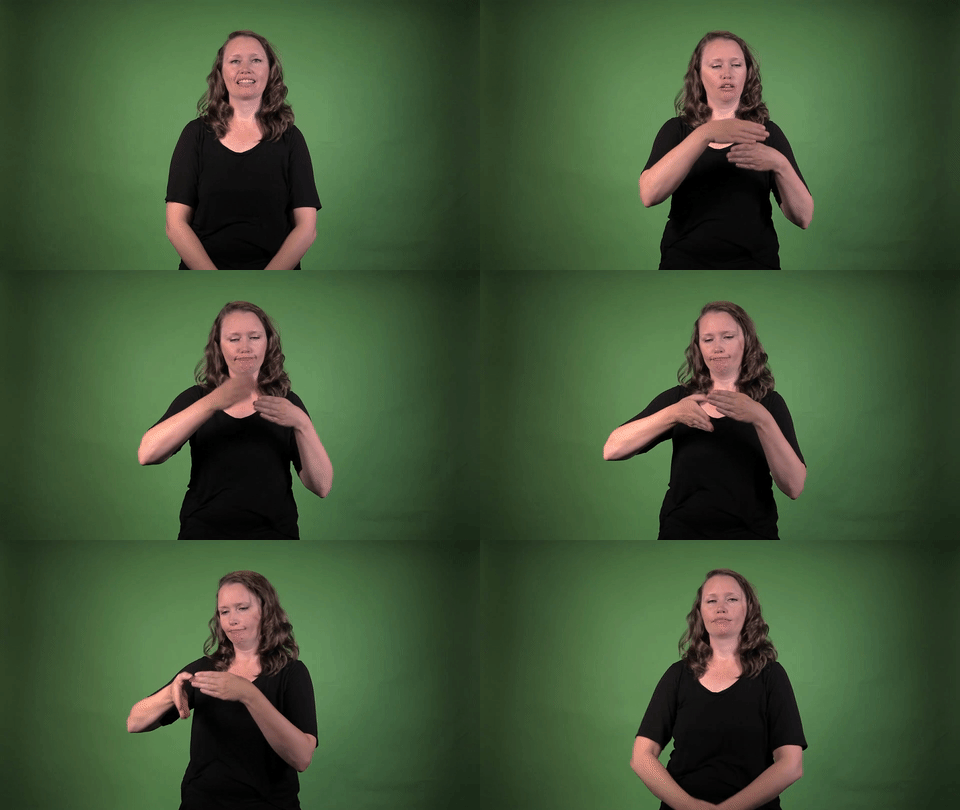
Sign for COMPLETING in ASL | ✅ ASL Dictionary

Definition: Completing.

Sign for COMPLETING in ASL

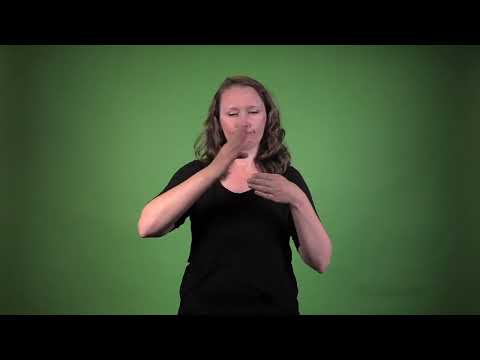
YouTube player

Practice Activities:

To begin practicing the sign for COMPLETING in ASL, try standing in front of a mirror and signing the word slowly and accurately. Focus on handshape, palm orientation, and movement. Repeat the sign several times to build muscle memory. Start in short practice sessions of five to ten minutes to keep your hands fresh and focused.

Use flashcards to help reinforce the concept. Write different situations or tasks on each card, such as “completing homework,” “completing a project,” or “completing a race.” Pick a card and demonstrate the sign for COMPLETING in ASL with facial expressions that match the context on the card. This adds realism and emotional depth.

Create full ASL sentences that include the sign for COMPLETING in ASL. Try examples like: “I just finished reading the book” or “They completed the assignment yesterday.” Sign each sentence, emphasizing fluency and natural transitions. Record yourself and watch the playback to observe your accuracy and movement.

Try storytelling prompts such as, “Tell about a time you completed something difficult.” As you sign the story, incorporate the sign for COMPLETING in ASL at appropriate points. This will help you feel more confident using the sign in real-life narratives.

Partner up with another ASL learner for a conversation-based activity. One person describes a scenario, and the other person responds using a sentence that naturally includes the sign for COMPLETING in ASL. Switch roles every few minutes to get equal practice.

Practice a timed challenge where you describe five things you have completed during the day. This helps build fluency and encourages spontaneous sentence building. The more variety you practice, the quicker you’ll internalize the sign’s use in different contexts.

Cultural Context:

In American Sign Language, the sign for COMPLETING in ASL carries cultural significance beyond the literal meaning. Deaf culture places strong value on follow-through, personal responsibility, and the sense of finishing what has been started. The concept of completing a task or a goal is often seen as empowering and meaningful within the Deaf community.

The sign for COMPLETING in ASL is used not only in academic or work settings but also in everyday conversations. Whether it’s completing a project, assignment, or personal challenge, this sign communicates closure and achievement. It reflects a sense of progression and moving forward that aligns with Deaf cultural values of self-determination.

In educational settings, the sign for COMPLETING in ASL may be used during graduation ceremonies, final exams, or as part of classroom routines. Students learning in ASL settings become familiar with this sign as a marker of academic success and growth . Teachers often sign COMPLETING to acknowledge milestones or to encourage students to finish their tasks.

In the workplace, Deaf professionals use the sign for COMPLETING in ASL to discuss finished reports, completed assignments, or fulfilled objectives. Because communication is highly visual in Deaf culture, signs like COMPLETING serve a vital function in streamlining interactions with coworkers and supervisors. It helps build clarity and shared understanding in professional environments.

Personal development is another area where you’ll frequently see the sign for COMPLETING in ASL. Completing a self-improvement goal, such as fitness training or a personal project, often includes a sense of motivation that is visually communicated through ASL. Using this sign is a way to celebrate progress and reinforce dedication .

Within Deaf communities, group projects or community events also emphasize the importance of completion. Volunteers and organizers might use the sign for COMPLETING in ASL when discussing finished community activities or successful events. This reinforces accountability and encourages participation in community affairs.

In family and daily life, parents may sign COMPLETING to children when asking if they’ve finished homework, chores, or other responsibilities. The sign acts as a gentle reminder and helps build routines in households where ASL is the primary language of communication. It supports the value of structure and discipline from an early age .

ASL is deeply rooted in visual and kinesthetic expression. The sign for COMPLETING in ASL allows signers to embody not just an action, but a feeling of accomplishment and finality. It’s a concept that’s easy to relate to and frequently needed in conversation, which makes it a useful and powerful addition to

Extended Definition:

The sign for completing in ASL conveys the idea of finishing a task, bringing something to an end, or successfully reaching a goal. It’s a frequently used concept in both casual and formal settings, especially in school, work, and personal achievements. In ASL, the visual nature of the language allows the sign for completing to capture both the physical and emotional sense of accomplishment .

To express the sign for completing in ASL, hand movements often represent something coming to an end or being fully done. This aligns closely with the English word “complete,” but ASL grammar and structure make it distinct in motion and facial expression. The sign may change slightly depending on whether you are completing a specific task, a period of time, or a process.

When signing completing in ASL, the context makes a big difference. For example, completing a book assignment uses different surrounding signs or classifiers than completing a life goal. ASL doesn’t always rely on one fixed sign for a concept; instead, it adapts based on the conversation’s focus and meaning.

The sign for completing in ASL is useful in education settings when discussing finished homework, completed courses, or end-of-semester projects. In workplace conversations, it helps describe completed tasks, finished reports, or concluded meetings. This sign has a strong practical function across different areas of life, underlining its importance in everyday communication.

For deaf and hard-of-hearing individuals, being able to clearly express the idea of completing something in ASL supports more nuanced conversations. It allows users to describe not just the end of a task, but also the satisfaction or relief that comes with getting something done ✅. In this way, the sign provides both functional and emotional expression.

Learning the sign for completing in ASL also strengthens a signer’s understanding of verbs in American Sign Language. Verbs like complete, finish, begin, and continue can all show progression or transition. This helps learners become more fluent by recognizing how ideas are connected in a visual-gestural language.

Cultural context is also vital. Within the Deaf community, the sign for completing in ASL may be used during formal ceremonies, such as graduation, where completing one’s education is a celebrated milestone. It also appears in personal milestones like finishing a home project or completing a journey of self-improvement. These uses show the sign’s flexibility and depth.

This vocabulary sign is fundamental not just for students or professionals, but also for families communicating about daily routines. Children can use the sign for completing

Synonyms: finishing, finalizing, concluding, wrapping up, fulfilling

Educational resources: Find related learning materials in our course bank!

Want more? Check out some of our popular learning activities on the homepage!

Need to look up a sign? Use our highly rated dictionary: https://aslinteractive.com/best-asl-dictionary/

Follow us on tiktok: https://www.tiktok.com/@aslinteractive. More social media links at the bottom of this page!

Long-tail Keywords: what is the sign for completing in ASL, how do you sign completing in ASL, ASL sign for completing

Categories:

tags: Activities, Commands, Language Learning, Everyday Activities, Verbs

Parameters

*Handshape*:

The handshape used in the sign for COMPLETING in ASL begins with both hands in a flat “B” handshape, palms facing inward. As the motion starts, the hands move away from each other quickly, shifting to open “5” handshapes with palms facing outward to indicate something being finished or finalized.

This transition visually represents the idea of wrapping something up or completion. The sign for COMPLETING in ASL captures the finality of a task or action through this deliberate change in handshape.

*Palm Orientation*:

The palm orientation for the sign for COMPLETING in ASL begins with both hands in a modified “5” handshape. The dominant hand moves outward while the palm faces downward, brushing across the top of the non-dominant hand, which also starts palm-down.

Throughout the motion of the sign for COMPLETING in ASL, the palms remain mostly flat, with minimal rotation. This orientation helps convey the idea of finishing or concluding a task clearly and efficiently.

*Location*:

The sign for COMPLETING in ASL typically occurs in the neutral space directly in front of the upper torso. The hands begin slightly separated and then move apart quickly, palm sides facing down and slightly outward. This location allows for clear visibility and emphasizes the idea of finishing or reaching an endpoint, essential to the meaning of the sign for COMPLETING in ASL.

Because it is produced in front of the chest, the sign for COMPLETING in ASL fits naturally into the visual field, aligning with many signs that convey completion or finality. It keeps the motion within a comfortable and easily understood range.

*Movement*:

The movement for the sign for COMPLETING in ASL typically begins with both hands in flat “B” handshapes, palms facing inward and touching lightly at the fingertips. In a swift, deliberate motion, the dominant hand slides off the fingertips of the non-dominant hand and continues forward, ending with the palm facing outward.

This motion symbolizes completion or finishing a task. The sign for COMPLETING in ASL visually conveys the idea of something coming to an end or being fully done.

*Non-Manual Signals*:

When performing the sign for COMPLETING in ASL, the face usually displays a clear expression of finality or accomplishment. The eyebrows may be slightly raised and the eyes focused, showing that something has come to an end or been achieved.

A slight head nod forward can accompany the motion to reinforce the idea of something being finished. The sign for COMPLETING in ASL may also include a subtle exhalation or relaxed mouth posture to signal relief or resolution.

*Prosody, Dominant/Non-Dominant Hand*:

The sign for COMPLETING in ASL uses both hands. The dominant hand, held flat and palm down, moves in a quick, brushing motion over the non-dominant hand, which is also flat and stationary in front of the body. This movement conveys the idea of something being finalized or brought to an end.

Both hands work together smoothly, with the dominant hand completing the motion to indicate something has been done. The sign for COMPLETING in ASL captures the concept of wrapping up a task or finishing a process with precision and clarity. ✅

Tips for Beginners:

When learning the sign for COMPLETING in ASL, it’s important to focus on the speed and precision of your movement. This sign typically involves a quick, clean motion that represents the idea of finishing or completing something. Practicing the movement in front of a mirror can help build confidence and make sure the execution is clear to the viewer.

A common mistake beginners make with the sign for COMPLETING in ASL is rushing through the motion without enough control. While the sign should be quick, it still needs to be deliberate and fluid. Make sure your handshape is correct at both the start and the end of the motion, and avoid unnecessarily exaggerated gestures.

Hand placement and facial expression both play roles in making your sign more meaningful. For example, if you’re talking about something exciting or urgent being completed, raise your eyebrows or show a look of satisfaction. ASL is a visual language, so these non-manual signals give context and emotion to your signs.

Be consistent with the hand dominance you’ve chosen. The dominant hand performs the main action, and switching hands randomly can confuse the meaning. For the sign for COMPLETING in ASL to be effective, use your dominant hand consistently throughout your practice sessions.

It helps to practice the sign in everyday sentences. Try phrases like “I’m completing my homework” or “The project is finally completing” in ASL. This will help solidify your understanding and make it easier to retrieve the sign naturally in conversation.

Finally, watch native signers using the sign for COMPLETING in ASL and mimic their facial expressions, body posture, and rhythm. It’s not just about the hand movement but how the whole body communicates the concept of completion. Practice regularly to build muscle memory and develop fluidity over time.

Connections to Other topics:

The sign for COMPLETING in ASL is closely related to concepts such as finishing, ending, and achieving. It often appears in conversations centered around accomplishing goals, finishing tasks, or closing projects. This makes it an essential sign in both academic and professional settings, where tracking progress or marking completion is a common topic.

In ASL, the idea of finishing or ending something connects to signs like FINISH, DONE, and COMPLETE. The sign for COMPLETING in ASL may share similar handshapes or movements with these related signs, especially FINISH, which often incorporates a quick flicking motion. These signs help express verb aspects relating to the completion of an action, which is crucial for clear timeline communication in sign language.

Compound constructions using the sign for COMPLETING in ASL can appear in phrases like FINISH-CLEAN, meaning “completed cleaning,” or FINISH-HOMEWORK, meaning “homework is completed.” These compound signs help streamline communication, turning multiple concepts into a single fluid interaction. They are often used in schooling and family contexts, allowing for efficient expression of daily activities.

Another connection can be made to progression signs, such as BEGIN, CONTINUE, and then COMPLETE, creating a logical narrative flow. Learners of ASL can benefit from recognizing how these signs form a natural sequence in timeline-based storytelling. Understanding the sign for COMPLETING in ASL within this sequence helps clarify events and their order—particularly useful in narrating personal experiences or projects.

Additionally, the concept of achieving a goal, used in motivational contexts, often involves the sign for COMPLETING in ASL to indicate success or fulfillment. Signs like SUCCEED or REACH-GOAL may follow it to elaborate that something was not only finished but done well. This illustrates how ASL integrates emotional or qualitative dimensions alongside actions.

Summary:

The sign for COMPLETING in ASL emphasizes a clear, abrupt motion that visually cues the idea of finality. To produce the sign, start with both hands in open 5-handshapes, palms facing downward slightly. Then quickly move the dominant hand forward while simultaneously snapping from an open 5-handshape into a flat B-handshape, indicating closure or the finished state of an action.

This sign belongs to the broader category of completion-related signs, such as FINISH and DONE. The motion used in the sign for COMPLETING in ASL shares similarities with these other verbs of finality but may vary in intensity and context. The context in which a signer chooses COMPLETING over FINISH often relates to formal or structured tasks.

Grammatically, the sign for COMPLETING in ASL often marks the culmination of an action that is integral to the discussion. It typically appears after the verb it modifies or at the end of a clause for emphasis. This temporal role it plays reflects ASL’s tendency to build meaning across time rather than assigning rigid subject-verb-object order.

The sign for COMPLETING in ASL may also function as a modifier to reinforce the state of accomplishment related to schoolwork, professional tasks, or long-term goals. For example, one might use this sign when discussing completing a degree, finishing a project, or achieving a deadline. Its versatility makes it an indispensable sign in narratives and formal discourse.

Culturally, the concept of completion holds great significance within the Deaf community. Whether referring to personal milestones or shared achievements, the concept represented by the sign for COMPLETING in ASL is often used to stress perseverance and accomplishment. Visual languages such as ASL give clear visibility to transformations, making the act of finishing highly expressive.

The high-speed snap in the sign conveys decisiveness—no lingering, no partial results. This gives the sign a unique visual identity rooted in the visual-spatial logic of ASL. Even when used symbolically, its iconicity remains consistent with its literal meaning.

In ASL storytelling, the sign for COMPLETING in ASL evokes closure, both literal and metaphorical. It can signal the end of a dramatic arc, a moral resolution, or a character’s journey. This narrative function aligns with ASL’s general penchant for spatial-temporal markers over more abstract temporal tenses.

In educational settings, the sign is often introduced alongside FINISH to highlight nuanced differences. Teachers may explain that while FINISH often cues a completed task in general, COMPLETING can imply a comprehensive closing of a multistep activity. That subtle semantic distinction helps learners refine their expressive power.

From a linguistic standpoint, the morphology of the sign for COMPLETING in ASL demonstrates how motion alone can shift grammatical intensification. The sharp motion toward closure mimics the satisfaction of a task successfully ending. This type of non-manual feature coordination is common in ASL where body and facial expressions contribute essential grammatical information.

Non-manual markers, such as furrowed brows or a head nod at the end of the sign, can add layers to the meaning. In contexts where the signer is confirming or emphasizing the completeness of the task, these markers enhance the impact of the message. This coordination creates a dynamic visual grammar structure richer than isolated handshapes.

Interpersonally, the sign for COMPLETING in ASL signals accountability. When someone uses this sign, they are affirming progress and asserting closure. In workplace or educational environments within the Deaf community, this can be a powerful cue to move onto another topic or segment of discussion.

The rhythmic nature of the sign contributes to its memorability. Learners often attach physical sensations to visual movements, and the swift hand transition gives a tactile sense of conclusion. This embodiment of meaning reinforces memory and retention, especially in immersive ASL acquisition contexts.

Connections also exist between the sign for COMPLETING in ASL and concepts in applied linguistics. For instance, gesture analysis explores how abrupt termination in movement implies finality across cultures. In this sign, the hand snapping shut reflects these global embodied metaphors, though its exact execution is deeply situational in ASL.

In terms of syntax, the sign may alternate position based on what the speaker wants to emphasize. One could place the sign before a subject to preemptively denote that the task is already wrapped up. Or it might follow a list of discussions or subtasks to serve as a summarizing gesture.

Structurally, the sign prioritizes briefly active motion, differentiating it from continuous action verbs. While signs like WORK or PRACTICE focus on repetition and ongoing effort, COMPLETING uses an evident breakpoint. That contrast provides valuable semantic scaffolding in complex conversations.

In personal conversations, using the sign for COMPLETING in ASL often implies relief or pride. Added facial expressions such as widened eyes or lip-pressed smiles reinforce this interpretation. The sign becomes more than linguistic—it becomes emotional.

Professionally, this sign is crucial in projects, planning, and education. Deaf

Want more? Check out some of our popular learning activities!

ASL Interactive Resources

ASLInteractive YouTube Channel

Follow us on tiktok: @aslinteractive.com

Follow us on Instagram: aslinteractive

Facebook page: aslinteractive

Facebook group: aslinteractive

LInkedIn: ASL Interactive LLC

Twitter: @ASL_interactive

*Some information on this page is AI-generated. AI can make mistakes. Please check the information.

Sign for COMPLETING in ASL

Responses