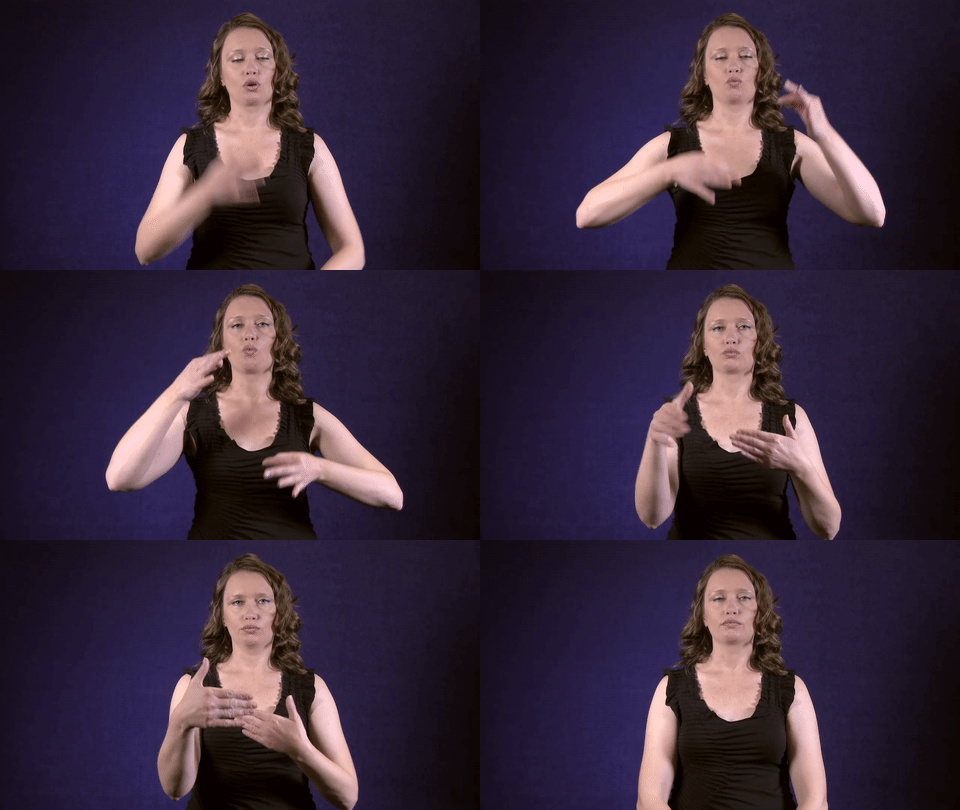
Sign for COURT ROOM in ASL | 🚪 ASL Dictionary

Definition: A room where legal cases are heard.

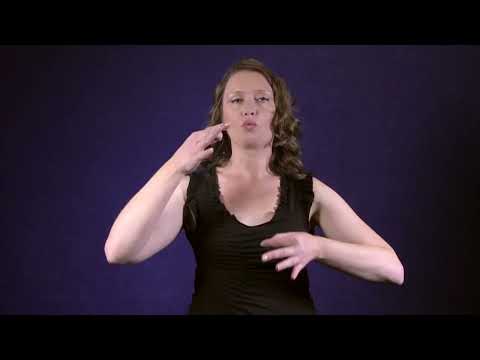
Sign for COURT ROOM in ASL

YouTube player

Practice Activities:

Start by practicing the sign for COURT ROOM in ASL in isolation using a mirror. Focus on the individual components: first sign “court” and then “room.” Repeat this sequence slowly and then at natural speed until it feels smooth. Record yourself signing and compare it to a fluent signer or video reference to check accuracy.

Use the sign for COURT ROOM in ASL in simple sentences like “I go to court room tomorrow” or “The judge is in the court room.” Practice signing these aloud and use facial expression to match your sentence meaning. Try asking and answering in ASL with a partner using questions like, “Where is the court room?” or “Who is in the court room today?”

Create a short story involving a courtroom scene. Possible starters include: “Today I had jury duty,” or “The lawyer stood in the court room and spoke.” Tell your story out loud in ASL using the sign for COURT ROOM in ASL each time the location appears. Include signs like “judge,” “lawyer,” “defendant,” and “witnesses” to make your story feel realistic and immersive.

Play a role-play activity with a partner. One of you can be the judge, and the other a lawyer or witness. Set up a mock court room and act out a simple trial scene, using the space around you to show the room’s layout. Point to the area when using the location sign to reinforce spatial referencing for the court room.

Review videos or ASL storytelling clips that show a courtroom setting, and watch how fluent signers use the location transition. Try shadowing the signer and incorporate the timing and rhythm in your own practice. Keep practicing by using the sign for COURT ROOM in ASL in different types of sentences like describing your favorite court TV show or explaining how courts work.

Cultural Context:

Understanding the sign for COURT ROOM in ASL involves more than just knowing the handshape and motion. It also includes understanding the cultural and social context in which the sign is used. Deaf culture places a strong value on clarity and direct visual communication, especially when discussing formal settings like a court room.

In ASL, the sign for COURT ROOM in ASL combines signs for legal concepts and physical space. This reflects how Deaf individuals conceptualize places based on function and purpose. A court room is not just a physical room—it represents justice, authority, and structured process, all of which are reflected in the sign’s components.

Legal settings often require interpretation services, and being familiar with the sign for COURT ROOM in ASL is essential for both Deaf individuals and interpreters. It helps with clarity when discussing legal matters or navigating the justice system. For many Deaf individuals, knowing the appropriate vocabulary in ASL builds empowerment and autonomy in such formal environments ⚖️.

When using the sign for COURT ROOM in ASL, context matters. It is often used in conversations about court hearings, trials, legal consultations, and civil or criminal matters. Understanding when and how to use this sign properly ensures accurate communication within the Deaf community as well as with hearing individuals.

In Deaf culture, storytelling plays a huge role, especially when describing personal experiences. If someone is sharing a story about being in court, using the sign for COURT ROOM in ASL can visually immerse the audience. A storyteller would often pair the sign with strong facial expressions and role shifting to convey the seriousness and emotional tone connected to the situation.

In professional settings involving legal procedures, using the correct sign for COURT ROOM in ASL is part of being respectful and credible. Interpreters, social workers, law professionals, and educators who work with Deaf clients are expected to be fluent in such critical legal signs to ensure equal access to justice.

The sign for COURT ROOM in ASL contributes to legal literacy in the Deaf community. Community workshops and ASL classes often include signs like this to help prepare Deaf individuals for life events that may involve the legal system. Knowing this sign helps reduce stress and confusion during official proceedings ️.

Access to accurate legal signs empowers Deaf people to participate fully in society. The sign for COURT ROOM in ASL is one component of a broader set of legal vocabulary that ensures communication equity during high-stakes interactions like trials, witness testimony, or jury duty.

Just as with any cultural language

Extended Definition:

The sign for court room in ASL is a combination of signs that represent both the idea of a court and the concept of a room. American Sign Language often uses compound signs to express full ideas, and this is a perfect example. To sign court room in ASL, you typically begin by signing court, followed by the sign for room.

The ASL sign for court is often created by signing law or legal concepts, depending on context. This sign usually involves placing a flat hand against the palm of the other, mimicking the scales of justice or showing a reference to legal authority. The concept of court can be expressed with slight variations depending on the region or user preference.

Once you sign court, you then complete the phrase with the sign for room. The sign for room in ASL uses a movement that shows the outline or shape of a small four-sided space, like drawing the shape of a room’s boundaries in the air. This illustrates that it’s a physical location connected to a legal proceeding.

The full sign for court room in ASL therefore expresses both the legal function and the physical space. It is commonly used in conversations about jury duty, legal proceedings, or when discussing locations within government and justice buildings. The sign may appear in educational content, law-related discussions, or workplace presentations that involve interpreting services.

When learning the sign for court room in ASL, clarity and context are critical. Because ASL is a visual language, grammatical structure and body language often help convey more detailed meaning. For example, the facial expression you use when signing court room can convey whether the context is serious, formal, or stressful.

In classroom settings or interpreter training programs, the sign for court room in ASL is often used as an example of how compound signs work to describe more specific places or ideas. This aids in vocabulary building for both deaf and hearing learners of the language. Practicing compound location-based signs like court room helps expand fluency and comprehension.

While there is a common structure to this sign, keep in mind that regional variations can occur within the deaf community. Some ASL users may adapt or modify the sign depending on their background or area. Always watch for how your conversation partner responds and clarify if needed.

Video demonstrations and handshape diagrams can be helpful for mastering this sign. Visit ASLinteractive to see a native signer perform the sign for court room in ASL and slow it down for practicing at your own pace. Seeing the sign in context, such as in a courtroom scenario

Synonyms: courtroom, trial room, legal chamber, judicial hall, tribunal

Educational resources: Find related learning materials in our course bank!

Want more? Check out some of our popular learning activities on the homepage!

Need to look up a sign? Use our highly rated dictionary: https://aslinteractive.com/best-asl-dictionary/

Follow us on tiktok: https://www.tiktok.com/@aslinteractive. More social media links at the bottom of this page!

Long-tail Keywords: what is the sign for courtroom in ASL, how do you sign courtroom in American Sign Language, ASL sign for courtroom

Categories:

tags: Courtroom, Legal, Facilities, Occupations, Major Decisions

Parameters

*Handshape*:

The handshape for the sign for COURT ROOM in ASL typically uses the “F” handshape for the word “court,” where the thumb and index finger form a circle while the other fingers stay extended. This is moved in an alternating fashion between both hands, resembling a scale of justice.

For “room,” both hands form flat “B” handshapes and outline the shape of a square to suggest a four-walled space. Together, the sign for COURT ROOM in ASL combines these elements to convey both the concept of law and physical space.

*Palm Orientation*:

For the sign for COURT ROOM in ASL, the palm orientation typically starts with both hands in an “O” handshape for the sign COURT, where hands face each other slightly upward and outward. When transitioning to ROOM, both flat hands face each other, palms inward, representing the shape of a room.

In the sign for COURT ROOM in ASL, maintaining consistent palm orientation is key, especially when switching between the two signs fluidly. The hands generally stay vertical and inward-facing throughout this compound sign.

*Location*:

The sign for COURT ROOM in ASL is typically produced in the neutral space in front of the torso. For the first part, the sign for “court” is made near chest height, while “room” is created by outlining the shape of a rectangular space in front of the body using both hands.

This neutral signing area allows clear visibility for both parts of the compound sign. When signing the full phrase, ensure each component of the sign for COURT ROOM in ASL is delivered clearly and with slight pauses to distinguish each concept.

*Movement*:

The sign for COURT ROOM in ASL typically begins by signing COURT using a modified “F” or flat “O” handshape tapped lightly on the palm of the opposite hand, symbolizing the scales of justice. Then, sign ROOM by forming both hands into flat “B” shapes and outlining the sides of a room in front of the body.

The movement in the sign for COURT ROOM in ASL combines precision with clarity. The transition from COURT to ROOM should be smooth, emphasizing the connection between the concept of law and the physical space. ️

*Non-Manual Signals*:

The non-manual signals for the sign for COURT ROOM in ASL typically include a neutral to slightly formal facial expression, reflecting the seriousness or official nature of a courtroom setting. Eyes often glance toward the imagined space being referred to when indicating “room,” helping to structurally define the location.

Slight head movement may accompany the transition between the concept of “court” and “room,” clarifying the compound structure of the sign for COURT ROOM in ASL. Maintain steady eye contact and minimal exaggerated emotions, aligning with the respectful tone of a court environment.

*Prosody, Dominant/Non-Dominant Hand*:

The sign for COURT ROOM in ASL typically uses the dominant hand shaped in a “C” to represent “court,” moving from one side to the other above the non-dominant palm, mimicking scales of justice ⚖️. For “room,” both hands form flat “B” shapes and move in front of each other to outline a box shape, resembling a room ️. The sign for COURT ROOM in ASL combines both ideas to create a clear visual concept.

Tips for Beginners:

When learning the sign for COURT ROOM in ASL, it’s helpful to break it into parts. The concept is typically shown in two segments: the sign for COURT followed by the sign for ROOM. COURT is commonly signed by forming the letter “F” handshape (like a judge or fairness concept) and tapping it twice on the back of your non-dominant palm, mimicking a gavel. ROOM is signed by outlining the box shape of a room using both hands in flat “B” handshapes.

Beginners often rush the combined sign and blur the movements together. Take your time to sign COURT clearly first, then pause briefly before doing ROOM. This small pause helps people distinguish you’re signing a place, not just a legal term. When in doubt, it’s okay to fingerspell COURT ROOM if clarity is needed, particularly in legal or professional settings.

Handshape accuracy is essential. Make sure your “F” hand maintains a clean circle between the thumb and index finger without collapsing. Practicing in the mirror can help you monitor this. For ROOM, keep your hands flat and angle the box shape as if framing a little space in front of you — think 3D perspective.

Facial expressions also add meaning when using the sign for COURT ROOM in ASL. Keep your expression neutral or slightly serious to reflect the nature of the subject. Don’t over-emphasize the facial expression unless providing context like a humorous story or sarcastic tone.

Practice often using legal or real-world examples — talk about going to a COURT ROOM, watching a trial, or talking to a lawyer. The more you use the sign for COURT ROOM in ASL, the more natural and fluid it will become . Consistent, intentional use is key to ASL fluency.

Connections to Other topics:

The sign for COURT ROOM in ASL connects closely with other signs in the legal and civic domain. It is typically a compound of the sign for COURT and the sign for ROOM or AREA. The sign for COURT often involves referencing the concept of judgment or law, while ROOM can be conveyed using the “four walls” classifier structure, showing space around a location.

Understanding the sign for COURT ROOM in ASL helps learners better conceptualize other signs related to law and governance. For example, signs like JUDGE, LAWYER, TRIAL, and JUSTICE are directly related and frequently used together in interpretation settings or legal discussions. These signs often appear in similar contexts and share movements or handshapes that echo the authoritative nature of the legal space.

Compound signs allow for the expansion of vocabulary through frank representation of real-world domains. The sign for COURT ROOM in ASL is a great example of semantic grouping. Similar compounds include CLASS+ROOM, BATH+ROOM, or OPERATING+ROOM. In each case, the environment is defined by the activity that happens within it, creating contextually meaningful combinations.

In storytelling or interpreting within legal contexts, knowing how to express the sign for COURT ROOM in ASL enables more precise and nuanced communication. For instance, during a legal scene in a signed drama, the interpreter might need to shift between COURT ROOM, JURY, and WITNESS STAND quickly. These concepts are often built with spatial referencing, so placement and orientation are crucial.

The sign also leads into discussions about spatial mapping, use of classifiers, and directional referencing in ASL grammar. These elements come into play when describing scenes, giving testimony summaries, or showing interactions among multiple figures in a COURT ROOM scenario. Exploring such themes reinforces the versatility and depth the sign for COURT ROOM in ASL brings to advanced language learning.

Summary:

The sign for COURT ROOM in ASL is typically a compound sign that combines the signs for COURT and ROOM. Each part of the sign carries unique meaning and adds to the overall interpretation, depending on the context. This compound structure makes it easier to communicate legal or institutional ideas quickly.

To sign COURT, use a dominant hand configured into the letter “F” handshape and move it in an upward arc to the side of your non-dominant hand’s palm. This symbolizes a balance or scale, similar to the image often associated with the judicial system’s scale of justice. The ROOM portion is signed similarly to how you indicate a square space: use both hands in “flat B” handshapes and draw a rectangular shape in the air, mimicking four walls.

When combined, the result is a sign for COURT ROOM in ASL that efficiently conveys the physical as well as symbolic meaning of a judicial space. This layered sign makes use of ASL’s spatial grammar, visually defining a specialized area within a broader concept of government or authority.

The sign for COURT ROOM in ASL can vary slightly depending on regional dialect or professional setting. In legal contexts, some signers may even fingerspell the term or use a classified space to describe it with more detail. This flexibility shows how ASL accommodates complex topics with both precision and adaptability.

ASL is deeply linked to visual metaphors that help contextualize abstract institutions like a courtroom. The use of balance in the sign for COURT draws straight from the English-speaking world’s symbolic representation of justice. This shared visual-cultural reference reinforces the meaning behind the sign.

Within ASL grammar, spatial referencing plays a critical role when discussing places like a courtroom. Signers may set up a space to represent the courtroom and then reference characters such as judges, lawyers, or defendants in designated areas within that space. This aspect allows for highly dynamic storytelling and legal explanations.

The sign for COURT ROOM in ASL is used commonly in discussions involving legal situations, societal rules, and civil rights. In Deaf advocacy, having standardized but rich signs for legal institutions ensures that signers are not left out of official conversations. It reflects the community’s growing demand for inclusion in all forms of governance.

A linguistic examination of the sign for COURT ROOM in ASL reveals the intentional layering of conceptual meaning through space and shape. It also shows how ASL often uses two distinct semantic units to make a phrase more precise and visual. This phenomenon is common in ASL for representing noun phrases where specificity matters.

Applied linguistics in ASL classrooms often utilizes signs like this for teaching vocabulary in context. In legal interpreting programs, the sign for COURT ROOM in ASL serves as foundational knowledge. Students may have to understand multiple variations and when it is appropriate to use each.

In interpreting, the ability to sign COURT ROOM appropriately can affect comprehension in both real-time legal contexts and educational scenarios. Errors in formation or pacing can lead to confusion about the nature of the space or proceeding being described. Because of that, interpreter training often includes repeated drills and exposure to various legal signs.

The grammatical categories of place nouns in ASL, such as COURT ROOM, are often formed through classifier constructions and fixed signs. These help define entire environments and are essential in ASL syntax, especially when setting up scenes. The classifier usage allows for rich descriptive narratives, particularly in courtroom stories or legal testimonies.

The sign for COURT ROOM in ASL also ties into broader themes of civic duty and justice within the Deaf community. Advocates have long pushed for increased accessibility in the judicial process, and signs like this enable participation. It’s a small but significant step in breaking barriers often encountered in legal frameworks.

Historically, signs for institutional buildings have evolved as Deaf culture interacted more directly with systems of governance. The evolution of the sign for COURT ROOM in ASL reflects a progression in how Deaf individuals experience and discuss justice. In older versions, the sign may have differed or been fully fingerspelled before becoming conceptualized into a compound sign.

The concept of a courtroom represents authority, resolution, and sometimes conflict, which makes the visual strength of the sign for COURT ROOM in ASL crucial. It anchors abstract legal discourse in a concrete visual space. This is particularly important in ASL because visible clarity enhances both storytelling and legal interpretation.

Language access in courtrooms for Deaf defendants and participants is a constitutional right, and signs like COURT ROOM are building blocks of that access. Interpreters must be skilled not just in vocabulary but in conveying institutional tone and procedural nuances. A thorough understanding of the sign for COURT ROOM in ASL aids in that process.

Cultural significance becomes especially salient considering many Deaf community members have historically lacked access to legal education or support systems. The proliferation and standardization of legal signs like COURT ROOM demonstrate a response to these challenges. It reflects a maturing sociolinguistic environment where Deaf rights are affirmed.

When analyzing the sign

Want more? Check out some of our popular learning activities!

ASL Interactive Resources

ASLInteractive YouTube Channel

Follow us on tiktok: @aslinteractive.com

Follow us on Instagram: aslinteractive

Facebook page: aslinteractive

Facebook group: aslinteractive

LInkedIn: ASL Interactive LLC

Twitter: @ASL_interactive

*Some information on this page is AI-generated. AI can make mistakes. Please check the information.

Sign for COURT ROOM in ASL

Responses