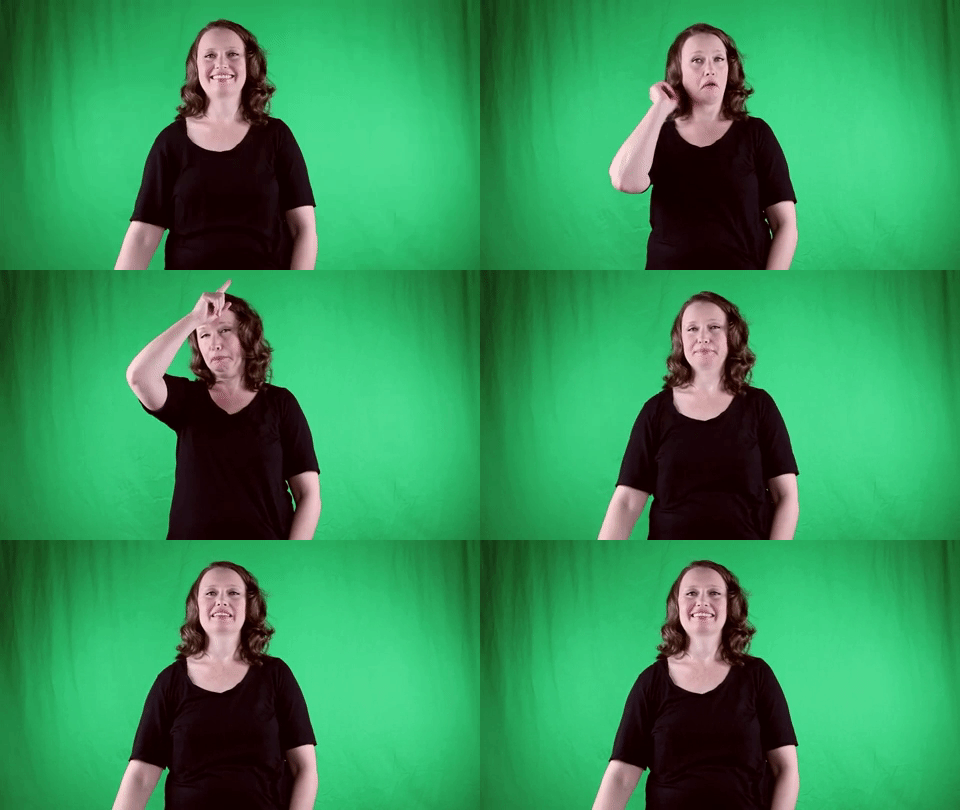
Sign for COWLICK in ASL | 🌀 ASL Dictionary

Definition: A tuft of hair that stands up.

Sign for COWLICK in ASL

YouTube player

Practice Activities:

To build fluency with the sign for COWLICK in ASL, begin by practicing the sign in front of a mirror. Focus on precision of handshape and location to clearly portray the small, noticeable patch of hair that sticks up or curls in a different direction. Say the English word aloud as you sign to reinforce the visual meaning.

Next, use the sign in short sentences. Practice phrases like: “I have a cowlick,” “His cowlick always shows,” and “The cowlick won’t stay down.” Repeat each sentence multiple times, varying your pace and facial expressions to better convey meaning. Adding emotion or storytelling elements can help strengthen clarity and recall.

Create a short story using the sign for COWLICK in ASL as a key detail. For example, tell a story about someone getting ready for a school photo but struggling with a cowlick. Add signs for emotions like frustrated, embarrassed, or funny to provide context and practice sequencing your signing.

Try a mimic and match game with a partner. One person signs a sentence including the sign for COWLICK in ASL, and the other must copy it exactly. This fun challenge helps with observing details in movement and expression. Switch partners or roles often to keep the activity engaging.

Use images of people with visible cowlicks as prompts. Describe what you see using complete ASL sentences. This helps connect vocabulary to real-life visuals and promotes storytelling through description.

Record yourself signing about your own hairstyle and include the sign for COWLICK in ASL. Then review the video to notice areas to improve in clarity, speed, or facial grammar. Self-assessment strengthens confidence and controlled fluency. Keep signing regularly to retain the unique gesture and meaning.

Cultural Context:

In American Sign Language, expressing everyday concepts like cowlicks offers insight into how Deaf culture describes and visualizes personal grooming and appearance. The sign for COWLICK in ASL is a creative representation that captures not just the physical feature but also the cultural perceptions around hair and self-presentation. Since cowlicks are common across all hair types, they tend to come up in casual conversations, especially when talking about getting ready or struggling with unruly hair.

The use of the sign for COWLICK in ASL often comes into play during discussions about haircuts, morning routines, and embarrassing school photos. Within the Deaf community, signed conversations tend to be rich with expressive facial cues, and signs like this are perfect examples of how visual communication reflects shared human experiences. Discussing a cowlick isn’t just about hair—it can be a funny or frustrating story, a part of memory sharing, and a way to express personality quirks.

Deaf culture places a strong emphasis on visual storytelling, and signs that describe personal traits or physical features like cowlicks are used with expressive accuracy. A cowlick might be the subject of a conversation about getting ready for a big event or trying to look polished for a job interview. In these contexts, the sign for COWLICK in ASL becomes an important detail in the visual narrative.

In the context of family and childhood, cowlicks are often mentioned when recalling childhood photos or funny memories about a sibling’s unmanageable hair. The sign for COWLICK in ASL can be used in humorous ways, especially when teasing someone in a lighthearted, visual storytelling setting. These moments show how rich signing can be—not just in conveying facts but in sharing emotion and connection.

There’s also cultural pride in how Deaf individuals manage their appearance with unique challenges in mind. Using the sign for COWLICK in ASL might come up when members of the community talk about beauty routines, hair care, or working with interpreters and stylists who may not always share the same cultural or language background. It shows how nuanced and considerate ASL can be when discussing things that might seem small but matter in the bigger picture of identity.

The sign for COWLICK in ASL may appear in lessons, children’s books, or visual poems performed by Deaf creatives. These uses highlight how versatile and context-based ASL is, making every sign more than just a translation—it’s a culturally meaningful choice. Having a sign for something like a cowlick gives people the

Extended Definition:

The sign for cowlick in ASL refers to the common hair condition where a section of hair grows in a different direction than the rest. This term is usually used to describe a patch of hair, especially near the front or crown of the head, that won’t lay flat no matter how it’s styled. In American Sign Language, expressing this concept means combining facial expression, directional movement, and a sign that visually represents the problem area on the scalp.

When signing the word cowlick, it’s helpful to think visually. ASL users often indicate where the cowlick appears on the scalp using non-manual markers like head tilts or eye gaze, paired with a gesture that mimics hair sticking out in a specific direction. This adds clarity and context, especially when distinguishing between a cowlick and other hair issues.

The sign for cowlick in ASL is not an official single-word sign but instead may be described using classifiers or by illustrating the behavior of the hair. A signer may use a flat hand in a flicking motion from the scalp to show how the hair sticks out or swirls in an unusual pattern. This descriptive approach is common in ASL when a specific English word does not have a standardized sign.

In conversations, the sign for cowlick in ASL is used to explain issues during haircuts, styling routines, or quirky childhood hair patterns. For instance, you might see it used in phrases like “My son has a big cowlick here” with pointing and directional gestures. The focus is often on showing the direction and nature of the unruly hair with clear body language and signs.

Describing a cowlick in sign language involves more than vocabulary—it involves context and emphasis, too. Facial expressions signal whether the cowlick is funny, frustrating, or just a neutral detail. This level of expressiveness sets ASL apart and makes it effective for personal storytelling and descriptions.

In ASL storytelling or personal narratives, the sign for cowlick in ASL may appear often when someone is recounting childhood memories, embarrassing haircuts, or family traits. The use of role-shifting, facial movement, and directional signs helps create a vivid image of the stubborn swirl of hair that just won’t stay down.

When learning new vocabulary like the sign for cowlick in ASL, it’s often helpful to mirror native signers and watch videos that show how the concept is expressed in real-life situations. Because signs for unique concepts can be nuanced, watching how different Deaf signers describe a cowlick

Synonyms: tuft, hair whorl, unruly hair, swirl, quiff

Educational resources: Find related learning materials in our course bank!

Want more? Check out some of our popular learning activities on the homepage!

Need to look up a sign? Use our highly rated dictionary: https://aslinteractive.com/best-asl-dictionary/

Follow us on tiktok: https://www.tiktok.com/@aslinteractive. More social media links at the bottom of this page!

Long-tail Keywords: what is the sign for cowlick in ASL, how do you sign cowlick in American Sign Language, ASL sign for cowlick

Categories:

tags: hair, grooming, appearance, everyday activities, vocabulary

Parameters

*Handshape*:

The handshape used in the sign for COWLICK in ASL typically begins with the dominant hand in a modified “1” or index pointing handshape. The fingertip touches the scalp or hair area where a cowlick might appear.

In the sign for COWLICK in ASL, this action mimics the small, twirling motion of an unruly patch of hair. The motion may include a quick circle or flick to show the swirl typical of a cowlick.

*Palm Orientation*:

The palm orientation for the sign for COWLICK in ASL involves the dominant hand using a “1” handshape with the palm facing toward the head, usually inward or slightly to the side, depending on the location of the imagined hair swirl. The movement mimics a small circular motion at the side or back of the head, where a cowlick would appear.

When signing the sign for COWLICK in ASL, the hand may subtly twist or rotate to show the irregular pattern of hair caused by the cowlick. The palm remains generally perpendicular to the scalp while maintaining this motion.

*Location*:

The sign for COWLICK in ASL is produced at the side of the head, typically near the temple or above the ear, where a cowlick might naturally appear. This location helps visually emphasize the direction or swirl of hair growth, which is central to the meaning of the sign.

Because the sign for COWLICK in ASL involves the hair area, maintaining a clear space on the side of the head is essential for visibility. The hand movement and positioning in this area help make the sign easily understandable in conversation. ‍

*Movement*:

To show the sign for COWLICK in ASL, start by forming your dominant hand into a bent 5-handshape and place it flat against the side or top of your head where a cowlick might appear. Make a quick upward flick or twist away from the scalp, as if mimicking a tuft of hair sticking up unexpectedly.

Repeat the motion slightly or exaggerate it for clarity depending on the context. The sign for COWLICK in ASL reflects the visual appearance of hair sticking out or swirling oddly.

*Non-Manual Signals*:

For the sign for COWLICK in ASL, the non-manual signals often include a slight tilt of the head and a playful or puzzled facial expression, as if indicating the odd, uncontrollable nature of a cowlick. Eyebrows may be slightly raised and the mouth might form a mild grimace or smirk to emphasize the quirky aspect of the sign.

Using these facial cues helps give the sign for COWLICK in ASL a more vivid and expressive meaning. Non-manual signals like subtle head movements and facial expressions can convey the frustration or amusement that often accompanies having a stubborn cowlick.

*Prosody, Dominant/Non-Dominant Hand*:

The sign for COWLICK in ASL uses the dominant hand in a claw shape, mimicking a tufts-of-hair motion. It typically starts near the scalp at the crown, where a cowlick naturally occurs, and moves upward or in a small circular motion to show unruly hair growth.

The non-dominant hand is not used in this sign. Facial expression is key in the sign for COWLICK in ASL, often showing slight annoyance or humor to reflect the natural frustration with this stubborn hair pattern.

Tips for Beginners:

When learning the sign for COWLICK in ASL, it’s important to remember this is a very visual and concept-driven sign. Because there is no standardized sign for “cowlick,” this word is typically fingerspelled in casual and formal contexts. Practice fingerspelling clearly and at a moderate speed to ensure your audience understands what you’re saying. Don’t rush through the letters—accuracy matters more than speed for unfamiliar or unusual words like this.

A key tip is to keep your hand steady and maintain consistent spacing between letters when using the sign for COWLICK in ASL. Prevent your hand from bouncing too much, as that can distract from your message. Use your dominant hand and keep it at chest level, with palm orientation facing out or slightly to the side, depending on your comfort.

Another common beginner mistake is dropping non-manual markers. While fingerspelling, maintain eye contact and a neutral, engaged facial expression. For clarity, especially with less common words like “cowlick,” consider pairing the fingerspelled sign with an illustrative gesture—pointing to your hair or mimicking a stubborn strand can help clarify the message.

Practice in front of a mirror or record yourself to check how readable your fingerspelling is. The sign for COWLICK in ASL will be better understood when your letters are crisp and fully formed. You might even spell it slowly to start and gradually increase speed with fluency.

If you’re in conversation and unsure whether your fingerspelling was understood, don’t be afraid to repeat it. Confident repetition shows you care about being clear. Adding a slight pause before and after the sign for COWLICK in ASL can help set it apart from surrounding signs, especially in fast-paced signing. Consider learning the individual letter signs thoroughly—mastering the alphabet greatly boosts your overall signing skill .

Connections to Other topics:

The sign for COWLICK in ASL connects with other signs related to hair, grooming, and body language. It shares physical space and handshape similarities with signs like HAIR, BRUSH, and COMB. These associations help learners understand how hair-related signs often originate from realistic locations and gestures on or near the head.

The sign for COWLICK in ASL can also relate to descriptive signs commonly seen in storytelling or character development. When describing a person’s unique look or quirky traits, such as a stubborn piece of hair that sticks up, this sign is useful in providing visual context. Descriptive classifiers, particularly related to the head, are often inserted into narratives for clarity and personality.

This sign is functionally connected to signs for appearance and clothing, as it often comes up in discussions about style or grooming. For example, it may be paired with signs like FIX-HAIR or LOOK to describe someone preparing for an event or expressing frustration with their hairstyle. These compound sign uses allow more fluid communication around daily routines and personal care.

In classroom settings or children’s stories, the sign for COWLICK in ASL becomes especially important when conveying details about characters or animals. It is sometimes used along with signs like GOAT, COW, or FUNNY to show a person or character with a whimsical or childlike hair feature. This expands its use beyond descriptive language into narrative and expressive language domains.

Additionally, learners can connect this sign to broader linguistic concepts such as spatial referencing and visual iconicity, where the sign mimics the physical feature it references. This strengthens comprehension of how ASL conveys meaning through movement and placement. The use of such visually descriptive signs like the sign for COWLICK in ASL allows ASL to vividly portray physical characteristics in a concise and culturally appropriate manner.

Summary:

The sign for COWLICK in ASL is a visually descriptive, iconic sign that mirrors the natural swirl or tuft of hair. It draws from classifier use to show a small section of hair standing upright or swirling against the typical grain of hair. It is often grounded in the visual representation of how such hair behaves, especially when it doesn’t lie flat.

To sign COWLICK, one typically starts by using a handshape resembling a bent index finger, moving it in a small circular motion over a location on the head where the cowlick would naturally appear. The movement mirrors the spiral of the hair in a cowlick. This motion combined with facial expression helps clarify the meaning and grounds it in physical reality.

This sign may vary by region or signer, with some individuals opting to fingerspell the word if unfamiliar. However, most native signers will choose a constructed action or classifier to reflect the specific swirl motion. The sign for COWLICK in ASL captures both the frustration and uniqueness of this common hair phenomenon.

Cultural knowledge plays a role in understanding the sign for COWLICK in ASL, as cowlicks can be associated with childhood, grooming struggles, or even humorous commentary on one’s appearance. They may represent persistently unruly hair or be part of a joke among peers. These connections are often reflected in the facial expressions that accompany the sign.

ASL is deeply rooted in its visual nature, and the sign for COWLICK demonstrates this well. The visual representation allows easy comprehension among signers, even when the spoken term may be unfamiliar. This reflects the importance of spatial and bodily awareness in ASL communication.

From a grammatical perspective, the sign for COWLICK in ASL can function in multiple ways depending on the sentence context. When used as a noun, it identifies the swirl of hair itself. When used descriptively, it becomes part of a constructed action to illustrate the effect on someone’s head.

Classifier usage supports a richer visual grammar. The hand mimicking a section of hair sticking up uses a classifier that aligns with bodypart depiction, which is common in ASL. This strengthens the naturalistic elements of the sign and makes it more intuitive for fluent signers.

In linguistic terms, the sign for COWLICK in ASL falls into the category of descriptive iconic signs. These are signs that closely resemble the concept they represent, making language access more immediate for users. This is particularly useful for teaching and learning.

Applied linguistics intersects here when analyzing how deaf children acquire such visual iconography. Signs like COWLICK provide early learners with context-rich material. Since the sign models real-world phenomena, the cognitive link between sign and object is stronger.

Deaf culture recognizes appearance-related signs as meaningful, not shallow. Grooming signs like the one for cowlick reflect community interactions and shared experiences. They can foster storytelling around personal identity, hair texture, and family memories.

Related signs include HAIR, CURL, STICK-UP, and MESSY. These signs often work in sequence or conjunction with the sign for COWLICK in ASL to build more nuanced descriptions. For example, someone might sign HAIR, followed by COWLICK, then MESSY to describe a morning hairstyle.

Facial expression plays a key grammatical and pragmatic role in signing cowlick. A frustrated or amused face changes how the sign is interpreted. This reflects ASL’s unique language structure, which relies on facial markers for grammar and emotion.

The sign for COWLICK in ASL also illustrates how space is used linguistically. The signer often localizes the cowlick on a specific part of the head—front, back, or side. This use of referential space offers a three-dimensional layering to the language.

Language variation may occur across regions or generations. While younger signers may prefer constructed action or simplified descriptions, older members might rely more on fingerspelling followed by clarification. This evolution shows ASL’s adaptability.

In interpreting contexts, the sign for COWLICK in ASL must be adjusted based on audience familiarity. An interpreter may pair the sign with contextual descriptors like “hair not lying down” to ensure comprehension. This is particularly useful in educational or theatrical settings.

Teachers of ASL often use the sign for COWLICK as an example of how language mirrors life. It’s a fun, everyday sign that students can relate to. By signing something humorous and familiar, learners become engaged and more confident.

The word “cowlick” may have ambiguous English origins, so having a succinct sign helps with clarity in conversation. ASL helps cut through linguistic confusion by showing the concept instead of explaining it. This makes the sign especially helpful for non-native English users learning ASL.

The sign’s construction also illustrates how ASL bypasses the need for abstract explanations. A quick movement with the appropriate handshape clearly conveys the idea. This hands-on learning enhances both teaching effectiveness and memory retention.

In storytelling, the sign for COWLICK in ASL

Want more? Check out some of our popular learning activities!

ASL Interactive Resources

ASLInteractive YouTube Channel

Follow us on tiktok: @aslinteractive.com

Follow us on Instagram: aslinteractive

Facebook page: aslinteractive

Facebook group: aslinteractive

LInkedIn: ASL Interactive LLC

Twitter: @ASL_interactive

*Some information on this page is AI-generated. AI can make mistakes. Please check the information.

Sign for COWLICK in ASL

Responses