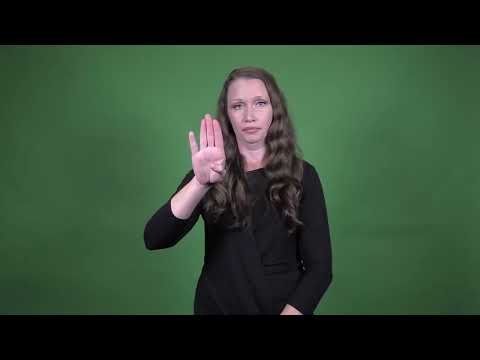
Definition: A raised edge or boundary.
Sign for CURB in ASL

Practice Activities:
To practice the sign for CURB in ASL, begin by isolating the movement and handshape. Stand in front of a mirror and sign CURB slowly, checking for clarity and accuracy. Repeat it five times, gradually increasing your speed while staying precise. This will help build muscle memory and confidence in using the sign properly.
Next, create short sentences that include the sign for CURB in ASL. For example, “Watch the CURB before you step” or “The car parked next to the CURB.” Practice signing these full sentences while maintaining the rhythm and incorporating facial expressions to match the tone and context. This helps reinforce the sign in everyday usage.
Partner with another learner to role-play scenarios using the sign for CURB in ASL. One person can act out walking or riding near a curb while the other signs a warning or gives a description. For example, act out someone riding a bike and the partner can sign, “Be careful—CURB ahead.” Adding storytelling adds real-world context that strengthens recall.
Try a storytelling prompt using the sign, like describing a trip walking down a city street where you had to step over several obstacles, including a CURB. Incorporate other common signs like STREET, WALK, TRIP, and FALL. Emphasize smooth transitions and use space to recreate the environment visually.
You can also try a picture description activity. Look at urban photos that include a curb and describe the scene using ASL. Point out where the CURB is and what’s beside it, such as a trash can or parked car. This helps anchor the sign to a visual reference for better retention.
Finally, vary the speed, emotion, and setting of your practice to mimic real-life communication. Whether giving directions or describing a sidewalk scene, practicing the sign for CURB in ASL often ensures greater fluency.
Cultural Context:
In American Sign Language (ASL), the sign for CURB provides more than just a translation of the English word. ASL is a visual language rooted in cultural nuance, and the sign for CURB reflects both the physical structure and how Deaf community members interact with their environments.
The Deaf community often navigates urban spaces with heightened visual awareness. The sign for CURB captures the spatial and safety aspects of city life, communicating a physical boundary where sidewalks meet roads. This is especially relevant in conversations about accessibility, transportation, and safety.
Within Deaf culture, clear descriptions of physical environments are crucial. When signing about a curb, this is not just about a raised surface—it becomes a part of a bigger narrative, whether it’s about finding a safe drop-off spot, describing a location, or planning accessible travel. The sign for CURB in ASL becomes a reflection of how Deaf people interact with the built world.
ASL does not simply translate English words one-for-one. Instead, it conveys meaning through handshape, movement, and facial expression. The sign for CURB in ASL may include classifiers to show elevation changes or spatial direction. This visual grammar deepens understanding and allows for more expressive communication.
Deaf individuals use the sign for CURB in ASL during daily events—from navigating public transit to teaching children about traffic safety. When explaining directions, giving descriptions, or advocating for accessibility, knowing and using the specific sign correctly supports clearer communication.
Cultural values of independence and inclusivity in the Deaf community influence how certain signs are used. The sign for CURB in ASL may appear during community discussions on sidewalk repairs, city planning, or safe crossings for people with mobility aids. These conversations often happen in community centers, town halls, or social media, where ASL is the primary mode of communication.
Storytelling is a rich part of Deaf culture, often incorporating vivid physical descriptions. The sign for CURB in ASL might appear in signed stories or life narratives, where it helps set the scene or highlight a significant moment. These visual descriptions help listeners gain a full understanding without needing further explanation.
Deaf educators and parents regularly use the sign for CURB in ASL when teaching children about safety and the environment. This can include instructions like waiting at the curb before crossing or staying close to the sidewalk. The sign becomes a key part of raising awareness in visual learners and ensures the message is both clear and impactful.
ASL interpreters use the sign for CURB in educational, professional
Extended Definition:
The sign for curb in ASL can vary slightly depending on the context in which it is used. In general, the concept of a curb refers to the raised edge along a street, often found where the sidewalk and roadway meet. To express this in ASL, a signer uses a combination of classifiers and directional motion.
To sign curb in ASL, one common method involves using a flat hand to represent the surface of a road and then showing a raised edge with the other hand to symbolize the curb. This spatial use of the hands allows the signer to clearly depict the physical feature. Classifier descriptions are key when signing objects like curbs that don’t have a one-motion sign equivalent.
In street-related conversations, the sign for curb in ASL helps describe locations, obstacles, or directions near the roadside. For example, you might sign this when explaining where to park, warning about a high curb, or describing where someone tripped. The visual nature of ASL makes environments like streets very intuitive to describe.
Another way to show the concept uses fingerspelling, particularly when discussing the word for academic or legal definitions. When needed in formal or educational settings, one might fingerspell C-U-R-B while adding contextual signs around it to make the meaning clearer. This layers understanding for both fluent signers and those still learning.
Facial expressions and body movement also play a major role in communicating the function or danger of a curb. For instance, raising the eyebrows and leaning the body back while showing a steep curb adds emphasis. That’s one of the unique aspects of ASL—it brings meaning not just from hands, but the whole body.
When teaching the sign for curb in ASL to students, it’s helpful to use visual aids such as diagrams or model streets. Seeing a real curb and watching someone sign it simultaneously strengthens the mental connection. It also encourages learners to use classifiers appropriately as they describe real-world objects.
The sign for curb in ASL might also be used metaphorically, such as to express concepts like curbing behavior or limiting actions. In those situations, signers often switch to more abstract signs related to control, stop, or limit. Context guides whether the physical or metaphorical meaning is intended.
In conversational signing, the context is everything. When someone uses the sign for curb in ASL while pointing toward a street or drawing a road layout in the air, it becomes obvious they are describing a physical curb. Around urban or suburban settings, this sign appears often while giving directions.
Synonyms: limit, restrain, control, check, restrict
Educational resources: Find related learning materials in our course bank!
Want more? Check out some of our popular learning activities on the homepage!
Need to look up a sign? Use our highly rated dictionary: https://aslinteractive.com/best-asl-dictionary/
Follow us on tiktok: https://www.tiktok.com/@aslinteractive. More social media links at the bottom of this page!
Long-tail Keywords: what is the sign for curb in ASL, how do you sign curb in ASL, ASL sign for curb
Categories:
tags: transportation, facilities and other locations/needs, driving rules, objects, classifiers
Parameters
*Handshape*:
The handshape for the sign for CURB in ASL typically uses a flat B-handshape on both hands. Both hands are held with palms facing each other, mimicking the vertical drop and horizontal plane of a curb’s edge.
When using the sign for CURB in ASL, one hand often moves downward while the other remains horizontal, representing the step down found at a street curb. This visual representation is key in conveying the concept clearly.
*Palm Orientation*:
The palm orientation for the sign for CURB in ASL generally involves one flat non-dominant hand held horizontally, palm facing down, representing the sidewalk or street level. The dominant hand is also flat and moves to a perpendicular position, palm facing outward or slightly down, to show the edge or elevated barrier.
This orientation helps visually convey the concept of a raised area or boundary, making the sign for CURB in ASL clear and spatially descriptive. The hand positions mimic the physical layout of a curb.
*Location*:
The sign for CURB in ASL is typically produced in the neutral space in front of the body, around chest level. The dominant hand may mimic a downward edge or drop-off, indicating the physical concept of a curb. This location allows clear visibility and contextual accuracy when signing in conversation.
When demonstrating the sign for CURB in ASL, the signer keeps movements compact, visually referencing the tangible edge between sidewalk and street. The chest-level location helps maintain fluidity in sentence structure and ensures the sign is easy to follow in a conversational setting.
*Movement*:
To show the sign for CURB in ASL, start with your dominant hand in a flat B-handshape, palm facing down. Position it in front of your body at about waist level. Then, move the hand horizontally away from the body in a swift, straight motion to mimic the edge or border one might associate with a curb.
The movement should be clean and controlled, suggesting the limiting or stopping action tied to the meaning of “curb.” When demonstrating the sign for CURB in ASL, your facial expression can subtly reinforce the idea of control or restraint, depending on the context.
*Non-Manual Signals*:
When using the sign for CURB in ASL, the facial expression should reflect a sense of restraint or limitation, often with slightly pursed lips and a controlled, focused gaze. This helps to convey the meaning behind the sign and emphasizes the idea of holding back or restricting something.
The non-manual signals for the sign for CURB in ASL may also include a mild head shake or a stiff posture to visually support the concept. These cues help reinforce the controlling or limiting nature of the sign.
*Prosody, Dominant/Non-Dominant Hand*:
The dominant hand forms a flat B-handshape, palm facing downward, and represents the edge or boundary like a curb. The non-dominant hand is also in a B-handshape, held horizontally in front of the body to show the street surface. The dominant hand moves downward to touch the edge of the non-dominant hand, showing a drop-off or boundary.
This motion in the sign for curb in ASL visually represents where a sidewalk ends and a street begins. The prosodic use of hands helps anchor the concept of a curb line separating walking space from traffic. The sign for curb in ASL can be enhanced with facial expressions to show emphasis or caution.
Tips for Beginners:
When learning the sign for CURB in ASL, it’s important to understand the context in which you’re using the word. CURB as a noun typically refers to the edge of a sidewalk, and some signers choose to visually describe it using classifiers (CLs) instead of a specific lexical sign. A common approach is using a flat B-hand to represent the sidewalk and a second hand in a perpendicular position to indicate the vertical drop of the curb.
Beginners should practice maintaining clear angles and consistent palm orientations when using classifiers to show the curb’s edge. Avoid making the sign too quickly—take your time to form each part of the visual description clearly. If you’re fingerspelling CURB, be sure to articulate each letter—C-U-R-B—with precise handshapes and smooth transitions between letters. This ensures your fingerspelling is legible, especially when communicating with those still becoming fluent in ASL.
Another effective method is incorporating directional signs or additional movement that helps contextualize the curb, such as showing a car approaching it or stepping off the curb. This helps native signers better understand your meaning if the sign for CURB in ASL is being portrayed with classifiers.
Don’t forget to use facial expressions and body role shifting when describing physical space. This will help bring the concept of “curb” to life and create a clearer mental image for your conversation partner. It’s easy for beginner signers to keep their faces blank, so make a conscious effort to mirror the scale or importance of what you’re showing.
Throughout your learning, keep watching native signers use the sign for CURB in ASL in actual conversations or story narratives. Pay attention to how they incorporate it into descriptions of streets or crossing scenarios. Practicing in context builds long-term retention and improves your expressive ability .
Connections to Other topics:
The sign for CURB in ASL connects to larger themes in spatial referencing and environmental descriptions. In ASL, locations or structures like sidewalks, streets, and boundaries are often depicted using classifiers. A signer may use classifiers to represent a car approaching a curb or someone stepping off a curb, showing how the sign integrates easily into narrative contexts.
This sign ties closely to other directional or boundary-related signs, such as STREET, SIDEWALK, and EDGE. The physical characteristics of a curb—often a raised concrete edge—are reflected through handshape and movement, which can be modified to depict spatial scale. ASL typically uses visualization strategies to provide contextual depth, and the sign for CURB in ASL emphasizes the difference in elevation between street and sidewalk through gestural depth.
Another relevant connection is with signs used in travel and transportation, such as DRIVE, PARK, and WALK. For example, explaining that a car is parked near the curb would involve combining CAR, PARK, and CURB signs, possibly with added classifiers to indicate vehicle direction or exact location. In discussions of urban accessibility, the sign for CURB in ASL might appear in phrases like CURB RAMP or CURB CUT, both of which are conceptually rich and often fingerspelled or represented with combined signs.
The sign also shares characteristics with other signs indicating limits or control, similar to signs for BARRIER or FENCE, due to the nature of a curb as a boundary. This functional similarity highlights the conceptual overlap in how ASL portrays physical versus metaphorical boundaries.
Furthermore, the use of the sign for CURB in ASL can play a role in safety instructions or storytelling that emphasizes environment. Such usage is common in interpreting for traffic education, construction zones, or describing accidents where curbs are referenced. These nuances make it vital for learners to grasp how the sign operates in diverse real-world contexts.
Summary:
The sign for CURB in ASL is not considered a standardized or frequently used sign. Because the word refers to something physical like the edge of a sidewalk or metaphorically like limiting behavior, multiple forms may be used depending on context. Often, the word is fingerspelled unless a clear visual classifier or idiomatic workaround is employed.
In physical or directional contexts, signers might use classifiers to show the shape or location of a curb. For instance, a horizontal flat hand can represent the sidewalk while the other hand indicates the raised edge. This classifier approach supports providing spatial information relevant to the setting.
When referring to controlling or restraining something abstract, like emotion or appetite, signers might default to the sign for LIMIT or CONTROL. These are more widely recognized and relevant in conveying the figurative meaning of curb. ASL is highly situational, and this flexibility allows for effective communication even when a direct translation isn’t available.
In some instances, particularly in educational or legal settings where the word needs specification, CURB might simply be fingerspelled as C-U-R-B. This strategy is common with nouns that lack specific signs, particularly if their concept is unique, urban, or technical in nature. Fingerspelling preserves clarity and ensures mutual understanding.
The sign for CURB in ASL can depend largely on whether it’s depicting a literal concrete edge or a metaphorical restraint. ASL excels at expressing both with tools like classifiers and facial expressions. This dual potential allows the word to function well within ASL’s visual and spatial grammar.
Linguistically, CURB stands at an interesting intersection of semantics and morphology in ASL. The abstract verb meaning and the concrete noun meaning diverge in how they are expressed. This highlights the difference in how ASL treats polysemous English words.
Because ASL doesn’t always adopt English one-to-one translations, CURB’s multiple meanings must be interpreted and expressed in a conceptually accurate way. Emphasizing meaning over form is a key element in sign language, especially in translation practices. This makes the sign for CURB in ASL both a process and a judgment call rooted in the broader sentence.
In narrative or descriptive settings, such as storytelling or visual explanations, a signer may use role shift or viewpoint depiction to show a curb physically. This may involve showing someone stepping off of a curb or something resting up against one. The dynamic visual nature of ASL allows for immersive storytelling.
ASL classifiers effectively convey the location, shape, and height of a physical curb. Flat handshapes with subtle movement and placement within signing space provide dimension. These strategies illustrate ASL’s visual-gestural modality and its strengths in spatial representation.
In more abstract usage, such as curbing enthusiasm, a signer may combine facial grammar with signs like RESTRAIN, HOLD BACK, or CONTROL. Emotive expressions and directional movements enhance understanding in those contexts. Such nuances matter in sensitive or nuanced discussions like mental health or personal boundaries.
From a cultural standpoint, the concept of curbs takes on added weight in conversations about accessibility in the Deaf community. Navigating physical environments, especially urban ones with curbs and limited ramps, can factor into discussions about DeafBlind accessibility. Channels that support visual detailing, like classifiers, empower equity and inclusion narratives within ASL.
Another cultural layer for the sign for CURB in ASL may relate to behavioral expectations in Deaf education. Teachers often use terms like curb your behavior when discussing classroom discipline. A visual representation of restraint, limit, or control often substitutes the English word, keeping communication conceptually grounded.
Linguistic researchers note that when ASL borrows abstract terminology from English, fingerspelling often acts as a temporary solution. Over time, such borrowings may evolve into initialized signs or entirely unique signs within ASL grammar. The evolution of the sign for CURB in ASL is still developing and reflects wider phenomena in sign language change.
Applied linguistics illustrates how signers select appropriate forms depending on the audience and setting. If CURB is used in a medical, legal, or architectural discussion, fingerspelling might be preferred for clarity. But if used metaphorically or narratively, conceptual accuracy weighs more heavily.
When teaching ASL, instructors often guide students not toward direct translations, but rather toward conceptually accurate expressions. This is crucial in learning how to express words like CURB that have multiple meanings. Teaching strategies often highlight possible signs and use context-driven decisions.
Digital platforms and ASL dictionaries may not yet include a set standard for CURB, meaning that learners turn to other resources for usage examples. Video databases, ASL storytelling platforms, and native signers share contextual signs showcasing variability. This underlines the community-driven nature of ASL evolution.
In terms of grammar, placement of the hand during representation of a physical curb follows ASL’s spatial rules. For example, if indicating a person sitting on a curb, the sign might include classifiers for person and horizontal edge. Maintaining visual consistency enhances sentence coherence
Want more? Check out some of our popular learning activities!
ASL Interactive Resources
ASLInteractive YouTube Channel
Follow us on tiktok: @aslinteractive.com
Follow us on Instagram: aslinteractive
Facebook page: aslinteractive
Facebook group: aslinteractive
LInkedIn: ASL Interactive LLC
Twitter: @ASL_interactive
*Some information on this page is AI-generated. AI can make mistakes. Please check the information.


Responses