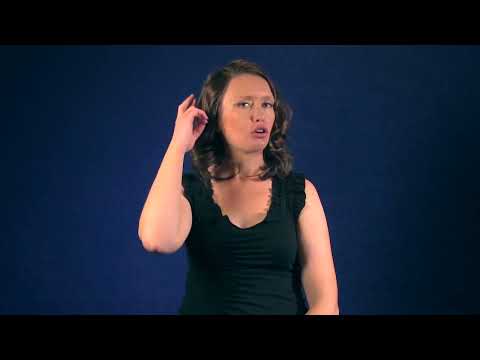
Sign for CURL HAIR in ASL | ️💇‍♀️ ASL Dictionary

Definition: To curl hair.

Sign for CURL HAIR in ASL

YouTube player

Practice Activities:

To practice the sign for CURL HAIR in ASL, start by isolating the sign and repeating it in front of a mirror. Focus on the handshape, motion, and location. Pretend you’re using a curling iron or your fingers to twist a section of hair, and mimic that movement in ASL form.

Use flashcards with different hairstyles drawn or printed out. Show one and sign whether the hair is curly or not, incorporating the sign for CURL HAIR in ASL. Make yes or no responses to describe whether the person in the image has curly hair, adding additional descriptive signs such as LONG, SHORT, or BLACK.

Try forming full sentences like “I CURL HAIR every morning” or “My sister has CURL HAIR.” Signing in full phrases helps commit vocabulary to memory. For children, act out morning routine role-plays, incorporating signs like BRUSH, WASH, and CURL HAIR in ASL.

Create simple dialogues with a partner. Take turns describing people and what they do to their hair. One person can say, “She STRAIGHTENS HER HAIR,” and the other can respond using “No, she CURL HAIR.” This helps build familiarity with various hair-related signs.

For story-based practice, invent a character who is getting ready for a big event. You can describe their hair routine, saying things like “First she WASHES, then she CURL HAIR, then she puts on a HAT.” Be creative and add visual expressions to show how excited or frustrated the character is while styling hair.

Watch videos or vlogs featuring signers who discuss daily routines or fashion. Pause and repeat the sign for CURL HAIR in ASL whenever it appears. Mimic their expressions and pacing to improve fluency. Pair this with recording your own videos to spot errors and track progress over time.

Cultural Context:

Hair is an important part of personal style and cultural identity, and understanding how to express different hairstyles in American Sign Language helps create inclusive and accurate communication. The sign for curl hair in ASL reflects the shape and motion of curling hair, whether naturally curly or styled with tools. It’s a visual representation that captures not only the texture but also the process of achieving curls.

In Deaf culture, physical appearance is often discussed through descriptive signing. This helps paint a detailed picture of someone’s look. The sign for curl hair in ASL is helpful when talking about personal grooming, hairstyling routines, or describing people in storytelling and introductions. It brings depth to social interactions and allows for clearer self-expression.

Hair texture and styling vary widely across cultures, and curly hair carries significance in many communities. Using the sign for curl hair in ASL allows Deaf and signing individuals to embrace and celebrate these differences. Whether you’re discussing naturally curly hair, permed hair, or using curling tools, this sign adapts to the context, much like how spoken language uses specific adjectives.

Being able to use the sign for curl hair in ASL also supports positive cultural representation. It allows for accurate communication when describing diverse hairstyles in educational settings, mainstream media, theatre, or social events in the Deaf community. Including details like hair texture shows attentiveness and respect for individual identity.

In conversations, the sign for curl hair in ASL is often combined with other signs to create fuller descriptions. You might match it with signs for long, short, thick, or color words to describe someone more vividly. This kind of detail is appreciated in Deaf culture, where visual information enriches storytelling and social bonding.

For interpreters and ASL learners, knowing how to sign hairstyles like curl hair is essential vocabulary. It ensures that conversations remain natural and inclusive, especially when interpreting in salons, beauty events, or stylist appointments. Mastering expressions like the sign for curl hair in ASL helps bridge communication gaps and respect visual language norms.

The sign also appears in beauty blogging, vlogs, TikTok clips, and tutorials involving ASL. Many Deaf content creators demonstrate how to style or care for curl hair while using signs. This makes the sign for curl hair in ASL part of the intersection between mainstream fashion and ASL fluency ‍♀️.

Kids and adults alike benefit from knowing how to use signs for everyday topics. Teaching the sign for curl hair in ASL to children, especially during identity development, normalizes

Extended Definition:

The sign for curl hair in ASL refers to the American Sign Language gesture used to describe curly hair or the act of curling hair. This sign is often used when describing someone’s hairstyle, talking about hair textures, or discussing grooming habits. It can vary slightly depending on the context, such as whether you are talking about natural curls or using tools like curling irons.

To make the sign for curl hair in ASL, one common method involves using a finger to mimic the spiral or twirling motion of curling hair. Sometimes the movement is made beside the head to indicate naturally curly hair, while for styling, the sign may shift to a gesture resembling the motion of rotating a curler. The facial expression plays a big role in showing whether the hair is curly by nature or curled on purpose.

This sign is typically used in conversations about appearance and personal care. For example, someone might say they need to curl their hair for a special occasion or describe a friend’s naturally curly locks. In such situations, the sign for curl hair in ASL becomes a useful vocabulary addition to express ideas about daily routines, beauty, and identity.

ASL is a rich visual language, and this sign helps convey specific information about hair types. Rather than simply saying “hair,” the sign for curl hair in ASL adds depth, letting the listener know more about the person being described. This adds context and emotion, which are essential in ASL storytelling and personal expression.

Body language and non-manual signals also enhance the meaning of this sign. A signer may exaggerate the curling movement to express dramatic or voluminous curls. A more subtle sign might suggest slight waves or light curls. Facial expressions, especially the use of eyebrows or mouthing the English word, help the viewer interpret how tightly or loosely the hair is curled.

You might also see this sign combined with others to create compound phrases. For instance, someone discussing curly long hair would combine the sign for curl hair in ASL with the sign for “long.” This flexibility in sign combination helps make conversations smooth and expressive.

The sign is useful in teaching settings too. ASL educators often demonstrate hair-related signs when covering topics of self-description and family vocabulary. Students quickly pick up on visual cues, especially if they or someone they know has curly hair. It becomes an easy and memorable part of learning the signs for physical characteristics.

Understanding the sign for curl hair in ASL not only builds vocabulary but also offers cultural insights. Hair plays an important role in identity across cultures

Synonyms: Curl, ringlet, coil, wave, helix

Educational resources: Find related learning materials in our course bank!

Want more? Check out some of our popular learning activities on the homepage!

Need to look up a sign? Use our highly rated dictionary: https://aslinteractive.com/best-asl-dictionary/

Follow us on tiktok: https://www.tiktok.com/@aslinteractive. More social media links at the bottom of this page!

Long-tail Keywords: What is the sign for curl hair in ASL, how do you sign curl hair in American Sign Language, ASL sign for curly hair

Categories:

tags: appearance, hair types, people, identity, fashion

Parameters

*Handshape*:

The handshape for the sign for CURL HAIR in ASL typically uses a modified claw or loose C-shape hand. Both hands are formed with fingers curved as if grasping a curling motion, resembling how one might mimic using a curling iron or styling tool on long hair.

This handshape is ideal for demonstrating the action described in the sign for CURL HAIR in ASL. The loose, curved fingers help visually represent the spiral or twisting motion associated with curling hair.

*Palm Orientation*:

The palm orientation for the sign for CURL HAIR in ASL typically involves both hands in a claw or loose “C” shape, with palms facing down or slightly inward toward the head. The hands move in a spiraling or twisting motion around sections of imaginary hair, mimicking the action of curling.

In the sign for CURL HAIR in ASL, the palms sometimes alternate or mirror each other in their circular path, depending on the length or style of hair being referenced. The motion closely resembles using a curling iron or styling tool near the head.

*Location*:

The sign for CURL HAIR in ASL is typically performed near the top and sides of the head, around the forehead and temple areas. This placement corresponds to where hair naturally grows and where curls are often styled or shaped.

When signing the sign for CURL HAIR in ASL, both hands are usually raised to either side of the head, indicating the motion or texture of curly hair. The movement mimics the twirling or shaping of curls, reinforcing the concept through location and motion.

*Movement*:

To produce the sign for curl hair in ASL, form both hands into loose fists with index fingers extended. Starting near the top sides of the head, move the index fingers downward in a twisting, spiral motion like you are winding hair around a curling iron. Repeat this curling gesture to emphasize texture or volume.

This repeated spiraling movement mimics how hair is curled, making the sign for curl hair in ASL visually intuitive and descriptive.

*Non-Manual Signals*:

Facial expression plays a key role in the sign for CURL HAIR in ASL. Slight brow movement or a focused look may be added to indicate intensity or style being described, especially if mimicking how curly the hair is.

The mouth might mimic the sound “brrr” or form a slight pursed or rounded shape to emphasize the coiling motion. Non-manual signals help convey texture, such as tight or loose curls, in the sign for CURL HAIR in ASL.

*Prosody, Dominant/Non-Dominant Hand*:

The sign for curl hair in ASL uses both hands. The dominant hand is in a modified “C” or “G” handshape, acting as if holding a curling tool. The non-dominant hand represents the section of hair, held steady or loosely extended. The dominant hand moves downward or spirals slightly around the non-dominant hand, mimicking the motion of curling hair.

This prosody helps express the actual action, making the sign for curl hair in ASL very iconic. Facial expression, such as a focused or light expression, can enhance clarity depending on context.

Tips for Beginners:

When learning the sign for CURL HAIR in ASL, start by watching how native signers demonstrate it. The motion should represent the spiraling or twirling of hair, typically with curved fingers, as though mimicking the motion a curling iron or fingers would make. Practice this motion slowly in front of a mirror to ensure your handshape and direction are accurate.

One common mistake beginners make is not maintaining the proper handshape or direction of movement. If your motion is too fast, stiff, or disjointed, it could confuse the meaning or make it harder to recognize. Make sure your hand and wrist are relaxed to help create the smooth curling gesture that mimics styling hair.

Facial expression is an important aspect of the sign for CURL HAIR in ASL. Incorporating slight head movement and a neutral or engaged facial expression adds clarity and realism to your communication. This ensures that the sign is both visually accurate and expressive of the intended meaning.

Try practicing with both hands if needed, especially when referring to curling your own hair. If you’re demonstrating the action being done on someone else, the direction and location of the sign may change to match context—this spatial awareness improves clarity. Always align the movement to who or what you’re referencing.

Practice using the sign in different scenarios—for example, describing a morning routine or giving someone a compliment on their hairstyle. Repetition in varied contexts helps you remember the sign for CURL HAIR in ASL and makes it easier to recall in conversation.

Lastly, don’t hesitate to get feedback from fluent signers or record yourself to track improvement. ASL is a visual language, and refining your expressiveness will improve your overall confidence with the sign for CURL HAIR in ASL. Keep practicing consistently

sign for curl hair in asl, curl hair sign language, how to sign curl hair in asl, asl sign for curling hair, american sign language curl hair sign

Connections to Other topics:

The sign for CURL HAIR in ASL is closely connected to other signs that involve hair types and styling, such as STRAIGHT HAIR, BRAID, and HAIR-CUT. These signs often incorporate classifier handshapes and directional movement along the head to show shape or texture. This gives learners an opportunity to build vocabulary by comparing how hair-related ideas are visually expressed.

In many cases, the sign for CURL HAIR in ASL can be combined with facial expressions or body classifiers to describe different curl patterns or styling tools, such as curling irons. This allows for nuance and specificity when telling stories, describing routines, or explaining preferences. Students learning the sign can also benefit from practice constructing descriptions like “I CURL HAIR every morning” or compound expressions such as CURL HAIR + BEAUTY to refer to beauty routines.

The use of classifiers in relation to the sign for CURL HAIR in ASL helps connect learners with topics like texture, shape, or material. Classifier “C” shapes, for example, may be used to describe thick curls, while “F” handshapes can indicate tighter spiral curls. Understanding how to modify movement and size in the sign adds depth and context to communication.

The sign for CURL HAIR in ASL can also be useful when discussing professions such as hairstylist, barber, or cosmetologist. Common compound signs like HAIR + STYLE or HAIR + CUT link easily with CURL HAIR to create full sentences like “She CURL HAIR professionally” or “He love CURL HAIR for fun.” This makes it highly relevant in work and hobby-related vocabulary.

In discussions involving family, identity, or culture, the sign for CURL HAIR in ASL can support meaningful narratives. Talking about natural hair, traditional hairstyles, and self-expression connects this sign to broader cultural topics. Using this sign fluently gives learners more tools to engage deeply in ASL storytelling ✨.

Summary:

The sign for CURL HAIR in ASL uses a twisting or rotating motion of the fingers to show the process of wrapping hair around a finger or object. The most common way to sign it involves using the dominant hand in a loose “1” handshape or “G” handshape as it spirals around a finger or mimics the motion spiraling upward, reflecting the action of forming curls. The direction, speed, and number of curls can reinforce meaning.

Facial expression plays a strong role in the sign for CURL HAIR in ASL. Slight head tilts, raised eyebrows, or puffed cheeks can emphasize more styled or voluminous curls, adding style context. Variations in expression are especially useful when describing someone else’s hair texture in conversation.

This sign is iconic and functions visually to replicate the actual process of curling hair. Such iconicity helps beginner ASL learners grasp vocabulary quickly, particularly with grooming or body-related actions. The visual mimicry makes retention easier.

The sign for CURL HAIR in ASL often gets used in conversations about hairstyles, identity, grooming, or appearance. It can be used in storytelling, when describing a character or family member, or while engaging in beauty-related discussions. It is also useful in salon settings or in aesthetic or fashion contexts.

In casual conversation, the sign can be modified to show whether curls are natural or styled. When wanting to share that hair is naturally curly, one might blend CURL HAIR with the sign for NATURAL using relaxed hand and facial movement. Situational context determines meaning.

Regional dialects impact how the sign for CURL HAIR in ASL is produced. Some regions depict smaller, tighter curls using a pinching motion, while others demonstrate broad loopy motions for looser curls. Such variability reflects the diversity of expression within Deaf communities.

The sign for CURL HAIR in ASL is inherently connected to the broader sign family involving hair textures and styles. For example, related signs include STRAIGHT HAIR, WAVY HAIR, AFRO, and DREADLOCKS. Understanding these relationships helps build fluency and precision.

In ASL grammar, the sign for CURL HAIR in ASL can act like a verb or descriptor depending on syntax. It might say someone “is curling” their hair, or it might describe someone as “having curled” hair already. Context and timing expressed through movement help determine tense.

Classifier handshapes can add to the sign’s descriptive power. When describing long curly hair down the back, you might use two hands with spiraling downward motions from either side of the head. For shorter curls, the hands may move in small tight rotations at the crown of the head.

Children learning ASL often enjoy signs like CURL HAIR because of their engaging visual and kinesthetic quality. It activates multisensory pathways that support language learning. They can use it to describe dolls, draw themselves, or tell stories about family.

From an applied linguistic lens, this sign represents the interplay between gesture and culturally specific grooming actions. Haircare has cultural and racial dimensions, and the way curls are portrayed in ASL often mirrors cultural variations in beauty standards or norms. This adds semiotic richness to the sign.

Gender dynamics sometimes emerge in how CURL HAIR is used. In some conversations, this sign is more frequently applied when referring to women due to social norms about grooming and hairstyling. However, this is beginning to shift as diverse expressions of identity evolve within all communities.

In narratives using visual vernacular styles, CURL HAIR becomes a prominent element for character design. Signers use accentuated hand motions, theatrical mimicry, and exaggerated spiral motions to show whimsical or dramatic curly-haired personas. This offers stylistic depth and character development.

The sign for CURL HAIR in ASL can also be embedded in poetic forms such as ASL storytelling or sign poetry. The spiraling shape reflects cyclical forms found in nature and narrative, used metaphorically as a sign of renewal or complexity. This makes the sign especially rich in artistic domains.

Technology has reinforced the usefulness of signs like CURL HAIR, particularly with Deaf influencers or vloggers discussing their haircare routines. The sign takes on expanded currency in discussions of self-expression, body positivity, and cultural pride on social platforms. It blends identity with daily practice.

In classes teaching ASL, CURL HAIR is often introduced with other vocabulary related to appearance. It ties into units on self-description, cultural diversity, or even science topics like biology of hair. It serves as a bridge for cross-subject integration in Deaf Education.

In multilingual Deaf settings, especially among Black Deaf individuals or Latinx Deaf communities, the sign for CURL HAIR in ASL might be code-switched with fingerspelled terminology or regional gestures to express more nuanced textures. These practices show language resilience and adaptation.

The frequency of hand rolling in the sign reflects how a sensory-oriented language like ASL mirrors real-world sensations. The spiraling motion taps into proprioceptive

Want more? Check out some of our popular learning activities!

ASL Interactive Resources

ASLInteractive YouTube Channel

Follow us on tiktok: @aslinteractive.com

Follow us on Instagram: aslinteractive

Facebook page: aslinteractive

Facebook group: aslinteractive

LInkedIn: ASL Interactive LLC

Twitter: @ASL_interactive

*Some information on this page is AI-generated. AI can make mistakes. Please check the information.

Responses