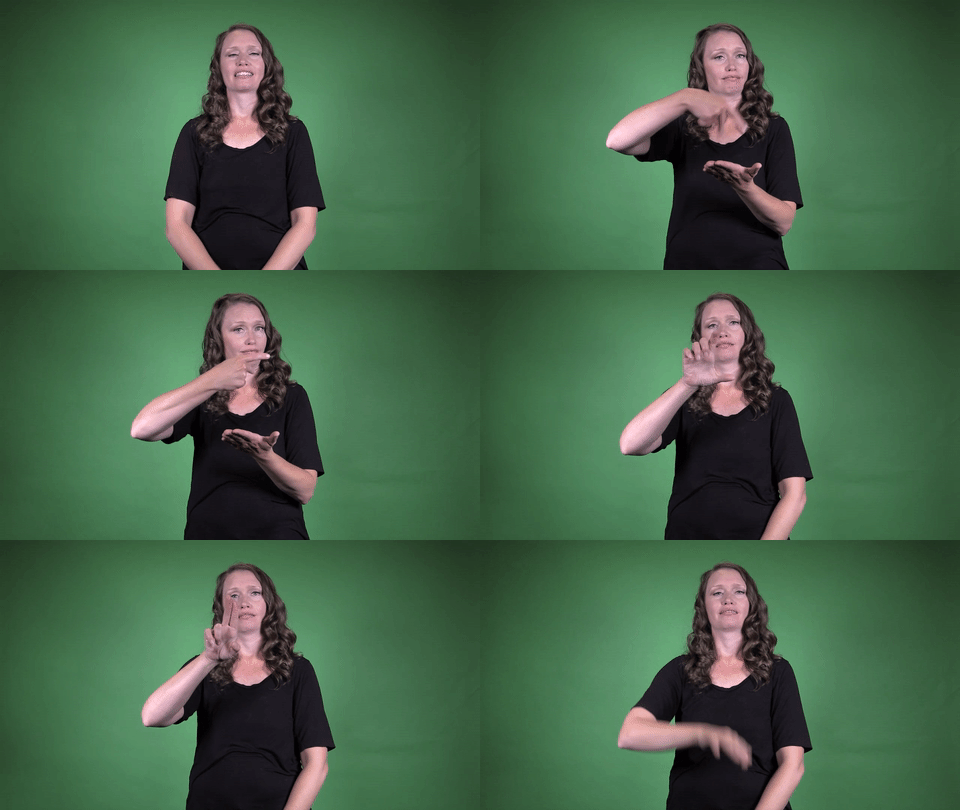
Sign for DANCE CLUB in ASL | 💃🏽 ASL Dictionary

Definition: A club where people dance.

Sign for DANCE CLUB in ASL

YouTube player

Practice Activities:

To build fluency with the sign for DANCE CLUB in ASL, begin by practicing the individual signs for DANCE and CLUB separately. Stand in front of a mirror and repeat each sign slowly, then increase your speed while maintaining clarity. Focus on your handshape and motion for DANCE, visualizing the feet of dancers, then use the correct sign for CLUB, often represented by the sign for GROUP or a similar community-based classifier.

After you are comfortable with each component, combine them and practice signing DANCE CLUB several times in a row. Say the word aloud as you sign to help reinforce the connection between the English phrase and the ASL sign. You can also create visual flashcards with the keyword phrase on one side and an illustration of the sign on the other.

Use the sign for DANCE CLUB in ASL in short sentences like: I like go DANCE CLUB. She invite me DANCE CLUB next weekend. Next, try answering questions using the phrase, such as: Do you go to the DANCE CLUB often? Who do you see at the DANCE CLUB?

With a partner, role-play short dialogues where one person invites the other to a DANCE CLUB. Panels like “Where should we go tonight?” or “What do you do on weekends?” can lead naturally into using the phrase. Try to include at least three sentences that naturally include the sign for DANCE CLUB in ASL.

For independent practice, create a short story about your first experience going to a DANCE CLUB. Even if it’s fictional, include descriptive signs like loud music, friends dancing, and fun energy. Use the sign for DANCE CLUB at least twice in your narrative.

Wrap up with a review quiz. Watch ASL videos and identify when the phrase appears. Signing along helps solidify your ability to use the sign for DANCE CLUB in ASL confidently and in context.

Cultural Context:

The sign for dance club in ASL captures more than just a fun night out—it reflects aspects of Deaf culture and community. Deaf clubs and dance events have historically been vital gathering spaces, serving both as places for recreation and as hubs for activism and connection .

Signing the term correctly is important because dance clubs are often popular in social life. Understanding the sign for dance club in ASL helps bridge communication between Deaf and hearing communities, especially in inclusive nightlife spaces.

In the Deaf community, dance is not just about hearing music—feeling the beat through bass vibrations is equally important. When someone uses the sign for dance club in ASL, they are conveying access to shared experiences, where movement and rhythm unite everyone on the dance floor .

ASL uses visual-spatial grammar, so the sign for dance club in ASL incorporates motion and positioning. It’s not only about knowing the sign for “dance” and “club” individually but about flowing them together as a natural phrase.

Historically, Deaf-centric events such as silent discos or Deaf-hosted dance nights emphasize the importance of accessibility. These events underline how critical it is to be able to sign specific terms, like the sign for dance club in ASL, to preserve inclusivity.

Access to nightlife for Deaf individuals depends on environments that respect visual communication. Knowing the sign for dance club in ASL allows Deaf people to express where they like to socialize, make plans, and feel fully immersed in their social spaces.

The use of strobe lights, bass-heavy speakers, and visual alerts in clubs enhances the experience for Deaf patrons. When someone asks about going to a dance club, using the correct sign for dance club in ASL enables smooth communication in group chats or at pre-event meetups .

Learning the sign for dance club in ASL can also boost confidence in social interactions. It enables spontaneous conversations between Deaf and hearing friends when planning a night of dancing and fun.

The growing demand for inclusivity in entertainment has brought more visibility to signs like the sign for dance club in ASL. Event planners and club owners who know this sign can better interact with Deaf patrons and foster a welcoming environment for all.

Culturally, knowing the sign for dance club in ASL shows respect and an effort to engage with ASL speakers. It’s not only about vocabulary—it’s about deeper cultural recognition and making everyone feel seen and understood .

Whether it’s for educational purposes, social planning, or work in the

Extended Definition:

The sign for dance club in ASL captures the lively and social nature of this popular nighttime venue. In American Sign Language, conveying ideas like a dance club involves combining specific classifiers, descriptive movements, and facial expressions to represent the place and activity.

To sign dance, you typically use a dominant hand in a bent “V” shape to mimic the movement of legs dancing over the non-dominant flat hand, representing the dance floor. For club, signers may use contextual clues like the sign for “place” or fingerspell the word “club” depending on the conversation or clarity required. When put together, the sign for dance club in ASL often incorporates a sequence or combination of these elements to paint a clear visual picture.

The sign for dance club in ASL may also reflect the vibe or mood of the place — finger movements can become more exaggerated or rhythmic to show loud music or high energy. Facial expressions contribute greatly to the meaning. A wide smile and bouncing motion with the body can help depict that the setting is fun, crowded, and full of activity.

Some signers may choose to use classifiers to show people dancing side-by-side, lights flashing, or different features of a dance club. The flexibility of American Sign Language allows for personalization and visual presentation based on the signer’s style and what they want to emphasize. This adds depth to the sign for dance club in ASL, making it more than just a direct translation — it becomes a visual narrative.

In conversation, context will determine whether the full concept of a dance club is signed using a compound sign, described with classifiers, or partially fingerspelled. For example, someone might just sign DANCE and follow with a point to a known location, if discussing a local club. Others may provide a full depiction using visual-spatial elements.

Learning the sign for dance club in ASL can be especially useful when discussing weekend plans, social events, or hobbies. It’s a common part of casual conversation, especially among young adults and those active in the Deaf community. Understanding how to express such everyday social concepts is crucial for fluency.

There may be regional differences in how people sign dance club in ASL, so it’s always helpful to watch Deaf signers in your area or refer to local resources. Visiting ASL video dictionaries or attending events can provide insight into variations and help learners see the sign used in real contexts.

Technology and pop culture continue to influence sign language, and the way people sign modern concepts like dance clubs

Synonyms: nightclub, discotheque, dance hall, party venue, music lounge

Educational resources: Find related learning materials in our course bank!

Want more? Check out some of our popular learning activities on the homepage!

Need to look up a sign? Use our highly rated dictionary: https://aslinteractive.com/best-asl-dictionary/

Follow us on tiktok: https://www.tiktok.com/@aslinteractive. More social media links at the bottom of this page!

Long-tail Keywords: what is the sign for dance club in ASL, how do you sign dance club in ASL, dance club in American Sign Language

Categories:

tags: dance, club, activities, recreation, entertainment

Parameters

*Handshape*:

The handshape for the sign for DANCE CLUB in ASL uses two primary configurations. For DANCE, the dominant hand forms a “V” handshape, representing legs, and moves rhythmically over the non-dominant open palm facing up, symbolizing a dance floor. This motion mimics dancing feet to visually depict the concept.

For CLUB, the sign typically involves fingerspelling the word “CLUB.” Each letter is produced with standard ASL fingerspelling handshapes. The fingerspelling portion emphasizes the specific type of establishment, clarifying that the context is a social or music venue. The handshape choices make the overall sign for DANCE CLUB in ASL clear and expressive.

*Palm Orientation*:

For the sign for DANCE CLUB in ASL, the dominant hand typically faces downward with the palm oriented toward the floor, performing a swinging motion as if representing dancing feet. The non-dominant hand may remain stationary with palm facing up to represent the “floor” or base.

When signing the CLUB portion, it may involve fingerspelling C-L-U-B, with each hand facing outward and slightly to the side, palms forward. Palm orientation stays consistent to maintain clarity in the sign’s meaning. The repeated motion and facing angles help distinguish the components of the sign for DANCE CLUB in ASL.

*Location*:

The sign for DANCE CLUB in ASL typically takes place in the area directly in front of the body, around chest to mid-torso height. The sign for “dance” is formed over the non-dominant flat hand and occurs in the central space just in front of the chest.

The sign for “club” may involve fingerspelling or a compound sign near the same area. The motion stays within this neutral zone, making the sign for DANCE CLUB in ASL easy to view and perform during conversation.

*Movement*:

To sign the concept for the sign for DANCE CLUB in ASL, start by forming both hands into “V” handshapes, palms facing down. Move the dominant hand over the non-dominant, mimicking a dancing motion by alternating the fingers side to side, as if tiny legs are dancing.

After signing “dance,” follow it with the sign for “club” by fingerspelling C-L-U-B. Keep your hand relaxed and at shoulder height, clearly forming each letter. This combination visually conveys the sign for DANCE CLUB in ASL, blending expressive movement with fingerspelling for clarity.

*Non-Manual Signals*:

When performing the sign for DANCE CLUB in ASL, use rhythmic or upbeat facial expressions to match the energetic environment of a club. Slight raised eyebrows and a light, cheerful smile help project the mood typically associated with dancing and socializing.

The non-manual signals for the sign for DANCE CLUB in ASL should convey excitement or enjoyment, mirroring the lively setting. Maintain an engaged expression and keep your body slightly relaxed to complete the overall vibe.

*Prosody, Dominant/Non-Dominant Hand*:

The sign for DANCE CLUB in ASL uses both hands, with the dominant hand performing the action for “DANCE” and both hands incorporating the sign for “CLUB.” For “DANCE,” the dominant hand in a “V” shape makes a swaying motion over the flat palm of the non-dominant hand, mimicking dancing feet. Then, transition to the sign for “CLUB” by forming both hands into “C” shapes and tapping them together.

The dominant hand leads the movement, especially during the “DANCE” portion. The non-dominant hand remains steady for the base of the motion and mirrors the “CLUB” sign. Smooth transitions and rhythmic motion align with the lively meaning behind the sign for DANCE CLUB in ASL .

Tips for Beginners:

When learning the sign for DANCE CLUB in ASL, it’s important to know that this phrase is usually signed using the compound concept of “dance” followed by “club” as in “group” or “organization.” The sign for “dance” includes a flat non-dominant hand (palm up) while the dominant hand, shaped like two legs (usually a “V” shape), moves back and forth gently as though a dancer is on a stage. The sign for “club” is typically shown by fingerspelling C-L-U-B or by signing “group” depending on the context. Some ASL users prefer fingerspelling for precision, especially if emphasizing a specific type of club like a social or nightclub.

One helpful tip is to pay attention to context. When signing the sign for DANCE CLUB in ASL in the sense of a social venue, make sure your facial expression conveys the appropriate energy — a light, fun expression often helps convey this mood. Facial grammar is essential in ASL and adds meaning beyond hand movements.

New learners often forget the flow between signs. Practice transitions between “dance” and “club” so your signing looks smooth and natural. If fingerspelling “club,” aim for clarity by keeping your hand steady and facing your conversation partner. It’s also helpful to avoid bouncing or jerking your hand while fingerspelling, which can make the word harder to recognize.

Use a mirror or record yourself to evaluate your accuracy and rhythm. Don’t rush the sign for DANCE CLUB in ASL — instead, focus on pacing and control.

Lastly, attend Deaf events or watch ASL videos where terms like “club” are used in real-life settings. This will give you better insight into how the sign for DANCE CLUB in ASL is used conversationally and help build your expressive confidence.

Connections to Other topics:

The sign for DANCE CLUB in ASL connects closely with the signs for both DANCE and CLUB as individual concepts, each representing foundational vocabulary in American Sign Language. The sign for DANCE typically involves a representation of a person moving rhythmically, shown through one dominant hand moving back and forth above the non-dominant hand like dancing feet. The sign for CLUB is often fingerspelled (CLUB), especially when referring to types of clubs like social venues or organizations.

This compound phrase naturally leads to meaningful conversations about how ASL often combines simple signs to express more specific ideas. In the case of the sign for DANCE CLUB in ASL, users may either sign DANCE and then fingerspell CLUB, or they may choose to fingerspell the entire phrase depending on clarity or audience. This flexibility is common in ASL when dealing with new or culturally specific terms.

The phrase also connects with signs involving nightlife, music, and social events. Signs like MUSIC, PARTY, and NIGHT are frequently used in similar contexts and often appear near or with the sign for DANCE CLUB in ASL during broader discussions. For example, someone might sign GO, NIGHT, PARTY, DANCE CLUB to describe weekend plans.

Moreover, this phrase introduces learners to the importance of context when interpreting or expressing compound ideas in ASL. In some cases, the sign for CLUB can change depending on whether it refers to a sports club, private venue, or student group. That makes understanding topic-driven or situational ASL essential.

The sign for DANCE CLUB in ASL also provides a great opportunity to practice expressive skills through facial expressions and body language, which add emphasis and nuance to topics like enjoyment, excitement, or social engagement . These connections encourage deeper cultural understanding within the Deaf community’s events and social spaces.

Summary:

The sign for DANCE CLUB in ASL is a combination of two distinct signs: DANCE and CLUB. Each sign is articulated separately and then combined to form a compound concept. Understanding both components is key to mastering the full expression.

The sign for DANCE uses the non-dominant hand palm-up, representing the floor, while the dominant hand forms two legs, usually the index and middle fingers extended together and moving side to side over the palm. This simulates the motion of dancing. The fluid sway of the fingers mimics expressive foot movement, representing a stylized, rhythmic motion.

CLUB, on the other hand, is typically fingerspelled in ASL because it’s an English borrowing without a standardized lexical sign in most contexts. However, in some instances, especially among youth or nightlife communities, people may abbreviate or use initialized signs. But commonly, CLUB is fingerspelled as C-L-U-B.

When combining the two, sign DANCE first with the expressive wrist movement, immediately followed by the fingerspelling of CLUB. This sequence forms the compound sign for DANCE CLUB in ASL. The use of fingerspelling retains the specificity of the English term while remaining true to ASL structure.

In ASL grammar, classifiers and spatial structure are important. Although the sign for DANCE CLUB in ASL is linear, placement in space can give it context. For example, pointing to a specific location in signing space before or after signing DANCE CLUB helps provide narrative texture.

The sign for DANCE CLUB in ASL emphasizes sociocultural environments where young adults gather for music and movement. It carries connotations of nightlife, community, celebration, and youth culture. Deaf individuals who frequent such spaces may develop slang or variations of the term in their local Deaf communities.

When describing events or outings, DANCE CLUB in ASL is often used with tense markers. For example, signing PAST or TOMORROW before DANCE CLUB can indicate when the visit or activity occurred. This aligns with ASL’s tendency to place time indicators early in the sentence.

Linguistically, the sign shows a blend of iconicity and borrowing. The sign for DANCE is highly iconic, resembling actual movement, while CLUB is non-iconic and fingerspelled. This contrast highlights ASL’s dual reliance on imagery and borrowed language.

The cultural context of dance clubs in Deaf communities often includes social events planned by Deaf organizations. These dance nights serve as important venues for visual music experiences, like music with strong bass or synchronized lighting that appeals to Deaf perceptual strengths. Hence, the sign for DANCE CLUB in ASL carries more than a location—it signifies community and expression.

Among younger Deaf signers, slang signs or even initialized lexicon may develop for frequent activities like clubbing. Still, fingerspelling for CLUB remains the default and widely understood form. Establishing this convention supports interregional comprehension.

From a sociolinguistic perspective, fingerspelling CLUB provides flexibility. Whether discussing a jazz club, salsa club, or rave, the term stays specific through context. Signers may modify their facial expressions, prosody, or sign speed to reflect the environment or excitement level of the venue.

The sign for DANCE CLUB in ASL also illustrates the role of multi-modality in ASL. Non-manual markers—like head nods, eye gaze, and mouth movements—enhance the meaning, expressing emotions like enthusiasm or fatigue after a long night out. These silent cues root the sign within the larger grammar of ASL.

Differences in regional sign variation may affect how DANCE is signed. Some signers use a more oriented palm or greater finger separation. These dialectal changes reflect evolving register and community-based preferences, yet still align fundamentally with the iconic movement representation.

In conversations about weekend plans, Deaf signers often use the sign for DANCE CLUB in ASL with real-world indexing to show specific locations. A signer might glance toward a contextual space while signing CLUB to show memory of a specific place. This spatial indexing strengthens the narrative frame.

From an applied linguistics view, the compound structure reinforces pedagogical focus on sign order and clarity. For ASL learners, practicing DANCE and then CLUB separately before combining helps establish fluency. Transitional smoothing between the signs also improves conversational flow.

Music in Deaf dance clubs often involves vibration-focused experiences. The sign for DANCE CLUB in ASL thus captures more than movement—it invokes immersion in physical rhythm and communal energy. It references a shared Deaf cultural adaptation of auditory environments.

In storytelling, a signer might expand on DANCE CLUB in ASL with classifiers to describe the crowd, light effects, or dance styles. This openness supports ASL’s descriptive richness. Instead of relying on a single fixed sign, elaboration builds a vivid visual scene.

Many Deaf community events include dance clubs during social weekends, conventions, or cruises. Thus, DANCE CLUB in ASL serves both as a common recreational reference and as a

Want more? Check out some of our popular learning activities!

ASL Interactive Resources

ASLInteractive YouTube Channel

Follow us on tiktok: @aslinteractive.com

Follow us on Instagram: aslinteractive

Facebook page: aslinteractive

Facebook group: aslinteractive

LInkedIn: ASL Interactive LLC

Twitter: @ASL_interactive

*Some information on this page is AI-generated. AI can make mistakes. Please check the information.

Sign for DANCE CLUB in ASL

Responses