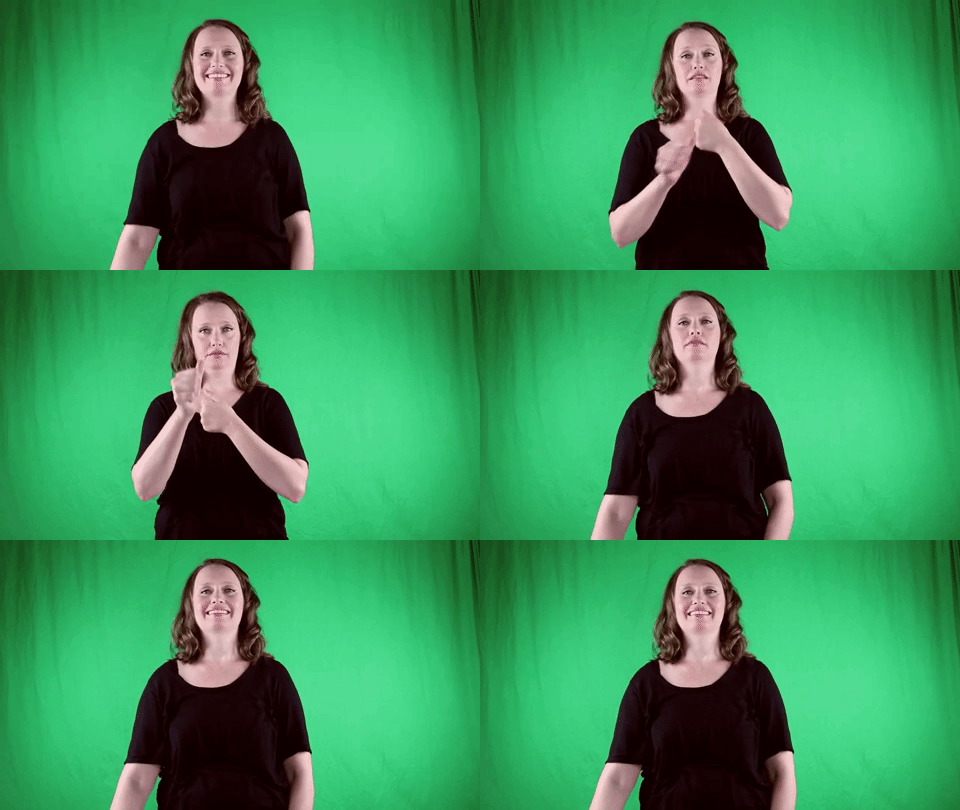
Sign for DANGEROUS in ASL | ⚠️ ASL Dictionary

Definition: Full of danger.

Sign for DANGEROUS in ASL

YouTube player

Practice Activities:

To practice the sign for DANGEROUS in ASL, start by isolating the sign. Stand in front of a mirror and repeat the motion slowly, paying close attention to handshape, palm orientation, and facial expression. A strong facial expression can add intensity to the message, which is key for conveying danger.

Use flashcards to quiz yourself on the sign for DANGEROUS in ASL along with similar signs like SAFE, HAZARD, or WARNING. This helps reinforce differences and prevent confusion between signs. Mix them together and practice identifying each based only on the visual motion.

Next, use the sign in short sentences to build fluency. Try phrases like “That road is dangerous,” “It’s dangerous to go alone,” or “Be careful, it’s dangerous here.” Sign the sentence slowly at first, then increase your speed as you gain comfort. Record yourself and watch it to assess fluidity and accuracy.

With a partner, role-play simple safety-related dialogues. One person can play a park ranger warning a hiker about a dangerous trail. The other responds with questions or acknowledgments. Switch roles to practice both giving information and reacting to it.

Craft a short story that includes scenarios where danger arises. For example, describe exploring a cave or being near a wild animal. Incorporate the sign for DANGEROUS in ASL naturally as the plot unfolds. This kind of storytelling helps you use the sign in realistic situations with emotional tone.

Watch ASL videos or vlogs that revolve around safety topics or emergency awareness. Try to notice how native signers use the sign in context and mimic their use. Combining these techniques will strengthen your receptive and expressive skills while deepening your understanding of the sign for DANGEROUS in ASL.

Cultural Context:

In the Deaf community, understanding the sign for DANGEROUS in ASL carries more meaning than just identifying risk. It reflects how Deaf people communicate important safety concepts clearly and quickly using their first language. Recognizing how to use the sign for DANGEROUS in ASL benefits both native users and learners by promoting effective and respectful communication.

The way the sign for DANGEROUS in ASL is used often depends on the context. It can express a physical threat, a risky decision, or an unsafe environment. In different situations, body language and facial expressions add intensity and help communicate how serious the danger is.

In Deaf culture, signs like the sign for DANGEROUS in ASL often represent more than the dictionary meaning. They may reflect values about caution, awareness, and respect for safety. The sign is often used in educational settings to raise awareness about hazards in the environment, in personal safety, or in health care situations.

Conversations about safety and warning signs are a regular part of communication within the Deaf community. Using the sign for DANGEROUS in ASL correctly helps improve understanding in emergencies. It helps everyone respond appropriately to threats or unsafe situations without confusion or delay.

Deaf children often learn the sign for DANGEROUS in ASL early in life, especially in school or at home during discussions of safety rules. This early exposure allows them to develop an understanding of dangerous situations in a language that fully supports their comprehension. For children and adults alike, it’s essential that words and signs related to danger are taught clearly and repeated often.

The sign for DANGEROUS in ASL is also important in interpreting and public service announcements, particularly those related to weather disasters, community threats, or health risks. Interpreters rely on this sign to convey urgency and concern in emergency broadcasts. The visual and spatial elements of ASL enhance these messages and prioritize clarity.

Culturally, using correct ASL signs like the sign for DANGEROUS in ASL prevents miscommunication and reinforces linguistic respect. As non-signers learn to incorporate ASL into daily interactions, understanding the cultural significance behind a sign helps strengthen community bonds. Knowing when and how to use a sign like DANGEROUS boosts confidence and builds cross-cultural respect.

In visual storytelling, the sign for DANGEROUS in ASL can carry dramatic weight. It is often used in performances, storytelling sessions, or plays within the Deaf community to emphasize tension or foreshadow unsafe moments.

Extended Definition:

The sign for dangerous in ASL is a useful part of daily vocabulary for both beginners and advanced signers. Understanding how to properly express this concept helps improve safety communication, especially in critical or emergency situations. The sign for dangerous in ASL is often taught in basic ASL classes, as it is one of the more essential and situational words.

To make the sign for dangerous in ASL, the dominant hand forms the letter A in ASL fingerspelling, then moves downward while brushing against the back of the non-dominant hand, which is also in the A handshape. This movement resembles friction or impact, suggesting a sense of hazard or risk. The facial expression you use when signing dangerous in ASL is also very important. A serious or cautious expression helps to clearly convey the warning message.

This sign can be used in many contexts. In conversation, you might use the sign for dangerous in ASL when talking about a harmful chemical, a risky situation, or even dangerous weather like tornados or flooding ️. You can combine this sign with others to form more detailed thoughts, like “that road is dangerous” or “dangerous to touch.”

Children learning ASL benefit from learning the sign for dangerous in ASL early on, especially when understanding boundaries or warning signs in daily life. This sign also appears in discussions about safety rules, guidelines, and behavior expectations at home, school, and public places. From playground safety to crossing the street, knowing how to identify and sign the word dangerous gives kids and parents a shared language of caution.

Deaf and hearing communities alike use the sign for dangerous in ASL when interpreting public announcements, news reports, and disaster warnings. Emergency shelters, schools, and public safety videos have increasingly adopted ASL interpretations where this sign is frequently used. Additionally, interpreters may use the sign for dangerous in ASL during legal or healthcare discussions where risk needs to be conveyed precisely.

With the growth of online ASL resources, more people are confident using signs like dangerous in ASL when communicating on social media or in educational content . Knowing how to sign this term adds depth to your expressive vocabulary, making conversations richer and more inclusive. It reflects not only a functional need but also supports emergency readiness and awareness across all audiences.

Accuracy matters when signing dangerous in ASL, so watching videos and practicing with fluent signers can help you gain confidence. Since ASL relies heavily on body language and facial expression, practicing in a mirror can

Synonyms: hazardous, risky, perilous, unsafe, treacherous

Educational resources: Find related learning materials in our course bank!

Want more? Check out some of our popular learning activities on the homepage!

Need to look up a sign? Use our highly rated dictionary: https://aslinteractive.com/best-asl-dictionary/

Follow us on tiktok: https://www.tiktok.com/@aslinteractive. More social media links at the bottom of this page!

Long-tail Keywords: what is the sign for dangerous in ASL, how do you sign dangerous in ASL, ASL sign for dangerous

Categories:

tags: Danger, Safety, Warnings, Adjectives, Everyday Activities

Parameters

*Handshape*:

The handshape for the sign for DANGEROUS in ASL uses both hands in the “A” handshape, which means the fingers are curled into a fist with the thumbs extended. The dominant hand moves over the back of the non-dominant hand in a brushing motion. This conveys a sense of impact or risk associated with the concept.

In the sign for DANGEROUS in ASL, the firm “A” handshapes apply pressure as the dominant thumb slides over the stationary hand. This gesture emphasizes the caution and severity linked with danger ⚠️. The handshape’s firmness helps reinforce the meaning of the sign visually.

*Palm Orientation*:

The palm orientation for the sign for DANGEROUS in ASL involves both hands in a thumbs-up “A” handshape. The dominant hand moves in a small, sharp downward arc while the non-dominant hand remains stationary. Both palms face each other during the motion.

In the sign for DANGEROUS in ASL, the movement combined with the palm orientation conveys a sense of warning or hazard. The orientation emphasizes the striking or impacting motion typical of danger-related signs.

*Location*:

The sign for DANGEROUS in ASL is produced at the upper chest level, slightly below the chin. Both hands begin in “A” handshapes, with the dominant hand resting on top of the non-dominant hand and then making a quick brushing or striking motion upward off of it.

This motion happens centrally in front of the body and in close proximity to the torso. Maintaining this location is vital for clarity when using the sign for DANGEROUS in ASL .

*Movement*:

The movement for the sign for DANGEROUS in ASL begins with both hands in “A” handshapes. The dominant hand is positioned above the non-dominant hand, which stays stationary. The dominant “A” hand then makes a firm brushing or striking motion downward across the top of the non-dominant hand.

This motion reflects the idea of danger or risk. Facial expression is key—often serious or intense—to match the meaning of the sign for DANGEROUS in ASL ⚠️.

*Non-Manual Signals*:

The sign for dangerous in ASL typically includes strong, intense non-manual signals. Keep your eyebrows slightly furrowed and your mouth slightly tightened as if expressing concern or caution . The expression should show alertness, matching the tone of something risky or hazardous.

When demonstrating the sign for dangerous in ASL, your overall facial tone should convey seriousness or warning. Avoid a relaxed expression, and maintain eye contact to enhance the urgency of the message.

*Prosody, Dominant/Non-Dominant Hand*:

The dominant hand forms an “A” handshape and strikes the top of the non-dominant “A” handshape in a repeated motion, palm sides facing each other. This striking motion near chest level symbolizes impact, intensity, or risk, aligning with the concept behind the sign for dangerous in ASL ⚠️.

Both hands stay close to the body, and movement is forceful but controlled. The sign for dangerous in ASL is typically performed with a serious expression to emphasize the meaning.

Tips for Beginners:

When learning the sign for DANGEROUS in ASL, start by closely observing the dominant hand’s position and motion. This sign involves a brush or contact motion between the back of the non-dominant hand and the knuckles or back of your dominant hand shaped like an “A” handshape. Consistent hand formation is essential—keep your “A” shaped hand tight and firm to convey the right energy behind the concept of danger.

Practice keeping the movement smooth and forceful enough to express intensity, but not so aggressive that it looks awkward or too harsh. The sign for DANGEROUS in ASL carries a visual weight that matches the seriousness of the word, so exaggerated or unclear gestures can distort the meaning. Practice in front of a mirror to maintain proper angle, wrist alignment, and motion direction.

Facial expression is another critical component when signing dangerous. A serious, mildly concerned facial expression adds an emotional tone and context that enhances clarity. Without an expressive face, the message may seem flat or confusing. Combine good facial grammar with the physical part of the sign for a fluent and more accurate message.

A common beginner mistake is using the wrong handshape or not applying enough contact between both hands, which may signal a completely different word or turn the sign into gibberish. Go slow, especially when you’re just starting out, and watch reliable video sources to compare your version to fluent signers.

To reinforce retention, try using the sign for DANGEROUS in ASL in full phrases or short conversations so it becomes part of your active vocabulary. Repetition builds muscle memory and boosts confidence when you use the sign in real-life situations. Keep it practical—use scenarios like talking about unsafe weather, wild animals, or risky situations to contextualize the sign properly.

sign for DANGEROUS in ASL, learn sign for DANGEROUS in ASL, how to sign DANGEROUS in ASL, ASL sign for DANGEROUS, what is the sign for DANGEROUS in ASL

Connections to Other topics:

The sign for DANGEROUS in ASL is connected to the broader concept of risk and hazard, which ties into signs like WARNING, CAUTION, and RISK. These signs are often used in similar contexts, such as safety instructions, emergency procedures, or describing environmental conditions. In advanced ASL usage, they appear together to form coherent warnings or descriptions about a situation.

This sign can also be linked with emotional states or reactions such as FEAR, ALERT, or WORRIED. Often, when describing someone avoiding a dangerous situation, facial expressions and body movement play a big role in amplifying the meaning. The sign for DANGEROUS in ASL may appear in narratives or storytelling when highlighting tension or conflict.

Compound concepts often use the sign for DANGEROUS in ASL in coordination with location or action-specific signs. For example, combining it with ROAD or CROSSING can indicate a dangerous intersection. Adding this sign before CHEMICAL, ANIMAL, or STORM, creates phrases pointing out types of danger effectively.

In discussing jobs or occupations, the sign for DANGEROUS in ASL may be used with WORK or JOB to describe high-risk professions like FIREFIGHTER, POLICE, or CONSTRUCTION. It helps communicate not just the duty, but the inherent risks in the profession. Similarly, in medical or health contexts, it can be paired with ILLNESS or MEDICINE to describe a risky procedure or health concern.

Cultural use of the sign also shows up in media discussions, debates, and interpreting situations that involve threats or potential harm. For instance, students might use it while discussing historical events, science experiments, or current news topics. This makes the sign for DANGEROUS in ASL crucial not just for safety but for broader social interaction.

Summary:

The sign for DANGEROUS in ASL involves the use of both hands in a specific configuration. The dominant hand is in an “A” handshape and swipes over the top of the non-dominant hand, also in an “A” formation, with a brushing or striking motion. This single movement conveys intensity and a sense of risk or threat.

Facial expression is extremely important when signing the concept of danger. A serious or urgent look amplifies the meaning and helps convey the emotional context. Just performing the hand movement without the appropriate face can reduce the clarity of the message in ASL.

The sign for DANGEROUS in ASL is used to describe situations, people, or things that pose a threat or could cause harm. It is often used in warnings or descriptions that require someone to take caution. This sign appears frequently in storytelling, emergency conversations, and news-related topics.

In terms of grammar, this sign is usually placed before or after the subject in sentence construction, depending on what the signer emphasizes. For example, “dog dangerous” versus “dangerous dog” can occur in ASL sign order depending on what is being highlighted. Like many ASL signs, the placement and repetition of DANGEROUS can vary based on the signer’s intent.

The sign also has some overlap with the sign for WARNING, but WARNING typically uses a different handshape and motion. The difference lies in usage: WARNING tends to be advisory, while DANGEROUS indicates a stronger, more intrinsic threat. The subtle variance reflects ASL’s depth and capacity to convey nuanced meaning.

Culturally, the sign for DANGEROUS in ASL can carry broader symbolic value. In deaf narratives, a dangerous situation may be described in detail using both manual aspects and facial expressions, blending language and visual storytelling. The sign thus plays a key role in how risk and caution are passed along in the Deaf community.

Signers also use spatial referencing when discussing danger. They may indicate where the danger is relative to themselves or another person, adding another layer of comprehension through space. These spatial decisions help create vivid and accurate mental maps for the audience.

The visualization of danger in ASL often expands beyond the single sign. Signers may integrate classifiers to describe how an object is dangerous—for instance, sharp, heavy, unstable, or explosive. By combining the sign for DANGEROUS in ASL with these classifier systems, the overall message becomes more dynamic and descriptive.

Applied linguistics can analyze how such a sign relates to cognitive load and memory. The iconicity—how closely a sign resembles its meaning—can make signs like DANGEROUS more easily remembered. Novice signers often internalize signs that carry clear metaphorical actions, which supports language acquisition.

Linguistically, the movement and location of the DANGEROUS sign reinforce phonological aspects of ASL. The striking motion across the back of the hand involves specific directionality and contact parameters consistent with other signs in ASL that denote conflict or harm. These linguistic patterns support categorizing signs in a semantic field.

In learning environments, the sign for DANGEROUS in ASL is often taught alongside synonyms like RISK, HAZARD, and WARNING. While these signs are related, the specificity of DANGEROUS provides a baseline from which to compare more nuanced concepts. This comparative approach helps students develop a more robust vocabulary.

There are also contexts, especially in science or safety-related education within Deaf contexts, where DANGEROUS becomes a core component of discussion. Conversations around chemicals, fire safety, or urban threats often employ it, extending its usage beyond just a descriptor. It becomes embedded in procedures and alert protocols.

When usability is considered, the sign for DANGEROUS in ASL is accessible and visually distinct, making it suitable for situations requiring immediate recognition. In emergencies, speed and clarity in communication are paramount, making signs like this vital in ASL’s practical function. Even younger Deaf children learn to use this sign early, often in daily interactions.

Another related sign is TROUBLE, which shares some energy and intensity but usually refers to consequences or conflict rather than direct danger. Understanding how DANGEROUS and TROUBLE differ helps highlight the scope of ASL’s expressive range. These signs can combine to enhance storytelling and emotional expression.

ASL poetry and performance art also embrace the use of signs like DANGEROUS to embody tension or conflict in an expressive way. The physicality of the sign, along with emphasized facial grammar, lends itself well to dramatic interpretation. Thus, it’s not just a lexical item but also an artistic tool.

From a social perspective, awareness of safety-related vocabulary in ASL, including the sign for DANGEROUS, contributes to inclusivity. Whether in public signage or interpersonal communication, these signs bridge gaps in accessibility. Their presence ensures that vital information reaches all members of the community equally.

Technologically, the sign for DANGERO

Want more? Check out some of our popular learning activities!

ASL Interactive Resources

ASLInteractive YouTube Channel

Follow us on tiktok: @aslinteractive.com

Follow us on Instagram: aslinteractive

Facebook page: aslinteractive

Facebook group: aslinteractive

LInkedIn: ASL Interactive LLC

Twitter: @ASL_interactive

*Some information on this page is AI-generated. AI can make mistakes. Please check the information.

Sign for DANGEROUS in ASL

Responses