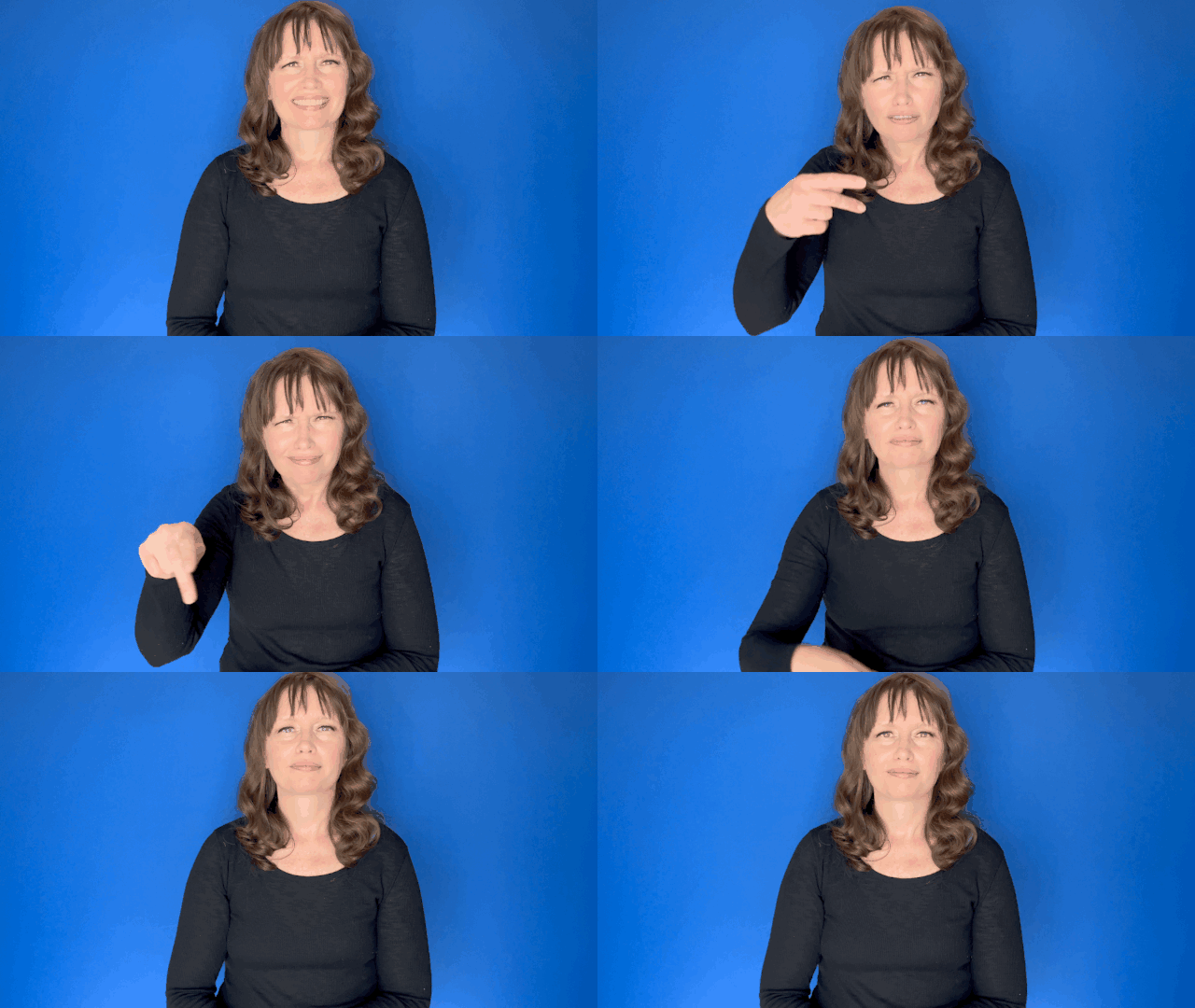
Sign for DARK PURPLE in ASL | 💜 ASL Dictionary

Definition: Dark purple color.

Sign for DARK PURPLE in ASL

YouTube player

Practice Activities:

To practice the sign for DARK PURPLE in ASL, begin by isolating each component of the phrase. First, review the individual sign for “dark” by making a flat handshape with both hands and crossing them over your face as if a shadow is passing. Then, review the sign for “purple,” which typically uses the handshape for the letter “P” and shakes slightly outward from the dominant side. Practice each motion slowly, then combine them into one fluid sign.

Use a mirror to self-correct your movements. Focus on handshapes, palm orientations, and transitions between the two signs. Try signing DARK PURPLE five times consecutively while looking at yourself. Then, gradually increase your speed while maintaining accuracy.

Next, incorporate the sign for DARK PURPLE in ASL into sentences. Practice signing “My favorite color is dark purple,” or “I saw a dark purple flower today.” Vary the subjects, such as clothing or objects, for example: “She wore a dark purple dress,” or “The wall is painted dark purple.” This helps reinforce your fluency and builds contextual understanding.

Use storytelling as a creative activity. Describe a sunset where the sky turns dark purple, or sign a story about a character whose magical power is tied to the color dark purple. These narratives give opportunities to repeat the sign in a meaningful and engaging way.

For partner work, play a color guessing game. One partner signs a color description, including “dark purple,” while the other guesses the object being described. Also consider matching flashcards with various shades and signing whether they are dark, light, or bright.

Finally, challenge yourself to spot dark purple items during the day and sign them out loud. This reinforces real-world application and helps commit the sign for DARK PURPLE in ASL to memory more naturally.

Cultural Context:

The sign for dark purple in ASL connects language with cultural expression in a unique and visually rich way. In Deaf culture, colors often carry more than visual meaning—they reflect mood, emotion, and identity through expressive movement and facial expression.

When someone uses the sign for dark purple in ASL, it’s not just about identifying a shade. It also carries tone and context, which can change depending on facial cues, the surrounding signs, or the intention behind the conversation. This emphasizes how ASL incorporates visual storytelling alongside vocabulary.

ASL users often describe colors like dark purple in conversation to talk about clothing, design, art, or nature. The sign for dark purple in ASL may be used when discussing anything from a stylish outfit to a beautiful sunset. It brings specificity and beauty to the dialogue.

Deaf communities tend to value visual clarity and description, especially in artistic or emotional expression. Signing the word for a deeper shade like dark purple helps convey richness or depth in something being described. Just like spoken languages use metaphors or descriptive adjectives, ASL uses space, motion, and intensity.

The sign for dark purple in ASL may involve modifying the base sign for purple with facial expression or hand movement to show that the shade is darker. These modifications are culturally understood and often taught in Deaf-led classrooms or shared in community settings. This reflects the hands-on and communal way ASL is passed on.

Cultural events such as drama performances, art exhibitions, and poetry nights within the Deaf community might include frequent use of signs for colors, especially expressive ones like dark purple. Whether describing scenery on stage or the mood of a painting, the sign for dark purple in ASL deepens the visual meaning.

Children who grow up in signing households also learn colors through conversation and play. The sign for dark purple in ASL might be part of everyday dialog when choosing clothes or talking about their favorite toy. Repetition of these signs in relatable contexts helps children learn language and cultural expectations at the same time.

Fashion, design, and even marketing in Deaf spaces make frequent use of descriptive color vocabulary. The sign for dark purple in ASL fits naturally into these conversations as Deaf people discuss trends, coordinate outfits, or build accessible brands that reflect their identity. Color becomes an expressive tool as well as a visual descriptor.

Sharing the sign for dark purple in ASL on social media platforms is also a way members of the Deaf community celebrate their language. By making this kind of detailed vocabulary visible and accessible online, it

Extended Definition:

The sign for dark purple in ASL combines the concept of the color purple with an added emphasis on the depth or shade of the color. In American Sign Language, colors are often modified to show light or dark variations, and dark purple is no exception. This visual language allows signers to convey subtle differences, making the sign for dark purple in ASL both expressive and precise.

To sign dark purple in ASL, you begin with the base sign for purple. This involves forming the letter “P” with your dominant hand and shaking it gently near the side of your chin or in front of your shoulder. Once you’ve established the base color, you add a movement or facial expression to show that the purple is dark or deep. Some signers might use a downward motion or combine it with the sign for dark, which is commonly represented by shading the hand over the other like you’re casting a shadow .

The sign for dark purple in ASL may vary slightly depending on regional dialects or individual signing habits. However, the essential features remain consistent: you always start with the sign for purple and adjust it to indicate the darkness. This flexibility allows the language to remain fluid while still being understood widely across the Deaf community.

Understanding how to modify color signs is an important aspect of becoming fluent in ASL. The sign for dark purple in ASL not only shows the specific color but also demonstrates how descriptive and nuanced the language can be. Whether you’re discussing clothing, art, or daily objects, being able to specify color depth is a helpful skill.

Facial expressions play a crucial role in enhancing the meaning of the sign for dark purple in ASL. A more serious or intense facial expression can communicate the richness of the color, while a neutral look might suggest the standard version of purple. This visual emphasis helps keep the language vibrant and engaging.

When teaching the sign for dark purple in ASL, visual aids and real-world examples can be particularly effective. Showing images of dark purple grapes or an eggplant can help learners make the connection between the sign and the actual color. In ASL classrooms, hands-on activities are often used to reinforce these color distinctions.

In everyday conversations, using the sign for dark purple in ASL can help describe clothing choices, décor, nature scenes, and more. It’s a functional and useful sign that enhances communication and allows for better descriptions. When used in storytelling or signing poetry, dark purple can even take on symbolic meanings, such as royalty or depth of emotion

Synonyms: deep purple, royal purple, eggplant, plum, wine

Educational resources: Find related learning materials in our course bank!

Want more? Check out some of our popular learning activities on the homepage!

Need to look up a sign? Use our highly rated dictionary: https://aslinteractive.com/best-asl-dictionary/

Follow us on tiktok: https://www.tiktok.com/@aslinteractive. More social media links at the bottom of this page!

Long-tail Keywords: What is the sign for Dark purple in ASL?, How do you sign Dark purple in ASL?, ASL sign for Dark purple

Categories:

tags: dark purple ASL sign, how to sign dark purple in ASL, dark purple American Sign Language, teach ASL dark purple, learn dark purple sign

Parameters

*Handshape*:

The handshape for the sign for DARK PURPLE in ASL uses an extended “P” handshape, which resembles the letter “P” in the ASL alphabet. The middle finger is extended downward while the index finger points forward, and the thumb touches the middle finger.

To express the color element, the “P” handshape shakes slightly outward near the shoulder or upper chest. For the dark component, use both open flat hands in front of the face, palms facing in, and move them downward slightly to suggest shade. This motion combines with the initial color sign to complete the sign for DARK PURPLE in ASL .

*Palm Orientation*:

For the sign for DARK PURPLE in ASL, the palm orientation begins with the dominant hand in the ‘P’ handshape. The palm typically faces downward or slightly toward the body, depending on the variation. When transitioning into the movement, the palm may shift slightly outward as the wrist rotates briefly.

This palm orientation helps differentiate the sign for DARK PURPLE in ASL from similar color signs and ensures the motion captures both components of the concept effectively. Proper hand rotation and palm orientation create visual clarity.

*Location*:

The sign for DARK PURPLE in ASL is made near the side of the head and upper torso. The sign for “dark” typically starts near the forehead or upper face and moves downward to indicate dimness or lack of light. For “purple,” the P handshape is shaken slightly near the shoulder or upper chest area.

Together, the location of the sign for DARK PURPLE in ASL focuses on the upper half of the body, connecting facial area movement for “dark” with the shoulder area for “purple.” The combination uses standard signing space close to the upper torso and head to maintain visibility.

*Movement*:

To produce the sign for DARK PURPLE in ASL, begin by signing DARK: place both open hands in front of your face, palms facing inward, and lower them together until they cross at wrist level, as if dimming the light. Immediately follow this with the sign for PURPLE by making a “P” handshape and flicking it out from the wrist a couple of times near the shoulder.

The movement of the Sign for DARK PURPLE in ASL blends these two motions smoothly, emphasizing both the concept of lack of light and the distinct color. Keep the transitions fluid to maintain clarity and reinforce the meaning.

*Non-Manual Signals*:

The non-manual signals for the sign for DARK PURPLE in ASL often include a slight squint of the eyes combined with a focused or serious expression to convey the deeper tone of the color. The lips may be pressed together or slightly parted with a neutral mouth shape to reinforce the concept of “dark” in the phrase.

When signing the sign for DARK PURPLE in ASL, avoid smiling or overly expressive facial gestures, as this can change the meaning. Context and facial cues add depth, helping differentiate it from the sign for just PURPLE alone.

*Prosody, Dominant/Non-Dominant Hand*:

The sign for DARK PURPLE in ASL combines the concepts of “dark” and the color “purple.” Use your dominant hand to form a bent “B” handshape and move it across the face to suggest darkness. Then, transition to sign “purple” by shaking a “P” handshape near the shoulder level using the dominant hand. The non-dominant hand remains relaxed throughout.

To express the sign for DARK PURPLE in ASL clearly, the dominant hand does most of the movement while the non-dominant supports overall facial placement if needed. This two-part sign blends both color and intensity.

Tips for Beginners:

When learning the sign for DARK PURPLE in ASL, beginners should first break it into two components: DARK and PURPLE. Start by mastering the individual signs before combining them smoothly. For DARK, you’ll often see a gesture that mimics the closing of light, usually bringing both open hands in front of the face and moving them downward and slightly toward each other, palms facing in. For PURPLE, use the initialized “P” handshape and gently shake it down or side to side, typically near the shoulder.

Practice each part slowly and clearly before increasing speed. Many beginners struggle with clarity when trying to execute color signs with modifiers like dark or light. Make sure each segment of the sign for DARK PURPLE in ASL is formed sharply to avoid communication errors. For example, don’t rush the PURPLE part, or it could be misread as another color if the “P” handshape gets lost or too fast.

Facial expressions can enhance meaning, especially with modifiers like dark. For DARK, a slight furrow of the brow might help convey the deeper shade. While facial grammar isn’t required for every color modifier, it’s good practice to match your expressions with your signs to ensure natural, effective communication.

Consistency is key—practice in front of a mirror or record yourself. Compare your handshape and movements with verified ASL videos or instructors. Repetition will help build fluency and confidence.

Be mindful of your hand placement and palm orientation. For the PURPLE sign, the “P” handshape should not be too far from the shoulder, and the rotation should be gentle and controlled. Mastering the sign for DARK PURPLE in ASL will get easier with repetition, focused practice, and watching native signers for smooth transitions between modifiers and base color signs.

Connections to Other topics:

The sign for DARK PURPLE in ASL brings together the core signs for both “dark” and “purple,” forming a compound expression that enriches understanding and descriptive vocabulary in ASL. This combination reflects a broader pattern in the language where modifiers like shades or intensities are signed separately and then linked with the base color. By recognizing this structure, learners can apply the same logic to other hues such as light blue, dark green, or bright red.

In ASL, color signs often relate closely to emotions, fashion, art, and nature topics, so learning the sign for DARK PURPLE in ASL opens pathways to discuss mood, style, or environment. For example, DARK PURPLE might be used to describe a somber painting or a deep-hued dress, signifying both aesthetic appreciation and emotional tone. This type of sign also connects to storytelling, where color imagery plays a strong role in scene setting and character description.

The base sign for “purple” involves a movement with the letter “P” handshape, and the sign for “dark” uses a downward sweeping of flat hands across the face, representing a decrease in light. When combined into the sign for DARK PURPLE in ASL, the user first signs “dark,” followed by the color to build meaning. This practice mirrors how ASL handles many descriptive compounds, such as signs for “cold weather” or “strong wind.”

Learning how to sign color combinations like the sign for DARK PURPLE in ASL builds proficiency in conversation and narrative structure. It supports visual precision, which is a critical skill in ASL. Students also benefit from understanding how descriptive sequences work universally across topics like weather, mood, design, and more, making their communication skills more nuanced and expressive.

Summary:

The sign for DARK PURPLE in ASL combines two core concepts: color and shade. To express it clearly, signers first use the color PURPLE, followed by a modifier indicating darkness or dimness.

The base color PURPLE uses a handshape of the letter “P” in American manual alphabet. The dominant hand, formed into a “P,” rotates slightly outward near the shoulder area.

To modify with the concept DARK, interpreters integrate the general sign for darkness. In ASL, DARK is usually shown by crossing both flat hands over the face in a downward motion, mimicking a dimming light.

By signing PURPLE and immediately layering it with DARK, the signer clearly conveys both hue and shade. The sequence maintains ASL grammar conventions—modifiers follow the root word or concept, completing the overall meaning.

Context decides if the DARK part is emphasized. For a poetic or descriptive scenario, the signer might exaggerate the darkness sign to visually express deeper hues or moodiness.

The sign for DARK PURPLE in ASL can also include facial expressions to heighten meaning. A squint or head tilt adds emphasis, giving the sign emotional nuance or aesthetic quality.

ASL relies heavily on non-manual signals. When referring to a dark version of a color, eyes may narrow slightly or the mouth might purse to show depth or intensity.

Not every color has a specific sign for its shade. Variation comes from combining modifiers, an essential principle in ASL morphology.

ASL often constructs complex ideas by layering concepts. DARK PURPLE follows this pattern, reinforcing the language’s unique spatial and visual grammar.

In Deaf culture, color terms like DARK PURPLE might have commentary beyond mere hue. It can suggest style, emotion, or be used metaphorically in art, fashion, or storytelling.

Deaf artists using ASL may describe a canvas with the sign for DARK PURPLE not just for color, but mood. It can suggest mystery, sadness, or bold statement, expanding creative expression.

Signers often utilize classifiers, though they are not required for color. However, for painting, clothing, or makeup contexts, DARK PURPLE may be followed by a classifier to show texture or fabric movement.

In storytelling using visual vernacular, signers might animate the sign for DARK PURPLE across a surface to “paint” a scene. This usage elevates the sign from lexical to performative.

In terms of grammar, the sign maintains SVO or OSV structure depending on emphasis. DARK PURPLE might function adjectivally in ASL sentences such as “shirt DARK PURPLE I LIKE.”

Color words are generally adjectives in English, but ASL’s fluid structure allows color signs to function more like predicates when used emphatically or in isolation.

The sign for DARK PURPLE in ASL—that merger of basic color with nuanced modifier—is part of a larger system of compound signs. Many signs in ASL are built through conceptual layering.

Linguistically, this shows ASL’s analytic nature. Rather than inflections, meaning is conveyed through gesture combinations, space placement, and intensity variations.

ASL does not inflect for tense or plurality through suffixes. In the sign for DARK PURPLE in ASL, plurality or frequency would be contextually supported, not morphologically altered.

Applied linguistics research highlights how shades like DARK PURPLE present opportunities for semantic specificity in signed discourse. It deepens the language’s expressivity.

Color perception in the Deaf experience is highly visual and embedded in environment-based learning from childhood. Attention is often drawn to the expressive value of colors.

Children learning ASL absorb color variations early through play with crayons, toys, or clothes. Signing DARK PURPLE helps connect language to concrete visual stimuli.

Educators may use sign games and visual aids to reinforce distinctions between base colors and their shades. DARK PURPLE becomes a teaching opportunity for color gradation.

Interpreters must ensure that intent behind DARK PURPLE isn’t lost in voice translation. Context matters—a poetic reference to DARK PURPLE differs from a clothing description.

Fashion and design often require detailed color distinctions. Interpreters for events like fashion shows must know how to efficiently deliver signs like DARK PURPLE with flair.

Signed language lacks a universal code for all shades, so clarity in signing DARK PURPLE comes largely from descriptive skill and visual context.

DARK PURPLE is sometimes fingerspelled in theatrical settings if specificity is needed, such as naming a costume color in a play’s description or stage direction.

In the DeafBlind community using tactile ASL, DARK PURPLE is expressed through nuanced pressure and directional cues. This includes drawing on the palm or back using tactile signs.

Across regional dialects in ASL, the sign for DARK PURPLE rarely changes in form but might vary in speed or hand dominance. These variances stem from local signing habits but don’t alter meaning.

Fluency in conceptual grouping helps native and second-language users of ASL. Signing DARK PURPLE improves with exposure and practice,

Want more? Check out some of our popular learning activities!

ASL Interactive Resources

ASLInteractive YouTube Channel

Follow us on tiktok: @aslinteractive.com

Follow us on Instagram: aslinteractive

Facebook page: aslinteractive

Facebook group: aslinteractive

LInkedIn: ASL Interactive LLC

Twitter: @ASL_interactive

*Some information on this page is AI-generated. AI can make mistakes. Please check the information.

Sign for DARK PURPLE in ASL

Responses