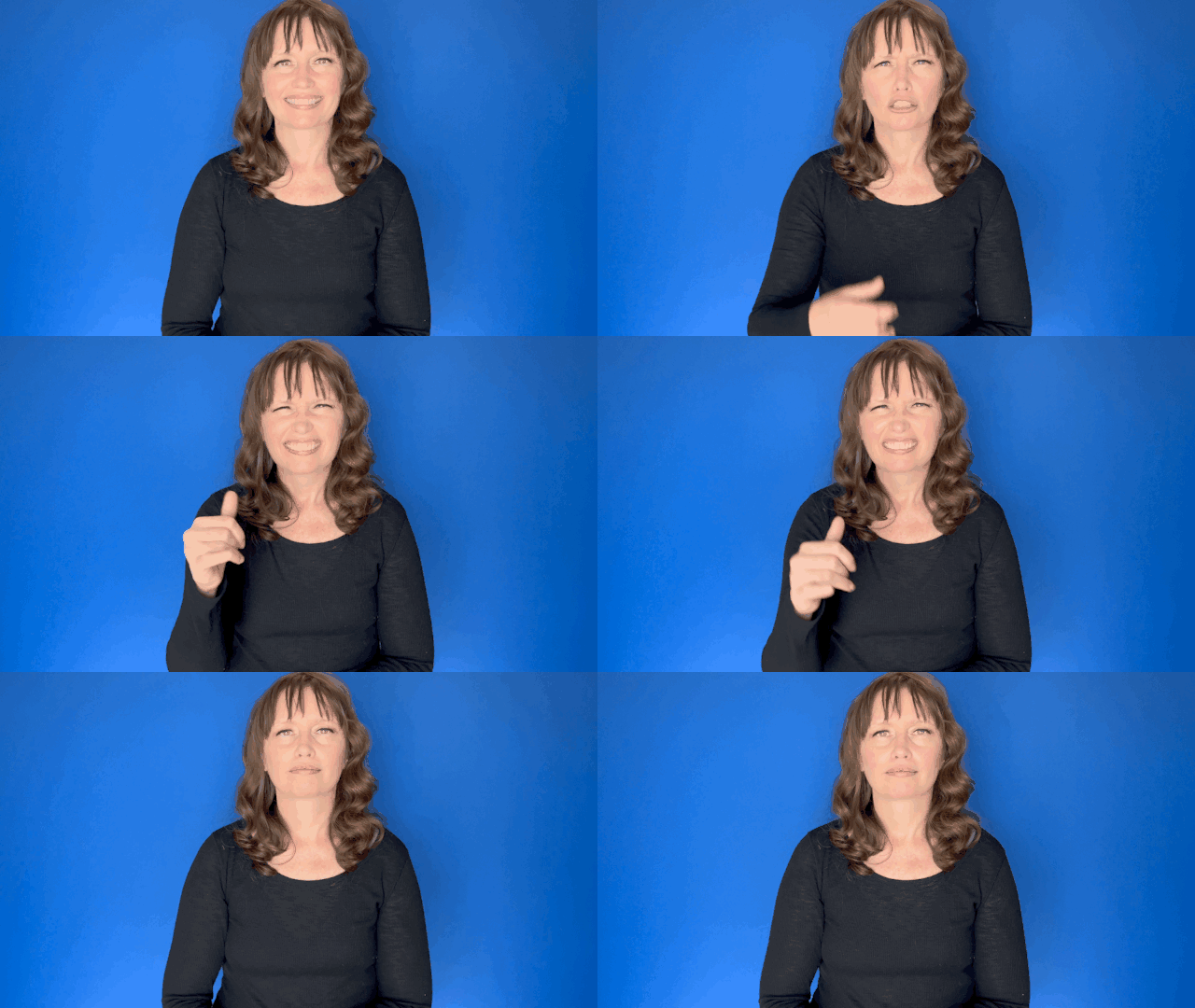
Definition: Dark yellow color.
Sign for DARK YELLOW in ASL

Practice Activities:
Start your practice with the sign for DARK YELLOW in ASL by isolating each concept. First, practice the sign for DARK by itself, using a flat hand above your eyes moving downward slightly as though you are dimming a light. Then, separately practice the sign for YELLOW by making the Y handshape and shaking it in front of your body. Repeat each sign slowly and smoothly, gradually increasing your speed and clarity.
Once you feel comfortable signing each word on its own, start combining them. Sign DARK first, then follow it with YELLOW to express the concept together. Say the phrase out loud in English while signing to reinforce connection between the meaning and the signs. Record yourself to check for fluid motion between the two signs and appropriate facial expressions.
Use sentences to develop fluency. Practice signing phrases like, “The car is dark yellow,” “I saw a dark yellow flower in the garden,” and “Her favorite color is dark yellow.” Say them in English first, then switch to ASL structure and sign them without using voice. This will help strengthen your receptive and expressive skills.
Create a storytelling activity using color as a theme. Tell a story involving different objects and their colors, emphasizing when something is dark yellow. For example, you could describe a mysterious room with a dark yellow lamp as a clue or mention a favorite shirt that is dark yellow in a narrative. This helps reinforce recall in a creative context.
Practice with a partner by playing color identification games. One person describes an object using its color, and the other has to guess what it is. Use the sign for DARK YELLOW in ASL during the game to ensure it is used frequently and naturally in different contexts. Try to use the sign at least five times in each session to build confidence.
Cultural Context:
In American Sign Language, signs for colors are more than simple translations—they reflect cultural perspectives and visual nuances that are important in the Deaf community. When learning the sign for dark yellow in ASL, it’s helpful to understand how color concepts are structured within the language. ASL often layers descriptions, like “dark” or “light,” to modify base color signs, allowing for more accurate visual communication.
The sign for dark yellow in ASL blends the core sign for yellow with a modifier indicating the depth or intensity of the shade. Colors in ASL are typically shown close to the face, incorporating handshape and motion. To show dark yellow specifically, signers may combine the standard motion for yellow with a gesture or facial expression that conveys darkness or richness of tone.
Color perception in ASL is not only visual but also deeply cultural. In Deaf communities, colors may carry symbolic meanings influenced by storytelling, societal context, and personal experience. The sign for dark yellow in ASL can also take on different connotations depending on usage—such as describing clothing, art, or emotional tone.
In educational and creative settings within Deaf culture, colors are often used to express mood or character traits. When someone uses the sign for dark yellow in ASL, it might not simply denote a shade, but evoke a particular mood or atmosphere. This makes signing more expressive and contextually rich than a direct one-to-one translation.
ASL is a spatial and visual language, so incorporating modifiers like “dark” conveys more than just color—it suggests movement, placement, and visual depth. The sign for dark yellow in ASL represents a fusion of two ideas, where the concept of darkness enhances the base yellow to provide a fuller description. The user’s facial expression and body language can further influence the meaning.
Traditionally, the ASL sign for yellow uses a “Y” handshape shaken near the chin. To make it darker, signers may add a second sign that means “dark” before or after the color, or change the motion and intensity. This layered approach to signing colors like dark yellow in ASL allows users to articulate visual details more precisely.
Within Deaf community art projects and cultural discussions, specifying color shade is common and appreciated. Artists and storytellers often rely on visual richness, and signs such as dark yellow in ASL help bridge language and imagery. This specific color might be used to describe themes in a painting, a sunset, or even symbolic items like clothing or flowers.
The ASL community values
Extended Definition:
The sign for dark yellow in ASL combines two visual elements to represent both the color yellow and the concept of darkness. In American Sign Language, colors are often shown using descriptive movement and facial expressions to convey depth or intensity, which helps in communicating more specific shades like dark yellow.
To sign for dark yellow in ASL, individuals usually start with the basic sign for yellow. This sign involves forming the hand into the Y-handshape (thumb and pinky extended, other fingers closed) and shaking it slightly near the side of the face. This basic movement communicates the general color yellow.
To shift that to dark yellow, a second layer is added. Typically, the signer may first use a gesture that conveys darkness. This can be shown by moving one hand in a shadowing motion over the other, or by using a facial expression that suggests dimness or a lack of brightness. Then they follow it immediately with the yellow sign, allowing the viewer to understand the shading.
The order and expression matter in achieving the right tone when communicating the sign for dark yellow in ASL. For example, changing your facial expression to a more serious or dimmed look helps support the idea of a darker tone. ASL is not just about hand movements; facial expressions, body movement, and context also play a major role in meaning.
In some variations, people may use a flat-hand swipe over the basic yellow sign as a way to represent darkness falling over the color. This kind of modifier is common in ASL when describing shades or intensities. Since ASL is a visual language, creativity in describing colors like dark yellow is encouraged as long as clarity is maintained.
Understanding the sign for dark yellow in ASL can be especially helpful when discussing art, design, clothing, or details that include color descriptions. It’s important to note that ASL users might slightly personalize how they express shades based on regional influences or personal style, but the foundational elements remain consistent.
By combining descriptive color signs and contextual cues, signers are able to communicate detailed visual concepts like dark yellow accurately. For teachers, interpreters, and learners of ASL, practicing these compound signs is useful for fluency and comprehension. Using the sign for dark yellow in ASL also offers a great opportunity to expand your vocabulary into more nuanced areas.
In settings such as classrooms, art lessons, or casual conversations where colors are used frequently, knowing how to properly sign different shades adds depth to the discussion. For kids and educators especially, learning these signs can
Synonyms: mustard, goldenrod, amber, ochre, maize
Educational resources: Find related learning materials in our course bank!
Want more? Check out some of our popular learning activities on the homepage!
Need to look up a sign? Use our highly rated dictionary: https://aslinteractive.com/best-asl-dictionary/
Follow us on tiktok: https://www.tiktok.com/@aslinteractive. More social media links at the bottom of this page!
Long-tail Keywords: What is the ASL sign for dark yellow, how to sign dark yellow in American Sign Language, ASL sign for dark yellow
Categories:
tags: dark yellow ASL sign, how to sign dark yellow in ASL, American Sign Language dark yellow, dark yellow color in ASL, ASL color signs
Parameters
*Handshape*:
The handshape for the sign for DARK YELLOW in ASL involves the “Y” handshape, formed by extending the thumb and pinky while tucking in the other fingers. This handshape is typically used to represent the color yellow and is moved in a small twisting or rocking motion near the side of the body.
To show the dark aspect in the sign for DARK YELLOW in ASL, an additional movement is made by crossing both flat hands over the face, representing dimming or darkness. These stacked flat hands suggest a change in light or intensity, completing the visual concept of DARK YELLOW effectively.
*Palm Orientation*:
For the sign for DARK YELLOW in ASL, the palm orientation changes slightly depending on the component sign being produced. When signing “dark,” both hands typically face inward toward the body with palms angled slightly down, crossing at the wrists over the face. As you transition to “yellow,” the dominant hand forms a “Y” handshape with the palm facing outward, shaking slightly side-to-side. The palm orientation shift highlights the distinction between the two concepts in the sign for DARK YELLOW in ASL .
*Location*:
The sign for DARK YELLOW in ASL takes place primarily in the signing space in front of the chest. The dominant hand begins at the side of the forehead or upper chest to suggest the idea of “dark” by moving the hand downward with partially curved fingers, then follows with the sign for “yellow” near the upper chest using the “Y” handshape shaken slightly.
This placement ensures the movement and transition between the “dark” and “yellow” components of the sign for DARK YELLOW in ASL are clearly visible. Using the space between chest and face allows the signer to convey both color and descriptive tone effectively .
*Movement*:
Begin by signing “YELLOW” using the Y-handshape, shaking it side to side near the shoulder. Then transition into the concept of “DARK” by placing both open hands in front of the face, palms facing inward, and moving them downward slightly while bringing them together, as if dimming the light.
This combination creates the sign for DARK YELLOW in ASL by layering the color sign with a visual indicator of shade depth. Use appropriate facial expressions to emphasize the darker tone of the yellow.
*Non-Manual Signals*:
The non-manual signals used in the sign for DARK YELLOW in ASL convey both the visual tone and intensity of the color. The eyebrows may lower slightly, and the eyes might squint a bit to emphasize the “dark” aspect, showing concentration or seriousness. The mouth may form a slight “mm” or neutral expression, reinforcing the subdued shade rather than a bright one.
Facial expression helps clarify that this is not a typical yellow but a deeper or muted version. These non-manual markers ensure that the sign for DARK YELLOW in ASL is clearly distinguished from its brighter counterpart .
*Prosody, Dominant/Non-Dominant Hand*:
The sign for DARK YELLOW in ASL typically involves using both hands. The dominant hand makes the motion for YELLOW by forming a “Y” handshape and shaking it near the side of the face. To indicate DARK, the non-dominant hand remains stationary while the dominant hand moves down over it with open palms to suggest darkness or shading. Combining both elements creates the expressive sign for DARK YELLOW in ASL . This layered signing approach visually distinguishes a deeper tone of yellow.
Tips for Beginners:
When learning the sign for DARK YELLOW in ASL, it’s important to understand that this phrase is typically expressed by combining two separate signs: one for “dark” and one for “yellow.” You’ll start with the sign for “yellow,” which is made by forming the letter “Y” handshape and twisting your wrist slightly side to side near your shoulder. To indicate “dark,” you bring both flat open hands, palms facing in, down over your face slightly as if dimming the light. Practice each sign separately before trying to blend them together smoothly.
A good approach for mastering clarity is to maintain consistent handshapes and clean movement transitions between the two signs. Make sure the “Y” handshape is easily distinguishable—thumb and pinky extended, other fingers down. Avoid rigid movements because the sign for “yellow” is light and flicking, while “dark” is broader and more deliberate. This visual contrast helps keep the meaning clear.
One common mistake beginners make with the sign for DARK YELLOW in ASL is failing to establish contrast between the two descriptive elements. Rushing the transition between signs can cause confusion. Take your time during practice to pause slightly between “dark” and “yellow” to ensure each part is understood.
Facial expressions help deepen meaning. When signing “dark,” darken your expression just slightly. It doesn’t need to be dramatic—just a subtle cue, like squinting or tilting your head, can help convey the tone more expressively.
Always sign in context. Using the sign for DARK YELLOW in ASL while pointing to something visually that color will help reinforce understanding. Repetition with feedback is key. Practice with a mirror or record yourself to compare your accuracy. Join ASL groups online or in person to receive feedback and build confidence .
Connections to Other topics:
The sign for DARK YELLOW in ASL connects directly to the broader concept of combining basic color signs with modifiers. DARK and YELLOW are both individual signs that learners often master early, and the combination is a practical example of how descriptive language is formed in ASL. This compound structure mirrors the way adjectives are commonly layered in signed phrases, maintaining the visual-spatial grammar of the language.
Understanding how to modify base colors like YELLOW with descriptive signs like DARK opens the door to expressing more nuanced color concepts. Other variations include LIGHT YELLOW or DULL YELLOW, each created by modifying the color with a visual cue like brightness or intensity. This mirrors the way ASL users create other compound concepts, such as BIG HOUSE or COLD WEATHER, by pairing a descriptive sign with the noun or subject.
The sign for DARK YELLOW in ASL also relates to how ASL prioritizes clarity and context. For example, when describing clothing or artwork, a signer could use DARK YELLOW to differentiate between multiple items, intensifying the precision of communication. This is particularly useful in storytelling and visual descriptions, where color sets tone and details character.
In educational environments, the sign for DARK YELLOW in ASL reinforces understanding of visual description and adjective-noun order. Students can practice color theory, combining signs like DARK, BRIGHT, and PALE with YELLOW, BLUE, or RED to build fluency in complex concepts. This helps improve semantic range and encourages expressive confidence.
Additionally, modifiers like DARK are not exclusive to color; they apply in other concepts such as DARK NIGHT, creating natural transitions between topics. Learning the sign for DARK YELLOW in ASL therefore enhances cross-topic comprehension and prepares learners to build richer, clearer expressions in everyday signing .
Summary:
The sign for DARK YELLOW in ASL is a compound sign, combining elements that convey both the idea of darkness and the specific hue of yellow. It begins by modifying the base color sign, YELLOW, with modifications that reflect the degree of its intensity or value. This approach reflects how ASL uses layering or sequential signing to describe more complex color concepts, rather than having a unique sign for each variation.
To sign DARK YELLOW in ASL, you typically start with the sign for DARK. This is often represented by both open hands coming down over each other in front of the face or chest area with palms facing inward, mimicking the naturally dimming quality of darkness. After this, the sign for YELLOW is produced, made by shaking the Y handshape (pinky and thumb extended, other fingers closed) side to side near the shoulder or face.
Combining these signs in sequence allows the signer to clearly express that the yellow being described is not bright or neon but rather shaded, deeper, or muted. This use of modification through sequencing is common in ASL, as it allows for compositional nuance without the need for separate lexical entries for every shade.
ASL is a visually expressive language and often relies on facial expressions and non-manual markers to further enhance meaning. When signing DARK YELLOW, a slightly furrowed brow or a subtle downturn to the mouth can be used to support the concept of darkness or dullness in the color’s tone. This is a great example of how prosodic features contribute to lexical meaning in ASL.
The sign for YELLOW on its own already holds a distinct linguistic role in describing objects, feelings, or classifications. Adding DARK in front of it does not alter its core meaning, but rather specifies the shade. This balance between base lexicon and modifiers showcases natural compositionality in ASL morphology.
In applied linguistics, this method of building up meaning through signs-for-parts, as seen in DARK YELLOW, is known as a productive morphological process. It’s similar to how adjectives or descriptors in spoken English modify base nouns or other adjectives. In ASL, though, spatial orientation, facial grammar, and movement all carry semantic load alongside handshape.
Color-specific terms like DARK YELLOW often come up in everyday conversation, especially in contexts such as art, clothing, design, or even one’s mood. Signers might use DARK YELLOW to describe a specific couch, autumn leaves, or a shirt. The context-driven choice to specify a dark hue as opposed to the brighter form underscores how important visual detail is in ASL.
There’s also a semiotic aspect to consider. In visual modal languages like ASL, color is directly linked to visual description and identification. The sign for DARK YELLOW works within this visual-semiotic frame, where some colors are signs and others are described through combinations or comparisons to known references.
Whereas some colors in ASL have established signs (like BLUE or RED), more specific shades such as DARK YELLOW must be signed through either description, sequencing, or fingerspelling. This shows how access to specific vocabulary may vary depending on usage frequency or linguistic community needs. But even without standardized vocabulary, ASL allows for precision through constructiveness.
Culturally, signers often exhibit creativity when expressing shades or unique color tones. Descriptions like DIRTY YELLOW or MUSTARD are sometimes used to enhance the clarity or vividness of the intended color. This is part of the rich descriptive potential that ASL native and fluent users develop over years of exposure and usage.
The sign for DARK YELLOW in ASL might also rely on referencing known objects with that color. For instance, someone could point to a mustard bottle or hold up a shirt while signing to clarify the hue. This shows how iconicity and real-world associations are leveraged in ASL communication.
From a grammatical standpoint, DARK operates as an adjective within the sign phrase, functioning similarly to English. However, its placement at the beginning of the sign phrase aligns with how descriptors precede nouns or main ideas in ASL structure. This positioning is essential to proper sentence construction and ensures clear understanding.
The order of elements in the sign for DARK YELLOW in ASL also respects time-topic-comment structure, which is common in ASL syntax. Here, the modifier (DARK) comes first thematically, followed by the specific color (YELLOW), delivering the reference from general to specific.
Classifiers in ASL are another tool signers use to clarify visual attributes during color discussions. A signer might include a flat handshape classifier while signing DARK YELLOW to specify whether the object is large, flat, or multicolored. These classifiers enrich the narrative ability of ASL.
In some cases, if a person is unsure whether their audience will understand DARK YELLOW as a compound, they may follow up with comparisons (“like brown but more yellow”) or visual cues. It’s an adaptive process that reflects the user’s awareness of
Want more? Check out some of our popular learning activities!
ASL Interactive Resources
ASLInteractive YouTube Channel
Follow us on tiktok: @aslinteractive.com
Follow us on Instagram: aslinteractive
Facebook page: aslinteractive
Facebook group: aslinteractive
LInkedIn: ASL Interactive LLC
Twitter: @ASL_interactive
*Some information on this page is AI-generated. AI can make mistakes. Please check the information.


Responses