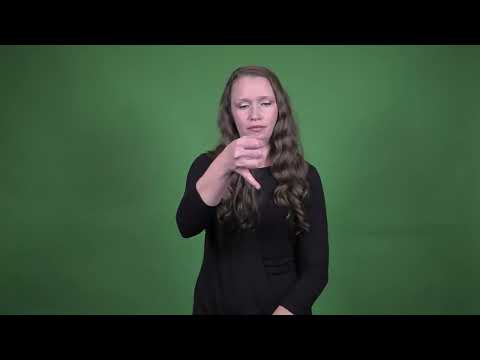
Definition: Lines that are dashed.
Sign for DASHED LINES in ASL

Practice Activities:
To build confidence using the sign for DASHED LINES in ASL, start with isolated practice by repeating the movement in front of a mirror. Focus on shaping your dominant hand into a flat “B” handshape and making quick, evenly spaced horizontal or vertical tapping motions in the air. Practice facing left to right and top to bottom, mimicking how a dashed line may appear on a map or in a diagram.
Use flashcards showing images of roads, patterns, or design graphics that include dashed lines and sign what you see. Label each dashed feature with the sign for DASHED LINES in ASL, followed by the subject to support vocabulary connection. Reinforce with full sentences such as “Road has dashed lines” or “The drawing shows three dashed lines.”
Storytelling is a great activity to expand fluency. Create short descriptions of diagrams, roads, or art that contain dashed dividers or outlines. For example, tell a quick story about a treasure map, describing the path with dashed lines leading to an “X” . Be sure to pause and clearly show each directional or patterned movement as you describe it.
Partner work is helpful for feedback and improvement. One person can describe a scene using ASL, while the other draws what they visualize based on the signed instructions. Emphasize when the sign for DASHED LINES in ASL appears, making sure it is interpreted accurately.
Finish your practice by comparing DASHED LINES to other line types, like solid lines or curved lines. Set up a sorting game with various images and categorize each one. Use the correct ASL sign as you classify what kind of line it is and explain why. This strengthens both receptive and expressive skills while reinforcing visual literacy in ASL.
Cultural Context:
In American Sign Language, the sign for DASHED LINES in ASL plays an important role when describing visual concepts or spatial layouts. It is especially common in educational and professional settings where diagrams, maps, or surface features need to be explained clearly using ASL.
The sign for DASHED LINES in ASL is not just a literal translation of the English term. Instead, it incorporates visual techniques and non-manual markers to represent the intermittent or segmented visual aspect of dashed lines. This visual-spatial approach makes it easier for Deaf and hard-of-hearing individuals to understand abstract layouts or boundaries without relying on spoken or written explanations.
Culturally, the use of the sign for DASHED LINES in ASL is rooted in the Deaf community’s deep connection to visual learning and communication. ASL users often need to describe complex shapes, routes, or grids in an accessible way. When a map or blueprint has dashed lines to indicate something temporary or movable, this ASL sign allows those nuances to be clearly conveyed through signed language.
In academic contexts, Deaf students and teachers often use the sign for DASHED LINES in ASL to explain math graphs, art patterns, or science charts. It furthers visual understanding by aligning ASL’s descriptive nature with the visual organization found in many learning materials. The gesture for dashed lines is often repeated or demonstrated through movement and spacing of the hands, which allows the signer to show the segmentation in a vivid, accurate way.
Within the workplace or technical settings, the sign for DASHED LINES in ASL can be used during presentations or team meetings. Often, interpreters work alongside visual aids, so this sign becomes essential in translating design, planning, or navigation information. From architecture plans to sewing patterns, dashed lines are everywhere, and having a clear sign helps break down barriers in communication.
The evolution of this sign is also part of ASL’s natural adaptation and creativity. As technology and education introduce more visual components into everyday life, the need for signs like the one for DASHED LINES in ASL increases. This shows how fluent signers adapt their language to meet the needs of modern life and stay connected with broader conversations.
Deaf artists, designers, and engineers also benefit greatly from the use of this sign. Whether explaining stitching guides or indicating road markings, the sign for DASHED LINES in ASL becomes a key visual expression of a concept that might otherwise be difficult to describe.
Social storytelling and vlogs within the signing community
Extended Definition:
The sign for dashed lines in ASL refers to how visual representations of broken, segmented, or dotted lines are expressed using American Sign Language. This sign is commonly used in educational settings, especially when discussing maps, diagrams, road markings, or illustrations that include broken lines. It helps describe visual layouts clearly and effectively in signed communication.
To convey the sign for dashed lines in ASL, a signer typically uses repeated short hand motions to mimic the look of a segmented or dotted line. This may involve movement in a straight path with brief pauses, using alternating hand shapes or spacing to signify the broken nature of the line. The direction of movement often matches the orientation of the lines being described, whether vertical, horizontal, or angled.
This ASL sign is especially useful in classrooms, art discussions, or when giving directions. If someone is explaining how to draw a border with dashed lines or discussing road markings, the sign offers a visual counterpart to the idea. For example, on a map, dashed lines often mark trails or paths, and being able to sign this detail allows for more accurate communication.
Context is important when using the sign for dashed lines in ASL. Depending on what the dashed line represents, a signer might also include additional signs to clarify — such as sign for road, trail, or border. When combined with facial expressions and directional movements, the full meaning becomes much clearer in conversation.
Many ASL users, especially those involved in graphic design, drafting, mapping, or education, find the sign for dashed lines to be part of everyday vocabulary. It helps bridge the gap between visuals and verbal explanations, reinforcing the idea with both motion and space. This strengthens understanding, particularly in visual-spatial descriptions.
Learning how to use the sign for dashed lines in ASL also encourages a deeper appreciation for how ASL communicates abstract visual concepts. Unlike spoken English, where one might simply say dashed or dotted, ASL turns these shapes into motion. That motion brings clarity and dimension to signed discussions.
In ASL teaching materials and visual aids, the sign for dashed lines may appear repeatedly to help learners describe objects accurately. Practice with this sign can improve a user’s descriptive ability in various contexts. Whether discussing art, road signs, or architectural plans, this sign enhances accuracy.
Understanding the sign for dashed lines in ASL also helps when working with children or individuals learning to describe shapes and forms. It provides a quick and direct way to reference visual elements that are common but abstract. For budding artists or students,
Synonyms: broken lines, dotted lines, interrupted lines, segmented lines, discontinuous lines
Educational resources: Find related learning materials in our course bank!
Want more? Check out some of our popular learning activities on the homepage!
Need to look up a sign? Use our highly rated dictionary: https://aslinteractive.com/best-asl-dictionary/
Follow us on tiktok: https://www.tiktok.com/@aslinteractive. More social media links at the bottom of this page!
Long-tail Keywords: what is the ASL sign for dashed lines, how do you sign dashed lines in ASL, ASL sign for dashed lines
Categories:
tags: Transportation, objects in the classroom, language learning, math, science
Parameters
*Handshape*:
The handshape for the sign for DASHED LINES in ASL usually begins with both hands in the “G” handshape, where the index finger and thumb are held slightly apart, mimicking the look of a dash mark. This handshape is used to create a segmented or broken visual representation in the air.
As you perform the sign for DASHED LINES in ASL, move the “G” handshape repeatedly forward in small, evenly spaced steps to create the appearance of dashes. The spacing mimics how dashed lines appear on paper or roads, making the sign visually descriptive. ✏️
*Palm Orientation*:
The palm orientation for the sign for DASHED LINES in ASL typically involves both hands held with palms facing downward or slightly inward, representing the surface where the dashed lines appear. The dominant hand may move in short, quick motions to mimic short segments of a dashed pattern.
When signing the concept, it’s important that the palms stay relatively flat throughout to visually represent the flatness and separation of lines in the sign for DASHED LINES in ASL ✋ .
*Location*:
The sign for dashed lines in ASL is typically produced in the neutral space in front of the body, at about chest level. This placement allows both hands to move freely and clearly portray the segmented or broken pattern of dashed lines.
The signer uses this space to visually represent the distinctive breaks or pauses seen in dashed lines. The location ensures that the sign for dashed lines in ASL is easily visible and understood.
*Movement*:
To show the sign for dashed lines in ASL, both hands begin in front of the body, using the index fingers extended, palms facing down. The fingers move forward in short, evenly spaced, downward arc motions, pausing slightly between each dash to indicate separation.
This sign mimics the visual appearance of a line broken into segments. The dash motion is repeated across a horizontal path to represent multiple dashed lines. The sign for dashed lines in ASL captures the fragmented, repetitive nature of marked lines like those on a road.
*Non-Manual Signals*:
When demonstrating the sign for DASHED LINES in ASL, the facial expression should reflect precision and focus, often with slightly raised eyebrows and narrowed eyes to indicate attention to detail. This supports the meaning of segmented or broken lines, which require visual emphasis.
Head tilting slightly or following the path of the fingers with your gaze adds clarity, emphasizing the segmented motion that conveys the concept. These non-manual signals help reinforce the visual nature of the sign for DASHED LINES in ASL .
*Prosody, Dominant/Non-Dominant Hand*:
The sign for dashed lines in ASL uses both hands. The dominant and non-dominant hands are in index-finger shapes, moving forward in alternating short tapping motions in the air to depict segments of a line.
This motion is repeated with small pauses between each movement, visually representing the segmented appearance of dashed lines. The sign for dashed lines in ASL relies on consistent spacing and rhythm to convey the look of line breaks.
Tips for Beginners:
When learning the sign for DASHED LINES in ASL, focus on maintaining consistent spacing and rhythm in your hand movements. This sign typically involves mimicking the visual appearance of dashed lines by moving the dominant hand across an imaginary line, stopping and starting in a soft, rhythmic motion. Use a flat handshape or index finger, depending on context or clarity needed. Practicing uniform spacing helps clarify the concept of dashes rather than a solid or continuous line.
It’s essential not to confuse the sign for DASHED LINES in ASL with signs for general lines or paths. A common beginner’s mistake is failing to create even or visible pauses between your motions, making the sign look like a continuous line instead of a broken one. Think of drawing a dotted line in the air—each “dash” should be short, with a distinct pause in between. That small pause communicates that the line is not solid.
Facial expressions add support when emphasizing the concept. Slight raised eyebrows or eye tracking along your hand movement reinforces the visual nature of dashed lines. Practicing in front of a mirror or recording yourself can help you check spacing, angle, and facial consistency. It’s helpful to practice slowly at first and deliberately until you master the pattern.
Use visual references, like dashed road markings or sentence underline styles, to anchor the imagery. This method helps reinforce muscle memory and expressive timing. The movement should stay on a steady horizontal or vertical path to resemble a drawn line. Avoid curving or jagged movements unless contextually appropriate.
To fully internalize the sign for DASHED LINES in ASL, try incorporating it into describing written content, maps, or diagrams. Using the sign in real-world scenarios helps retention. Don’t shy away from asking Deaf peers or instructors for feedback on accuracy and clarity.
dashed lines in ASL, sign for dashed lines in ASL, ASL sign for dashed lines
Connections to Other topics:
The sign for DASHED LINES in ASL is closely related to visual and spatial description signs, such as those used for drawing, demonstrating shapes, or giving road and design instructions. It often involves depicting spacing and repetition, which connects it to concepts like dotted or broken lines, sign boundaries, or pattern representation in floor plans and maps. Learners familiar with classifiers that show placement or repetitive motion will find the sign for DASHED LINES in ASL an extension of such spatial grammar.
In classroom or technical contexts, the sign for DASHED LINES in ASL might combine with subject-specific terms like ROAD, DRAW, or BLUEPRINT. For example, describing traffic lanes or architectural diagrams may require combining the concept of DASHED LINES with directional signs, surface classifiers, or sign-space management that indicates how far apart or consistent the dashes are. This sign also aligns well with descriptions involving sewing lines or fold marks in crafting and design.
This sign can evolve into compound sign phrases, such as combining it with SIGNS or SYMBOL to explain signage that includes visual elements like guidance lines or cutting indicators. Integration with shape classifiers or directional verbs—such as SHOW, POINT-TO, or SEPARATE—can further extend its usage, especially when explaining how dashed lines function in navigation or organization.
Learning the sign for DASHED LINES in ASL also strengthens the ability to use visual comparatives, a key part of ASL storytelling and explanation. Whether in STEM fields or everyday conversations involving graphics, maps, or city planning, understanding how to describe non-solid lines can help students more precisely structure their signing space. This clarity supports multilingual communication where ASL speakers interpret visual cues into meaningful and shared understanding.
Summary:
The sign for DASHED LINES in ASL typically employs the use of spatial movement, segmented hand shapes, and directional portrayal to mimic the visual characteristic of broken or dashed lines. It reflects a visual-conceptual representation rather than a word-for-word translation, a common principle in ASL.
To create the sign for DASHED LINES in ASL, a signer generally uses an index finger or the flat B-handshape, moving in small, spaced choppy lines across an imaginary plane. This motion creates a visual metaphor that most closely resembles how dashed lines appear on paper or in road markings.
Location in signing space matters to convey the orientation of the dashed lines: horizontal, vertical, or diagonal. This spatial grammar mirrors the real-world layout of dashed lines, such as those seen in graphics, maps, or architectural drafts.
The classifier use is prominent in the sign for DASHED LINES in ASL. Classifiers allow for a wide range of specifics, such as line spacing or length of each dash, and are critical for visual grammar within the language.
Some variations of the sign may incorporate brief pauses or stops in the motion to emphasize the break in continuity. These pauses mimic how dashed lines are visually interrupted, reinforcing the concept being communicated.
The sign for DASHED LINES in ASL often appears in contexts like drawing, measurement, road safety, and construction. Interpreters working in educational or technical settings use this sign when referring to diagrams or instructional materials.
This is a relatively modern sign, as the need to describe dashed lines visually increased with the integration of graphic design and digital platforms in everyday language. It shows how ASL continually evolves to match new visual and technological additions to culture.
Signers often employ mouth morphemes or non-manual signals like pursed lips to underline the segmented nature of dashed lines. Such features are essential in ASL to convey texture, rhythm, or emphasis that supports the manual components of the sign.
In ASL linguistics, signs like the sign for DASHED LINES in ASL exemplify the language’s spatial and iconic nature. Rather than using a symbol or an arbitrary label, the sign visually represents what is being described.
Grammatically, the sign for DASHED LINES in ASL functions primarily as a descriptive classifier and fits into sentence structure as a noun or adjective. It can describe an object’s properties or appear as the subject of a sentence.
The sign may be followed by a directional classifier or a verb to explain what is happening to the dashed line, such as growing, erasing, or splitting. This supports ASL’s predicate structure and its flexibility in expression.
The cultural significance of the sign for DASHED LINES in ASL lies in how Deaf culture values clarity and visual representation. The sign inherently aligns with this value, promoting a visually accurate communication approach.
Construction-related terms often use forms of this classifier, especially in technical fields like architecture or engineering. It brings ASL vocabulary into more specialized and professional contexts, broadening its reach.
In classrooms, particularly in STEM education, the sign for DASHED LINES in ASL is used to describe drawing techniques, coordinate graphs, and other ergonomically spatial designs. Teachers adapt this sign to suit multiple contexts.
When teaching or learning art in ASL, describing dashed patterns relies heavily on this sign. It demonstrates a creative use of classifiers and encourages learners to “draw” in the air, bridging art with language.
The sign for DASHED LINES in ASL also proves useful in tactile signing environments, where DeafBlind individuals rely on the physical depiction of sign movement across their hands or body. This shows the sign’s adaptability.
Linguistically, signs like these are analyzed as highly iconic and context-dependent. They support theories that ASL utilizes visual-spatial affordances more than linear spoken languages.
Educators often instruct students on the difference between continuous lines and dashed lines using juxtaposed classifiers. This comparison helps reinforce spatial logic and classifier rules in ASL.
Different forms exist depending on the length and style of the dashes. For instance, longer pauses between tap movements may denote longer gaps in the dash, while rapid short movements suggest shorter ones.
The use of space isn’t merely a directional tool but a semantic parameter that gives weight to the concept being signed. The sign for DASHED LINES in ASL thus provides a linguistic basis for describing abstract concepts visually.
In interpreting scenarios, especially science or design-based topics, this sign enriches the translation by allowing better conceptual transfer. It supports the idea that a concept doesn’t always need a single word equivalent.
ASL is uniquely equipped to handle visual terminology like the sign for DASHED LINES in ASL. Unlike English, which uses alphabetic symbols, ASL can tap directly into the visual world to inform communication.
Studying the sign also gives insight into how the Deaf community conceptualizes the world visually. There’s a natural fluency in expressing spatial relationships that spoken languages can’t easily replicate.
Moreover,
Want more? Check out some of our popular learning activities!
ASL Interactive Resources
ASLInteractive YouTube Channel
Follow us on tiktok: @aslinteractive.com
Follow us on Instagram: aslinteractive
Facebook page: aslinteractive
Facebook group: aslinteractive
LInkedIn: ASL Interactive LLC
Twitter: @ASL_interactive
*Some information on this page is AI-generated. AI can make mistakes. Please check the information.


Responses