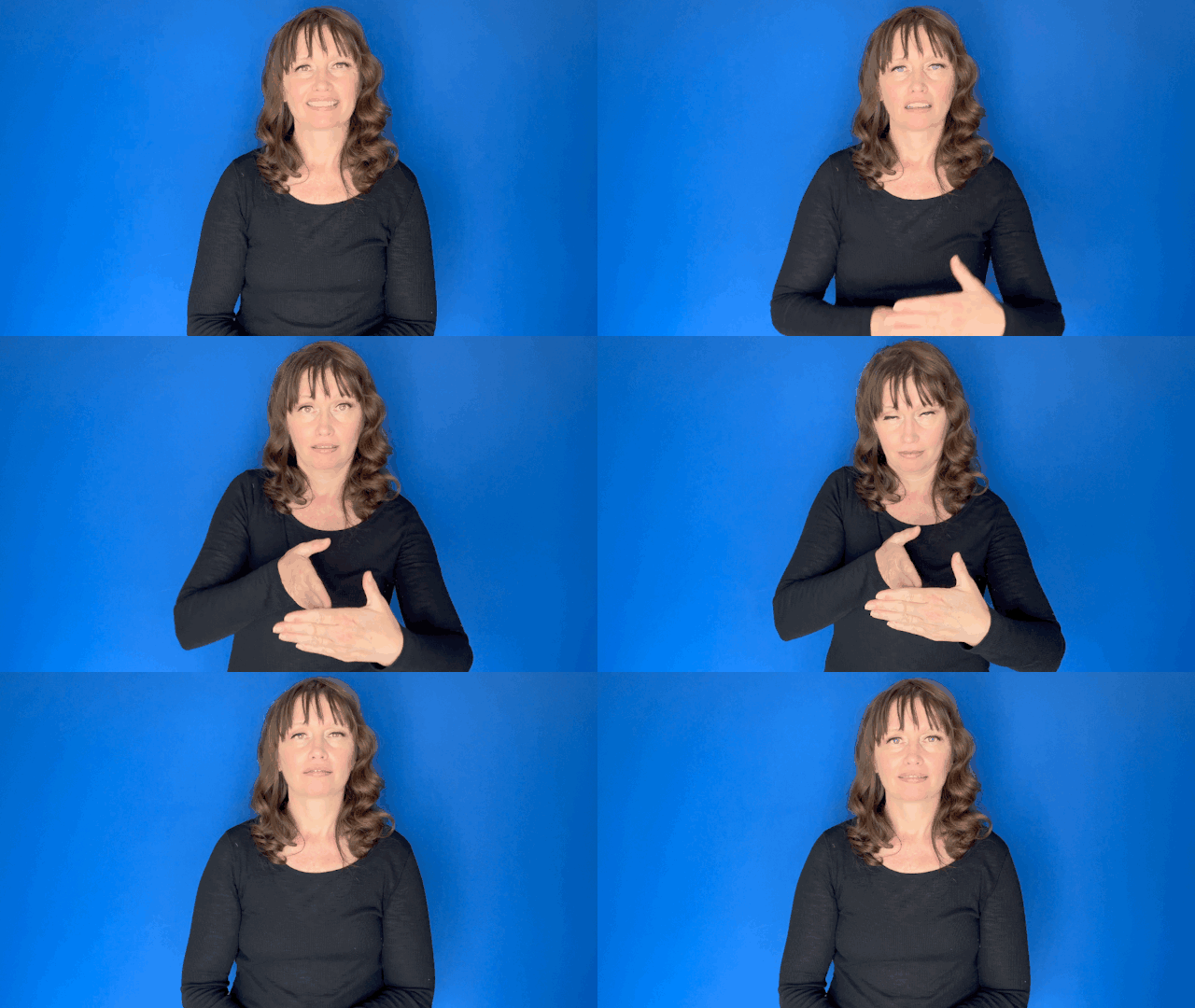
Sign for DEAD END in ASL | 🚧 ASL Dictionary

Definition: A street with no exit.

Sign for DEAD END in ASL

YouTube player

Practice Activities:

To practice the sign for DEAD END in ASL, begin with repetition in front of a mirror. Focus on the placement and movement of the hands to ensure clarity and precision. Practicing in isolation helps build muscle memory before using it in full sentences.

Next, use the sign in simple sentences like “This road is a dead end” or “We can’t go further, it’s a dead end.” Sign these slowly, then gradually increase your speed as your confidence grows. Record yourself and play it back to check for accuracy and fluidity.

Create flashcards with phrases that use the sign for DEAD END in ASL. Include additional words like “road,” “blocked,” or “stop” to build sentence structure around the sign. Shuffle the cards and try forming different sentences by drawing two or three at random.

A fun way to reinforce this sign is through storytelling. Use a visual scene such as someone driving a car and hitting a dead end. Tell the story in ASL, incorporating facial expressions and role-shifting to show the driver’s emotions and reactions. Challenge yourself to show frustration or surprise using non-manual markers.

Pair up with a classmate or friend and give each other scenarios where you’d need to use the sign for DEAD END in ASL. For example, one person signs directions, and the other needs to indicate if there is a dead end in the path. This interactive activity improves comprehension and response time.

Watch short ASL conversations or vlogs that include travel, exploration, or navigation. Try to identify when the sign for DEAD END in ASL appears and mirror it. This will reinforce real-life usage and help with context-based signing.

Review what you’ve learned by signing a brief summary of how to respond when you encounter a dead end. Keep your hands expressive and pay attention to your eye gaze and mouth morphemes to emphasize finality.

Cultural Context:

In American Sign Language, the sign for DEAD END in ASL relates to both a literal and figurative concept that is commonly understood in Deaf culture. Whether used in conversations about road signs or metaphorical dead ends in life situations, the sign carries layered meaning depending on context.

The sign for DEAD END in ASL is often used when discussing driving, directions, and navigation. In Deaf communities, clear visual communication is crucial, so understanding signs like DEAD END in ASL helps ensure clarity when giving travel instructions or explaining a location.

Beyond roadways, Deaf signers use the sign for DEAD END in ASL in everyday conversation to describe blocked paths, failed plans, or unresolved situations. It’s a common idiomatic expression that resonates across generational boundaries in the Deaf community.

Because ASL is a visual language deeply influenced by culture, the sign for DEAD END in ASL embraces more than just a dictionary definition. It reflects a shared life experience that connects to how Deaf individuals relate to the world around them.

In educational settings, learning the sign for DEAD END in ASL is important for students studying road safety, independence training, or personal narratives. Teachers often incorporate signs like DEAD END in ASL when discussing problem-solving, making decisions, or dealing with obstacles.

Within storytelling traditions in Deaf culture, the sign for DEAD END in ASL adds emotional and visual impact. It can be used to describe moments when characters face challenges or must change direction, both literally and emotionally.

Media content and films produced in sign language frequently use DEAD END in ASL to highlight moments of tension, uncertainty, or climax. Viewers familiar with Deaf culture quickly recognize its meaning and cultural relevance.

Parents and caregivers teaching ASL to children also find the sign for DEAD END in ASL useful when setting boundaries or explaining consequences. It serves as a visual cue that reinforces understanding in a way spoken language may not.

In community discussions around accessibility and communication, the sign for DEAD END in ASL can symbolize barriers to services, communication, or inclusion. It’s a term often brought up when discussing real-world limitations that Deaf individuals may experience.

The use of DEAD END in ASL during personal storytelling or poetry in the Deaf community underlines its emotional depth. Whether describing heartbreak, struggle, or missed opportunities, it’s a culturally resonant sign that carries more than just a directional warning.

In group conversations or debates, a signer may use DEAD END in ASL to assert a strong opinion or signal that a topic has reached its conclusion

Extended Definition:

The sign for DEAD END in ASL is a useful vocabulary term for describing blocked paths or situations with no further progression. In American Sign Language, the concept of a dead end can be applied literally, like in street signs, or metaphorically, such as life or conversations that don’t lead anywhere. Signing it correctly helps ensure clear and accurate communication in both personal and public contexts.

To sign DEAD END in ASL, you usually combine two concepts: the idea of something dying or finishing and the idea of a barrier or wall. It’s often a compound sign that blends meaning with visual clarity. This sign can also be adjusted based on regional variations or individual signing styles, although the overall concept remains consistent.

When using the sign for DEAD END in ASL, context matters. For example, in a conversation about driving or navigating, the sign clearly communicates a physical stop or blockage. In a discussion about relationships or plans, it can convey an emotional or metaphorical barrier.

The sign is typically performed using forward movement and an abrupt end to symbolize the idea of reaching a point where no further action is possible. This visual representation helps the viewer immediately understand the implication of finality or barrier. It also mimics the real-world meaning of the term, which aids in learning and memory.

Learning how to use the sign for DEAD END in ASL can enhance descriptive detail in storytelling or everyday communication. It’s particularly helpful when giving traveling directions or describing life scenarios with no clear way forward. Because ASL is a visual language, the way the sign is delivered can add layers of emotional and situational depth.

The proper use of directional space and facial expressions also enhances the impact of this sign. A serious or frustrated facial expression can help convey the emotional tone behind reaching a dead end. In formal ASL instruction, educators often emphasize the importance of matching non-manual signals with hand signs for full meaning.

Signers who want to reinforce the idea of a DEAD END in ASL might also use specific palm orientations and movements to show the abrupt stop. This visual cue strengthens the concept and supports better comprehension. Practice and feedback can help learners fine-tune this sign for fluid communication.

Understanding how to sign DEAD END in ASL is valuable for navigating both literal and figurative barriers. It can enrich dialogues, whether you’re discussing geography, emotions, or problem-solving scenarios. Because ASL emphasizes context, this sign’s meaning can shift slightly based on how and when it’s used, making it a dynamic addition to your signing vocabulary.

Synonyms: cul-de-sac, impasse, blind alley, no exit, closed road

Educational resources: Find related learning materials in our course bank!

Want more? Check out some of our popular learning activities on the homepage!

Need to look up a sign? Use our highly rated dictionary: https://aslinteractive.com/best-asl-dictionary/

Follow us on tiktok: https://www.tiktok.com/@aslinteractive. More social media links at the bottom of this page!

Long-tail Keywords: what is the sign for Dead end in ASL, how do you sign Dead end in ASL, ASL sign for Dead end

Categories:

tags: Dead end ASL meaning, how to sign dead end in ASL, dead end American Sign Language, ASL phrase dead end, learn dead end in sign language

Parameters

*Handshape*:

The handshape for the sign for DEAD END in ASL typically uses both hands with flat B-handshapes . One hand stays stationary in front of the body, palm facing inward, while the other hand, also in a B-handshape, moves forward and abruptly stops against the stationary hand.

This motion illustrates the concept of something coming to a halt or barrier, aligning with the meaning of the sign for DEAD END in ASL. The distinct flat shape helps emphasize the idea of a blocked path or a conclusion.

*Palm Orientation*:

For the sign for DEAD END in ASL, the dominant hand typically has the palm facing inward toward the signer, mimicking the action of one object coming to a halt against another. The non-dominant hand is often held upright with the palm facing outward, like a vertical barrier. This palm orientation visually represents the concept of a sudden stop, essential to the meaning of the sign for DEAD END in ASL.

In some regional variations of the sign for DEAD END in ASL, the dominant hand might make contact with the non-dominant hand’s palm in a quick, firm motion to emphasize the end or blockage. This use of opposing palm orientations effectively communicates a physical and abrupt stop, reinforcing the imagery of a dead end.

*Location*:

The sign for DEAD END in ASL is typically produced in the neutral space directly in front of the torso, slightly above waist level. This location allows for clear visibility and natural movement of the hands to convey the concept. Depending on the variation, it may also briefly move closer to the chest to show emphasis.

Using the correct location for the sign for DEAD END in ASL ensures clarity and fluidity in communication. Consistent hand positioning in this space helps maintain visual focus and supports accurate interpretation of the sign.

*Movement*:

To show the sign for DEAD END in ASL, start with your dominant hand in a flat “B” shape, palm facing in, and bring it forward horizontally until it meets the upright non-dominant hand, also in a flat “B” shape. The motion resembles a car hitting a barrier or reaching an impassable point .

This movement clearly shows the meaning behind the sign for DEAD END in ASL. The abrupt stop of the dominant hand against the other emphasizes that there’s nowhere else to go.

*Non-Manual Signals*:

The non-manual signals for the sign for DEAD END in ASL typically include raised eyebrows briefly to introduce the concept, followed by a shift to a more serious or neutral facial expression. The lips may press together slightly, and the head may move forward subtly to emphasize finality or blockage.

To clearly convey the sign for DEAD END in ASL, a momentary pause or tightened jaw can help emphasize the idea of something stopping abruptly. These facial cues add clarity and emotional depth to the meaning behind the roadway or situational termination .

*Prosody, Dominant/Non-Dominant Hand*:

The sign for DEAD END in ASL uses both hands. The non-dominant hand is held in an upright flat-B shape, palm facing to the side. The dominant hand, also in a flat-B, moves toward the non-dominant hand and comes to a firm stop against it, mimicking a blocked path. This prosody indicates a final point or termination, which clearly conveys the meaning of the sign for DEAD END in ASL.

Facial expression is neutral to slightly serious, emphasizing that the path or option doesn’t continue. The prosodic movement feels abrupt, mirroring the concept behind the sign for DEAD END in ASL.

Tips for Beginners:

When learning the sign for DEAD END in ASL, begin by familiarizing yourself with both the concept and a possible contextual setup. DEAD END can be signed conceptually or by fingerspelling D-E-A-D E-N-D depending on your region or community norms. If fingerspelling, make sure each letter is formed clearly, keeping a steady rhythm and avoiding bouncing or drifting out of your signing space.

If you’re opting for a conceptual sign, it’s commonly interpreted using two hands to show a motion that metaphorically represents a halt or blocked path. For instance, one palm may move toward another hand that represents a “wall” or stopping point. The motion should be precise and deliberate to capture the finality of “dead end.” Practice this movement slowly, gradually increasing speed while maintaining accuracy.

One of the most common beginner errors is rushing the sign or merging words without clarity. In the sign for DEAD END in ASL, visual accuracy is key, especially when using abstract concepts rather than literal translations. Make eye contact and use appropriate facial expressions—such as a slight frown or look of finality—to convey the idea of a dead end more effectively.

Record yourself signing and compare it to native signers online. This can help you catch subtle inconsistencies that affect clarity. If you’re unsure which version to use, fingerspelling is always acceptable, particularly in formal or professional settings.

Don’t forget that context matters—a DEAD END in a conversation might differ slightly than on a street. Ask for feedback from fluent signers whenever possible. Practicing the sign for DEAD END in ASL in real-world situations, like describing directions or conversation topics concluding, can strengthen your fluency and help commit it to memory.

sign for DEAD END in ASL, DEAD END asl sign, how to sign DEAD END in ASL

Connections to Other topics:

The sign for DEAD END in ASL connects closely to directional and spatial concepts in the language. It often factors into discussions involving road signs, navigation, and decision-making. Because American Sign Language is highly visual and spatial, signs like DEAD END complement broader topics in map terms, directions, and physical barriers.

This sign is frequently used in conversation when describing literal dead ends in streets or abstract situations such as halted progress or blocked paths. Learners of ASL can benefit from understanding similar signs such as DETOUR, ROADBLOCK, or STOP, which are all used in related contexts. These signs may form compound expressions when storytelling or explaining difficult situations.

Conceptually, the sign for DEAD END in ASL relates to expressions about limitation or termination. For example, it can be paired with signs like FAIL, NO-GO, or CANNOT to describe situations that have no viable outcome. In narratives, this imagery contributes to setting a scene or providing emotional tone, especially when describing obstacles.

When used metaphorically, the sign for DEAD END in ASL often overlaps with other sign clusters involving finality or conclusion. This includes connections to signs like END, FINISH, or TRAPPED. It allows the signer to creatively portray abstract ideas such as emotional limitations, job loss, or other life turning points.

In ASL storytelling, the sign for DEAD END encourages the use of classifiers and spatial referencing. For example, to show a character walking until hitting a dead end, a signer can combine movement with the proper handshape to visually depict the scene. These techniques enhance narrative flow and engage visual logic in communication.

This sign can also work in conjunction with grammar features like role-shifting, giving more depth to its use in personal anecdotes, comparisons, or hypothetical situations. The sign for DEAD END in ASL is not just about roads—it opens dialogue on deeper themes of choices, boundaries, and personal journeys .

Summary:

The sign for DEAD END in ASL carries both a literal and metaphorical significance within the language. As in English, the phrase can refer to a physical or conceptual boundary where forward motion is halted. The visual expression of this concept in ASL reflects this layered meaning.

To produce the sign for DEAD END in ASL, one dominant flat hand (usually the right) is held upright, like a wall, while the non-dominant hand moves forward and then abruptly stops as it hits the wall. This motion cues the idea of an obstruction or final point. Facial expressions usually convey surprise, realization, or finality to reinforce the concept.

This sign has high relevance in both real-world and abstract communication. It’s commonly used in directions or spatial descriptions, such as when navigating roads, walking routes, or hallways. But it also appears in emotional or philosophical contexts, such as discussing a failed relationship or an obstacle in life goals.

The sign for DEAD END in ASL overlaps in meaning with signs like FINISH, STOP, and BLOCK. Each shares thematic components but diverges in use and nuance. For example, while STOP halts action suddenly, DEAD END may suggest an inescapable halt or conclusion without alternatives.

Grammatically, DEAD END can function similarly to its English counterpart — as part of a noun phrase or metaphorical expression. In narrative ASL storytelling, it often appears at the climax of situation setup. The placement usually occurs at the end of a clause or as a response to a visual build-up.

The facial expression is vital. For literal uses, the signer adopts a neutral or informational expression. When used metaphorically, eyebrows may raise with widened eyes or squint to suggest finality, confusion, or resignation. Non-manual markers add rich emotional content to the motion.

Variations exist in dialects or regional signs. In some settings, DEAD END may be fingerspelled for technical clarity, especially during official discussions, such as urban planning signed to a Deaf audience. Nonetheless, the classifier and conceptual version is more fluid in casual conversation.

Historically, signs like DEAD END reflect the Deaf community’s emphasis on visual metaphors for abstract ideas. ASL’s linguistic roots give special importance to physical space and iconic symbols that mirror real-world experience. This iconism helps learners grasp meaning intuitively.

Applied linguistics research on DEAD END and similar compound concepts shows how ASL condenses English phrases into efficient visual chunks. A simple gesture can carry a whole clause or situation. This visual economy makes ASL both dense and expressive.

DEAD END further plays into Deaf poetics and performance, symbolizing more than just an obstacle. In Deaf slam poetry or storytelling, it often marks a moment of transformation, conflict, or emotional peak. Performers use it to pivot the story or signify resolution or loss.

There is no universally fixed way to sign DEAD END, allowing flexibility and creativity. This accommodates varying situations, emotional tones, and individual signer styles. But the core concept—a line that suddenly terminates—is always preserved visually.

The sign for DEAD END in ASL reinforces how much ASL values spatial metaphor. Conceptualizing time, emotion, and direction within three-dimensional space gives the language remarkable nuance. DEAD END is a marker within this landscape.

When discussing feelings like hopelessness, burnout, or futility, DEAD END becomes a powerful metaphor. Conversations about job loss, grief, or mental exhaustion often incorporate the sign, accompanied by a defeated facial expression or downward motion.

Technology and media have influenced some modern representations. In vlogs or ASL podcasts, signers may blend DEAD END with contemporary expressions or follow it with more detailed classifiers. This creates a fuller picture or dramatic effect for the viewer.

The sign for DEAD END in ASL aligns with cognitive linguistics theories of embodied language. Our understanding of concepts based in the body’s interaction with space seems central to the formation of the sign. Its gesture mimics a hand moving and physically stopping—a tangible experience.

Deaf educators often teach the sign for DEAD END in context, using road signs or physical modeling in classrooms. This helps students internalize both the function of the word and its expressive range. Classifiers, models, and real-world role play make it intuitive.

Street signs in Deaf-friendly environments sometimes use the visual symbol for DEAD END as a prompt for the ASL sign itself. This connection between official signage and hand sign deepens the word’s multimodal identity in Deaf culture.

Audiologically, complex signs like DEAD END challenge interpreters to consider both physical imagery and narrative coherence. When interpreting from spoken English, they must decide whether to fingerspell, use classifiers, or lean into metaphor based on the audience.

Some learners confuse BLOCK or BARRIER with the sign for DEAD END. Teachers often contrast them using classifiers—highlighting the finality of DEAD END versus the temporary halt of BLOCK. This helps distinguish purpose and application for each sign.

Grammar-wise, DEAD END in ASL can appear in

Want more? Check out some of our popular learning activities!

ASL Interactive Resources

ASLInteractive YouTube Channel

Follow us on tiktok: @aslinteractive.com

Follow us on Instagram: aslinteractive

Facebook page: aslinteractive

Facebook group: aslinteractive

LInkedIn: ASL Interactive LLC

Twitter: @ASL_interactive

*Some information on this page is AI-generated. AI can make mistakes. Please check the information.

Sign for DEAD END in ASL

Responses