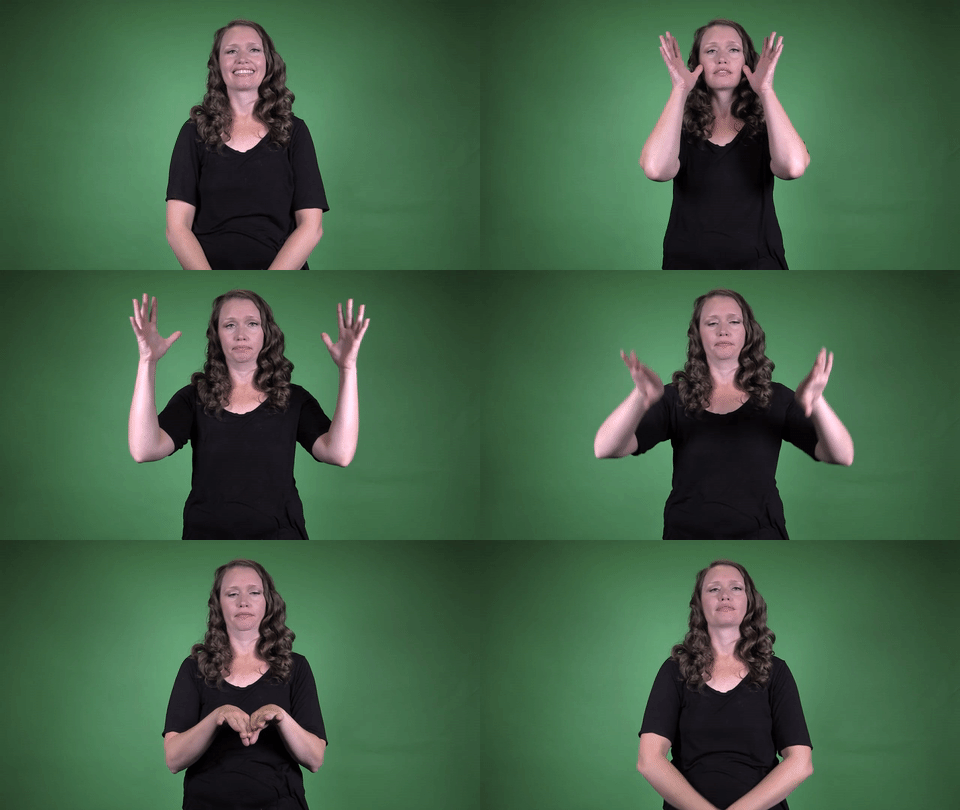
Definition: A valley named Deer.
Sign for DEER VALLEY in ASL

Practice Activities:
Start your practice by isolating the sign for DEER and the sign for VALLEY before combining them. Practice each part individually by watching a video or using a mirror to match your hand shapes and facial expressions accurately. Repeat several times to build muscle memory.
Once you’re comfortable with both parts, practice the sign for DEER VALLEY in ASL as a full concept. Say the phrase aloud while signing to help connect meaning with motion. Be sure to pay attention to any directional or spatial elements, especially with VALLEY, which typically involves showing a dip or space between sides.
Create simple sentences using the sign for DEER VALLEY in ASL to fit real-life conversation. For example: “I visited DEER VALLEY last winter” or “My cousin lives in DEER VALLEY.” Sign these sentences in front of a mirror or record yourself to review clarity and fluidity.
Work with a partner and quiz each other using flashcards with phrases that include the sign for DEER VALLEY in ASL. Switch roles, where one person signs and the other person guesses or writes down what was signed. This helps reinforce recognition and usage in unpredictable contexts.
Take part in a storytelling activity using DEER VALLEY as the setting. Make up a short story involving animals or people visiting or living in DEER VALLEY. Incorporate signs like MOUNTAIN, SNOW, SKI, HIKE, and FRIEND. This adds vocabulary depth and creative association.
Play a description game where one person signs a scene involving DEER VALLEY and others guess what is being described. You can include environmental features like TREES, WILDLIFE, or LODGES. These activities will make the sign for DEER VALLEY in ASL feel more natural and connected to broader communication.
Cultural Context:
The sign for DEER VALLEY in ASL connects deeply with local culture and geographic identity. DEER VALLEY is known for its natural beauty, outdoor recreation, and unique history, making this sign a meaningful addition to regional and location-based American Sign Language vocabulary.
Understanding the sign for DEER VALLEY in ASL is important for connecting with Deaf community members who live in or travel to this area ️. When discussing travel experiences, real estate, or even local news, knowing this specific ASL sign enhances communication and cultural inclusivity.
Deaf and hard-of-hearing individuals who are from DEER VALLEY or who frequently visit the region will likely incorporate the sign for DEER VALLEY in ASL into their everyday conversations. Using this sign shows respect and cultural awareness, especially when sharing stories or making introductions at schools, workplaces, or Deaf events.
The sign for DEER VALLEY in ASL may carry visual elements related to deer or valleys, depending on community consensus or local adaptations. ASL often reflects visual storytelling, so signs for place names like this one can be rich in imagery. That makes it easier for signers to connect language to lived experience.
DEER VALLEY is also associated with ski resorts, hiking, and other outdoor adventures, which are frequently topics of conversation among Deaf outdoor enthusiasts ️. The sign for DEER VALLEY in ASL is likely to appear in vlogs, social media stories, and group chats centered around these pastimes.
When sharing local information such as event schedules, weather updates, or directions, the sign for DEER VALLEY in ASL comes into use naturally. Locals and visitors alike benefit from being able to describe their location or plans clearly and visually through ASL.
Many Deaf families choose to use specific place name signs to foster a sense of belonging, especially when a location like DEER VALLEY plays a significant role in their family traditions or heritage. Using the sign for DEER VALLEY in ASL can bring history and geography to life for younger generations learning the language.
Language evolves through community use, and new signs for places like DEER VALLEY develop as people incorporate them into social, educational, and digital spaces. The sign for DEER VALLEY in ASL may have become more popular through increased tourism, relocation, or media influence.
Whether used in a classroom, a Zoom meeting, or an outdoor guide’s presentation, the sign for DEER VALLEY in ASL adds precision
Extended Definition:
The sign for DEER VALLEY in ASL can vary slightly depending on regional influences, but it generally combines the concept of a deer with the idea of a valley. To express this, signers often begin by showing the visual features of a deer’s antlers, followed by a motion that represents a valley between hills or mountains. The best way to learn the most accurate and accepted variation is through community-based exposure or a video demonstration by a fluent signer.
In American Sign Language, location names like DEER VALLEY aren’t always translated literally word-for-word. Instead, the sign for DEER VALLEY in ASL may take on a more visual or conceptual interpretation. This helps create a more natural communication flow between ASL users.
For the “deer” part of the sign, use open hands with fingers spread placed by the sides of the head to mimic antlers, then flick the hands slightly upward and outward. This mimics how deer might look in the wild. For “valley,” a flowing downward motion between two elevated points made with both hands helps create the image of a valley nestled between hills.
These individual signs—”deer” and “valley”—can be combined smoothly, giving the complete sign for DEER VALLEY in ASL a fluid and meaningful appearance. Context is very important in ASL, so based on conversation or topic, a signer might also use finger spelling or regional shortcuts.
If DEER VALLEY refers to a specific school, ski resort, or location, it’s common in the Deaf community to adopt initialized signs or abbreviations that reflect the cultural or local use of the name. These are often created and accepted by groups of ASL users in the area, making them somewhat unique and evolving over time.
Some Deaf communities near DEER VALLEY have developed distinct name signs for it that avoid using the full fingerspelled version. These name signs are typically based on features of the environment or a characteristic that locals associate with the place. If you live near this area or plan to communicate often about it, learning the localized version of the sign for DEER VALLEY in ASL is incredibly helpful.
When fingerspelling is used instead of a location name sign, it’s typically used in formal or unfamiliar contexts. Fingerspelling is a clear way to identify specific names, but for frequent use, a trusted regional sign is more efficient and preferred. That’s why both forms—the full fingerspelled version and the combined concept sign
Synonyms: Deer Canyon, Stag Valley, Fawn Hollow, Hart Ravine, Buck Glen
Educational resources: Find related learning materials in our course bank!
Want more? Check out some of our popular learning activities on the homepage!
Need to look up a sign? Use our highly rated dictionary: https://aslinteractive.com/best-asl-dictionary/
Follow us on tiktok: https://www.tiktok.com/@aslinteractive. More social media links at the bottom of this page!
Long-tail Keywords: what is the sign for deer valley in asl, how do you sign deer valley in asl, deer valley asl sign
Categories:
tags: Deer Valley, Arizona landmarks, Cities, Animals, Facilities and other locations/needs
Parameters
*Handshape*:
The handshape for the Sign for DEER VALLEY in ASL begins with open hands, fingers spread, positioned near either side of the head to represent antlers—this mirrors the sign for “deer.” The hands use the “5” handshape in this part. Then for “valley,” transition both hands into flat “B” handshapes with palms down, moving downward diagonally to illustrate a V-shaped landscape.
This combination visually blends both the “deer” and “valley” concepts. Each handshape plays a vital role in clearly expressing the Sign for DEER VALLEY in ASL, ensuring both parts of the name are accurately conveyed with appropriate classifiers. ⛰️
*Palm Orientation*:
For the sign for DEER VALLEY in ASL, the palm orientation begins with both open hands near the sides of the forehead, palms facing outward and fingers spread, simulating antlers. Then, as the movement transitions to represent a valley, the palms turn slightly inward while the hands move downward in a slope shape, indicating the contours of a valley ️.
Throughout the sign for DEER VALLEY in ASL, palm orientation shifts smoothly from outward for “deer” to an angled inward position for “valley,” reflecting the visual imagery of each component. This orientation supports the clear representation of both concepts in one fluid motion.
*Location*:
The sign for DEER VALLEY in ASL is formed in the neutral space in front of the body, typically at chest level. For DEER, both open hands are held near the sides of the head with fingers spread to mimic antlers.
For VALLEY, the hands move from near the shoulders and slope downward in a curved motion to indicate a valley’s shape. The sign for DEER VALLEY in ASL flows naturally from the head to chest area, keeping all movements clearly visible.
*Movement*:
The sign for DEER VALLEY in ASL starts with the sign for “deer,” where open hands with fingers spread (like antlers) are placed on either side of the forehead and moved slightly outward. This mimics a deer’s antlers in a gentle outward motion.
To show “valley,” both hands move downward and out in a curved motion, starting from in front of the chest and moving down as if outlining the shape of a valley. The sign for DEER VALLEY in ASL combines these two motions fluidly to represent both the animal and the geographic feature. ⛰️
*Non-Manual Signals*:
For the sign for DEER VALLEY in ASL, maintain a calm and neutral facial expression, mimicking the serene natural landscape the place evokes. Slight head tilts that follow hand movement showing slope or terrain help convey the “valley” aspect clearly. ️ When signing “deer,” a subtle widened eye expression adds life, mimicking the alertness of the animal, enhancing clarity of the sign for DEER VALLEY in ASL.
*Prosody, Dominant/Non-Dominant Hand*:
The sign for DEER VALLEY in ASL uses both hands. The dominant hand typically represents the concept of “deer” by placing open 5-hands near the sides of the head, mimicking antlers, and wiggling the fingers slightly. For “valley,” both hands (in a flat-B shape) glide downward and away from the body in a gradual slope, symbolizing a V-shaped landscape.
When forming the sign for DEER VALLEY in ASL, the dominant hand leads during the “deer” portion, while both hands work evenly for “valley.” The motion highlights spatial geography and animal imagery. This sign combines nature elements clearly and visually in ASL.
Tips for Beginners:
Mastering the sign for DEER VALLEY in ASL begins with understanding that it typically includes two parts: the sign for “deer” and then fingerspelling “Valley”. To start, make sure you’re confident with the sign for deer. Bring both open hands up to the sides of your head, palms facing forward. Your thumbs should touch your temples or just in front, with fingers spread out like antlers. Move your hands slightly outward to represent a graceful deer.
When transitioning to the second part, remember that “Valley” is generally fingerspelled in ASL. This means you’ll use the ASL alphabet to spell out V-A-L-L-E-Y. Be sure to keep your hand steady at chest height and maintain consistent pacing—don’t rush through the letters. Accuracy in fingerspelling is key, especially since “Valley” includes a double “L”, which beginners often overlook or sign too quickly. Practice the double “L” by slightly bouncing or hesitating between the two formations.
A common issue with the sign for DEER VALLEY in ASL is blending the two parts too closely together. There should be a clear distinction between the iconic deer sign and the fingerspelling of Valley. Pause briefly between them and keep your facial expressions neutral but clear, showing intentionality.
Another helpful tip is to practice in front of a mirror or record yourself. This helps you see whether your deer sign is symmetrical and whether your fingerspelling is readable. Also, engage with native signers if possible—they’ll help correct small mistakes and show natural flow. Don’t forget hand placement; keep it within your signing space and avoid hiding your letters behind your hand. To build fluency with the sign for DEER VALLEY in ASL, practice frequently in context, such as signing it when talking about locations, travel, or cities.
Connections to Other topics:
The sign for DEER VALLEY in ASL often draws on a compound structure, incorporating the sign for “deer” followed by a representation of “valley,” which may come from the classifier or iconic sign showing a low space between mountain tops. This approach is similar to how place names in ASL are often constructed by combining meaningful signs that reflect the environment or characteristics of the location, instead of using a direct translation. Learners can relate this method to signs for other geographic areas like “Grand Canyon” or “Palm Springs.”
Understanding the sign for DEER VALLEY in ASL also reinforces how classifiers and descriptive signs are used throughout ASL to represent natural landscapes. The sign for “valley” parallels other landform-related signs such as “mountain,” “river,” and “hill,” which often mirror their physical shapes. These signs provide useful context for discussing geography, travel, and outdoor activities in ASL storytelling or conversation.
This sign also serves as a good example of how proper nouns, particularly place names, are adapted in ASL. Many place names are fingerspelled, especially if they are not well-known, but some — like the sign for DEER VALLEY in ASL — are given visual signs based on meaning. This mirrors techniques used for locations such as “Hollywood” or “Yellowstone,” where common conceptual or iconic elements are blended into a recognizable sign.
Using the sign for DEER VALLEY in ASL can prompt discussions about wildlife, especially since the “deer” component can connect to signs for animals like “moose,” “elk,” and “antelope.” These animal signs often share similar handshapes and placements, helping learners build categories and associations. It also encourages learners to notice nuances in readability, as similar handshapes may differ subtly in motion or placement.
Lastly, this sign can support lessons on spatial referencing and depiction in ASL. Depicting a remote ski resort, for example, using classifiers for slopes and lodges can enhance a narrative. The use of iconic elements in the sign for DEER VALLEY in ASL helps learners become more adept at combining setting, description, and storytelling in a cohesive visual format. ⛷️ ️
Summary:
The sign for DEER VALLEY in ASL is typically a compound or name sign that combines the sign for DEER with an added localization or classifier to represent VALLEY. DEER is often signed using both hands open, with thumbs touching the sides of the head, fingers wiggling upwards to mimic antlers. This is a well-established lexicalized sign widely recognized in ASL vocabulary.
VALLEY, on the other hand, does not have a standard single sign in many contexts and is generally expressed through classifiers or descriptive movement. It is often formed by using both flat hands (B-hands) beginning wide apart and descending diagonally toward the middle, mimicking sloping sides. This depiction shows the contour of a natural geographic feature like a valley in mountain terrain.
When interpreting or signing the sign for DEER VALLEY in ASL, it’s common to combine both of these components—first DEER, followed by the constructed depiction for VALLEY. In naming conventions, if DEER VALLEY is a proper noun such as a geographic name, it may alternatively be fingerspelled completely. Fingerspelling ensures clarity for uncommon or highly specific place names.
The choice between fingerspelling and a conceptual sign often depends on the context in which the term is used. For example, Deaf locals familiar with the place may create a regional name sign based on geographic features, landmarks, or cultural associations. Meanwhile, outside of those familiar settings, a signer may opt to fingerspell DEER VALLEY to preserve its identity and specificity.
Culturally, the sign for DEER VALLEY in ASL may carry particular importance if the location has significance in Deaf community events, such as hosting retreats, educational programs, ski resorts, or spiritual gatherings. In such cases, communities sometimes assign idiosyncratic or familial signs based on experiences or repeated interactions with the place.
From a linguistic perspective, the sign DEER falls under iconic signs due to its visual likeness to an actual deer. VALLEY, when signed descriptively, shows the spatial layout of terrain, making it a constructed action or classifier sign. The representational nature of these signs highlights how ASL leverages visual-spatial modality to retain meaning.
Compounds involving a noun plus a descriptive classifier are common patterns in ASL and can be highly productive in naming places. The sign for DEER VALLEY in ASL is one example of spatial blending and classifier use, which remains a large part of ASL morphology. This type of blending also invites discussion into how Deaf people experience and conceptualize physical landscapes.
Place names in ASL often mirror how Deaf communities relate to their surroundings, visually emphasizing contours and features. For DEER VALLEY, this may include gestures echoing mountain ranges, ski slopes, or forest surroundings, especially if the place is well known for such environments. These additions provide depth to the sign and improve cultural richness.
In some cases, especially in informal conversation, a signer might fingerspell DEER VALLEY once and then assign a localized sign that shortens or simplifies subsequent references. This follows a broader linguistic trend in ASL: economy and efficiency in narrative or repeated use. It also reflects the cognitive organization of mental maps and naming conventions.
When storytelling or giving directions, especially visually rich ones like in ASL, the sign for DEER VALLEY in ASL offers both conceptual clarity and artistic expression. The sign allows depiction of landscape and motion, and is typically paired with spatial referencing to situate where DEER VALLEY is on an imagined or real map.
Applied linguistics also benefits from analyzing the sign for DEER VALLEY in ASL because it demonstrates how language adapts to represent proper nouns spatially. Researchers and educators can study how signers switch between lexical signs and classifiers based on audience familiarity, retaining semantic richness while choosing appropriate form.
Language acquisition in Deaf children may include learning specific place name constructions like DEER VALLEY, especially if those locations have personal meaning. This enriches their semantic range and introduces classifier systems early, which supports linguistic development in ASL grammar.
Additionally, the syntax surrounding the sign for DEER VALLEY in ASL may shift depending on whether it’s used as an object of a sentence, in locative phrases, or as a focus of topics. For example, “We are going to DEER VALLEY” may involve spatial indexing and directional verbs that enhance the semantic functions of the place name.
There’s a deep connection between topographical signs and anthropological features of spaces. In describing DEER VALLEY, signers may embed local customs or physical activities associated with the location using adjacent signs. For instance, a signer might transition from DEER VALLEY into SKI or CAMPING or MOUNTAIN to anchor it within relevant contexts.
Cross-linguistically, this kind of spatial language is unique to sign languages and supported heavily in ASL. The use of classifiers for geographic features is one of the richer areas of study in signed languages. The sign for
Want more? Check out some of our popular learning activities!
ASL Interactive Resources
ASLInteractive YouTube Channel
Follow us on tiktok: @aslinteractive.com
Follow us on Instagram: aslinteractive
Facebook page: aslinteractive
Facebook group: aslinteractive
LInkedIn: ASL Interactive LLC
Twitter: @ASL_interactive
*Some information on this page is AI-generated. AI can make mistakes. Please check the information.


Responses