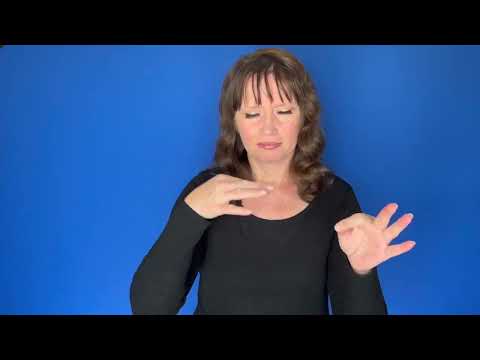
Sign for DEFINITION 1 in ASL | ASL Dictionary

Definition: The meaning of a word 1.

Sign for DEFINITION 1 in ASL

YouTube player

Practice Activities:

To practice the sign for DEFINITION 1 in ASL, begin by signing it repeatedly in front of a mirror. Focus on the handshape, movement, and palm orientation to build muscle memory. Pay attention to how clearly and accurately you are producing the sign.

Once you are comfortable using the sign for DEFINITION 1 in ASL by itself, start practicing it in short phrases like “clear definition,” “give a definition,” or “simple definition.” Try signing each phrase slowly, then build up to signing them at a conversational pace.

Use full sentences to reinforce your understanding. Sign examples like “I need a definition of that word” and “The teacher gave us the definition.” Record yourself signing these sentences and compare your signing with fluent signers in ASL videos to refine your expression and clarity.

Create a storytelling prompt that involves explaining a new word. For example, pretend you’re a teacher introducing new vocabulary and use the sign for DEFINITION 1 in ASL as part of your explanation. This helps incorporate the sign naturally into a narrative context, reinforcing retention through storytelling.

Pair up with a partner or use a video chat with another learner. Take turns giving each other words to define in ASL using the sign for DEFINITION 1 in ASL. This helps with receptive skills as well as expressive usage, encouraging thoughtful application.

Create flashcards with vocabulary words and their definitions. Practice pulling a card and signing the word then using the sign for DEFINITION 1 in ASL to introduce the explanation. This interactive method makes concept connections stronger.

Lastly, watch ASL vlogs or vocabulary lessons that include explanations and definitions. Try identifying when the sign is used and mimic the examples. The more you see it in context, the more natural it will become in your own sign vocabulary.

Cultural Context:

In American Sign Language (ASL), the sign for DEFINITION 1 in ASL captures more than just a simple word translation—it reflects how Deaf culture values clarity and understanding in communication. When using this sign, it’s important to understand that ASL is a visual and spatial language, so precision and clear meaning are at the core of every concept conveyed.

The sign for DEFINITION 1 in ASL is commonly used in educational settings, especially in Deaf schools and classrooms. This sign helps reinforce academic understanding and ensures that information is communicated clearly and effectively among ASL users ‍ ‍ . Students use the sign frequently when discussing word meanings or explaining parts of speech.

In Deaf culture, sharing definitions goes beyond vocabulary—it’s about creating access. The sign for DEFINITION 1 in ASL is a perfect example of how language is not only about words but about community and accessibility. Whether you’re learning something new or explaining a concept, this sign helps ensure communication is inclusive and accurate.

When teaching or learning in ASL, it is common to see the sign for DEFINITION 1 in ASL used alongside fingerspelling or classifiers. This multi-layered approach adds depth and nuance to the message, allowing signers to be as detailed and specific as they need to be.

Interpreters often use the sign for DEFINITION 1 in ASL when translating academic content or during workshops and presentations. It serves as a bridge between spoken English and ASL, making sure the intended meaning is fully expressed and understood . It’s not only a translation—it’s a cultural and linguistic adaptation.

In ASL storytelling or poetry, the sign for DEFINITION 1 in ASL might be used when characters explain ideas or when setting the scene. This use highlights ASL as a rich language for expression, not just for functional communication but also for artistic performances that celebrate language and identity.

The sign for DEFINITION 1 in ASL is also important in legal and medical contexts where accuracy and clear understanding are critical. In interactions with professionals, Deaf individuals rely on signs like this to ensure their needs and rights are communicated properly and respectfully.

This sign reflects the visual precision ASL is known for. It is not only used for understanding the meaning of words but also for unpacking abstract ideas, teaching critical thinking, and empowering self-expression within the Deaf community .

Cultural respect for communication is at the heart of ASL, and the sign for DEFINITION 1

Extended Definition:

The sign for definition 1 in ASL is a useful sign when explaining specific meanings of words or concepts. In American Sign Language, the motion and handshape used for this sign help clarify that you are talking about the first, or primary, meaning of a word. It is often used in academic settings, during lessons, or when discussing language in general.

When signing the sign for definition 1 in ASL, you typically use both hands to create a concept of explaining or outlining. The number one is indicated through your dominant hand using the ASL number 1 sign, while the other hand assists in demonstrating the idea of defining or providing context. This visual combination gives a clear representation of selecting the first or most common definition.

This sign is commonly used by ASL teachers and interpreters when reviewing vocabulary. It’s also used by native signers and ASL learners in discussions, lectures, or even during casual conversations. Signing the sign for definition 1 in ASL properly ensures the meaning is not confused with alternative definitions or misunderstood altogether.

Learning the sign for definition 1 in ASL improves communication clarity, especially when teaching new terms. In educational environments, instructors use this sign to walk through definitions step-by-step, showing students how many meanings a word may have and focusing on the first. This sign becomes essential when multiple meanings exist for a single English word.

Context is important when signing. The sign for definition 1 in ASL might be accompanied by facial expressions that suggest explanation or clarification. ASL relies heavily on facial cues to convey subtle shifts in meaning, so combining the right handshapes with the correct facial tone enhances understanding.

Digital learning platforms and apps often include the sign for definition 1 in ASL in their curriculum. This helps students associate the sign with educational settings and encourages deeper learning. It’s a foundational sign when discussing language in broader ASL conversations or even within linguistics-based dialogue.

The sign for definition 1 in ASL is not only functional but also encourages precision in language use. Since ASL expresses concepts visually, this sign ensures others know exactly which meaning you are referencing. Readers or viewers can focus on the most relevant use of the term being discussed without confusion.

In dictionary applications and books using ASL, this sign helps to organize content clearly. Each word may have multiple meanings, but starting with a firm grasp of the first allows for a more structured learning progression. The sign for definition 1 in ASL sets the stage for understanding definitions

Synonyms: Please provide Definition 1, and I will return the requested synonyms.

Educational resources: Find related learning materials in our course bank!

Want more? Check out some of our popular learning activities on the homepage!

Need to look up a sign? Use our highly rated dictionary: https://aslinteractive.com/best-asl-dictionary/

Follow us on tiktok: https://www.tiktok.com/@aslinteractive. More social media links at the bottom of this page!

Long-tail Keywords: What is the sign for Definition in ASL?, How do you sign Definition in ASL?, Learn how to sign Definition in American Sign Language

Categories:

tags: ASL definition, American Sign Language dictionary, learn ASL online, ASL vocabulary definitions, ASL terms explained

Parameters

*Handshape*:

The handshape used in the Sign for DEFINITION 1 in ASL typically involves both hands in the “F” handshape . The thumb and index finger touch to form a circle, while the remaining fingers are extended. This creates a precise and formal appearance, which aligns with the concept of giving a clear meaning or explanation.

In the Sign for DEFINITION 1 in ASL, both “F” handshapes are positioned in front of the body and then moved slightly apart in a straight line. This symmetrical motion emphasizes clarity and structure, representing how a definition organizes ideas or concepts. The handshape plays a central role in conveying this clear and logical impression.

*Palm Orientation*:

In the sign for DEFINITION 1 in ASL, both hands start in a horizontal “F” handshape, with the pads of the thumbs and index fingers touching. The palm orientation for both hands is inward, facing each other. As the sign progresses, the hands move slightly apart while maintaining the same orientation, still facing each other. This movement emphasizes clarity, which aligns closely with the meaning conveyed by the sign for DEFINITION 1 in ASL.

*Location*:

The sign for DEFINITION 1 in ASL is typically produced in the neutral signing space in front of the torso. Both hands begin near the center of the body and move slightly outward, emphasizing clarity and explanation.

This location is important because it keeps the sign for DEFINITION 1 in ASL clearly visible to the viewer and allows for easy integration with related academic or conceptual signs. The neutral space also supports consistent eye contact, which aids in communication.

*Movement*:

The sign for definition 1 in ASL is made using both hands in “F” handshapes . Start by holding the non-dominant “F” hand steady in front of the body, palm facing in. The dominant “F” hand begins next to it, then moves slightly outward in a short, straight line, ending parallel to the non-dominant hand.

This movement shows a clear distinction or explanation, capturing the essence of the sign for definition 1 in ASL. Keep the wrists steady while moving the dominant hand to maintain clarity and precision.

*Non-Manual Signals*:

When demonstrating the sign for DEFINITION 1 in ASL, your facial expression should remain neutral or slightly inquisitive, depending on context. Keep your eyebrows in a relaxed position or raise them slightly if seeking clarification or emphasizing the exactness of the term.

Eye gaze should be focused directly on your conversation partner or on your moving hands to direct the viewer’s attention. The non-manual signals support the clarity and precision found in the sign for DEFINITION 1 in ASL .

*Prosody, Dominant/Non-Dominant Hand*:

The sign for DEFINITION 1 in ASL uses both hands: the dominant hand forms an “F” handshape, and the non-dominant hand also forms an “F” handshape. Both handshapes come together in front of the body, touching at the tips of the index finger and thumb, then slide apart horizontally. Movement is smooth and deliberate, conveying clarity, as is appropriate for the sign for DEFINITION 1 in ASL. This symmetrical motion reinforces the concept of providing a clear explanation or specifying meaning.

Tips for Beginners:

The sign for DEFINITION 1 in ASL uses a clear, structured motion that mimics outlining or clarifying a concept, which ties directly to the meaning of the word. To master the sign for DEFINITION 1 in ASL, start by ensuring your dominant hand is clearly shaped and your movement is deliberate. Practicing in front of a mirror can help you adjust your angles to stay consistent with standard sign orientation.

One common pitfall to avoid is making the movement too fast or too small. Rushing the sign can make it visually unclear or too similar to other concept signs like “explanation” or “clarify.” Be sure to give it space and a distinct handshape. The sign for DEFINITION 1 in ASL is meant to convey precision, so focus on clean, exact motion.

For beginners, it’s helpful to watch fluent signers perform the sign for DEFINITION 1 in ASL in context. Real dialogue helps reinforce its timing and facial expressions, which are just as essential as the hand movements. Neutral facial expression is often used, but some speakers may add slight raised eyebrows to emphasize the delivery.

Many learners confuse this sign with similar abstract concept signs due to the generality of ideas like define, explain, or describe. To avoid mix-ups, pair the sign for DEFINITION 1 in ASL with a real sentence as you practice. Use it in basic sentences like “What is the definition?” or “Can you define the word?” to build familiarity.

Lastly, remember that fingerspelling the word “definition” may sometimes be appropriate, particularly in academic or formal contexts. But for everyday use, the standard sign works perfectly. Repetition and context are your best tools for gaining fluency with the sign for DEFINITION 1 in ASL. Keep practicing consistently each day ✨.

sign for DEFINITION 1 in ASL, define word in ASL, how to sign definition in ASL, beginner ASL definition sign, ASL describing vocabulary, ASL academic signs

Connections to Other topics:

The sign for DEFINITION 1 in ASL is closely related to academic and conceptual discourse, making it a frequent part of conversations in educational or intellectual contexts. It often overlaps with signs like EXPLAIN, MEANING, and CLARIFY, which are all used when elaborating on ideas or teaching concepts. These signs share common features, such as movement patterns that illustrate the flow of information.

In compound expressions, the sign for DEFINITION 1 in ASL can be seen integrated with signs like WORD or CONCEPT to form more specific expressions like DEFINE-A-WORD or DEFINE-CONCEPT. In such compounds, the sign DEFINITION becomes the semantic anchor, clarifying the focus on interpretation or explanation. This is particularly useful in academic ASL settings where precision is critical.

Contextually, it also relates to signed discourse markers that indicate a speaker is about to give further detail or a breakdown of a concept. It functions similarly to a transition into deeper understanding, often used before signing lists or attributes. This aligns it with metalinguistic signs, which are signs commenting on language itself — a key feature in interpreters’ and educators’ use of ASL.

The sign for DEFINITION 1 in ASL can be modified slightly in its flow or facial expression to emphasize accuracy or correction. When used with signs such as CORRECT or RIGHT, it highlights the definitive nature of the information. In debates or instructional settings, this emphasis drives clearer comprehension.

Furthermore, this sign is fundamental in technical ASL, including legal, medical, and scientific fields, where specific terminologies often need precise explanation. Pairing it with fingerspelled technical terms reinforces accurate meaning. Therefore, understanding the sign for DEFINITION 1 in ASL supports advanced ASL fluency, especially in educational interpretation and content teaching.

Summary:

The sign for DEFINITION 1 in ASL is commonly constructed using concepts of precision and clarity. This particular sign is frequently used in educational settings, particularly when teachers or interpreters are explaining vocabulary terms or complex ideas.

To sign definition, start with both index fingers and thumbs forming an “F” handshape. The hands are initially placed in front of the body, palms facing each other, and then move apart horizontally. This motion suggests the idea of specifying or outlining details.

This sign mimics the movement of drawing a clear line or boundary between concepts, which aligns well with the meaning of the word. The symmetrical action between the hands adds visual balance, emphasizing order and structure.

The sign for DEFINITION 1 in ASL can be closely related to other conceptual signs like EXPLAIN, CLARIFY, or MEANING. Each makes use of directional, repetitive, or symmetrical hand motions to convey cognitive or abstract processes.

Grammatically, the sign typically functions as a noun in ASL but can be framed within questions, imperatives, or descriptive clauses depending on sentence structure. For example, an instructor may sign WHAT DEFINITION or GIVE DEFINITION appropriately using facial grammar.

The cultural role of the sign for DEFINITION 1 in ASL is significant, particularly in Deaf education where clarity is essential. The sign supports a learning environment where ideas are broken down into manageable parts, fostering accessibility to language and knowledge.

In contexts involving literacy or bilingualism, such as ASL and English education, this sign becomes a bridge between visual-gestural and written languages. Its frequency in such settings makes it crucial for learners who are navigating both linguistic systems.

From a linguistic perspective, the sign for DEFINITION 1 in ASL illustrates how sign language uses space, movement, and iconicity to build meaning. The expansion gesture—hands moving away from each other—suggests elaborating or detailing a concept.

The handshape “F” used in the sign has phonological significance in ASL. It’s often involved in signs that relate to structure or format, adding an extra layer of semantic consistency within the language.

Applied linguistics examines how signs like this function in real-world communication, especially in classrooms or academic discussions. Its use allows Deaf students to engage in metalinguistic tasks like defining terms, comparing meanings, or creating glossaries in ASL.

When the sign is used in technical or professional fields, such as science or law, it takes on a higher level of discourse. Professionals rely on it to clarify terms that may have complex or layered meanings, aiding mutual understanding.

Facial expressions play a key role in modulating the meaning of the sign for DEFINITION 1 in ASL. Raising the eyebrows might indicate a question about a definition, while a firm head nod signals agreement or affirmation in explanation.

The sign integrates well into sentence structures where ASL’s topic-comment syntax may be used. For instance, a topic might be signed first, followed by DEFINITION to indicate that an explanation or verbal equivalent is forthcoming.

There’s a pedagogical richness to this sign, which makes it a critical tool for ASL instructors. Because defining concepts is foundational to knowledge transfer, knowing how to use this sign appropriately is necessary for both Deaf and hearing educators working in bilingual environments.

The sign also resonates with the broader theme of clarity in language and communication. Whether used by interpreters, teachers, or presenters, it functions as a cue that structured, sequential information is about to follow.

Comparative studies between ASL and other sign languages show that equivalent signs for definition often share similar structures. This observation highlights the universality of the concept across visual languages, even when specific movements or handshapes diverge.

The semantic field surrounding the sign for DEFINITION 1 in ASL includes associated topics like EXPLAIN, DESCRIPTION, INTERPRETATION, and MEANING. Understanding these connections deepens a signer’s capacity for nuanced communication.

The sign is also significant in Deaf studies and identity formation, as it often appears in contexts where individuals discuss terminology relevant to culture, accessibility rights, or linguistic pride. Defining terms in one’s native sign language is an act of recognition and empowerment.

In digital spaces, such as vlogs or online classrooms, the sign for DEFINITION 1 in ASL remains important. It allows creators and educators to initiate moments of clarification for their audience, much like the written use of definitions in textbooks or glossaries.

Variations of the sign might exist depending on regional dialects within ASL, yet most maintain the F handshape and separating motion. These slight deviations underscore the diversity and fluidity found within ASL communities.

Interpreters often use this sign when transliterating English content that includes dictionary terms, legal jargon, or pedagogical explanations. It helps convey when a specific, textbook-style explanation is being provided.

In legal settings, the sign for DEFINITION 1 in ASL could appear in signed proceedings or interpretations when legal

Want more? Check out some of our popular learning activities!

ASL Interactive Resources

ASLInteractive YouTube Channel

Follow us on tiktok: @aslinteractive.com

Follow us on Instagram: aslinteractive

Facebook page: aslinteractive

Facebook group: aslinteractive

LInkedIn: ASL Interactive LLC

Twitter: @ASL_interactive

*Some information on this page is AI-generated. AI can make mistakes. Please check the information.


Responses