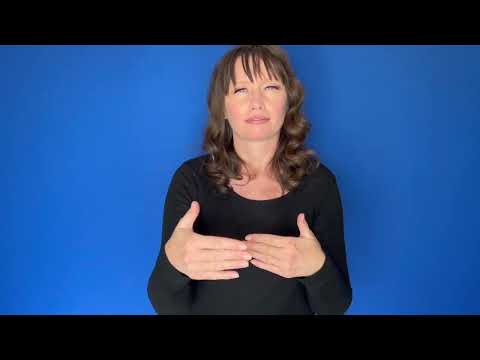
Sign for DOCTORS OFFICE 2 ROOM in ASL | ‍⚕️ ASL Dictionary

Definition: A doctor’s office 2 room.

Sign for DOCTORS OFFICE 2 ROOM in ASL

YouTube player

Practice Activities:

Start by practicing the sign for DOCTORS OFFICE 2 ROOM in ASL in front of a mirror. Focus on each part of the compound sign, beginning with DOCTOR, then OFFICE, followed by the concept of multiple ROOMS. Isolate each part and make sure your handshapes, movement, and facial expressions are clear and consistent. Use slow repetitions at first, then try increasing the speed while maintaining precision.

Create flashcards with images representing each component of the phrase. Look at a flashcard and sign that part. Then try to put all parts together, signing DOCTOR, OFFICE, and ROOM 2 in one smooth sequence. Add related vocabulary like PATIENT, WAIT, SICK, or APPOINTMENT to build stronger sentence-building skills.

Practice using the sign for DOCTORS OFFICE 2 ROOM in ASL in context with short sentences. For example: I GO DOCTORS OFFICE 2 ROOM TODAY. or MY MOM WORK DOCTORS OFFICE 2 ROOM. Record yourself and notice areas where the transition between signs could be smoother. Adjust accordingly for better flow.

Pair up with a partner and take turns describing different rooms you might find in a medical building. For instance, practice asking WHERE DOCTORS OFFICE 2 ROOM? or WHO USE DOCTORS OFFICE 2 ROOM? This reinforces comprehension and helps develop confidence in using the full phrase.

Create a visual story using a simple hospital or clinic visit. Include situations like entering the building, checking in, and being directed to DOCTORS OFFICE 2 ROOM. Narrate your story using ASL signs. Optionally, draw a floor plan and label where different rooms are located. Then sign directions using classifiers and spatial referencing.

Close your practice by watching videos of fluent signers using similar vocabulary. Compare how they transition between signs and try to mimic their pacing. Rehearse daily until the sign for DOCTORS OFFICE 2 ROOM in ASL feels natural to produce within conversations.

Cultural Context:

In Deaf culture, accessing a doctors office 2 room can present unique challenges, especially when navigating communication barriers. Knowing the sign for doctors office 2 room in ASL empowers Deaf individuals to express specific needs clearly and efficiently within healthcare settings. This sign is part of a broader ability to describe physical spaces, which is crucial when asking for directions or clarifying locations inside medical facilities.

Within the Deaf community, signing spaces like a doctors office 2 room in ASL reflects a practical approach to navigating public locations where interpreters may not always be available. When visiting a clinic or a hospital, being able to sign doctors office 2 room in ASL helps identify a specific medical room when more than one is assigned to different purposes or professionals.

In American Sign Language, space and order matter, much like grammar rules in spoken English. So when someone uses the sign for doctors office 2 room in ASL, they’re not just signing individual words—they’re creating an accurate visual structure of what they’re referring to. This allows ASL users to give or request directions effectively within hospital corridors or administrative sections.

Culturally, it’s crucial to understand environments like a doctors office 2 room because medical appointments often involve personal and private conversations. When Deaf individuals are able to clearly indicate the location of their appointment or request assistance finding the correct room, they gain independence and autonomy in a system that doesn’t always provide equal access.

Parents, interpreters, and educators often teach signs like doctors office 2 room in ASL to help school-aged children and adults navigate their regular checkups or specialist appointments. In mainstream settings, mastery of this phrase in ASL supports vital communication between patients and hearing staff, reducing misunderstandings about where the appointment takes place or which room they should wait in.

Cultural respect is also seen when medical professionals learn to recognize or use major location signs like doctors office 2 room in ASL. It signals awareness and readiness to reduce communication gaps within clinical settings that Deaf patients encounter frequently. By learning such terms, healthcare workers help alleviate anxiety and confusion in patients unfamiliar with spoken direction or office layouts.

Discussing rooms or designated spaces in ASL also ties back to the language’s visual-spatial nature. Deaf individuals often rely more on visual reminders and orientation cues, so being able to consistently use the term doctors office 2 room in ASL helps them plan appointments and move confidently within complex buildings.

The ability to sign doctors office 2 room in ASL builds layers of understanding within healthcare contexts

Extended Definition:

The sign for doctors office 2 room in ASL is a combination of individual signs that convey the meaning of a medical space with two designated rooms. It incorporates signs for doctor, office, the number two, and room, all of which are well-established signs in American Sign Language. When these signs are put together in sequence, they help clearly communicate a specific location within a medical facility.

In ASL, the sign for doctor involves tapping the fingertips of one hand (the “D” handshape) on the wrist of the opposite hand, resembling the action of checking a pulse. The sign for office uses the letter “O” handshape, making a rectangle to mimic the shape of a room or enclosed space. These basic ASL signs combine to create a coherent concept for doctors office.

The sign for room in ASL is typically formed using both hands in a flat “B” shape, moving together to show the corners of a square or small space. This visual clearly represents a separate area or enclosed room. When explaining doctors office 2 room in ASL, you add context about there being two separate spaces or examining areas within the office.

The number two is signed with the palm facing outward and the index and middle fingers extended. This handshape is universally recognized in ASL to indicate the number. When signing doctors office 2 room in ASL, you will show the two after signing the concept for office to specify the amount of areas being referenced.

To convey meaning clearly, order and facial expressions are important in ASL. For example, you might first sign doctor, then office, followed by the number two, and end with the sign for room. This sequence ensures that the meaning of doctors office 2 room in ASL is structured in a way that Deaf individuals will understand.

Facial expressions and non-manual signals play a major part in confirming the message. You can raise your eyebrows or nod slightly to emphasize that you are referring to a specific place like a doctors office with two available rooms. These visual cues are just as vital as the actual signs when expressing more complex ideas.

Context matters a lot in American Sign Language. The sign for doctors office 2 room in ASL might be used when giving directions inside a building or explaining where a patient needs to go. It could be useful in hospitals, clinics, urgent care units, and schools when communicating with Deaf clients or students.

Instructors and interpreters sometimes adapt the speed or clarity of each sign depending on the

Synonyms: doctor’s office, medical clinic, health center, physician’s office, medical practice

Educational resources: Find related learning materials in our course bank!

Want more? Check out some of our popular learning activities on the homepage!

Need to look up a sign? Use our highly rated dictionary: https://aslinteractive.com/best-asl-dictionary/

Follow us on tiktok: https://www.tiktok.com/@aslinteractive. More social media links at the bottom of this page!

Long-tail Keywords: what is the sign for doctors office in asl, how do you sign doctors office in american sign language, learn asl for doctors office

Categories:

tags: doctors office in ASL, 2-room ASL sign, ASL sign for doctors office, medical office in ASL, describing rooms in ASL

Tips for Beginners:

When learning the sign for DOCTORS OFFICE 2 ROOM in ASL, it’s important to break the phrase into manageable parts. First, learn the sign for DOCTOR, which typically involves a dominant hand in the “D” handshape tapping the wrist of the non-dominant hand, mimicking checking a pulse. Clarify your facial expressions while signing to match the setting—formal or conversational.

Next, for OFFICE, use both hands in flat “O” handshapes, starting at the front and moving simultaneously back and to the sides to outline a rectangular space. This depiction gives a spatial context to the setting. When signing ROOM, the dominant and non-dominant hands move to form a box formation, sweeping the front space to show a confined area.

For the phrase DOCTORS OFFICE 2 ROOM, make sure to sign each part clearly to maintain meaning. Don’t rush through, as the combination of signs can otherwise look muddled. Use deliberate spacing and shoulder shifts if discussing distinct rooms or situations in context. Practicing in front of a mirror can help with hand placements and ensuring that facial grammar matches the sign’s content.

Avoid common pitfalls such as blending the signs too tightly. Beginners often fail to separate signs distinctly, causing confusion. Also, don’t substitute similar generic signs for profession-specific terms—always sign DOCTOR rather than a general job sign. Remember, accuracy builds clarity in storytelling and dialogue.

Drill each part of the sign for DOCTORS OFFICE 2 ROOM in ASL multiple times, then practice stringing them together naturally. Try signing them in different sentence structures during roleplay to add fluency. Watching Deaf narrators or interpreters using these signs in natural contexts, such as medical interpreting settings, will expose you to proper pacing and structure.

sign for DOCTORS OFFICE 2 ROOM in ASL, ASL sign for medical consultation room, how to sign doctor’s office with two rooms in ASL, American Sign Language for doctor visit room setup, ASL description for office medical rooms

Connections to Other topics:

The sign for DOCTORS OFFICE 2 ROOM in ASL connects closely with signs for medical professions, specific locations, and general building layouts. The sign often combines DOCTOR, OFFICE, and ROOM using either sequential classifiers or compound signs that reflect real-world associations. Learners who understand the base signs for OFFICE and ROOM will find it easier to interpret more complex context-specific signs like this one.

This sign also ties into spatial referencing in ASL, which is key when discussing specific places. When signing the phrase, a signer might index or shift body positions to indicate one office versus another, showing distinctions between DOCTORS OFFICE 2 ROOM and DOCTORS OFFICE 1 ROOM. This use of space is helpful for comprehension, especially in medical settings where multiple rooms, departments, or doctors are involved.

DOCTOR, often signed using the dominant hand tapping the wrist of the non-dominant hand, directly connects to other medical-related signs like NURSE, HOSPITAL, and EMERGENCY. Similarly, OFFICE and ROOM connect to the broader category of locations and buildings, like CLASSROOM, BATHROOM, or KITCHEN. Understanding how each of these signs is built helps signers navigate more advanced expressions.

Compound signs like DOCTOR’S APPOINTMENT or OFFICE HOURS also build on the same components found in the sign for DOCTORS OFFICE 2 ROOM in ASL. By practicing sequences and expressions that combine medical or architectural concepts, learners will become more fluent in everyday and professional settings.

In narrative ASL, placement and role-shifting help distinguish which “office” or “room” is being referred to, especially when explaining directions or giving descriptions within a building. The sign for DOCTORS OFFICE 2 ROOM in ASL, therefore, becomes a foundational piece for navigating a range of related health-care and location signs ‍⚕️.

Summary:

The sign for DOCTORS OFFICE 2 ROOM in ASL combines multiple elements that represent both specific vocabulary and spatial relationships. Each component—DOCTOR, OFFICE, and ROOM—is signed with clear, distinguishable movements. The sign can be expanded to convey the spatial location of the second room, emphasizing numerical order and physical placement.

DOCTOR is signed with a bent B hand tapping the wrist, symbolizing the placement of a pulse or stethoscope, a strong visual cue connected to health professionals. OFFICE uses the concept of enclosed space, shaped with both hands in a modified O or B handshape forming an imaginary boundary. ROOM is typically signed with both flat hands forming a square shape, mimicking four walls enclosing a space.

To express DOCTORS OFFICE 2 ROOM in ASL, signers would combine these concepts sequentially and spatially. The number 2 is shown with the index and middle fingers extended. Placement plays a critical role—pointing toward or spatially referencing the specific second room makes the message clear.

This phrase is commonly used when giving directions within a clinic or hospital setting. For fluent communication, the signer may set up spatial referencing early in the conversation. Using this technique, the second room may be established to the right or left, depending on the signer’s orientation.

Spatial indexing enhances clarity and functions like prepositions in English. ASL doesn’t use spoken prepositions, so physical location and directional movement convey the relationship. This allows the signer to articulate the concept of the second room in a doctor’s office without ambiguity.

The concept of ordering rooms—such as ROOM 2—relies on number incorporation and location referencing. Number signs can be held while pointing to specific spaces to indicate their position. The combination of classifier use and number signs creates an efficient structure for information delivery.

Classifiers may also be employed in expressing DOCTORS OFFICE 2 ROOM in ASL. For example, a CL:CL classifier (both hands showing flat surfaces) can establish a hallway or row of rooms. Then, pointing with the number 2 hand or using role-shift can indicate which room is being referenced.

Role-shifting is another effective strategy in delivering complex spatial layouts in ASL. A signer may shift their body slightly when transitioning between the general office and room 2. This allows for a more immersive depiction of moving through space.

The sign for DOCTORS OFFICE 2 ROOM in ASL can change subtly depending on the local dialect or community. In some Deaf communities, OFFICE and ROOM may be substituted with initialized signs or fingerspelled alternatives. This reflects the evolving nature of language within different ASL-using groups.

Grammatically, topicalization in ASL may alter the order of the sign sequence. A signer might start with ROOM 2 and then elaborate that it belongs to the doctor’s office. This mirrors how emphasis can be placed differently to highlight key information.

In medical settings, this sign provides navigational clarity for Deaf patients, caregivers, and staff. Clarity in indicating which room is intended prevents misunderstandings and contributes to better healthcare outcomes. In practical use, the sign is often used repeatedly in clinics with multiple examining rooms.

The sign for DOCTORS OFFICE 2 ROOM in ASL, although simple in structure, encompasses complex linguistic features such as classifiers, spatial logic, and lexical accuracy. These allow for precise communication without relying on written forms. It’s part of the visual-spatial grammar unique to ASL.

Some signers may include the sign CLINIC before or instead of DOCTOR, especially in larger medical buildings. This modification emphasizes that the environment includes multiple doctors or departments. Such adaptability showcases the dynamic range of ASL vocabulary.

From a sociolinguistic view, use of the sign for DOCTORS OFFICE 2 ROOM in ASL reflects the signer’s familiarity with healthcare environments. Frequent users such as interpreters or medical staff proficient in ASL may develop shortcuts or more fluent transitions between signs. This results in efficient yet rich communication.

Within applied linguistics, this phrase notably illustrates how ASL handles spatial and numerical information compared to English. While English uses prepositions and phrases, ASL relies on visual grammar to express similar information. This is an excellent example for studying language modality differences.

The phrase is also useful for analyzing discourse cohesion in signed interactions. When navigating spaces like a medical facility, signers establish a mental map using hand movements and orientation. As the conversation proceeds, these spatial references become anchored components of the discourse structure.

Signers using DOCTORS OFFICE 2 ROOM in ASL often gesture toward an actual location if it’s within view. If the room is behind the signer or in another part of the building, they might mimic walking or turning corners. These subtle visual cues carry significant meaning without adding extra signs.

The number two as part of this ASL phrase can be emphasized, especially if distinguishing between rooms is crucial. Sometimes, the signer repeats the movement or adds stress on the number

Want more? Check out some of our popular learning activities!

ASL Interactive Resources

ASLInteractive YouTube Channel

Follow us on tiktok: @aslinteractive.com

Follow us on Instagram: aslinteractive

Facebook page: aslinteractive

Facebook group: aslinteractive

LInkedIn: ASL Interactive LLC

Twitter: @ASL_interactive

*Some information on this page is AI-generated. AI can make mistakes. Please check the information.


Responses