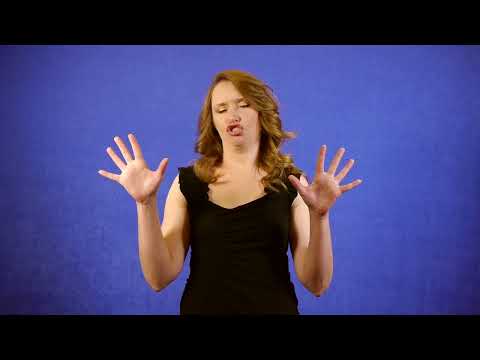
Sign for DONE in ASL | ASL Dictionary

Definition: Finished or completed.

Sign for DONE in ASL

YouTube player

Practice Activities:

To practice the sign for DONE in ASL, start by repeating the sign in isolation in front of a mirror. Focus on the palm orientation, facial expressions, and fluid motion of the hands moving from the front of your body to outward. Make sure your expression matches the context—neutral for completion, exaggerated or sharp when indicating finality or frustration.

Create a short list of phrases that naturally include the sign for DONE in ASL, such as “I am DONE,” “Homework is DONE,” “We’re DONE talking,” or “The food is DONE.” Practice signing each of these with the appropriate tone and facial expression. Record yourself signing and review to ensure clarity and grammatical accuracy.

Engage in storytelling activities where you describe a day from start to finish. For example, sign about waking up, going to school, completing tasks, and ending with saying you are DONE for the day. This helps reinforce how to use the sign for DONE in ASL within narrative context.

Use role-play with a partner to simulate real-life conversations. Take turns asking and answering if a task is DONE—such as cooking dinner, sending an email, or finishing a project. This builds fluency in conversational signing and helps internalize the natural use of the sign in different scenarios.

Watch ASL videos or dialogues that use the sign for DONE in ASL and try to spot its use in various emotional or situational contexts. Mimic those examples to enhance expressiveness and accuracy. You can also challenge yourself by turning off the sound on a video and interpreting when the sign for DONE appears based on what’s happening in context.

For a fun solo exercise, walk through your daily to-do list in ASL. Check off each item by stating, “DONE,” once it’s completed. This encourages frequent and meaningful repetition.

Cultural Context:

In American Sign Language (ASL), the sign for DONE in ASL carries deep cultural and grammatical importance. It goes beyond just finishing an activity; it communicates the end or completion of an action with clear intent and finality. This sign is used throughout the Deaf community to convey that something is finished, completed, or no longer happening.

The sign for DONE in ASL typically uses a movement that represents releasing or letting go, symbolizing that the matter is complete. It’s not just used in formal situations—people use it in everyday conversation, storytelling, and casual dialogue. This makes it a very versatile and commonly used sign within ASL communication.

Culturally, the way the sign for DONE in ASL is used depends on the tone, facial expressions, and context. For example, it can show you are done with a task, emotionally finished with a topic, or metaphorically done with a relationship or event. These subtle differences are often communicated through non-manual markers like eye gaze and mouth movements.

Because ASL is a visual and spatial language, the expression of being done isn’t limited to just signs but integrates body movement and expression. The sign for DONE in ASL is a strong example of this layered communication. It can express satisfaction, frustration, or even relief, depending on how it’s performed.

In Deaf storytelling and narration, the sign for DONE in ASL often marks the turning point or conclusion of a pivotal moment. Its use helps signal that a change has happened or that a process has come to an end. This makes the sign a key tool for clear and effective ASL communication.

Children learning ASL often learn the sign for DONE in ASL early because it’s essential for setting boundaries or expressing independence. Teachers and parents also use it to guide children through structured activities, signaling completion or transition to a new task. This supports its role in both educational and home settings.

In more formal or academic settings, the sign for DONE in ASL can also function grammatically, marking the completion of past events or the conclusion of discussions. This shows its flexibility as both a concept and a grammatical marker within the ASL language structure.

The frequency and importance of the sign for DONE in ASL reflect not only its linguistic necessity but also its cultural embeddedness in the Deaf community. It shows how ASL allows for expressive, rich communication built from visual and cultural cues. The use of DONE contributes to storytelling, daily conversations, and emotional expressions within ASL.

Native AS

Extended Definition:

The sign for DONE in ASL is commonly used to express the completion of an action, task, or event. It communicates that something has finished or reached its end. In American Sign Language, this concept can also mean phrases like “all done,” “finished,” or “that’s it.”

To produce the sign for DONE in ASL, you begin with both hands held in front of the body, palms facing in toward you. Then flip your hands outward so the palms face away from you. This quick outward movement visually represents that something is over or no longer present.

Facial expressions play a key role when signing DONE. A firm, final expression helps show that an activity is completed without the need to repeat it. In more casual or lighthearted contexts, your expression may look more relaxed, depending on the situation.

The sign for DONE in ASL is a versatile concept that works across many settings. For example, students use it to show they have finished schoolwork ✏️, parents use it at mealtime to say a child is all done eating ️, and workers use it on the job site to indicate a task is completed ️. It’s commonly used in conversations to show transitions or to move on to another topic.

Cultural understanding of the sign for DONE in ASL is important because it differs from the English word “done.” In ASL, the sign not only conveys that something is completed, but can also show relief, satisfaction, or closure. Signing DONE with a head nod and proper facial expression makes your meaning more clear and natural in Deaf culture.

There are different variations of the sign depending on context. When speaking to children or using baby sign language, the sign for DONE in ASL is often paired with other signs or gestures. For example, when a toddler finishes a meal, caregivers will sign DONE with an exaggerated motion to help babies associate the word with completion.

The sign also appears often in storytelling, performances, or ASL poetry as a way to convey a shift in time or mood. In visual storytelling, the sign can symbolize a sudden event or transformation that is now complete. It gives movement and rhythm to how information is shared in a visual format.

If you’re learning American Sign Language, the sign for DONE in ASL is one of the essentials you’ll use often. It forms part of daily conversations and helps build your fluency for expressing past events or transitions. The more frequently you practice it in context, the more natural it

Synonyms: completed, finished, accomplished, concluded, finalized

Educational resources: Find related learning materials in our course bank!

Want more? Check out some of our popular learning activities on the homepage!

Need to look up a sign? Use our highly rated dictionary: https://aslinteractive.com/best-asl-dictionary/

Follow us on tiktok: https://www.tiktok.com/@aslinteractive. More social media links at the bottom of this page!

Long-tail Keywords: what is the sign for done in ASL, how do you sign done in ASL, ASL sign for finished or done

Categories:

tags: done in American Sign Language, how to sign done in ASL, ASL sign for done, done sign language meaning, done ASL interpretation

Tips for Beginners:

When learning the sign for DONE in ASL, it’s important to understand both the movement and the context. This sign is often used to express completion or the idea that something is finished. To produce the sign correctly, open both hands with the palms facing you, then flip them outward so the palms face away. This motion mimics the idea of pushing something away that is completed.

A helpful tip for beginners is to ensure the flip of the hands is smooth and confident. A hesitant motion can confuse the meaning or make it appear like a different sign. Practice the hand movement in a mirror to build fluidity and precision. Remember, facial expression adds meaning—pair the movement with an expression that communicates a sense of finality or completion.

One of the most common pitfalls when learning the sign for DONE in ASL is making it too subtle or too rushed. The clarity of the flipping motion is essential. Don’t just turn the wrists slightly—commit to the full motion. Also, be aware of regional variations; some Deaf communities use one hand instead of two or place more emphasis on facial expression, so it’s good to observe others and ask your ASL teacher or mentor.

Use the sign for DONE in ASL in multiple contexts to become more confident. For example, try signing “I’m done with work” or “Dinner is done” to get used to different sentence structures. This will help build muscle memory and reinforce the meaning in natural usage.

Finally, don’t be afraid to ask for feedback. Sign language is a visual language, and slight changes in motion or expression can shift the meaning. Practicing regularly, watching ASL videos, and participating in Deaf community events can greatly enhance your understanding of the sign for DONE in ASL.

sign for DONE in ASL, done in ASL sign, how to sign done in ASL, ASL sign for done, done ASL, done sign language ASL

Connections to Other topics:

The sign for DONE in ASL is closely tied to the concept of completion or finality, making it a useful sign when discussing time, activities, or transitions. It often overlaps with other completion-related signs such as FINISH, which shares similar movement and handshape. However, while related, the sign for DONE in ASL carries a more definitive sense of being through or no longer involved.

In narratives or storytelling, DONE is often used to mark the end of sequences, linking well with sequencing signs like THEN, NEXT, or AFTER. For example, one might say LEARN FINISH, TEST DONE to indicate the progression and conclusion of an activity. This allows for a visual representation of timelines or chronological steps, which is crucial in ASL syntax.

The sign for DONE in ASL is also a foundational part of compound expressions like ALL-DONE, a phrase frequently used with children or in casual conversation to signify that something is completely finished. Another example might be EAT DONE, which succinctly conveys that a meal is over. These combinations help learners understand how ASL strings together concepts for fluid communication.

Grammatically, DONE can function similarly to a past tense marker in ASL. While ASL generally lacks verb tenses like English, DONE can be used to show that an action has been completed—effectively acting as a temporal modifier. For example, GIVE DONE can show that the act of giving is no longer in progress.

For learners, recognizing the differences and appropriate contexts for DONE and related signs like FINISH enhances clarity. These signs may appear interchangeable, but subtle distinctions affect meaning. Understanding how the sign for DONE in ASL fits into broader conversation patterns supports fluency and helps with understanding native users’ expressions. ✨

Summary:

The sign for DONE in ASL is a dynamic and versatile expression that carries both literal and metaphorical meanings. It’s frequently used in daily conversation to indicate completion, finality, or transition.

To produce the sign for DONE in ASL, both hands typically begin with the palms facing the signer and near the chest or stomach area. The hands then flip forward so that the palms now face out toward the listener, representing something being finished or pushed away.

This movement is sharp and final, conveying a sense of conclusion. Facial expression plays a critical role, adding emphasis—raised eyebrows or nodding the head can suggest a positive or assertive finish, while a frown or eye-roll might reflect irritation or impatience.

The sign for DONE in ASL shares similarities in usage with expressions like “all done,” “finished,” or even “that’s it.” This makes it functionally rich and adaptable in sentence structures, elevating expressiveness without lengthening discourse.

Grammatically, this sign can serve multiple purposes depending on context. Often it behaves like an auxiliary verb or even a predicate marker, especially when paired with time indicators or sequence-related signs.

The sign can also replace more complex phrasing in English, allowing for smoother and more efficient communication in ASL. Rather than saying “I have already eaten,” a signer could simply say “EAT DONE,” with time context inferred or stated earlier.

Culturally, the sign for DONE in ASL has become a staple in Deaf community storytelling and casual exchanges. It helps to anchor narratives by marking the passage from one phase to another.

In ASL narratives, storytellers often use this sign to punctuate scenes or emotional peaks. A signer might use a dramatic version of the sign—using broader motion and intense gaze—to show closure, relief, or finality.

The sign also appears in educational environments among Deaf children and adults. Teachers frequently use it to indicate the end of an activity, assignment, or module. For example, “HOMEWORK DONE?” is a common question in classrooms.

Its simplicity does not limit its complexity or adaptive nature. The sign for DONE in ASL evolves slightly depending on regional dialects and situational adjustments, often adapted in informal vs. formal settings.

In linguistic terms, the sign is transitive, often anchoring the verb-object structure in ASL sentences. For instance, “CLEAN KITCHEN DONE” may imply that the action is completed and needs no further follow-up.

Applied linguistics research on ASL syntax observes that DONE plays a critical role in tense marking, particularly perfective aspect. This means the action is viewed as complete and bounded, which is crucial in structuring narratives.

The sign for DONE in ASL is not just procedural but also emotional. In interpersonal exchanges, the sign often carries subtext, reflecting fatigue, satisfaction, or indifference. For example, a teenager using the sign emphatically to say “I’M DONE” may be expressing more than task completion—they could be sharing emotional overwhelm or resistance.

In family settings, especially among Deaf parents and children, this sign emerges early in language acquisition. Young toddlers often mimic the motion to express sufficiency—like being full from eating or done with a toy.

It often serves as a cornerstone in child-directed ASL, similar to how English-speaking children might first learn words such as “no,” “more,” and “done.” This supports early expressive development and regulation of needs.

Among adults, especially in Deaf professionals and artists, the sign for DONE in ASL appears in workplace discourse. It facilitates rapid communication and signals project completion, urgency, or content approval.

In group discussions or meetings, you might see someone suggest a decision and close with a swift sign for DONE—clearly marking their stance or concluding their point. This adds efficiency and clarity in fast-paced environments.

Interestingly, the sign’s metaphorical applications span abstract concepts. People use it to illustrate emotional closure, decision-making, and personal boundaries. One might say “RELATIONSHIP DONE” to express a breakup or emotional decision.

The insistent nature of the palm-flip gesture adds emphasis, backing the sign with a cold certainty or emotional relief. That physicality creates a language-driven emotional resonance often missed in voice-alone systems.

In ASL poetry and storytelling, the sign functions like a punctuation mark or fade-out scene. The rhythmic flipping out of hands gives a kinesthetic way of conveying endings, enhancing aesthetic qualities in visual communication.

The sign for DONE in ASL also appears in theatrical settings, signed music performances, and ASL literature. It provides performers with a gesture to mark transitions and closure on stage.

Within the Deaf community, DONE has become a shorthand for many life experiences, from finishing studies to ending conflicts. Community members sometimes even play with exaggerated versions of the sign for comedic or dramatic effect.

On social media platforms and vlogs aimed at the Deaf community, the sign for DONE in ASL is frequently used with humorous expressions. Content

Want more? Check out some of our popular learning activities!

ASL Interactive Resources

ASLInteractive YouTube Channel

Follow us on tiktok: @aslinteractive.com

Follow us on Instagram: aslinteractive

Facebook page: aslinteractive

Facebook group: aslinteractive

LInkedIn: ASL Interactive LLC

Twitter: @ASL_interactive

*Some information on this page is AI-generated. AI can make mistakes. Please check the information.


Responses