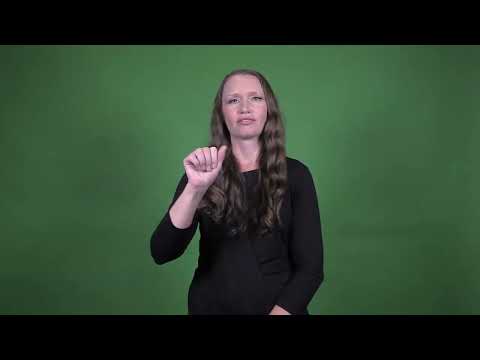
Definition: A former currency of Greece.
Sign for DRACHMA in ASL

Practice Activities:
Begin by practicing the sign for DRACHMA in ASL in isolation. Use a mirror to observe your handshape, movement, and facial expression as you fingerspell each letter slowly and clearly. Repeat several times until it feels comfortable and smooth.
Next, move into signing simple sentences that include the sign for DRACHMA in ASL. For example, you can practice phrases like “In ancient Greece, they used DRACHMA,” or “The museum displays DRACHMA coins.” Say the sentences out loud first, then try signing them without voice to focus only on your ASL fluency.
Create a short story around a historical topic that includes the sign for DRACHMA in ASL. Write out your story in English first, such as a traveler finding a DRACHMA in the ruins of Athens. Then translate it into ASL using appropriate structure and pauses, making sure to fingerspell DRACHMA clearly each time.
Pair with a partner and take turns quizzing each other. One person can fingerspell the word at different speeds, and the other person identifies the word. Or, give each other sentences where one person signs and the other translates into English, paying attention to the accurate use of the sign for DRACHMA in ASL.
Incorporate role-play activities by setting a scene in a history museum, a coin shop, or an archaeology class. Use props or images of Greek coins and include the sign for DRACHMA in ASL naturally in the dialogue. This helps make the sign more memorable and connected to cultural context.
Use flashcards or digital apps to practice fingerspelling vocabulary related to currency, especially rare or historical ones like DRACHMA. Reinforcing this category will help solidify your understanding and improve recall when using the sign for DRACHMA in ASL in varied situations.
Cultural Context:
The sign for drachma in ASL connects deeply with both currency and cultural history, reflecting the significance of the ancient Greek drachma. As American Sign Language evolves to include global concepts, the inclusion of signs for historical currencies like the drachma shows a growing interest in international education and cultural awareness within the Deaf community.
In ancient Greece, the drachma was more than just a coin—it was a foundational part of their economy and daily transactions. Understanding the sign for drachma in ASL helps bridge a modern understanding of ancient systems with Deaf education and communication. When teaching about ancient civilizations, educators often need specific signs that represent historical terms, and having a clear, standard sign for drachma supports this effort.
While the drachma is no longer in circulation since Greece adopted the euro in 2001, its historical significance remains strong. The sign for drachma in ASL allows Deaf individuals to participate fully in conversations about world history and economics. Using ASL to describe ancient currencies fosters inclusive education and shows how language adapts to cover a wide range of subjects.
The inclusion of a sign for drachma in ASL not only benefits classroom discussions but also supports content creators, tour guides, and educators in museums where Greek history is discussed. With digital content becoming increasingly accessible, having accurate and culturally respectful signs like the one for drachma ensures that Deaf viewers are not left out of global conversations.
The visual nature of ASL allows complex concepts like monetary systems to be expressed clearly. The sign for drachma in ASL can help convey the physical characteristics of ancient coins, their use in trading, and their role in Greek society. This helps students and viewers form a deeper understanding of what made the drachma such a central part of the ancient world.
Culturally, discussing currencies like the drachma opens up conversations about trade, colonization, and the spread of civilizations. By learning the sign for drachma in ASL, Deaf users gain access to the same cultural and historical knowledge as hearing individuals. It helps reduce barriers in education and celebrates the adaptability of ASL to new topics.
The word drachma itself has roots in the Greek verb meaning to grasp, which may tie into how coins were originally handled or measured. This kind of linguistic detail enriches the cultural context of the sign for drachma in ASL, giving it more depth than just a visual symbol. It becomes a tool for storytelling, learning, and
Extended Definition:
The sign for drachma in ASL refers to conveying the concept of the drachma, which was the official currency of Greece before the euro. Since drachma is a historical form of currency and not commonly used today, there isn’t a universally recognized sign in American Sign Language that directly translates to drachma. In most cases, the sign for drachma in ASL is fingerspelled, using the manual alphabet to spell out D-R-A-C-H-M-A.
When using the sign for drachma in ASL, context is important. If you’re discussing world currencies, Greek history, or international economics, fingerspelling drachma allows the signer to clarify meaning and refer to this specific currency. The sign for drachma in ASL is typically accompanied by non-manual signals such as raised eyebrows or a slight head tilt to indicate the proper noun being introduced.
If you want to go beyond fingerspelling and make the meaning clearer, you might combine the sign for Greek with the fingerspelled word drachma. This can help emphasize that it’s the Greek currency, especially when the audience may not be familiar with the term. Since the drachma no longer circulates, signers often rely on added explanations or visual descriptions to help others understand what they mean.
The drachma was reintroduced several times throughout Greek history and was in use for much of the 20th century until it was replaced by the euro. When using the sign for drachma in ASL in an educational or historical context, it may be helpful to include signs for past or in the past to give a complete picture. This can help distinguish drachma from currently circulating money like euros or dollars.
Students, interpreters, and educators may encounter the sign for drachma in ASL when translating documentaries, news segments, books, or museum exhibits related to Greece. Including clear fingerspelling and facial expressions makes the message more understandable and accurate. If signing for children or ASL learners, visuals or props like a picture of a drachma coin may help support understanding.
Because ASL is a visual language with strong reliance on spatial and contextual information, the sign for drachma in ASL can vary slightly depending on the user’s intent. Some signers may include the sign for money or currency after fingerspelling drachma to emphasize its use as a form of money. This strategy can add clarity when introducing unfamiliar or obsolete terms.
Synonyms: drachmas, Greek currency, ancient Greek coin, drachm, Greek monetary unit
Educational resources: Find related learning materials in our course bank!
Want more? Check out some of our popular learning activities on the homepage!
Need to look up a sign? Use our highly rated dictionary: https://aslinteractive.com/best-asl-dictionary/
Follow us on tiktok: https://www.tiktok.com/@aslinteractive. More social media links at the bottom of this page!
Long-tail Keywords: what is the sign for Drachma in ASL, how do you sign Drachma in ASL, ASL sign for Drachma
Categories:
tags: Currencies, Greece, History, Language Learning, Numbers
Tips for Beginners:
The sign for DRACHMA in ASL is typically fingerspelled, as it refers to an ancient Greek currency and does not have a standardized gesture in American Sign Language. For beginners, it’s important to take your time fingerspelling each letter clearly: D-R-A-C-H-M-A. Keep your hand steady at shoulder or chest height, and make sure your fingers are formed precisely to avoid confusion with similar-looking letters.
One of the most common challenges when learning the sign for DRACHMA in ASL is finger placement during fast fingerspelling. Beginners often rush or blend the letters together, especially with the unique sequence of “CHM” in the middle. Practicing slowly at first will help build muscle memory. Use a mirror or record yourself on video to check if each letter is clear and distinct.
Accuracy is more important than speed when learning this sign. Avoid dropping your hand or turning it to the side, as that can make letters difficult to see. Fingerspelling on a flat, neutral background also helps others read the sign more easily, boosting comprehension.
Another useful tip is to practice fingerspelling vocabulary that contains similar letter combinations, like “alchemy” or “machine,” to improve fluidity. Watching native signers use fingerspelling in conversation helps to see natural pacing and rhythm. Repetition is key, so keep reviewing the sign for DRACHMA in ASL daily.
When using this sign in a cultural or historical context, be prepared to explain what it means or provide context with facial expressions or classifiers. This makes the conversation more engaging and easier to follow. Lastly, be patient—fingerspelling long or unique words takes time, but clarity and consistency will pay off .
sign for DRACHMA in ASL, how to sign drachma in asl, fingerspell drachma correctly in asl, asl drachma currency sign, drachma spelling in american sign language, sign language for drachma name, learn asl sign for drachma
Connections to Other topics:
The sign for DRACHMA in ASL connects deeply with signs used in context of currency, economy, and history. Because drachma is a historical unit of currency from Greece, it is often fingerspelled (FS) rather than signed using a specific symbol, especially in academic or cultural discussions. This aligns with how other non-standard or defunct currencies are handled within ASL, making it part of a broader category of signs used in discussing global currencies.
In conversations about finance, the sign for DRACHMA in ASL might appear alongside signs like MONEY, EURO, COIN, and GREECE. These combinations help construct compound meanings or clarify subject matter. For example, a person might say FS-DRACHMA followed by GREECE or use COIN and FS-DRACHMA together to describe ancient coins or historical transactions in a classroom lecture or museum setting.
Fingerspelled signs like drachma also tie into the way ASL deals with unique or uncommon nouns—especially those with no set ASL equivalent. This is a common approach in interpreting proper nouns, foreign words, or obsolete terms. The sign for DRACHMA in ASL, therefore, illustrates how ASL remains adaptive to a wide array of concepts by using fingerspelling when needed.
Connections can also be drawn between the sign for DRACHMA in ASL and cultural signs like HISTORY, ANCIENT, or EMPIRE. These are often used in combination to build complex concepts about the past, including lessons about trade or ancient civilizations. ASL learners exploring historical or academic vocabularies will benefit from seeing how such signs work together to convey specific meanings.
In teaching contexts, the sign for DRACHMA in ASL can also provide a gateway for discussions on how ASL approaches specialized or dated content areas. It exemplifies how the language accommodates terms outside everyday use, enriching vocabulary depth for advanced signers.
Summary:
The sign for DRACHMA in ASL is typically conveyed through fingerspelling, since it refers to a foreign currency largely tied to historical and cultural contexts. Because the drachma was the former currency of Greece before adopting the euro, ASL users often rely on transliteration through fingerspelling to maintain clarity and precision. Fingerspelling is particularly effective when standard signs haven’t been broadly adopted or when technical terms like currencies, names, or less-common references are being discussed.
To produce the sign for DRACHMA in ASL, fingerspell the word D-R-A-C-H-M-A, keeping your hand dominant and your movements clear to ensure readability. Like other unfamiliar or foreign monetary terms, this fingerspelled sign fits within the common ASL strategy of borrowing from English when an established sign does not exist. Clarity and a steady pace are key components in accurately fingerspelling such terms, especially for fingerspelled words with consonant clusters like DRACHMA.
The sign for DRACHMA in ASL, being fingerspelled, lacks the dynamic visual-iconic features that other currency signs like DOLLAR or CENT might have. Instead, the reliance on the manual alphabet enables a broader range of proper nouns and foreign entities to be incorporated into ASL. This underscores how ASL retains adaptability within a visual-spatial language framework, accommodating specific or specialized vocabulary.
Using the sign for DRACHMA in ASL usually occurs in educational, historical, or economic conversations where context around international currencies is relevant. For example, a deaf student learning about ancient Greek economies or recent European monetary history would encounter the sign when discussing the drachma in an academic setting. It also appears in cultural discussions, especially within anthropological or numismatic contexts.
From a linguistic perspective, the use of fingerspelling in the sign for DRACHMA in ASL reflects a common morphological boundary where borrowed lexical items aren’t always adapted phonetically or visually. Instead of creating a new visual sign to represent the concept, ASL signs maintain external references through fingerspelling. This practice preserves fidelity to the source language and supports bilingual and bicultural awareness among signers.
Applied linguistics teaches us that the presence of fingerspelling richens the vocabulary breadth in ASL and enhances cognitive flexibility among signers. Incorporating signs like the sign for DRACHMA in ASL illustrates how cross-linguistic borrowing functions not just in spoken language, but also in signed systems. It shows the bridge-building work done through contact between ASL and English and beyond with other languages and cultures.
Culturally, the Greek drachma carries centuries of historical resonance, from ancient times through to modern history before the eurozone era. When expressing this term in ASL, the signer may use additional contextual cues—either facial expressions or classifiers—to expand on the societal role of the drachma. For instance, facial grammar can convey a shift from ancient to modern references, anchoring the sign temporally or culturally.
The sign for DRACHMA in ASL therefore sits at the intersection of linguistics, culture, and history. It opens conversations about how ASL encodes foreign knowledge and how visual elements are preserved or adapted across visual-linguistic modalities. The use of fingerspelling here also reflects an acknowledgment of global terminology without compromising ASL’s unique grammatical and lexical systems.
Register plays a big role in when and how the sign for DRACHMA in ASL is used. In formal academic signing, fingerspelling is accompanied by expansion strategies, such as explaining that the drachma is a form of currency used before the euro. In informal settings or classroom interactions, it might be fingerspelled alone with elaboration provided through body language or visual storytelling.
The use of the sign for DRACHMA in ASL is similar in function to signs for other obsolete or historical currencies like LIRA or PESO, when unfamiliar, which are also often fingerspelled. However, unlike DOLLAR or YEN, which have established signs due to their prevalence in the American cultural and linguistic environment, drachma’s limited daily usage among ASL users necessitates fingerspelling. Thus, fingerspelling serves as an important tool for low-frequency, high-specificity terminology.
This sign aligns closely with ASL’s tendency to preserve lexical accuracy while maintaining linguistic economy. In contrast to attempting to reinterpret a word’s meaning entirely through visual metaphor or classifier functions, the sign for DRACHMA in ASL directly transfers the English orthography to ASL’s manual alphabet. This aligns with modern signs for brand names, geographic locations, and international items.
In terms of grammar, fingerspelling DRACHMA within an ASL sentence follows native ASL syntax rather than English word order. For instance, a phrase may be structured as “GREECE BEFORE EURO USE D-R-A-C-H-M-A,” highlighting temporal structure and logical sequencing. It demonstrates how the sign fits organically within syntactically
Want more? Check out some of our popular learning activities!
ASL Interactive Resources
ASLInteractive YouTube Channel
Follow us on tiktok: @aslinteractive.com
Follow us on Instagram: aslinteractive
Facebook page: aslinteractive
Facebook group: aslinteractive
LInkedIn: ASL Interactive LLC
Twitter: @ASL_interactive
*Some information on this page is AI-generated. AI can make mistakes. Please check the information.

Responses