Sign for DRINK in ASL | ASL Dictionary

Definition: To consume a liquid.

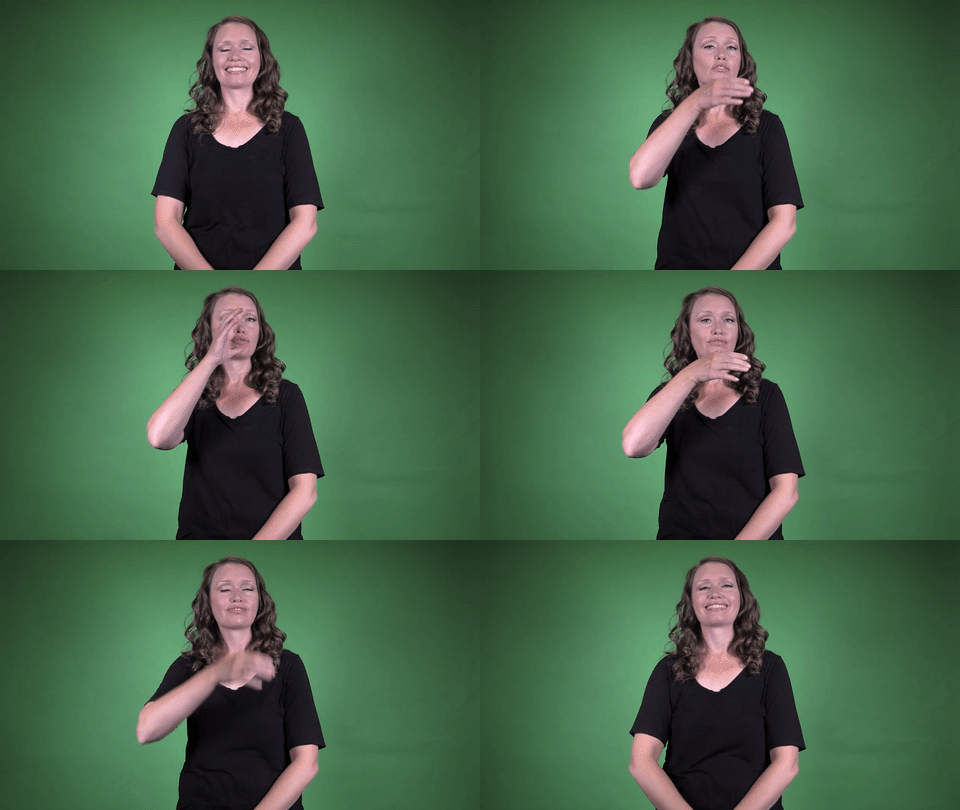
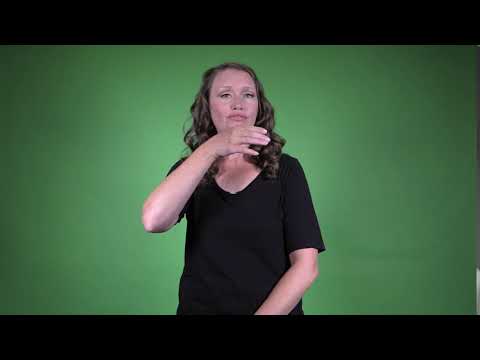
Sign for DRINK in ASL

YouTube player

Practice Activities:

To get comfortable with the sign for DRINK in ASL, begin by practicing the movement in front of a mirror. Sign it repeatedly while visualizing holding a glass or cup and miming bringing it to your mouth. Try using different facial expressions to match different contexts: thirsty, satisfied, or excited about a particular beverage.

Use flashcards or images of various drinks like water, soda, and juice. As each card is revealed, sign what the object is and pair it with the sign for DRINK in ASL. For example, sign “WATER, DRINK” or “JUICE, I DRINK.” This helps build vocabulary while reinforcing sentence structure.

Create simple ASL sentences using DRINK in a structured format. Practice full phrases like “I want to drink,” “You drink coffee,” or “He doesn’t drink soda.” Make sure to keep your sign smooth and your non-manual signals clear. Adjust the pace to stay fluent without rushing.

For more dynamic practice, try storytelling. Use prompts like “a hot summer day” or “a visit to a coffee shop.” Incorporate the sign for DRINK in ASL naturally as you describe people getting beverages or taking sips. Include time indicators, descriptions of cups, and mention who is drinking what.

Partner practice can boost fluency. With a partner, take turns mime-ordering drinks, and the other person signs back using appropriate signs. For example, one partner mimics pointing to coffee and the other responds, “YOU DRINK COFFEE.” Reverse roles and add new beverages to increase variety.

Play a role-play game where you’re at a restaurant. One person will be the server and the other the customer. Use signs to ask questions, place orders, and respond. The sign for DRINK in ASL should be used frequently and naturally throughout the scenario.

End your practice by watching short ASL videos centered around dining or eating. Pause to identify and copy how the sign for DRINK in ASL is used by native signers. Mimic their fluency and mannerisms to enhance your expressive accuracy.

Cultural Context:

The sign for DRINK in ASL is commonly used in everyday conversation. In Deaf culture, using signs like this one helps express needs and routines clearly and respectfully. Since communication in ASL is visual, signs like DRINK are important for quick and clear exchanges, especially in social settings or at shared meals.

The sign for DRINK in ASL mimics the action of holding a cup or glass to your mouth. This visual representation makes it intuitive and easy to remember. It reflects how many ASL signs are closely connected to real-world gestures, making communication natural.

In Deaf culture, food and drink-related signs carry more than just literal meanings. They help build social bonds, especially when people are gathered for meals or celebrations. The sign for DRINK in ASL can represent more than just drinking water—it can also refer to beverages at events, coffee at a café, or even casual meetups.

Understanding when and how to appropriately use signs like the sign for DRINK in ASL shows cultural competence. It’s polite to ask someone if they want a drink using ASL during social gatherings or shared spaces. This shows respect and inclusion, key values in the Deaf community.

The sign for DRINK in ASL is also important in educational settings where Deaf children are taught how to communicate basic needs. Using clear signs for things like food and drink empowers them to interact independently and confidently from a young age. Teachers and caregivers regularly use this sign in classroom and home routines.

In casual conversations, the sign for DRINK in ASL often appears in stories or jokes. Just like in spoken languages, ASL includes storytelling where signs like DRINK help illustrate actions and emotions. It makes the stories more engaging and relatable for Deaf audiences.

Restaurants, coffee shops, and public places that serve beverages can become more Deaf-friendly when staff learn essential signs like DRINK. Many community members appreciate it when workers take the time to learn even basic ASL. It improves service and makes spaces more welcoming.

The sign for DRINK in ASL is also useful during health-related discussions. Whether you’re in a clinic or taking care of someone at home, asking if someone needs water or any kind of beverage can be important. Being able to relay this quickly with a visual sign ensures comfort and care.

In the world of visual media, ASL users often incorporate the sign for DRINK in ASL in vlogs, tutorials, and lifestyle content. It appears across social media platforms whenever someone is discussing food, prepping a drink

Extended Definition:

The sign for drink in ASL is a common and essential gesture used in everyday communication. This sign mimics the action of holding and tipping a cup to the mouth, making it intuitive and easy to remember. It’s a helpful sign to know when talking about beverages, mealtime, or health-related topics.

To sign drink in ASL, form your dominant hand into the shape of the letter “C”, as if you were holding a cup. Bring the hand up to your mouth and tilt it slightly, as if taking a sip. The movement should be smooth and natural, just like the action of drinking from a cup.

The sign for drink in ASL can be used with kids, adults, or in professional settings. It appears often when teaching children about their basic needs, as it helps them communicate thirst before they can speak. In restaurants, hospitals, or caregiving environments, it allows nonverbal communication about wanting something to drink.

You can use this sign along with other related vocabulary in ASL. For example, combine it with the sign for water to ask for a drink of water, or pair it with soda, juice, or coffee to specify what beverage is being requested. Using contextual signs together helps expand signing fluency.

In conversational ASL, facial expressions and context are important. A questioning expression while using the sign for drink in ASL may indicate you are asking someone if they’d like a drink. A more direct motion without the raised eyebrows could be you stating that you need a drink yourself.

This sign stays relatively consistent, but there may be some slight variations depending on the region or specific signing community. Still, the basic motion of miming drinking from a cup is widely understood. Most ASL users across the United States will recognize and use this standard version.

The sign for drink in ASL can also be incorporated into full sentences. For example, you might sign I want drink or Baby needs drink during common interactions. The simplicity of this sign allows for more fluid communication with both new learners and advanced signers.

Learning foundational signs like this builds confidence in using American Sign Language. Because drink is tied closely to routine, it is one of the first signs often introduced in ASL classes for beginners. It provides a direct connection between real-life actions and symbolic hand gestures.

When teaching this sign to others, it helps to demonstrate while actually drinking from a cup or bottle. Visual demonstration reinforces the sign’s meaning and helps learners connect the gesture to its real-world counterpart.

The

Synonyms: beverage, liquid, refreshment, thirst-quencher, libation

Educational resources: Find related learning materials in our course bank!

Want more? Check out some of our popular learning activities on the homepage!

Need to look up a sign? Use our highly rated dictionary: https://aslinteractive.com/best-asl-dictionary/

Follow us on tiktok: https://www.tiktok.com/@aslinteractive. More social media links at the bottom of this page!

Long-tail Keywords: What is the sign for drink in ASL, How do you sign drink in ASL, ASL sign for drinking

Categories:

tags: Drink, Everyday Activities, Verbs, Commands, Language Learning

Tips for Beginners:

When learning the sign for DRINK in ASL, it’s important to focus on mimicking the natural motion of taking a drink from a cup. To form the sign, shape your dominant hand into the “C” handshape and bring it toward your mouth as if you’re drinking from a glass. Keep your palm facing slightly inward and make the movement smooth and deliberate.

Begin with slow, controlled repetition to build muscle memory. Practicing in front of a mirror can help you avoid an exaggerated or robotic motion. Many beginners make the mistake of overextending the wrist or bringing the hand too close or too far from the mouth. Aim for a motion that looks natural and feels like you’re realistically drinking.

Timing and rhythm matter when signing fluidly. The motion should be confident and consistent, as hesitation can make the sign unclear. Watching native signers model the sign for DRINK in ASL can give you a better sense of the appropriate speed and angles.

Another pitfall is using the wrong handshape. Remember, the hand should clearly resemble a cup or glass—curved fingers, not flat or stiff. Also, avoid twisting your wrist or rotating your arm in a way that distracts from the basic drinking motion.

Context in conversations helps reinforce retention. Incorporate the sign for DRINK in ASL while learning food- and beverage-related vocabulary. Try sentences like, “I want a drink,” or “Do you want to drink water?” to strengthen recall in practical settings.

Joining sign language groups or practicing with a fluent signer can boost your confidence. Peer correction is extremely helpful—you’ll learn subtle refinements and better understand how the sign fits into everyday interactions. With steady practice and feedback, your ability to use the sign for DRINK in ASL will progress naturally and confidently.

sign for DRINK in ASL, drink sign language, how to sign drink in ASL, learn ASL drink, ASL beverage sign, American Sign Language drink, sign drink properly, ASL tips for drink

Connections to Other topics:

The sign for DRINK in ASL connects closely with food and meal-related vocabulary. It is a fundamental sign used in everyday conversation and is often one of the first nouns taught to ASL learners. This sign is essential when discussing eating habits, preferences, and routines, making it interdependent with signs like EAT, WATER, or THIRSTY.

The sign for DRINK in ASL also plays an important role in creating compound signs and more context-specific phrases. For example, pairing it with ALCOHOL or COFFEE creates more specific meanings such as drinking alcoholic beverages or coffee. The sign may also be used in conjunction with signs like SODA, MILK, or TEA to give clarity about what is being consumed.

In contexts dealing with health and wellness, the sign for DRINK in ASL frequently appears with signs like MEDICINE, WATER, or NEED, forming phrases that describe routines such as taking medication with water or the necessity to drink fluids. This usage is particularly helpful in healthcare or caregiving environments where accurate communication is critical.

The visual nature of the sign makes it intuitive and connects naturally to mime-like gestures, aligning with other action-based signs. It complements the ASL classifier system, especially when explaining how someone drinks or describing the type of cup or container. These classifiers clarify action and context, such as using a CL: C to show a large glass.

This sign also appears in narrative ASL to express emotions or set scenes. In storytelling or casual dialogues, describing someone taking a slow drink can imply suspense, nervousness, or casual behavior. These subtle uses show the expressive capacity of the sign for DRINK in ASL and how it interacts with broader layers of ASL grammar and culture. ☕

Summary:

The sign for DRINK in ASL is iconic and visually intuitive, making it one of the easiest for beginners to recognize and replicate. The basic motion involves forming a letter “C” shape with the dominant hand and mimicking the action of bringing a cup or glass to the mouth.

This sign reflects real-world actions and uses metaphor through gesture. Its clear resemblance to drinking from a glass helps reinforce its meaning in memory.

To make the sign, curve your fingers into a C-shape and hover the shape near the chin. Then, move the hand slightly backward—toward the mouth—in a smooth, short motion, as if you’re sipping from a cup.

The movement is small, controlled, and fluid rather than exaggerated or jerky. If overdone or dramatically enacted, it could confuse or be misinterpreted, especially in fluent signing and conversational ASL.

Though the primary version depicts drinking from a general container, variations exist to express specific types of drinking like water, alcohol, or coffee. These tend to incorporate context or be accompanied by descriptive signs.

In social settings, the sign for DRINK in ASL often appears during meal-time communication, casual conversation, health discussions, and polite offers. It’s frequently paired with signs for EAT or FOOD to create signed phrases like “Do you want to eat or drink?”

Linguistically, it demonstrates the concept of classifier-based representation even though it is not a true classifier in itself. The C-handshape, standing in for a cup or glass, serves as a visual metaphor.

ASL relies heavily on such metaphorical and iconic forms to represent everyday concepts. The sign for DRINK in ASL is a good example of how visual-spatial languages use mimicry to convey meaning.

When using the sign for DRINK in ASL in a sentence, facial expression and body language remain vital. For example, furrowing brows or raising them can dramatically change the grammatical intention, switching from a statement to a question.

Syntax in ASL differs from English, so the phrase “I want a drink” might come across signed as “DRINK I WANT” depending on emphasis. Sentence structure varies depending on the user’s intention and the broader discourse context.

In Deaf culture, signs like DRINK serve not just as communicative tools but as shared references in social rituals. Offering someone a drink or asking if they had one implies hospitality, similar to spoken language etiquette.

Children learning ASL often begin with concrete, daily-use signs like DRINK. It exemplifies the principle of language acquisition where tactile and visual feedback supports learning through repetition and muscle memory.

For interpreters, understanding the sign for DRINK in ASL involves more than knowing its form. They must discern context, such as interpreting for AA meetings versus social parties, as the meaning can shift—from hydration to alcohol consumption.

Signers often combine DRINK with other signs like WATER, JUICE, or COFFEE. This allows nuanced communication, whether discussing choice of beverages or medical needs such as hydration levels.

Culturally, alcohol-related uses of DRINK are distinct from neutral or health-focused uses. In contexts like bars or social gatherings, exaggerated versions or facial expressions might accompany the sign to indicate whether it’s alcoholic.

Deaf performers and storytellers use DRINK in theatrical ways. The sign’s easy-to-understand motion is ideal for pantomime or role-play on visual arts stages, especially in expressive storytelling.

Some regional and generational differences exist when signing DRINK. Variants may show slightly altered hand shapes or rhythmic shifts, particularly between older and younger signers or depending on dialect.

The sign for DRINK in ASL is rarely fingerspelled unless clarifying a brand name or proper noun. For general communication, the iconic nature of the sign supersedes the need for fingerspelling.

Applied linguistics highlights how signs like DRINK help illustrate symbol-referent relationships. These real-world connections between motion and object provide immediate cognitive anchoring, especially for non-native adult learners.

As with many ASL signs, context defines specificity. For example, signers might precede DRINK with signs for WINE, BEER, or COLD, giving additional detail through sequential concept stacking.

In children’s language development environments, DRINK is often among the “core signs” taught early due to its practical use. Parents and educators find it effective for basic needs communication.

In medical or caregiving settings, the sign for DRINK in ASL becomes essential. Caregivers use it to prompt hydration or assess health-related behaviors among Deaf patients or elders.

The sign offers strong visual reinforcement. Videos and flashcards featuring the sign are widespread in ASL education, both in schools and through language learning apps.

When teaching DRINK as part of ASL curriculum, educators often create gesture games to enhance recall. These involve physically mimicking the act in engaging ways, combining movement with signed instruction.

Even within storytelling or religious contexts, DRINK shows up symbolically. It can

Want more? Check out some of our popular learning activities!

ASL Interactive Resources

ASLInteractive YouTube Channel

Follow us on tiktok: @aslinteractive.com

Follow us on Instagram: aslinteractive

Facebook page: aslinteractive

Facebook group: aslinteractive

LInkedIn: ASL Interactive LLC

Twitter: @ASL_interactive

*Some information on this page is AI-generated. AI can make mistakes. Please check the information.


Responses