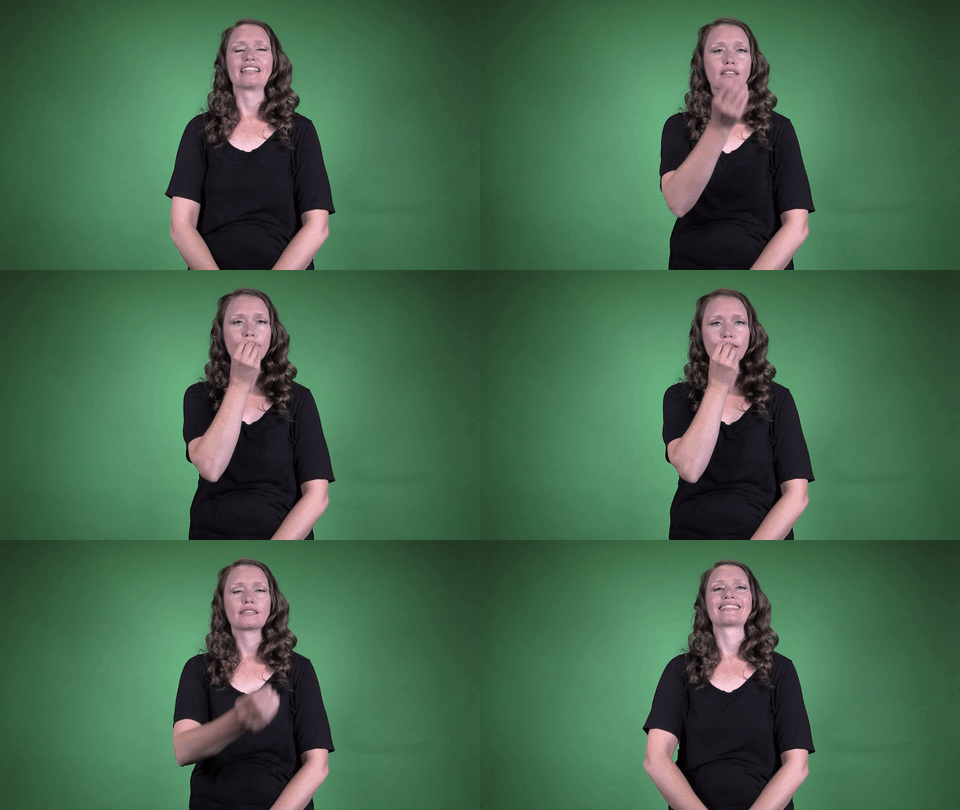
Definition: To consume food.
Sign for EAT in ASL

Practice Activities:
To build fluency with the sign for EAT in ASL, start by practicing the sign in front of a mirror. Repeat it multiple times while maintaining clear handshape and facial expression. Use a flat “O” handshape and bring your fingertips to your mouth, as if placing food into it.
Next, practice using the sign in simple sentences like “I eat,” “You eat now,” or “She likes to eat pizza.” Focus on incorporating facial expressions to indicate emotion or intensity, such as excitement, hunger, or satisfaction. Record yourself signing and review the footage to spot areas for improvement.
Set up daily routines to incorporate the sign for EAT in ASL naturally. Before meals, sign what you are about to eat. Practice describing your plate using signed vocabulary like apple, soup, or sandwich. This helps reinforce common food-related signage in meaningful context.
Work with a partner to create short dialogues that include the sign. Your partner might sign questions like “Did you eat?” or “What do you eat for breakfast?” Respond with complete answers, incorporating food vocabulary and adjectives like “delicious,” “sweet,” or “hot.” These interactions help reinforce language flow and conversation skills.
Try storytelling prompts involving food. You can sign a story about your favorite meal, a family dinner, or a trip to a restaurant. Include details using the sign for EAT in ASL along with other descriptive signs to create a vivid account.
Use flashcards of food items and respond with a yes or no while signing if you eat them. For example, show a card with “broccoli,” and ask yourself, “Do I eat broccoli?” and respond using the appropriate form. This reinforces speed and recognition.
Involve the sign for EAT in ASL during games like charades or category naming where players need to sign things they eat or meals of the day, encouraging quick thinking and recall under pressure.
Cultural Context:
The sign for eat in ASL is one of the most commonly used signs in everyday conversation. It plays a crucial role in expressing basic needs and routines, especially in family, educational, and caregiving settings. Because food is such a central aspect of culture, understanding how to use the sign for eat in ASL can help connect users across language and cultural barriers.
In Deaf culture, communication about daily necessities like meals is essential. The sign for eat in ASL can be used in various settings, from home life to school to restaurants. Whether someone is asking if you’ve eaten, offering food, or stating a preference, this sign is a cornerstone of social interaction.
The sign for eat in ASL mirrors real-life gestures, like bringing food to the mouth, making it intuitive and natural. This visual and iconic nature of the sign reflects how ASL often mimics real experiences, making it easier for new learners to pick up. Still, subtle nuances in facial expressions and context can alter the meaning, such as showing politeness, urgency, or curiosity.
In group settings, such as community dinners or larger social gatherings, Deaf individuals often use the sign for eat in ASL to initiate or join conversations. Asking someone if they’ve eaten or offering them food can be an important expression of hospitality and connection. It reflects values of care and inclusion within the Deaf community.
For parents and caregivers teaching babies or young children basic signs, the sign for eat in ASL is usually one of the first they learn. This helps children communicate their hunger and mealtime needs before they develop speech. It’s widely used in Baby Sign Language programs and in early educational environments.
In classroom settings where both Deaf and hearing students learn together, the sign for eat in ASL helps build bridges between cultures and languages. It allows for smooth transitions during lunch breaks or snack times, reducing frustration and promoting inclusion. Teachers often incorporate common signs like this into daily routines.
Technology and media have brought more awareness of signs like the sign for eat in ASL into mainstream culture. From educational videos to social media trends, many people now recognize this simple but essential sign. It helps foster appreciation for ASL and makes learning more engaging across all age groups.
When dining out, knowing the sign for eat in ASL can ease communication between Deaf patrons and restaurant staff. It can signal when someone is ready to order, express enjoyment of the meal, or navigate food options. This practical use shows the role the sign plays in promoting independence and accessibility
Extended Definition:
The sign for eat in ASL is one of the most commonly used gestures in American Sign Language. It’s a simple, intuitive sign that mimics the natural motion of eating and is easy for beginners to learn. This sign is frequently used in daily conversations when discussing meals, food preferences, or routines.
To make the sign for eat in ASL, use your dominant hand and form a flat “O” shape by bringing your fingers together and resting your thumb against them. Tap your hand to your mouth once, as if you’re mimicking the action of bringing food to your mouth. The motion should be gentle and done once for the verb form “eat.”
When using this sign as a noun, such as “food,” you can repeat the movement twice. So, the sign for eat in ASL and the sign for food are nearly identical, with repetition making the distinction. Context will often clarify the intended meaning, especially in flowing conversation.
This sign is a foundational part of ASL vocabulary that appears in a variety of situations—from asking someone if they have eaten to expressing a desire to eat. Young children learning ASL often learn this word early because it connects with basic needs and routines. Teaching the sign for eat in ASL can also encourage children to become more independent when communicating hunger or mealtime.
In conversation, this sign can be combined with other signs to create phrases like “want to eat,” “let’s eat,” or “eat later.” It’s important to pair the gesture with appropriate facial expressions, which are essential for tone and meaning in ASL. The expressiveness of a sign can alter the message’s urgency or emotion, such as being excited to eat versus simply stating a fact.
For Deaf and hard-of-hearing individuals, the sign for eat in ASL plays a big role in social settings involving meals and schedules. It helps maintain independence and clear communication whether at home, school, or out at a restaurant. Using this sign consistently helps others understand and respond to basic needs quickly.
Parents teaching their babies baby sign language often prioritize the sign for eat because it’s visually clear and connects to a daily experience. Babies can grasp and use the sign for eat in ASL as early as six months, encouraging early expression before verbal speech develops. This sign becomes part of a larger set of helpful early communication tools.
When learning ASL, mastering everyday signs such as the one for eat builds a strong foundation for more complex phrases later. It supports
Synonyms: consume, devour, munch, dine, swallow
Educational resources: Find related learning materials in our course bank!
Want more? Check out some of our popular learning activities on the homepage!
Need to look up a sign? Use our highly rated dictionary: https://aslinteractive.com/best-asl-dictionary/
Follow us on tiktok: https://www.tiktok.com/@aslinteractive. More social media links at the bottom of this page!
Long-tail Keywords: What is the sign for Eat in ASL, How do you sign Eat in ASL, ASL sign for Eat
Categories:
tags: Eat, Commands, Everyday Activities, Verbs, Language Learning
Parameters
*Handshape*:
The handshape used in the sign for EAT in ASL is the flat “O” handshape. All fingertips come together to form a closed, rounded shape resembling holding a small object like food. This handshape mimics the act of bringing food to the mouth.
When performing the sign for EAT in ASL, this flat “O” hand gently taps the mouth area, symbolizing the act of eating. The simplicity and clarity of the handshape make the meaning easy to understand and recognize in everyday conversation.
*Palm Orientation*:
For the sign for EAT in ASL, the dominant hand is formed into a flat “O” handshape, with the fingertips touching and the thumb resting against them. The palm orientation is generally facing inward toward the mouth. This inward-facing position mimics the motion of bringing food to the mouth, which helps convey the meaning of the sign for EAT in ASL clearly and naturally. ️
*Location*:
The sign for EAT in ASL is produced near the mouth, typically just above the chin level. The handshape resembles the flat “O” or closed fingertips, and it moves toward the mouth in a tapping motion. This placement emphasizes the connection to putting food in the mouth and is consistent with signs related to eating or meals.
When using the sign for EAT in ASL, the palm is generally facing the face, and the movement is repeated once or held briefly at the mouth. The location helps visually reinforce the meaning by simulating the act of bringing food to the mouth.
*Movement*:
The sign for EAT in ASL uses the dominant hand in a flat “O” handshape, as if holding a small piece of food. Bring the fingertips to the mouth in a small, repeated tapping motion. The movement should be subtle and directed clearly toward the mouth to signify the act of eating ️.
To clearly convey the sign for EAT in ASL, ensure the movement is smooth and deliberate. Repeating the motion once or twice helps reinforce the meaning of the sign without exaggeration.
*Non-Manual Signals*:
The non-manual signals for the sign for EAT in ASL typically include a relaxed or neutral facial expression, reflecting the everyday nature of the action. There’s no need for exaggerated expressions unless expressing mood or intensity about eating. Raised eyebrows may appear when using the sign for EAT in ASL in a yes/no question, like “Did you eat?”
When emphasizing hunger or excitement, someone might add slight head nods or a happy expression. These subtle cues enhance the meaning of the sign for EAT in ASL based on context.
*Prosody, Dominant/Non-Dominant Hand*:
The sign for EAT in ASL uses the dominant hand in a flat “O” handshape, resembling a closed pinched shape as if holding a small piece of food. It taps once or twice on the lips to indicate the motion of putting food into the mouth. The non-dominant hand is not involved.
When signing the sign for EAT in ASL, the movement is small and deliberate, suggesting the act of eating. This sign is commonly used in daily conversation around meals and food-related topics ️.
Tips for Beginners:
When learning the sign for EAT in ASL, start by focusing on handshape and location. This sign uses a flat “O” handshape, as if holding invisible food, and taps the fingers to the mouth gently. Don’t poke your mouth or use a stiff motion—aim for a soft, natural tap to communicate clearly.
Practice standing in front of a mirror to get immediate visual feedback. Many beginners either tap too far from their mouth or too harshly, which can make the sign unclear or awkward. Making smooth, controlled contact with your mouth each time you sign will build muscle memory and improve fluency.
The sign for EAT in ASL is commonly used beyond just describing a meal. It can be used to indicate “food” or when asking someone if they’ve eaten. Becoming familiar with its context helps in forming full sentences naturally, such as “Do you want to EAT?” or “What did you EAT?”
A common pitfall is using the incorrect handshape. Some new learners mistakenly use a closed fist or a C-hand instead of the correct flat O-hand. Take your time early on to get this handshape right, as it’s essential for clarity and proper communication.
Record yourself signing or ask a fluent signer to give feedback. This can help you catch subtle mistakes or unnatural motions. Watching ASL videos that use the sign for EAT in ASL within full sentences helps reinforce natural usage and rhythm.
Lastly, be sure to keep your facial expressions engaged. Although the sign is simple, adding proper non-manual signals like raised eyebrows for a question or a smile for enthusiasm enhances understanding. With mindful repetition, the sign for EAT in ASL will become second nature ️ .
Connections to Other topics:
The sign for EAT in ASL is closely connected to the concepts of food, mealtime, and daily routine. Because eating is a central part of life, this sign is foundational and frequently used in combination with other signs to discuss topics like breakfast, lunch, dinner, and specific foods. By learning the sign for EAT in ASL, learners also gain a linguistic key to understanding how action signs work in context.
One common compound sign involving the sign for EAT in ASL is EAT+FINISH, which together can imply that someone has eaten already or is done eating. This pattern reflects a broader structure in ASL where FINISH is used as a completion marker. Another example is EAT+TIME, which can indicate mealtime or asking if someone has eaten yet. These combinations demonstrate how ASL conveys nuanced temporal and practical information through sign layering.
The sign for EAT in ASL also connects with signs for nutrition, health, and daily habits. In conversations about well-being or medical care, one might use this sign to ask about someone’s appetite, dietary restrictions, or ability to eat independently. It pairs naturally with signs like HUNGRY, FULL, or FOOD, allowing for detailed and expressive communication in various settings such as family, education, or medical environments.
This sign also plays a crucial role in early childhood language development among Deaf children. Caregivers and teachers regularly use the sign for EAT in ASL in routines and structured activities to reinforce language acquisition. In Deaf culture, food-related signs also hold social importance, as shared meals often reflect deeper community bonds. Therefore, the sign for EAT in ASL serves not just a practical need but also supports cultural and social connections.
Summary:
The sign for EAT in ASL is iconic, making it easily recognizable due to its visual representation of the act of bringing food to the mouth. This sign is performed by bringing the fingertips of a closed, flat “O” handshape to the mouth, mimicking the gesture of eating. It connects deeply to the physical experience of nourishment, imitating a universal human action.
This sign can also be used to mean “food” depending on context, which reflects the flexibility and efficiency of ASL. In sentences, the placement of the sign and accompanying facial expressions provide cues as to whether the user refers to the noun or verb form. For example, repeated motion of the sign tends to reference food as a noun.
From a grammatical perspective, the sign for EAT in ASL follows standard Subject-Verb-Object word order common in ASL sentences. However, ASL often employs topicalization, which may place emphasis elements first, moving EAT forward in the sentence depending on what’s being emphasized. For example, “FOOD, I EAT EVERY DAY” is one way to organize a typical ASL sentence.
This sign is culturally important because it links to daily life rituals. Mealtimes, shared family dinners, and community gatherings are central to Deaf culture, just as they are in hearing culture. The ability to quickly and clearly express the concept of eating holds practical and relational significance.
When teaching the sign for EAT in ASL, instructors often reinforce the gesture with real-life actions, like pretending to lift an apple to one’s mouth. This strengthens cognitive associations between the motion and meaning. It also makes the learning process more immersive and effective for visual learners.
The sign for EAT is often one of the first signs taught to children or ASL beginners because of its clear visual cue and relevance to everyday interaction. Babies learning baby sign language often use the EAT sign as one of their earliest vocabulary words. Its simplicity and frequency of use make it a foundational sign in ASL acquisition.
Related signs include HUNGRY, which uses a “C” handshape that moves downward from the chest, and FULL, where the flat hand sweeps upward from underneath the chin to indicate being full. These signs often appear together in conversations about meals and are helpful in expanding discourse around bodily needs.
In storytelling or visual narrative contexts in ASL, the sign for EAT may be stylized or modified for expressive effect. For instance, exaggerated motion or repetition may indicate someone eating a large amount or eating quickly. In performance, body language, facial expressions, and pacing play key roles in amplifying the meaning.
The sign for EAT in ASL can also be applied metaphorically. Just like in English, where “she eats it up” can mean to enjoy something thoroughly, ASL users can mimic similar metaphorical uses visually. These extensions require a strong grasp of contextual clues but enrich ASL’s expressive range.
From a linguistic standpoint, EAT exemplifies the iconicity that pervades ASL. Unlike many spoken languages, ASL often favors signs that mimic real-world actions, known as iconic signs. The sign for EAT seamlessly conveys its meaning without reliance on arbitrary sound combinations, which is a hallmark of many spoken words.
In terms of morphology, the sign remains mostly stable without heavy inflection. However, it can take subtle modifications in movement or repetition depending on the grammatical tense or emphasis. For instance, one might repeat the motion to refer to continuous eating or to talk about multiple food items during a meal.
Sociolinguistically, the sign for EAT bridges various dialectal differences within ASL communities. While regional variances exist for several signs, this particular sign remains fairly uniform across the United States. Its universality may reflect the shared experience and necessity of eating as a basic human function.
The sign for EAT in ASL also holds relevance in medical or caregiving contexts where clear communication about meals is essential. Whether working with children, patients with disabilities, or elderly individuals, this sign offers quick and effective access to expressing or understanding hunger or mealtime readiness.
In educational settings, especially schools for the Deaf, understanding and using the sign for EAT is essential both in classroom routines and during social interactions. Teachers may use the sign as part of classroom management routines, such as transitioning to lunch or snack time. It becomes part of the expected structure in a visual curriculum.
There’s also a close tie between the sign for EAT in ASL and broader Deaf cultural values around community and food. Potlucks, shared meals, and Deaf club gatherings often involve communal eating, and the sign is used frequently in these social contexts. Its frequent use in culturally significant moments strengthens its place in ASL vocabularies.
The sign is sometimes combined with time indicators to express regular eating habits. For instance, one might sign “EVERY MORNING EAT” to indicate breakfast. These combinations highlight ASL’s tendency to convey complex
Want more? Check out some of our popular learning activities!
ASL Interactive Resources
ASLInteractive YouTube Channel
Follow us on tiktok: @aslinteractive.com
Follow us on Instagram: aslinteractive
Facebook page: aslinteractive
Facebook group: aslinteractive
LInkedIn: ASL Interactive LLC
Twitter: @ASL_interactive
*Some information on this page is AI-generated. AI can make mistakes. Please check the information.

Responses