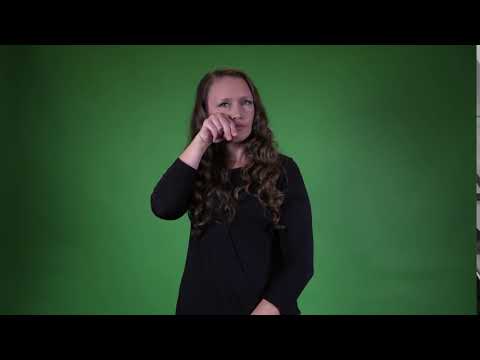
Definition: A waterfowl with a flat bill.
Sign for DUCK in ASL

Practice Activities:
Start by practicing the sign for DUCK in ASL on its own in front of a mirror. Focus on the handshape, which looks like the bill of a duck, and the placement near your mouth. Repeat the motion several times to build muscle memory and accuracy.
Once comfortable with the sign for DUCK in ASL by itself, add facial expressions that reflect curiosity or surprise to deepen your expressive skills. Ducks are sometimes seen in silly or playful settings—capture that feeling as you sign. Practice going from a neutral facial expression to an animated one while signing.
Use flashcards with pictures of different animals and identify the duck by signing it correctly. Try timing yourself to respond quickly when you see the duck image. This will help improve your speed and recall when using the sign in context.
Practice full sentences, such as “I see a duck,” “The duck is swimming,” or “The baby duck is cute.” Create at least five new sentences using the sign for DUCK in ASL with different descriptive elements like colors or locations. Record yourself signing the full sentence and review for clarity.
In a storytelling activity, describe a scene at a pond using multiple signs like water, duck, bird, and fish. Tell a short story using signs that include the sign for DUCK in ASL at least three times. This builds fluency and the ability to use the sign in fluid communication.
Pair with a partner and play a guessing game using only signs. One person describes or acts out an animal using signs, and the other guesses—for example, flap arms like wings and then sign for DUCK in ASL to indicate what animal is being portrayed. Switch roles to keep the practice interactive and engaging.
Cultural Context:
The sign for DUCK in ASL is more than just a translation of an English word. It reflects the strong visual nature of American Sign Language and how concepts from the natural world are expressed through hand shapes and movements. Ducks are familiar animals in both rural and urban settings, and their depiction in ASL often includes an iconic beak shape made with the fingers.
In American culture, ducks appear in children’s stories, cartoons, folk tales, and even as symbols in various idioms. Because of this, the sign for DUCK in ASL is taught early to many children, both hearing and Deaf, especially during storytime or while learning about animals. It becomes a foundation for communication about nature and wildlife.
The sign for DUCK in ASL is frequently used in early childhood classrooms and interpreted storybooks. Children’s songs featuring ducks often include this sign, making it one of the more familiar animal signs for young learners. It also appears in educational settings when discussing life cycles, habitats, or visits to a farm or zoo.
In Deaf culture, using signs like DUCK allows for full visual storytelling, which is an important tradition. Visual storytelling emphasizes expression, movement, and context, and animal signs are a key part of that. The sign for DUCK in ASL helps preserve cultural practices by adding richness and engagement to stories passed down through generations.
Community events like Deaf festivals or ASL story circles may include interactive stories with signs for animals like DUCK. These experiences showcase the connection between sign language and shared cultural experiences. Knowing the sign for DUCK in ASL helps foster inclusion and participation in these culturally rich moments.
Ducks in media are often portrayed as humorous or clever characters. When these characters are depicted in ASL, their personalities are supported through detailed classifiers and expressive signing. The sign for DUCK in ASL is often followed by descriptive signs that match each character’s role or temperament based on the story.
Many Deaf families use signs for animals like DUCK during nature walks or outings with children. This use offers real-world reinforcement of language and prompts questions about environments, behaviors, and sounds. The sign for DUCK in ASL connects families to a broader world and encourages vocabulary development in meaningful ways.
Since ASL is not a direct translation of English, it uses iconic movements and handshapes that reflect physical characteristics. The sign for DUCK in ASL mimics a duck’s beak, making it intuitive for new learners. This visual accuracy helps learners remember signs more
Extended Definition:
The sign for duck in ASL is a visual representation that mimics the shape of a duck’s bill. To make the sign for duck in ASL, bring your dominant hand up in front of your mouth and position your fingers and thumb together like a beak, then open and close your fingers once or twice. This motion captures the image of a duck quacking or pecking with its beak.
This sign is iconic and easy to remember, which makes it great for teaching young children and beginners. It often appears in children’s songs, storytime, or animal-themed lessons. Since ducks are common animals in books and videos for early learners, knowing the sign for duck in ASL can boost vocabulary quickly.
In daily conversation, the sign for duck in ASL is used when talking about animals, zoo visits, nature, or even during play. It is particularly helpful in educational settings where children might be learning animal names in both English and sign. Signing supports language development and can be a fun way for kids to connect gestures with sounds and words.
Additionally, the sign for duck in ASL is different from some other bird signs, so it helps to learn each separately. For example, bird or chicken have their own distinct signs, and learning the sign for duck in ASL reinforces the importance of handshapes in distinguishing meaning. Pay attention to the specific motion used to ensure clear communication.
When teaching or learning the sign for duck in ASL, integrating visual aids like illustrations or animal toys can make the process more engaging. Signing along with songs such as “Five Little Ducks” not only reinforces memory but also makes the sign more enjoyable to practice. Parents and educators find this sign particularly helpful when introducing animal categories.
The sign for duck in ASL is a part of a broader set of animal signs. Knowing this sign can lead naturally into learning related vocabulary such as water, pond, or swim. This context-rich approach encourages expanded communication and better understanding in both Deaf and hearing environments.
It’s important to model the sign for duck in ASL clearly and at eye level, especially for younger learners. Repetition through games, picture books, and interactive learning moments can help the sign become a permanent part of a user’s signing vocabulary.
For accurate signing, practicing in front of a mirror or with a signing partner can be helpful. Many learners benefit from watching short videos of native ASL users making the sign for duck in ASL to observe handshape and motion more precisely. Attending AS
Synonyms: Duck
Educational resources: Find related learning materials in our course bank!
Want more? Check out some of our popular learning activities on the homepage!
Need to look up a sign? Use our highly rated dictionary: https://aslinteractive.com/best-asl-dictionary/
Follow us on tiktok: https://www.tiktok.com/@aslinteractive. More social media links at the bottom of this page!
Long-tail Keywords: What is the sign for Duck in ASL, How do you sign Duck in ASL, ASL sign for Duck
Categories:
tags: Animals, Farm animals, Pets, Zoo animals, Language learning
Parameters
*Handshape*:
The handshape for the sign for DUCK in ASL involves forming the thumb and index finger into a beak-like shape. The rest of the fingers remain closed against the palm, mimicking the bill of a duck . This handshape is placed near the mouth to represent where a duck bill would be.
In the sign for DUCK in ASL, the thumb and index finger open and close together, similar to how a duck opens its beak. This motion is key to differentiating this sign from similar ones like bird.
*Palm Orientation*:
In the sign for DUCK in ASL, the palm orientation faces sideways with the dominant hand. The fingers and thumb come together near the mouth in a beak-like shape. The hand opens and closes slightly, mimicking the motion of a duck’s bill.
This palm orientation is important for accurately showing the handshape and movement in the sign for DUCK in ASL . It allows the visual representation to clearly resemble a duck’s beak, which is central to the meaning.
*Location*:
The sign for DUCK in ASL is located near the face, specifically around the mouth and nose area. One hand, typically the dominant hand, forms a closed “5” or flat handshape and begins with the fingertips touching the mouth or nose, mimicking the beak of a duck.
As the fingers close and open slightly, the movement resembles a duck’s bill snapping shut. This sign clearly associates the location with the beak area, emphasizing the animal’s defining feature. When learning the sign for DUCK in ASL, positioning your hand correctly on the face enhances clarity and recognition.
*Movement*:
To produce the sign for duck in ASL, form your dominant hand into a flattened “open G” handshape, with the thumb and index finger slightly apart. Position your hand in front of your mouth, with the palm facing to the side.
Close the thumb and index finger together as if mimicking a duck’s beak opening and closing. This opening and closing motion resembles a duck quacking and completes the sign for duck in ASL.
*Non-Manual Signals*:
When using the sign for duck in ASL, the facial expression is generally neutral or slightly playful, especially if the context involves animals or children . The eyebrows are relaxed, and the eyes often follow the motion of the dominant hand as it mimics a duck’s beak.
To enhance clarity, slight puffing of the cheeks can be used to suggest the animal’s form, depending on your storytelling context. Overall, non-manual signals stay subtle so they don’t overpower the handshape when presenting the sign for duck in ASL.
*Prosody, Dominant/Non-Dominant Hand*:
The sign for DUCK in ASL uses the dominant hand in a flat “O” handshape placed near the mouth, mimicking a duck’s bill. The fingers and thumb open and close together a few times, as if a duck is quacking.
The non-dominant hand is not used for this sign. The motion and position focus on representing the bill movement, making the sign for DUCK in ASL visually descriptive and intuitive.
Tips for Beginners:
When learning the sign for DUCK in ASL, beginners should first focus on mastering the handshape and movement to ensure the sign is clear. A common technique involves using the fingertips of the index and middle fingers pressing together against the thumb, mimicking a duck’s bill. This sign is made near your mouth, pivoting slightly like a duck opening and closing its bill.
One helpful tip is to practice the sign in front of a mirror so you can match the positioning with the facial area accurately. Since this sign occurs near the face, it’s important not to over-exaggerate or underdo the movement — a subtle but deliberate motion works best. Keep your fingers firm, not floppy, to maintain clear handshape and avoid confusion with similar signs.
A common mistake when learning the sign for DUCK in ASL is misplacing the location or mixing it up with the sign for bird. Unlike bird, which uses just the index finger and thumb, duck uses both the index and middle finger, so pay special attention to that. If you find yourself making the bird sign accidentally, slow down and review the correct duck handshape in front of the mirror.
Consistency in practice is key to becoming confident. Try incorporating the sign for DUCK in ASL into everyday activities like storytelling or when identifying animals. Associating it with visuals of a duck can also reinforce the concept.
Don’t forget to use facial expressions and natural pacing when learning the sign. ASL isn’t just about the hands — clear expressions make the communication more natural and engaging. Ask fluent signers or teachers for feedback to fine-tune your accuracy with the sign for DUCK in ASL and avoid forming bad habits early on.
Connections to Other topics:
The sign for DUCK in ASL connects closely to other animal-related signs, especially those using classifiers and iconic handshapes. It uses a flat hand that mimics the duck’s bill opening and closing, which is shared thematically with signs like BIRD and CHICKEN. These connections can help learners group signs based on similar semantic fields, making vocabulary acquisition more intuitive.
In terms of linguistic structure, the sign for DUCK in ASL can be part of compound signs or descriptive phrases. For instance, in storytelling or classroom settings, signs like BABY + DUCK or MOM + DUCK may be used to describe specific characters. These combinations help illustrate family groups among animals, especially when signing children’s books or animated stories in ASL.
The sign for DUCK in ASL also invites exploration of classifiers, particularly when indicating movement. A duck waddling or swimming can be shown using classifiers that capture spatial movement and orientation, enhancing a viewer’s understanding beyond a simple noun sign. This supports the narrative richness of ASL, which often relies on visual-spatial modifications.
Additionally, the placement of the DUCK sign near the mouth mirrors the location of other signs involving speech or eating, linking with concepts like EAT or NOISY. These spatial and thematic associations reinforce memory and fluency. Using such iconic signs alongside contrasting ones like GOOSE or SWAN can foster a better comprehension of subtle handshape distinctions and cultural nuances.
Learners can also compare the sign for DUCK in ASL with fingerspelled species-specific duck names like (FS)MALLARD or (FS)WOOD DUCK to distinguish between general and specific references. This helps build vocabulary precision and adaptability in advanced signing contexts such as biology lessons or wildlife interpretation. These broader applications deepen both vocabulary scope and sign production accuracy.
Summary:
The sign for DUCK in ASL uses one hand, typically the dominant hand, forming a flat “O” handshape—fingers and thumb touching. The hand is placed in front of the mouth, and the fingers and thumb open and close quickly, mimicking the beak of a duck quacking . It’s visually iconic and easy for learners to associate with the actual behavior of ducks.
This sign exemplifies what is known as an iconic sign in ASL, a sign that visually resembles its referent. The movement of the hand mimicking a beak connects the idea strongly with a duck, which makes the sign intuitive even for early language learners. Iconicity is a common feature in many animal signs across ASL.
The location for this sign is in front of the mouth, reinforcing the association with sound production and the animal itself. Keeping the movement near the face also reflects ASL’s spatial awareness and grammatical space. This use of location plays a crucial role in enhancing clarity and meaning.
In terms of grammatical structure, the sign for DUCK in ASL functions as a noun. It can be embedded in various sentence structures depending on whether you’re narrating a story, answering a question, or labeling a picture. Verbs associated with this noun, like SWIM or FLY, can be paired visually and spatially to show action.
The sign falls under the broader category of animal signs, many of which share a feature of mimicking real-life characteristics. When comparing the sign for DUCK in ASL to signs like BIRD or CHICKEN, similarities in handshape and location become evident. This suggests a semantic grouping that aligns with ASL’s efficient use of visual language.
The use of classifiers is another interesting layer when discussing DUCK. Once a duck is established in a discourse, a classifier handshape can represent it moving across space. For example, using a bent ‘V’ handshape to show waddling or swimming adds motion and narrative depth .
From a cultural angle, ducks are commonly found in children’s tales, fables, and songs like “Five Little Ducks,” making the sign for DUCK in ASL particularly relevant in early childhood education. Knowing the sign enriches communication with children who are either deaf or learning ASL at a young age.
In Deaf culture, storytelling is a cherished tradition. Animal characters are often central figures in ASL narratives. The sign for DUCK in ASL is therefore not only functional but also performative, adding drama and imagination to stories told through sign.
Linguistically, the sign is categorized under the noun category in ASL’s lexicon. Its production involves handshape, orientation, location, movement, and non-manual signals—though the latter is minimal in this particular sign. These linguistic parameters make the sign a good example for studying phonological aspects of ASL.
Applied linguistics can explore how this sign is acquired by children. It is one of the earlier animal signs learned due to its simplicity and iconicity. The visual and motor patterns involved make the sign neurologically rewarding and cognitively stimulating for language development.
The keyword phrase sign for DUCK in ASL is often searched by parents and educators who are introducing ASL vocabulary to young children. Its visual nature makes it easy to retain, and its usage in playful interactions forms part of a multimodal language learning approach that supports both linguistic and emotional growth .
There are variations in how people produce this sign depending on regional influences or generational styles. Some signers may make the beak motion at a slightly different tempo or angle. Despite slight modifications, the sign remains easily understood within communication contexts.
Educational initiatives that use ASL in early childhood, such as “baby sign language,” often include animals like DUCK among the first set of core signs. Because of its link to familiar songs and books, the sign becomes a bridge between visual language and spoken narrative traditions. It supports dual-language pathways in homes and classrooms.
The application of the sign for DUCK in ASL also extends to visual media. In ASL-interpreted video content, signed nursery rhymes, or children’s programming, accurate and expressive signing of animals like DUCK enhances accessibility. This demonstrates ASL’s role in creating inclusive media environments .
In multilingual deaf families, where members may use both ASL and another language, the sign often gets paired with spoken or fingerspelled labels. This promotes cross-modal understanding and supports bilingualism or even trilingualism. The sign remains a consistent visual anchor in such settings.
In storytelling performances at Deaf events or schools for the Deaf, animals have metaphorical meanings. Ducks, known for their waddling, can become humorous or exaggerated characters, and the sign for DUCK in ASL becomes a dynamic tool in the storyteller’s expressive repertoire.
From a semiotic perspective, the duck sign enriches the symbolic system of ASL where gestures go beyond representation and into meaning creation. As users engage
Want more? Check out some of our popular learning activities!
ASL Interactive Resources
ASLInteractive YouTube Channel
Follow us on tiktok: @aslinteractive.com
Follow us on Instagram: aslinteractive
Facebook page: aslinteractive
Facebook group: aslinteractive
LInkedIn: ASL Interactive LLC
Twitter: @ASL_interactive
*Some information on this page is AI-generated. AI can make mistakes. Please check the information.

Responses