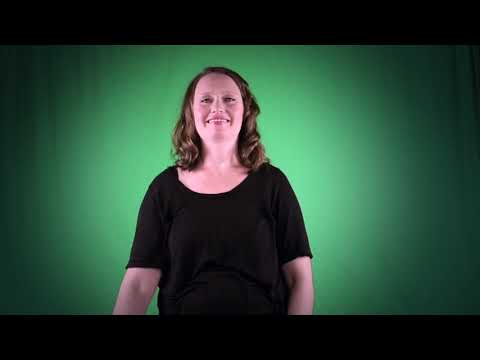
Definition: A popular donut chain.
Sign for DUNKIN DONUTS in ASL

Practice Activities:
Practice using the sign for DUNKIN DONUTS in ASL by signing it clearly while looking in a mirror. Focus on precision, especially since brand names may sometimes be fingerspelled. Repeat the sign slowly, then at a conversational pace to build fluency.
Use flashcards with food and drink brands, including the sign for DUNKIN DONUTS in ASL, to practice recognition and production. Mix in other coffee shops or dessert-related signs, and try sorting them into categories. Assign a timer to make the activity more engaging while improving speed.
Sign simple sentences about your coffee or breakfast preferences. For example: I LIKE DUNKIN DONUTS. MY FAVORITE DONUT CHOCOLATE. I GO DUNKIN DONUTS EVERY MORNING. This helps reinforce the sign in realistic statements and builds vocabulary around it.
Work with a partner to role-play going to a coffee shop. One person can be the cashier, and the other can be the customer ordering from DUNKIN DONUTS. Use related signs such as COFFEE, DONUT, HOT, ICED, or SUGAR. Switch roles and repeat to expand comfort in using the sign in a variety of contexts.
Create a short story involving a trip to DUNKIN DONUTS. Include what you ordered, who you were with, and what happened next. Sign the story to a peer or record yourself and watch the replay, checking for clarity and flow.
Go on a scavenger hunt around your neighborhood or online and collect signs and images related to DUNKIN DONUTS. Try to fingerspell the name while showing a product from the store, increasing real-world connection to the sign for DUNKIN DONUTS in ASL.
Finish your practice session by fingerspelling a list of donut flavors after introducing the store with the sign. This transition helps tie individual vocabulary to the brand for stronger retention. ☕️
Cultural Context:
The sign for Dunkin Donuts in ASL reflects both brand recognition and the deaf community’s innovative use of visual language. Since Dunkin Donuts is a popular American coffee and donut chain, deaf signers often use a blend of initialized signs and established food-related gestures to express this name clearly and efficiently in conversation.
Signing brand names like Dunkin Donuts in ASL can vary slightly based on region, exposure, and community norms. The sign for Dunkin Donuts in ASL typically incorporates a combination of the sign for coffee and/or donuts with either a fingerspelled component or a creative abbreviation. This allows the signer to stay visually accurate while referencing a specific brand.
In deaf culture, fingerspelling plays a crucial role in communication, especially when conveying brand names such as Dunkin Donuts. The sign for Dunkin Donuts in ASL often starts with fingerspelling D-U-N-K-I-N, and sometimes transitioning to a sign for donut symbolizing the round shape and action of eating one. Each signer may adopt a slightly unique variation, showing how ASL adapts to cultural and commercial influence.
When talking about the sign for Dunkin Donuts in ASL, it’s important to consider context. In everyday conversation, users may omit full fingerspelling after the brand is established. Once the location or name is known in a conversation, deaf people often switch to streamlined signs to improve communication speed.
Because Dunkin Donuts is such a recognizable franchise, the sign for Dunkin Donuts in ASL is becoming more standardized. However, creativity remains central in how people sign brand names. Some may integrate the letter D handshape with a signing motion for drinking coffee or holding a donut to illustrate the brand visually .
ASL is not a direct translation of English; it is its own complete language. The sign for Dunkin Donuts in ASL is an excellent example of how American Sign Language incorporates cultural references and product familiarity into its signs. Instead of rigid translations, ASL embraces functionality and iconic visuals.
Many deaf individuals in the United States recognize fast food chains like Dunkin Donuts, so the sign for Dunkin Donuts in ASL is useful during travel, casual dialogue, and group meetups. When placing group orders or referencing a coffee stop, clear and recognizable brand signs are essential. That’s why learning the appropriate sign for Dunkin Donuts in ASL can enhance communication in everyday life.
Since the sign for Dunkin
Extended Definition:
The sign for DUNKIN DONUTS in ASL is a brand-specific sign that has gained popularity within the Deaf community over time. Rather than spelling out the name letter by letter, many signers adopt a combination of initialized movements or culturally recognized gestures that resemble the brand’s logo or characteristics associated with it.
When people use the sign for DUNKIN DONUTS in ASL, they are usually referring to the coffee and donut chain known for its pink and orange color scheme and quick service. Some ASL users might fingerspell the name, especially in more formal or unfamiliar settings where brand-specific signs are not common. In casual conversations, however, a more fluid, visually symbolic gesture is often used, making communication easier and quicker.
The accepted sign for DUNKIN DONUTS in ASL can vary slightly depending on region or community context. Some signers may create a sign that mimics holding a coffee cup or taking a bite of a donut, while others incorporate the letter D handshape in a circular motion near the mouth. This flexibility in sign usage reflects how ASL continues to evolve and adapt to cultural trends and brand recognition.
Understanding how to use the sign for DUNKIN DONUTS in ASL also involves being aware of the brand’s presence within the culture. For example, when meeting someone at a DUNKIN DONUTS location, contextual clues often help clarify the meaning even if different sign variations are used. The key is to maintain visual clarity and ensure that your conversation partner understands which brand or place you are referencing.
Because the sign for DUNKIN DONUTS in ASL is not necessarily standardized across all regions, learners and signers are encouraged to pay attention to local usage. Consulting with native or fluent ASL users can help determine the most commonly accepted form in a particular area. It’s also helpful to observe how others in the Deaf community express brand names during real-time conversations.
Brand signs like the sign for DUNKIN DONUTS in ASL provide insight into how American Sign Language incorporates elements of popular culture. They often evolve from shared experience and visual metaphor rather than official linguistic rules. That makes them particularly dynamic and interesting from a language development perspective .
For those newly learning ASL, becoming familiar with brand signs boosts both comprehension and expressive fluency. Whether you are signing about your favorite coffee order or planning a meetup with friends, knowing how to use the sign for DUNKIN DONUTS in ASL allows
Synonyms: Dunkin Donuts, Dunkin’, Dunkin Doughnuts, Dunkin’ Coffee Shop, DD
Educational resources: Find related learning materials in our course bank!
Want more? Check out some of our popular learning activities on the homepage!
Need to look up a sign? Use our highly rated dictionary: https://aslinteractive.com/best-asl-dictionary/
Follow us on tiktok: https://www.tiktok.com/@aslinteractive. More social media links at the bottom of this page!
Long-tail Keywords: what is the sign for Dunkin Donuts in ASL, how do you sign Dunkin Donuts in ASL, ASL sign for Dunkin Donuts
Categories:
tags: brands, everyday activities, food and drink, facilities and other locations/needs, transportation
Parameters
*Handshape*:
The handshape for the sign for DUNKIN DONUTS in ASL involves fingerspelling both words using the manual alphabet. Start with a “D” handshape for “Dunkin,” followed by “U,” “N,” “K,” “I,” and “N.” Repeat finger articulation for “Donuts” using clear “D,” “O,” “N,” “U,” “T,” and “S” handshapes.
Since the sign for DUNKIN DONUTS in ASL is fingerspelled, each letter must be formed precisely with palm orientation forward and steady movement from one letter to the next. Make sure your hands are at shoulder level for visibility , and maintain a smooth flow through the entire sequence.
*Palm Orientation*:
The palm orientation for the sign for DUNKIN DONUTS in ASL typically faces outward when fingerspelling the brand name. The dominant hand forms each letter of “DUNKIN DONUTS” clearly, with the palm shifting slightly based on the natural movement between letters.
Since the sign for DUNKIN DONUTS in ASL is most commonly done through fingerspelling, keeping the palm upright and forward helps with clarity. A small bounce or slight pause between the two words may emphasize the separation between “DUNKIN” and “DONUTS” for better understanding.
*Location*:
The sign for DUNKIN DONUTS in ASL is typically performed in the neutral space directly in front of the torso, slightly above the waist and below the chest. This location allows for both hands to be visible and accessible, especially since the first part of the sign commonly involves fingerspelling “DUNKIN” before signing “DONUTS.”
Maintaining this location ensures clarity when performing the sign for DUNKIN DONUTS in ASL, especially in conversational settings or when used in storytelling. The hands remain comfortably within the signing space while keeping the motion clear and easy to read.
*Movement*:
The sign for DUNKIN DONUTS in ASL typically involves fingerspelling both words. Begin with your dominant hand in the fingerspelling position and spell out D-U-N-K-I-N, followed by a slight pause, then spell D-O-N-U-T-S. Keep your hand steady with clear, deliberate finger movements so the letters are easily understood.
Maintain a comfortable pace while fingerspelling the sign for DUNKIN DONUTS in ASL, ensuring each letter is distinct. You may choose to slightly arc your hand forward to emphasize the brand name or add a small smile to reflect the nature of the brand ☕.
*Non-Manual Signals*:
The facial expression for the sign for DUNKIN DONUTS in ASL typically remains neutral or slightly friendly, reflecting the casual and familiar context of the brand. Slight nodding or raised eyebrows may occur, especially when asking about or referencing the place conversationally ☕ .
Since the sign for DUNKIN DONUTS in ASL commonly involves fingerspelling, maintain eye contact and a focused gaze to support clarity and comprehension. Lips may mouth parts of the brand name lightly, though this is optional and varies by signer.
*Prosody, Dominant/Non-Dominant Hand*:
The sign for DUNKIN DONUTS in ASL often involves fingerspelling. Use your dominant hand to fingerspell D-U-N-K-I-N, followed by D-O-N-U-T-S, keeping both hands in a natural signing space near shoulder height. Your dominant hand performs the fingerspelling while your non-dominant hand remains neutral at your side.
Sometimes signers may use the sign for DONUTS after fingerspelling DUNKIN, mimicking a donut being eaten with a hand motion resembling a biting action. This variation of the sign for DUNKIN DONUTS in ASL helps convey the brand’s meaning more visually .
Tips for Beginners:
The sign for DUNKIN DONUTS in ASL is typically done using the fingerspelled names of each word. Since it is a brand name, you will fingerspell “DUNKIN” followed by “DONUTS.” Each word should be clearly spelled out with distinct handshapes and a steady rhythm to ensure the viewer can recognize each letter accurately. Make sure your dominant hand is used for fingerspelling and that your hand is in the sightline of your communication partner, just below your chin and slightly off-center for visibility.
For beginners learning the sign for DUNKIN DONUTS in ASL, it’s a great idea to practice fingerspelling daily to build muscle memory and fluency. Use online ASL fingerspelling games or flashcard drills to improve your speed while maintaining clarity. Don’t rush; accuracy is more important than speed, especially when spelling brand names that your conversation partner might not expect immediately.
Avoid blending the letters together too quickly—this is one of the most common mistakes learners make. Instead, give tiny pauses between words and make sure every letter is formed correctly. If you’re unsure how each letter looks from the viewer’s perspective, practice in front of a mirror or record yourself. This helps identify inconsistencies in shape or movement, which can be corrected over time with repetition and feedback.
Another tip when practicing the sign for DUNKIN DONUTS in ASL is to articulate each handshape crisply. Keep your fingers tensed rather than floppy, as mushy handshapes can be hard to understand. Visual clarity matters, especially in noisy or group settings where visual communication is key.
Try practicing with a friend or joining a local ASL group to use the sign for DUNKIN DONUTS in ASL in casual conversations. The more often you incorporate real-world vocabulary into your practice, the more confident you’ll become.
Connections to Other topics:
The sign for DUNKIN DONUTS in ASL is often fingerspelled as FS-DUNKIN FS-DONUTS, especially in formal or proper noun contexts. This approach connects directly to the broader practice of fingerspelling brand names when there is no standardized sign. Many companies, like STARBUCKS or AMAZON, follow this same convention, allowing signers to stay faithful to brand identity while still communicating clearly in ASL.
In casual or conversational settings, signers might incorporate the sign for DONUT by mimicking a motion that suggests a donut’s shape or biting into one. This is a good example of how the sign for DUNKIN DONUTS in ASL can become a compound or modified sign when paired with conceptual signs for food, coffee, or breakfast. For instance, people may sign COFFEE alongside DONUT to suggest going to Dunkin for breakfast.
The sign also relates closely to the category of food and drink locations in ASL, similar to places like MCDONALD’S or PIZZA HUT. These typically use a combination of fingerspelling and conceptual signs, reinforcing the strategy used for the sign for DUNKIN DONUTS in ASL. Understanding this approach helps learners recognize patterns in constructing place names that don’t have unique glossary signs.
The sign connects to the concept of brand awareness in ASL. Having consistent strategies, such as fingerspelling, helps native and non-native signers understand unfamiliar names. Additionally, pairing FS-DUNKIN FS-DONUTS with facial expressions and classifiers for drive-thru or ordering can expand a learner’s fluency.
Similar compound constructs include FS-KRISPY KREME combined with ENJOY or HOT-NOW to convey promotional ideas. This encourages learners to integrate vocabulary for time, temperature, and experience when using the sign for DUNKIN DONUTS in ASL in larger contexts, creating richer and more nuanced communication ☕ .
Summary:
The sign for DUNKIN DONUTS in ASL is not a standardized, universally agreed-upon sign across all regions. Instead, it varies based on usage, individual preference, and local signing communities. The most common approach is combining a depiction of “donut” with a fingerspelled representation of “DUNKIN.”
Because DUNKIN DONUTS is a brand name, many signers fingerspell the word “DUNKIN,” followed by either fingerspelling “DONUTS” or using a commonly understood sign for “donut.” The fingerspelled portion may be produced fluidly and quickly due to familiarity with the brand. Signers accustomed to the brand may omit “donuts” altogether because DUNKIN has grown into a well-known brand on its own.
The fingerspelling of D-U-N-K-I-N is usually done with the dominant hand and appears at shoulder or mid-chest level. Each letter flows into the next to preserve timing and pace, which reflects the signer’s fluency. When used in quick conversational settings, the fingerspelling is often abbreviated or compacted for ease.
For “donuts,” some signers mimic a circular motion with the index finger to represent the shape of a donut. This is often paired with a small thumb-to-index motion mimicking the act of biting or eating. This secondary movement conveys the edible and familiar nature of the food.
The hybrid use of fingerspelling and iconic signs illustrates the flexibility of ASL when referencing proprietary names. Since DUNKIN DONUTS is a trademarked company name, signers frequently revert to fingerspelling for accuracy and neutrality.
ASL absorbs cultural relevance through brands like DUNKIN DONUTS. Younger signers and those integrated into fast-food-heavy regions may lean toward a signer-specific shorthand sign that eventually becomes widespread. These signs often evolve through repetition and environment-based necessity, especially around urban Deaf communities.
In discussions about morning routines or order preferences, the sign for DUNKIN DONUTS in ASL appears in casual, lifestyle-related topics. It may be accompanied by related vocabulary like COFFEE, MUFFIN, or BREAKFAST. This expands the cultural context where brand signs become common within community dialogues, increasing their frequency and acceptance.
Grammatically, the sign for DUNKIN DONUTS in ASL functions as a proper noun. Placement in a sentence adheres to typical ASL grammar structure, appearing before or after related descriptive signs depending on information hierarchy. Signers may pause slightly before or after the brand to distinguish it clearly.
The connection between fingerspelled terms and iconic signs demonstrates how ASL blends the abstract with the visual. Through fingerspelling DUNKIN and signing “donuts,” users merge linguistic systems. The use of both alphabetic representation and symbolic imagery showcases ASL’s unique syntactic layer.
In applied linguistics, fingerspelling serves as a bridge between English lexical items and ASL expressions. This makes the sign for DUNKIN DONUTS in ASL a good case study in bilingual contact language phenomena. Particularly for brands, the choice to fingerspell marks ASL’s strategy for handling non-native inputs.
The evolution of the brand name from “DUNKIN DONUTS” to just “DUNKIN” also influences signing behavior. Depending on setting and generational familiarity, signers may opt to exclude “DONUTS” completely. This reflects real-time branding changes and how they affect signed communication.
Regional variations also affect how the sign for DUNKIN DONUTS in ASL is formed and understood. Some East Coast Deaf communities, where DUNKIN is deeply embedded in daily routines, may create localized shortcut signs. These signs develop organically and are not always universally understood outside that regional context.
Because fingerspelling requires alphabet fluency, younger or newer signers may default to depicting a donut only. This usually involves mimicking the circular shape or using mouth movements. These natural descriptive modifications help bridge gaps in vocabulary knowledge and serve as visual cues for the receiver.
Fingerspelling DUNKIN and signing donut showcases ASL’s openness to lexical borrowing. This process shows ASL’s capacity for linguistic flexibility, where visual language accommodates branded content. It supports the prominence of commercial culture in shaping modern sign use.
The sign for DUNKIN DONUTS in ASL commonly appears in vlogs, lifestyle content, and conversations around travel or food. Deaf influencers may sign their coffee orders or make brand comparisons using DUNKIN signs. These interactions subtly reinforce brand recognition and support ongoing language innovation.
Another notable feature is how classifiers may be integrated to describe the physical appearance or placement of DUNKIN DONUTS items. For example, using a flat-hand classifier to represent boxes, cups, trays, or food containers can sit alongside the main sign. This deepens the sign’s descriptive potential and enables vivid storytelling in ASL.
ASL provides space for
Want more? Check out some of our popular learning activities!
ASL Interactive Resources
ASLInteractive YouTube Channel
Follow us on tiktok: @aslinteractive.com
Follow us on Instagram: aslinteractive
Facebook page: aslinteractive
Facebook group: aslinteractive
LInkedIn: ASL Interactive LLC
Twitter: @ASL_interactive
*Some information on this page is AI-generated. AI can make mistakes. Please check the information.

Responses