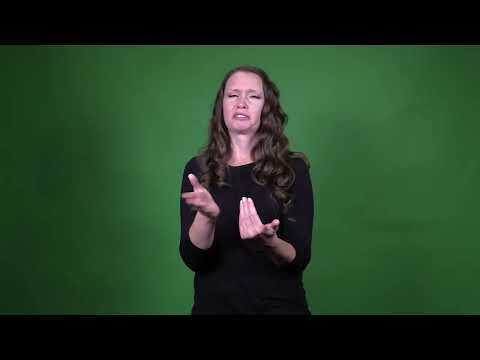
Definition: A place easy to park.
Sign for EASY PARK in ASL

Practice Activities:
To practice the sign for EASY PARK in ASL, start by isolating each part of the phrase. First, practice the sign for “easy” by brushing the dominant hand lightly over the back of the non-dominant hand. Repeat this motion slowly, then pick up speed to build fluency. Next, work on “park,” which typically includes a classifier or depiction of a car maneuvering into a space—use a CL:3 handshape and simulate the parking motion. Repeat this movement until it feels smooth and natural.
Practice transitioning from “easy” to “park” in one fluid sequence. Sign the two words together while maintaining clarity and natural pacing. Use a mirror to observe your hand shapes and facial expressions. Record yourself signing the full phrase and analyze your accuracy and flow. Try signing the phrase at varying speeds to build confidence in different conversation settings.
Use the sign for EASY PARK in ASL in short sentences. For example, sign “I want to find an easy park,” or “That spot is easy park.” Create at least five of your own short sentences using the sign. Sign them alone, then with a partner, trading roles as signer and interpreter. This builds both expressive and receptive skills.
Try storytelling that includes the sign for EASY PARK in ASL. Narrate a situation like arriving at the mall or stadium and finding a convenient parking space. Include emotions—relief, happiness, or surprise—that match your story and adjust your facial expressions accordingly.
For partner activities, set up an imaginary driving scenario. One partner acts as the driver describing the parking challenge, while the other responds using the sign for EASY PARK in ASL to suggest possible solutions. This helps contextualize the sign in real interactions and improves comfort in everyday use.
Cultural Context:
In American Sign Language, location-based signs like the sign for EASY PARK in ASL often reflect regional influences, community experiences, and common landmarks. When Deaf individuals refer to a place like Easy Park, especially in areas where it’s a well-known parking facility or location, they use specific classifiers and signs that give both meaning and context.
The sign for EASY PARK in ASL may vary slightly depending on where you’re located and whether you’re referencing a reserved parking area, covered structure, or simply an easy-to-use parking service. Community experience plays a role in shaping these signs. The smoothness or convenience indicated by “easy” is typically reflected in a sign that suggests simplicity or lack of difficulty.
In cultural terms, parking signs often involve directional movement, space classifiers, and the context around vehicles. In urban Deaf environments, the sign for EASY PARK in ASL might be more widely used in conversation when discussing accessible transportation, meeting spots, or well-known city landmarks. It becomes part of the social map people use every day.
Some Deaf community members who frequently attend events or meetups downtown will likely incorporate the sign for EASY PARK in ASL when giving directions or arranging a time to meet. This makes the sign not just descriptive of parking but also functional in everyday navigation and planning. Its cultural value grows from shared use.
Naming specific parking areas in ASL isn’t just about spelling; it’s about creating space through handshape and movement that conveys the concept clearly. The sign for EASY PARK in ASL uses conceptual accuracy to reflect convenience and familiarity, which are key to communicating effectively in real-world settings. This also makes it useful in educational and interpreting contexts.
The Deaf community often adapts signs based on need. If something becomes a routine part of life, like using a well-known parking structure, a consistent and shorthand sign like the one for EASY PARK in ASL forms naturally over time. This helps preserve linguistic efficiency and builds a lexicon tied to urban living.
Signs such as the one for EASY PARK in ASL also reflect how Deaf people engage with their environment. Rather than just translating English terms, ASL incorporates visual and cultural dimensions, showing how space and services relate to the user. In this way, parking isn’t just a utility, it’s part of how individuals interact with and orient themselves in the community.
Learning the sign for EASY PARK in ASL helps interpreters, students, and members of the hearing world connect more deeply with ASL users. It opens up access to conversations about city
Extended Definition:
The sign for EASY PARK in ASL is a combination of signs that describe the action and concept clearly and visually. ASL, or American Sign Language, often uses descriptive and spatial signs to express ideas, and this phrase is no exception. When you sign EASY PARK in ASL, you are usually depicting the simplicity and motion involved in parking a car easily.
To sign EASY, the dominant hand brushes over the back of the non-dominant hand in a quick and light motion. This suggests something smooth or done with little effort. It’s a sign often used to describe actions that are not difficult or require little resistance. When pairing it with other signs, it emphasizes the effortless nature of the action being described.
The word PARK in ASL typically relates to placing a car in a designated space. This is often signed with handshapes representing a vehicle moving into position. Some signers use a classifier symbol for a car and show it moving into a small spot between two other imaginary cars. This puts the emphasis on the spatial relation, which ASL does exceptionally well.
When you use the sign for EASY PARK in ASL together, the meaning becomes clear: it’s about placing a vehicle into a parking space without struggle. It is a common phrase when giving directions or explaining how convenient a location is. It’s especially helpful when communicating in situations like public transportation parking, parking garages, or street-side accessibility.
Because ASL relies heavily on facial expressions and body language, using a relaxed face or a slight smile while signing EASY PARK in ASL reinforces that the process is stress-free. If you were to sign the same phrase with a tense face or stressed posture, the meaning might change slightly—implying sarcasm or that the task is only supposedly easy.
This phrase can be useful when describing a beneficial spot in a city or a place where someone is looking for convenience, such as in travel vlogs or real estate descriptions. Deaf individuals often use signs like EASY PARK when asking about or reviewing locations. For businesses, understanding and using this sign can enhance accessibility and customer communication.
In ASL courses or interpreter training, phrases like sign for EASY PARK in ASL are frequently discussed for their practical application. They combine both vocabulary and spatial awareness, making them great examples of ASL’s structure and flow. This is not just a translation of English words but also carries the essence of visual communication distinctive to the Deaf community.
If you explore variations of this sign, you may see slight differences depending on the
Synonyms:
Educational resources: Find related learning materials in our course bank!
Want more? Check out some of our popular learning activities on the homepage!
Need to look up a sign? Use our highly rated dictionary: https://aslinteractive.com/best-asl-dictionary/
Follow us on tiktok: https://www.tiktok.com/@aslinteractive. More social media links at the bottom of this page!
Long-tail Keywords: what is the sign for easy park in ASL, how do you sign easy park in ASL, easy park in sign language
Categories:
tags: Driving rules, transportation, activities, describing residence, facilities and other locations/needs
Parameters
*Handshape*:
The handshape for the sign for EASY PARK in ASL uses both hands. For “easy,” the dominant hand forms a bent-5 shape and brushes lightly across the upturned palm of the non-dominant hand, which is also in a flat-5 handshape . This motion is soft and suggests that the task is effortless.
For “park,” you use a V-handshape with the dominant hand, resembling a small car, and place it between the index and middle fingers of the non-dominant flat hand, representing a parking space . Combining these handshapes clearly reflects the meaning of the sign for EASY PARK in ASL.
*Palm Orientation*:
The palm orientation for the sign for EASY PARK in ASL involves two distinct positions. For EASY, the dominant hand brushes over the fingertips of the non-dominant hand with both palms facing upward. The motion is light and quick, emphasizing ease.
For PARK, the dominant hand, shaped like a classifier for a car (often a “3” handshape), is placed palm-down and moves onto the palm-up non-dominant hand, mimicking a parking motion. This careful placement aids in conveying the concept clearly within the sign for EASY PARK in ASL .
*Location*:
The sign for EASY PARK in ASL is made primarily in the neutral space around the chest area. For “easy,” the dominant hand brushes lightly over the back of the non-dominant hand, which is held palm up in front of the torso. This motion happens in front of the upper stomach or lower chest.
For “park,” the sign is typically completed near the middle of the torso. You either fingerspell “PARK” or use a classifier of a car moving into a space, often in front of the body. The Sign for EASY PARK in ASL stays centralized and visible in neutral signing space to ensure clarity.
*Movement*:
To sign the phrase sign for EASY PARK in ASL, begin with the sign for “easy” by brushing the dominant hand’s fingertips lightly over the back of the non-dominant hand in a gentle, upward flicking motion. This movement mimics an effortless or smooth action.
Then transition to “park” by shaping the non-dominant hand into a flat palm, representing the ground. Take the dominant hand in a “3” handshape (symbolizing a car) and move it down to tap or rest onto the palm as if a car is pulling into a parking spot . The combination flows smoothly to express the sign for EASY PARK in ASL.
*Non-Manual Signals*:
When demonstrating the sign for EASY PARK in ASL, the facial expression should appear effortless and relaxed . Slightly raised eyebrows and a light head nod may accompany EASY to show simplicity, while PARK can include a casual, content expression to reflect ease or convenience.
Consistent eye contact and a smooth, fluid motion between the two sign components reinforce the meaning. Avoid tension in the face or exaggerated movements to maintain the clarity of the sign for EASY PARK in ASL.
*Prosody, Dominant/Non-Dominant Hand*:
The dominant hand for the sign for EASY PARK in ASL forms a flat hand that brushes lightly over the back of the non-dominant flat hand, indicating “easy.” Then, to show “park,” the dominant hand mimics a small car (often a bent V or 3 handshape) moving into position on the flat palm of the non-dominant hand, symbolizing a parking space . The sign for EASY PARK in ASL uses smooth, controlled movements to convey the concept.
Tips for Beginners:
When learning the sign for EASY PARK in ASL, begin by practicing each part of the phrase individually. The sign for “EASY” typically involves brushing the fingertips of the dominant hand upward across the back of the non-dominant hand, which lies palm-up. Be sure the movement is light and smooth—avoid pushing or slapping, as that can change the intended meaning.
“PARK” is often fingerspelled, especially when it refers to a general location and not the act of parking a vehicle. When fingerspelling, remember to keep your hand steady, your fingers clearly formed, and your palm orientation consistent. Moving too fast or inconsistent finger formation can cause confusion. Practice in front of a mirror or record yourself to watch for clarity and speed.
Linking the two parts of the sign for EASY PARK in ASL involves smooth transitions. Avoid pausing too long between each sign, which can break the flow. Once you are confident with each sign on its own, practice putting them together with natural rhythm and facial expression. Facial grammar plays a major role in ASL fluency, and reinforcing that it’s an easy place to park can be communicated with raised eyebrows or a slight head nod.
One common beginner mistake is overemphasizing “EASY” with an exaggerated brushing motion. Keep it controlled and moderate. Similarly, when fingerspelling “PARK”, some learners may rush or incorrectly form letters. Slow down at first, then increase speed gradually while keeping the hand steady.
Repetition and consistent feedback are key to mastering the sign for EASY PARK in ASL. Practice with native signers when possible or join ASL practice groups online. The more you sign in context, the better you’ll retain accuracy and natural flow ✋
Connections to Other topics:
The sign for EASY PARK in ASL connects with several foundational ASL concepts, particularly compound signing and classifiers. EASY is often signed using a brushing motion on the back of a relaxed hand, symbolizing a lack of difficulty. PARK involves more spatial awareness, often incorporating classifiers like CL:3 to represent a vehicle, combined with placement to indicate putting the car somewhere.
This sign combination is a great example of creating compound meanings from two individual signs. EASY PARK can be adjusted using directional or spatial modifiers, such as showing a car sliding smoothly into a space, which enhances understanding without adding more vocabulary. This builds on the ASL principle of using visual grammar, where meaning is layered visually rather than linearly.
Students learning the sign for EASY PARK in ASL will benefit from understanding related context-rich phrases like HARD PARK, where the sign for HARD replaces EASY to show struggle or difficulty. This contrast builds semantic depth and aids in expressing more nuanced situations. It also demonstrates how substituting one part of a compound can drastically alter its meaning.
This phrase also closely relates to signs like PARKING LOT and parallel signs such as EASY RIDE, where changes in hand movement or area of signing indicate a shift in location or context. These connected signs help learners move beyond vocabulary memorization and toward functional language use.
Understanding the sign for EASY PARK in ASL also opens up connections to casual conversation topics like travel, transportation, and city navigation, which are common in both interpreted environments and everyday conversation. Learners can apply similar structure when expressing ease or difficulty with other actions, such as EASY WALK, EASY DRIVE, or EASY FIND, encouraging greater fluency and intuitive language building in ASL.
Summary:
The sign for EASY PARK in ASL represents a concept that combines routine spatial organization with ease or lack of difficulty. Each component of the phrase is expressed using specific signs tailored to reflect both meaning and grammatical function in American Sign Language. When interpreting this term, it’s crucial to break it down into the signs for “easy” and “park,” then combine them fluidly.
To begin with, the sign for “easy” conveys a sense of something not difficult or smooth to accomplish. The dominant hand brushes quickly and lightly over the non-dominant upward palm. This repeated motion suggests a carefree, gentle interaction, reinforcing the concept of simplicity.
“Park” can be spatially represented in ASL depending on context, though it often requires adaptation. If referring to parking a car, the classifier handshape representing a vehicle is commonly placed into a space to represent the act of fitting or stopping in a designated slot. This is metaphorically rich, capturing not just the literal action of driving into a spot but also an understanding of how space functions in daily life.
To express the full concept of the sign for EASY PARK in ASL, the signer first establishes the notion of ease. Then, with the use of classifiers or referential space, the idea of placing or parking becomes visually distinct. These paired motions together suggest that the area offers simple or convenient parking.
This concept touches cultural practices in Deaf communities particularly around accessibility. Easy parking is essential for inclusion, especially at community events, social gatherings, and other in-person spaces where Deaf ASL users come together. The importance of accessible environments transcends design; it is part of language representation.
In ASL grammar, adjectives like “easy” come before the noun they modify. That structure reflects both linguistic economy and visual logic in ASL syntax. The sign for EASY PARK in ASL thus faithfully follows standard ordering, respecting the visual-spatial nature of the language.
One interesting aspect of combining these two concepts in ASL is the emotional tone carried through the sign for “easy.” It is not simply about function but evokes a positive sentiment. That enhances the phrase, especially in marketing or descriptive uses, where a location is promoted as user-friendly.
Applied linguistics reveals how this sign functions across different contexts. For example, in interpreting or educational settings, the sign for EASY PARK in ASL might be used to describe an amenity or service. Precision becomes key, as users must distinguish between the idea of a park (green area) and parking (vehicle space).
The sign’s meaning also depends on orientation and space establishment. A signer may establish a mental map of an area during discourse and place the “parking” classifier in that imagined space. Doing so supports the narrative clarity and allows engagement with a viewer’s spatial reasoning.
There are other signs related to this term that help expand its interpretation. “Convenient,” “accessible,” “nearby,” and “available” could be used alongside or in place of EASY. These bring flexibility depending on the context and deepen language variety.
The classifier used for vehicles is an essential linguistic feature that enriches ASL’s visual clarity. Typically an upright “3” or “bent V” handshape may signify a car. Placement into a slot or space mimics the act of parking and helps conceptualize EASY PARK in ASL more fluidly.
Culturally, the Deaf community values strong visual-spatial referencing. When conveying the sign for EASY PARK in ASL, the signer shows not only ease but also understanding of spatial design and ease of movement. It becomes a conversation about spatial ownership and freedom of accessibility.
From a linguistic perspective, the sign reveals ASL’s reliance on metaphor and physical space. Unlike spoken English, where words sit in a line, ASL offers multi-layered meaning through movement, directionality, and handshape. This is fully demonstrated in signs like EASY PARK.
Understanding the sign for EASY PARK in ASL also demands knowledge of regional variations. Some communities may adopt different classifiers or favor fingerspelled alternatives, especially if clarity is a priority. These shifts reflect both local identity and practical adaptation.
The flexibility of the term can serve within narratives, instructions, or practical descriptions. For instance, a Deaf person giving directions may emphasize the ease of parking to reduce stress. This assists in mental mapping and improves the overall communicative experience.
Moreover, this sign is useful in advertising and real estate through Deaf channels. Promoting a residential or commercial location with the description of EASY PARK in ASL can be a persuasive detail. It shows attentiveness to convenience and accessibility, which are deeply valued.
Real-world applications of this phrase extend to event planning, accessibility studies, and location marketing in Deaf-centric spaces. Each usage centers the Deaf experience by recognizing the need for ease in mobility. That directly connects to empowerment and independence.
Syntactically, classifiers complement signs and carry enormous semantic weight. In the sign for EASY PARK in ASL, classifiers do most of the expressive labor around the
Want more? Check out some of our popular learning activities!
ASL Interactive Resources
ASLInteractive YouTube Channel
Follow us on tiktok: @aslinteractive.com
Follow us on Instagram: aslinteractive
Facebook page: aslinteractive
Facebook group: aslinteractive
LInkedIn: ASL Interactive LLC
Twitter: @ASL_interactive
*Some information on this page is AI-generated. AI can make mistakes. Please check the information.

Responses