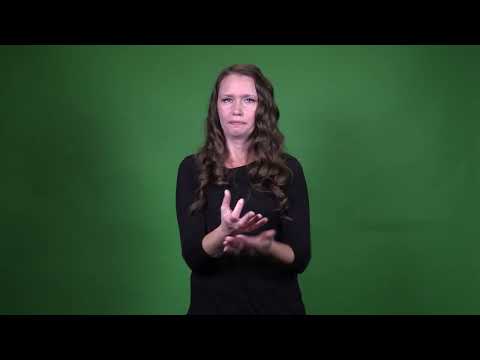
Sign for FACT in ASL | ASL Dictionary

Definition: A thing that is known or proved to be true.

Sign for FACT in ASL

YouTube player

Practice Activities:

To build confidence using the sign for FACT in ASL, learners can begin by practicing the sign repeatedly in isolation, focusing on accurate handshape and movement. Use a mirror to monitor hand placement and facial expressions, ensuring each repetition is clear and consistent. Try signing at different speeds to build flexibility while maintaining precision.

Next, incorporate the sign for FACT in ASL into simple sentences such as “That is a fact” or “Tell me the fact.” Signing in context helps develop fluency and provides a deeper understanding of how the word functions in real conversations. Using this approach, learners can create five to ten personal sentences related to real events or information they know to be true.

Challenge yourself with storytelling prompts. For example, tell a short story about a historical event using ASL, and include the sign for FACT in ASL when presenting a key truth or verified piece of information. This approach builds both vocabulary and narrative skills. You can also summarize a news article and sign which parts are facts versus opinions.

A fun partner activity is the “Fact or Fiction” game. One person signs a statement using factual ASL content, including the sign for FACT, while the partner guesses if it’s true. Then switch roles. This encourages critical thinking while reinforcing the target vocabulary.

Use flashcards showing concepts like history, science, or personal biography, and practice forming ASL sentences that use the sign for FACT to describe true details. For example: “The earth is round — fact.” Use emojis like to visually support learning in written practice prompts.

Finally, incorporate daily phrases involving the sign for FACT in ASL into conversations with classmates or language partners. The more you use the sign naturally, the more automatic your recall and fluency will become.

Cultural Context:

In American Sign Language (ASL), communication goes beyond just translating English words. Understanding the sign for FACT in ASL involves not only the handshape and motion, but also cultural awareness. ASL is a visual language built on context, body language, and shared experiences within the Deaf community.

The sign for FACT in ASL often reflects the concept of truth, certainty, or something known to be real within a specific context. In Deaf culture, being direct and factual is respected and often expected in communication. This is because ASL values clear and honest exchanges over vague or ambiguous statements.

The use of the sign for FACT in ASL may vary slightly depending on region, age, or individual style, but it consistently holds a tone of reliability and trust. It is common in educational settings, storytelling, debates, and even casual conversation. Since ASL is not a word-for-word match of spoken English, the intention behind the sign carries more weight than a literal translation.

Deaf culture places importance on shared knowledge and experiences. Presenting facts visually helps people in the community understand and connect through mutual truths. This enhances the role of the sign for FACT in ASL as a tool that promotes trust and understanding between signers.

When used in a conversation, the ASL sign for FACT serves as a key marker to distinguish between opinion and objective reality. It can be used for both academic and everyday topics, underlining that something is based on evidence or known information. This adds weight to a statement and signals a shift from personal viewpoint to verifiable information.

In Deaf culture, clarity and specificity are valued over vague generalities. Using the correct sign, such as the sign for FACT in ASL, signals that a signer is grounded in truth and aims to be understood fully. Visual communication depends heavily on intention, so accurate signing supports clear, respected dialogue.

ASL storytelling, which is a vital cultural tradition, often depends on factual accuracy when relaying historical or community events. Knowing how to properly use the sign for FACT in ASL ensures that learners of ASL can follow stories and teachings that hold cultural importance to the Deaf community. This enriches the experience for both Deaf and hearing signers.

The sign for FACT in ASL can also be seen in formatted media like ASL vlogs, education content, community meetings, and advocacy work. In these settings, clarifying what is a fact versus an opinion often helps advance understanding and progress. This makes the sign a frequent and meaningful part

Extended Definition:

The sign for fact in ASL is a useful concept when discussing truths, information, or evidence. In American Sign Language, conveying accuracy or something verifiable often uses a specific gesture that reflects the idea of a fact clearly and consistently. Learning how to correctly use the sign for fact in ASL helps improve conversations related to truth, opinions, and reliable statements.

To sign fact in ASL, the dominant hand typically forms the handshape F and moves forward from the chin area. The movement and placement can be slightly adjusted depending on the sentence structure or emphasis. Facial expressions also play a key role when using the sign, helping to reinforce the meaning and tone of the sentence.

The sign for fact in ASL can function in a variety of sentence types, from academic discussions to casual conversations. For example, someone might use it while signing a statement like, That is a fact, to stress accuracy. It often appears in contrast with opinion or assumption, offering a way to distinguish between what is known and what is believed.

Context matters when using the sign for fact in ASL. It can show up in classroom settings, debates, news discussions, or storytelling. ASL users may pair it with signs like true, proof, or evidence when explaining a situation thoroughly or supporting a claim.

Non-manual signals such as head nodding or confirming facial expressions are often used in combination with the sign for fact in ASL. These signals help deliver the intended message clearly and match the natural flow of ASL grammar. Without these cues, the sign might lose some of its emphasis or be misinterpreted.

It’s helpful to see the sign for fact in ASL used in conversations or phrases to understand how it’s integrated into everyday language. Watching native signers or ASL instructors demonstrate the sign in context can enhance comprehension. Practice with deaf community members or sign language partners can also make a big difference in accuracy and confidence.

As learners develop their ASL vocabulary, incorporating essential academic and factual terms like fact can greatly expand communication skills. It becomes easier to share logical points, provide detailed explanations, and participate in critical dialogue. Mastery of this sign allows for better engagement in analytical discussions or even trivia games where truth matters.

The sign for fact in ASL may slightly vary by region or be influenced by personal or community signing styles. Seeing variations is normal in any visual language. Whether you are a beginner or fluent, staying open to these differences helps build a deeper appreciation and understanding of ASL as a living language

Synonyms: truth, reality, certainty, actuality, verity

Educational resources: Find related learning materials in our course bank!

Want more? Check out some of our popular learning activities on the homepage!

Need to look up a sign? Use our highly rated dictionary: https://aslinteractive.com/best-asl-dictionary/

Follow us on tiktok: https://www.tiktok.com/@aslinteractive. More social media links at the bottom of this page!

Long-tail Keywords: What is the sign for Fact in ASL, How do you sign Fact in American Sign Language, Fact in ASL

Categories:

tags: Fact in American Sign Language, ASL sign for Fact, how to sign Fact in ASL, Fact meaning in ASL, learn Fact in ASL

Parameters

*Handshape*:

The handshape for the sign for FACT in ASL typically uses an F-handshape, where the index finger and thumb touch to form a small circle, while the remaining three fingers are extended upward. The hand starts near the face or chest and moves forward or directly outward, as if presenting information clearly and firmly.

This F-handshape visually reinforces the meaning of the sign for FACT in ASL . It emphasizes clarity and truth, often resembling a gesture of pointing out or stating a reliable point.

*Palm Orientation*:

The palm orientation for the sign for FACT in ASL typically faces inward, toward the signer. The dominant hand forms an “F” handshape and moves straight forward from the mouth or chest area, with the palm remaining inward throughout the motion.

This movement emphasizes the delivery or presentation of verified information. When learning the sign for FACT in ASL, maintaining the correct palm orientation ensures clear and accurate communication .

*Location*:

The sign for FACT in ASL is located in the area directly in front of the torso, near chest level. This central space allows for clear visibility and is a common area for signs conveying concepts related to ideas, truth, and information.

The positioning of the hand during the sign for FACT in ASL remains close to the body but not touching, maintaining clarity for the viewer . This neutral space supports easy transitions to and from other signs in a sentence.

*Movement*:

The sign for FACT in ASL uses the dominant hand in an “F” handshape. Start with the “F” hand hovering in front of the face, palm facing in toward the body.

From there, move the “F” hand straight forward and slightly down toward the center of the chest. The movement is deliberate and ends with the fingertips making contact near the upper chest. The sign for FACT in ASL is quick yet intentional, reflecting the truth or verification behind a statement or concept.

*Non-Manual Signals*:

When using the sign for FACT in ASL, your facial expression should appear confident and assertive, as if presenting verified or unquestionable information. Slight eyebrow lift and a firm head nod can emphasize the certainty behind the concept. This clarifies that the sign for FACT in ASL is not just a casual statement, but something grounded in truth. Proper non-manual signals help stress the factual tone accurately.

*Prosody, Dominant/Non-Dominant Hand*:

The sign for FACT in ASL uses the dominant hand in an “F” handshape. The dominant hand moves forward to touch the center of the non-dominant flat palm, which faces inward toward the body.

The non-dominant hand stays stationary while the dominant hand makes a decisive motion, symbolizing something definite or true. The sign for FACT in ASL is typically performed near the center of the chest to emphasize importance or certainty.

Tips for Beginners:

When learning the sign for FACT in ASL, it’s important to focus on precise handshape and location. This sign typically uses the “F” handshape and moves directly towards the chest area, indicating the truth or accuracy of information. Beginners should ensure the hand contact is deliberate and not floating near the chest, as unclear movement can cause confusion.

Try practicing the sign in front of a mirror to monitor your handshape and the direction of movement. The fingers of the “F” hand should stay firm and rounded, not collapsing or spreading apart. The movement should be short, deliberate, and aimed at the center of your chest, not the shoulder or arm.

A common mistake with the sign for FACT in ASL is soft or inaccurate hand placement. Sloppy handshape or weak movement can make the sign unclear or even resemble other signs. Another tip is to maintain good posture while signing—upright body position allows the hand to move cleanly and lets viewers read your sign accurately.

When using this sign in a sentence, remember that facial expressions matter. Since FACT often implies certainty, pairing it with a confident expression helps reinforce the meaning. Avoid overly casual expressions that might undermine the clarity of the communication.

It’s also helpful to watch native signers use the sign for FACT in ASL in real context—look for it in ASL narratives, tutorials, or even social media clips. Seeing how the sign fits into fluent signing can help you understand pacing and natural use.

Lastly, repetition is key. Don’t just drill the sign on its own—practice using it in various statements or questions. This not only builds muscle memory but also helps you connect the motion with real communication. Be patient, and your accuracy with the sign for FACT in ASL will improve steadily.

sign for FACT in ASL, fact in sign language, ASL sign for true fact, how to sign fact in ASL, sign language fact meaning, sign for true in ASL, learn ASL facts, sign for actual fact in ASL

Connections to Other topics:

The sign for FACT in ASL connects closely with signs that express truth, reality, and accuracy. It is related to signs like TRUE, REAL, and INFORMATION because these all convey concepts grounded in verifiable or objective knowledge. The directional movement in the sign for FACT can reflect the delivery of information, showing how ASL often layers meaning through spatial and physical expression.

This sign is commonly incorporated into compound or context-based signs such as FACT-BASED or FACT-CHECK. These concepts are becoming increasingly relevant in media and discourse, where verifying sources and truthfulness is key. In context, ASL users may blend the sign for FACT with others like CORRECT or EVIDENCE to communicate more specific meanings like citing factual support or aligning with the truth.

The sign for FACT in ASL also ties into broader themes in ASL grammar, such as topic-comment structure, where the factual basis of a statement might be established at the start of a sentence. It’s useful for constructing persuasive or declarative expressions, especially in debates or explanations. For instance, a Deaf student presenting an argument may begin with the sign for FACT to emphasize that what follows is supported by evidence.

Learners may also notice the visual resemblance between the sign for FACT and other signs involving directed motion toward the body, like EXPLAIN or DETAIL. This similarity helps reinforce the idea that facts are things presented or offered in communication. It supports semantic groupings in ASL, where signs that share meaning clusters often share motion or handshape elements.

In ASL storytelling and academic settings, the sign for FACT helps distinguish between opinion and verified information. It plays an educational role in classrooms, legal settings, and news interpretation. Understanding the nuance of the sign for FACT in ASL strengthens clarity and credibility in any conversation, especially those requiring evidence or validation.

Summary:

The sign for FACT in ASL is typically made by using the dominant hand in the F handshape, moving from near the mouth or chest outward in a small, deliberate motion, touching or moving toward the flat non-dominant hand, or just a neutral space for emphasis. The movement is confident and direct, reflecting the certainty and objectivity of the word.

This sign visually conveys the notion of an idea or truth being presented clearly and undeniably. The direction and clarity of the movement symbolize the delivery of truth or reality, which aligns with the meaning of the word “fact” in English.

The sign for FACT in ASL also overlaps in meaning with signs like true, real, and prove. These signs share movements and handshape patterns that stem from the concept of truthfulness and credibility within ASL linguistics.

In ASL, the concept of fact holds special significance due to the language’s spatial and conceptual depth. ASL signs often embody abstract ideas through concrete visual cues, and a fact—being objective and indisputable—is a valuable part of expressing assertiveness or evidence.

Culturally, Deaf communities often emphasize truth and openness in communication. The sign for FACT in ASL signifies not only factual accuracy but also cultural respect for directness and transparency.

This particular sign also intersects with educational and legal contexts. It is used in classrooms, debates, and discussions involving verifiable information, and also frequently appears in legal settings when delineating between fact and opinion.

The facial expression accompanying the sign for FACT in ASL is typically neutral or firm, which aligns with the objective nature of delivering accurate information. In contrast to opinion or belief, the sign for FACT in ASL carries an unambiguous tone.

Sometimes, signers might choose to fingerspell the English word “fact” if they are emphasizing a specific terminology, such as in academic discourse or referencing a specific source. However, the dedicated ASL sign is more common in regular conversations.

In grammatical usage, the sign for FACT in ASL can function similarly to a noun or abstract concept. It might be used to introduce a statement, clarify a claim, or contrast with assumptions.

Common sentence structures in ASL might place the sign for FACT at the beginning of a statement for emphasis, such as “FACT, he was there” to emphasize truthfulness or certainty about what follows.

Linguists studying ASL recognize signs like FACT as prime examples of how abstract English vocabulary is interpreted through iconic or conceptual means rather than direct translation. The lexicon of ASL is not a mirror of English, and signs represent ideas, not words.

The sign for FACT in ASL also aligns with the topic-comment grammatical structure that ASL favors. A user might preface a comment with the sign to affirm the reliability of what follows.

Semantically, this sign bridges the gap between knowing and proving, reflecting a deep cultural and linguistic emphasis on truth versus speculation. In this way, the sign can also function rhetorically during discussions or arguments.

In classrooms for Deaf and hard of hearing students, the sign for FACT in ASL becomes crucial when distinguishing between opinion-based writing and fact-based expository content. Teachers often stress this visual and cognitive distinction.

Fact-based discourse is essential in many spheres: news reporting, research presentation, and interpersonal problem-solving. The role of the sign for FACT in ASL is equally crucial in preserving integrity and accuracy in these ASL-based communicative contexts.

Related ASL signs such as TRUE, REAL, KNOW, and PROVE build a network of meaning around evidence and belief. The sign for FACT in ASL stands within this lexical group, often used in sequence or opposition for nuanced expression.

Linguistically, the F handshape appears in other ASL signs such as FINE, FAVORITE, and FEELING, but the trajectory and positional shift occur in the sign for FACT to distinguish it conceptually and semantically from other uses of the same handshape.

The motion of the sign outward from the face or central body hints at the cognitive movement of internal thought becoming shared truth. This spatial metaphor embedded in ASL structure enhances the richness of communication.

Children acquiring ASL learn signs like FACT as part of broader cognitive development, especially when separating subjective emotion from objective knowledge. Understanding this sign is a cognitive milestone in ASL language acquisition.

In storytelling or visual narrative, the sign for FACT in ASL is used to anchor the narrative in truth or to differentiate between reality and fantasy. It can deploy visually alongside behaviors or a shift in body posture to render clarity.

Within Deaf culture, the practice of “straight talk” or honesty aligns with the recurring use and importance of the sign for FACT. Whether in community meetings or everyday interactions, this sign contributes to ethical norms of communication.

In debates or disagreements, emphasizing certain claims as FACT can lead others to challenge or verify those claims. It elevates the discourse into evidence-based argumentation in both academic and social settings.

Some Deaf creators on social media use

Want more? Check out some of our popular learning activities!

ASL Interactive Resources

ASLInteractive YouTube Channel

Follow us on tiktok: @aslinteractive.com

Follow us on Instagram: aslinteractive

Facebook page: aslinteractive

Facebook group: aslinteractive

LInkedIn: ASL Interactive LLC

Twitter: @ASL_interactive

*Some information on this page is AI-generated. AI can make mistakes. Please check the information.


Responses