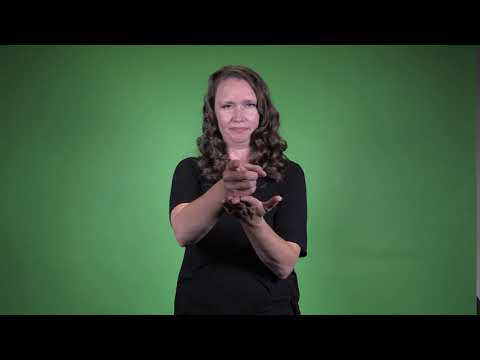
Definition: To begin to feel romantic love for someone.
Sign for FALL IN LOVE in ASL
Practice Activities:
To practice the sign for FALL IN LOVE in ASL, begin by rehearsing it in front of a mirror. Focus on the specific movement of the dominant hand “person” classifier falling forward onto the open palm, which represents the heart. Repetition will help reinforce both the handshape and the path of motion, which are key to clearly expressing the concept.
Try practicing the sign in isolation, followed by different facial expressions to show the intensity of the emotion. Use a neutral face, then a dreamy or joyful face to match different emotional contexts. Make sure your non-dominant hand remains steady as the focus is on the falling motion of the dominant hand.
Once you’re comfortable with the motion, integrate the sign for FALL IN LOVE in ASL into short sentences. For example, sign phrases like “She fall in love” or “I fall in love quick.” Practice directing the sign toward imagined locations of people in space to match who is falling in love. This builds accuracy in storytelling and conversational skills.
Storytelling prompts can deepen your understanding. Create a short ASL story about a character falling in love at first sight or unexpectedly. Include signs for emotions, time indicators like “suddenly” or “during summer,” and facial grammar for emphasis. This enhances your fluency and narrative rhythm.
Work with a partner to role-play conversations using the sign for FALL IN LOVE in ASL. One person can sign a short story while the other interprets or asks questions. Switch roles to get stronger in expressive and receptive skills. You can also practice exaggerating or minimizing the emotion behind the sign to reflect different intensities of love.
Record your signing and review to identify areas for improvement. Pay attention to flow, facial expression, and clarity. Work toward using the sign naturally within romantic, narrative, and humorous contexts to increase your expressive range.
Cultural Context:
In Deaf culture, expressing emotions clearly and visually is a key part of communication. The sign for FALL IN LOVE in ASL carries deep meaning and is often used in storytelling and everyday conversations to describe romantic feelings.
When learning the sign for FALL IN LOVE in ASL, it’s important to understand that ASL doesn’t just translate words directly from English. Instead, ASL conveys concepts, and the idea of falling in love is shown through expressive movements and facial expressions, which form an essential part of the language.
The sign for FALL IN LOVE in ASL reflects how love can feel like a sudden and powerful emotional experience. In the Deaf community, this sign symbolizes the moment of feeling a strong emotional connection with someone, reinforcing the idea that ASL is a visual and emotional language.
Romantic themes are a common part of Deaf poetry, narratives, and visual storytelling. The sign for FALL IN LOVE in ASL is often featured in these contexts, expressing more than just words—it sets a tone and feeling that is instantly understood by fluent signers.
Across different generations of Deaf signers, the expression of falling in love remains consistent as a shared cultural symbol. This reinforces the importance of emotional expression in ASL and its foundational role in Deaf culture.
When someone describes a past relationship or a current romance in ASL, using the sign for FALL IN LOVE in ASL helps connect the experience to deeper emotional cues. This gives viewers or conversation partners a clearer insight into the intensity and authenticity of the moment.
In Deaf relationships and personal storytelling, signs like the one for FALL IN LOVE in ASL help preserve emotional memories. Sharing how one fell in love becomes both a language exchange and a cultural experience.
Social media and video platforms are giving more visibility to ASL expressions of love. The sign for FALL IN LOVE in ASL appears in romantic skits and vlogs, helping hearing audiences appreciate how ASL conveys strong feelings in distinct ways.
Valentine’s Day, weddings, and anniversaries are popular times for teaching or showcasing the sign for FALL IN LOVE in ASL. This shows how the language celebrates milestones and highlights the emotional beauty within Deaf culture.
Teaching the sign for FALL IN LOVE in ASL to ASL learners creates opportunities for greater inclusivity and cultural appreciation. It helps those outside the Deaf community see the importance of emotion and visual storytelling woven into the language.
Children growing up in Deaf households often learn early on how to express emotions such as love and connection. Learning the sign for FALL IN LOVE
Extended Definition:
The sign for fall in love in ASL is a visually expressive sign that captures the idea of suddenly and deeply developing romantic feelings for someone. This sign combines facial expression and body language with specific hand movements to convey the emotional meaning behind falling in love.
To perform the sign for fall in love in ASL, start with your dominant hand in the 1-handshape (like a pointing finger) near your face. Then, make a small forward and downward motion toward the non-dominant hand, which is flat and palm-up—like the person is figuratively “falling” onto the other hand. This gesture mimics the feeling of unexpectedly falling into an emotional connection, emphasizing the sudden and heartfelt nature of falling in love.
Facial expressions play an important role with the sign for fall in love in ASL. You might show wide eyes, a smile, or a dreamy expression to match the emotion involved. Because ASL is a three-dimensional and expressive language, signing with the correct emotion helps clarify the depth and meaning of the phrase.
The sign for fall in love in ASL is often used in storytelling, songs, poetry, or casual conversation. It can refer to the first time someone experiences love or describe when two people begin a romantic relationship. Whether it’s a crush that grows more serious or a powerful attraction that occurs quickly, this ASL sign communicates the message clearly.
This sign is also commonly seen in Deaf culture, where visual expressions of emotions play a central role in communication. The sign for fall in love in ASL can be modified slightly in conversations or performances to increase or decrease the intensity of the emotion, depending on the story being told.
Location and directionality can also vary based on personal style or regional variation. Some people make the hand fall more quickly to show a fast, passionate love, while others may move the hand more slowly to symbolize a gradual emotional connection. Just like spoken languages, ASL allows flexibility in expression.
Children learning sign language may learn the sign for fall in love in ASL through stories involving characters that form friendships and deeper emotional bonds. Adults may use this sign more often in discussions about relationships, dating, or expressing admiration for someone special.
Using the sign for fall in love in ASL in romantic settings can add a personal and touching gesture in communication between Deaf and hearing friends, family members, or partners. It opens a window into the rich storytelling aspect of ASL and helps bridge emotional understanding without spoken words.
Whether you’re learning AS
Synonyms: fall head over heels, become smitten, develop feelings, be infatuated, become enamored
Educational resources: Find related learning materials in our course bank!
Want more? Check out some of our popular learning activities on the homepage!
Need to look up a sign? Use our highly rated dictionary: https://aslinteractive.com/best-asl-dictionary/
Follow us on tiktok: https://www.tiktok.com/@aslinteractive. More social media links at the bottom of this page!
Long-tail Keywords: what is the sign for fall in love in ASL, how do you sign fall in love in ASL, ASL sign for fall in love
Categories:
tags: Fall in Love ASL meaning, how to sign Fall in Love in ASL, Fall in Love American Sign Language, ASL dictionary Fall in Love, Fall in Love ASL translation
Parameters
*Handshape*:
The dominant hand begins in an extended index finger (the “1” handshape), resembling a pointing gesture. It moves from the forehead area downward toward the palm of the non-dominant hand, which is open and facing upward, as if the “person” is falling into the palm. The handshape stays in the extended finger form throughout the motion.
This gesture reflects the imagery behind the sign for FALL IN LOVE in ASL. The handshape highlights the concept of a sudden emotional shift, like physically falling, which aligns with the meaning behind the sign for FALL IN LOVE in ASL .
*Palm Orientation*:
The palm orientation for the sign for FALL IN LOVE in ASL begins with the dominant hand held upright in a “1” handshape, palm facing downward. As the sign progresses, the index finger moves downward in an arc, landing near the open palm of the non-dominant hand, which faces upward.
Throughout the sign for FALL IN LOVE in ASL, the non-dominant hand remains steady while the dominant hand shifts orientation slightly forward and downward, simulating a falling motion. This directional and palm-changing movement emphasizes the idea of “falling.”
*Location*:
The sign for FALL IN LOVE in ASL is produced in the neutral space directly in front of the body, slightly above waist level. The gesture begins near the face or chin and moves downward towards the palm, typically held horizontally at chest level.
This location emphasizes the emotional connection depicted in the sign for FALL IN LOVE in ASL, symbolizing the idea of the heart falling or descending into affection. Maintaining the sign within this space helps convey the romantic or emotional nature of the concept.
*Movement*:
The sign for FALL IN LOVE in ASL begins with the index finger of your dominant hand pointing outward, positioned near the mouth or chin. Then, the index finger makes a quick, downward arc, landing in the palm of the non-dominant hand, which is held horizontally, palm up.
This movement symbolizes the concept of “falling” emotionally. The expressive action helps capture the emotional nuance behind the sign for FALL IN LOVE in ASL . Facial expressions, such as softened eyes or a slight smile, can enhance the meaning.
*Non-Manual Signals*:
The non-manual signals for the sign for FALL IN LOVE in ASL include a soft, affectionate facial expression, often with raised eyebrows to show emotional involvement. Slight head movement forward or a gentle head tilt can suggest vulnerability or attraction, emphasizing the emotional fall.
A small smile may appear to convey affection or infatuation, reinforcing the positive emotions tied to the sign for FALL IN LOVE in ASL. Avoid a flat or neutral face, as it may change the emotional tone of the sign.
*Prosody, Dominant/Non-Dominant Hand*:
The sign for FALL IN LOVE in ASL uses the dominant hand in an extended “1” handshape, starting from near the mouth or nose area and moving downward in a short arc to touch the palm of the non-dominant hand, which is held horizontally facing up. This motion resembles someone “falling” onto love, metaphorically landing on the hand.
The non-dominant hand stays still, serving as the surface or representation of “love.” The sign for FALL IN LOVE in ASL combines facial expression with hand movement to convey deep emotional involvement or impact .
Tips for Beginners:
Learning the sign for FALL IN LOVE in ASL can be both meaningful and expressive, but it does take careful practice to do it accurately. The dominant hand typically points with the index finger and falls forward onto the palm of the non-dominant hand, which is held flat and facing up near the chest area. The idea is to mimic a person (the pointing finger) falling in love (onto the heart area), so body placement and movement are key in conveying the emotion properly.
When starting out, make sure your movement is smooth and intentional rather than stiff or rushed. A jerky or overly casual motion might confuse the person you’re signing to or convey the wrong message. A soft, downward arc of the index finger gives the sign an emotional tone that matches the concept of love growing or developing, so fluidity matters here a lot.
Beginner signers often forget to orient the non-dominant palm correctly or fail to maintain the right angle and positioning. Keep the palm stable and relaxed around the chest, since this placement enhances the metaphor of “falling into the heart.” Practicing in front of a mirror is an excellent way to fine-tune the sign for FALL IN LOVE in ASL and check for clarity.
Another useful tip is to observe how fluent signers express this sign within full sentences. Context, facial expression, and rhythm all help reinforce the meaning. Don’t be afraid to exaggerate facial expression slightly when practicing—it will help people understand your intent clearly and connect with the emotion behind the sign for FALL IN LOVE in ASL .
Lastly, slow down and focus on the symbolism the first few times you practice. Visualizing what you’re trying to express—not just the motion—can make learning the sign for FALL IN LOVE in ASL much more intuitive and engaging.
Connections to Other topics:
The sign for FALL IN LOVE in ASL is deeply connected to emotional and relational vocabulary in sign language. It merges the concepts of “fall” as a metaphor for going from a neutral state into a strong emotional state and “love,” which is expressed by crossing both arms over the chest as if hugging oneself. Understanding this sign helps learners grasp how ASL uses spatial and directional movement to visually mirror internal experiences.
This sign shares structural similarities with other romantic or emotional signs such as CRUSH, FLIRT, and ATTRACT. These signs also make use of the face, chest, and torso to demonstrate emotional movement or closeness, highlighting how ASL emphasizes bodily expression for emotional concepts. Learning the sign for FALL IN LOVE in ASL can aid a learner in recognizing non-manual signals such as facial expression and eye gaze that often accompany emotional signs.
Compound signs like FALL OUT OF LOVE or FALL HARD IN LOVE stem directly from the base sign and deepen the learner’s understanding of how conceptual layers are added in ASL. For example, adding intensity with a facial expression or using a more forceful motion can suggest “falling hard.” Conversely, reversing or modifying the hand movement slightly might communicate waning feelings or emotional detachment, as in “fall out of love.”
The sign for FALL IN LOVE in ASL also ties into storytelling and narrative structure, particularly in conversations around dating, relationships, or personal history. It appears frequently in deaf poetry and art, which often use the imagery of emotion through movement. Understanding this sign allows learners to better interpret romantic stories and personal sharing in the Deaf community.
In educational settings, instructors often use the sign for FALL IN LOVE in ASL when teaching about emotions, relationships, and nuanced verb phrases. This sign helps communicate abstract ideas, making it a valuable building block for learners aiming to express complex emotional content clearly and fluently in ASL.
Summary:
The sign for FALL IN LOVE in ASL is both visually poetic and emotionally expressive. It depicts the heart as a figurative agent falling for someone, using facial expression and body movement to reflect romantic dynamics.
To perform the sign for FALL IN LOVE in ASL, you begin with the nondominant hand held in front of you, palm up, as if representing a person or abstract grounding plane. The dominant index finger starts near the chin then “falls” forward to tap the upright palm, suggesting the act of falling toward someone emotionally or romantically.
This movement is iconic in nature, showing the abstract notion of love in a cascading descent. This powerful visualization communicates vulnerability and emotional surrender. Many users use their face and eyes to follow the trajectory of the hand, adding authentic depth to the expression.
The facial expression used during the sign for FALL IN LOVE in ASL contributes significantly to the meaning. A dreamy or softened expression combined with raised eyebrows underscores the sense of being emotionally overcome. If you sign this while stoic or flat-faced, the intended sentiment may be lost.
As is common in ASL, context is pivotal. The sign for FALL IN LOVE in ASL can differ in intensity depending on setting. It can be flirtatious, tragic, or joyful, depending on accompanying non-manual markers like eyebrows, mouth movements, and head tilts.
Culturally, the sign for FALL IN LOVE in ASL resonates deeply within Deaf storytelling and poetry. It often appears in visual narratives where love is depicted as spontaneous, light-hearted, or tragic. Many love stories in ASL media rely heavily on this visual metaphor to convey deep romantic shifts.
The linguistic form of the sign is an example of iconography in ASL. The falling motion links physical space to emotional experience, a property often seen in classifiers and metaphorical constructs in the language. It blurs the line between literal and figurative movement.
Variation exists in how the sign for FALL IN LOVE in ASL is used regionally or generationally. Some signers may add additional gestures, like touching the heart area or adjusting facial direction to symbolize unrequited or mutual love. These shifts reflect the elasticity of ASL grammar.
The sign draws from the broader ASL conceptual framework where physical space maps to ideas. The subject of the affection is often situated in the signer’s signing space, giving a spatial reference for the emotional pull. This makes ASL uniquely dynamic among world languages.
The concept of falling is not confined to romance in ASL. Related signs like FALL-FOR, OBSESSED, or ATTRACT CONNECT share grammar overlaps. Each sign maps ideas like gravitational motion or emotional weight to physical gestures.
The sign for FALL IN LOVE in ASL also holds pedagogical value in language acquisition. It teaches learners how to blend body language with manual signs to create expressive meaning. For language instructors, it is a bridge into more symbolic and metaphor-rich language use.
Exploring the sign for FALL IN LOVE in ASL reveals the power of ASL to communicate internal states externally. Unlike English, where love can be abstracted in many synonyms or phrases, ASL provides a visual anchor to the feeling. The fall of the index finger seems simple, yet it is loaded with nuance.
In Deaf art and performance, this sign frequently appears in narrative and poetic expressions. Performers can manipulate timing, emphasis, and direction to tell diverse stories of romantic emotions. From comedy to tragedy, the sign lends itself to expressive flexibility.
Pragmatically, this sign is typically used when discussing romantic involvement or strong affection. However, it might be adjusted or replaced when referring to emotional nuances outside typical romance. For example, someone might fingerspell F-A-L-L then sign LOVE, altering tone and intent.
A related concept is the sign LOVE IT, which uses a different structure entirely, often involving a closed fist thrown away from the mouth. While still connected to affection, it aligns more with passion or approval rather than relational intensity. The distinction is subtle but culturally important.
Another linguistic angle in the sign for FALL IN LOVE in ASL is its directional property. In fluent conversation, the starting and ending points of the dominant hand gesture can shift based on who is ‘falling’ and who is the object of affection. This adds grammatical precision to interpersonal dynamics.
Applied linguistics research has studied signs like this one to investigate how emotions are embodied in signed languages. The correlation between spatial movement and psychological experiences offers insight into the cognitive mapping involved in ASL grammar and usage.
The sign for FALL IN LOVE in ASL contributes to what is often referred to as the ‘visual vernacular’ of the language. It is part of a cluster of metaphor-rich expressions that form a key genre in Deaf performance traditions. It blends mime, gesture, and symbolic signing into cohesive visual communication.
In discourse, this sign often co-occurs with timing or situational markers. You might see a story contextualize the falling in love as ‘at first
Want more? Check out some of our popular learning activities!
ASL Interactive Resources
ASLInteractive YouTube Channel
Follow us on tiktok: @aslinteractive.com
Follow us on Instagram: aslinteractive
Facebook page: aslinteractive
Facebook group: aslinteractive
LInkedIn: ASL Interactive LLC
Twitter: @ASL_interactive
*Some information on this page is AI-generated. AI can make mistakes. Please check the information.


Responses