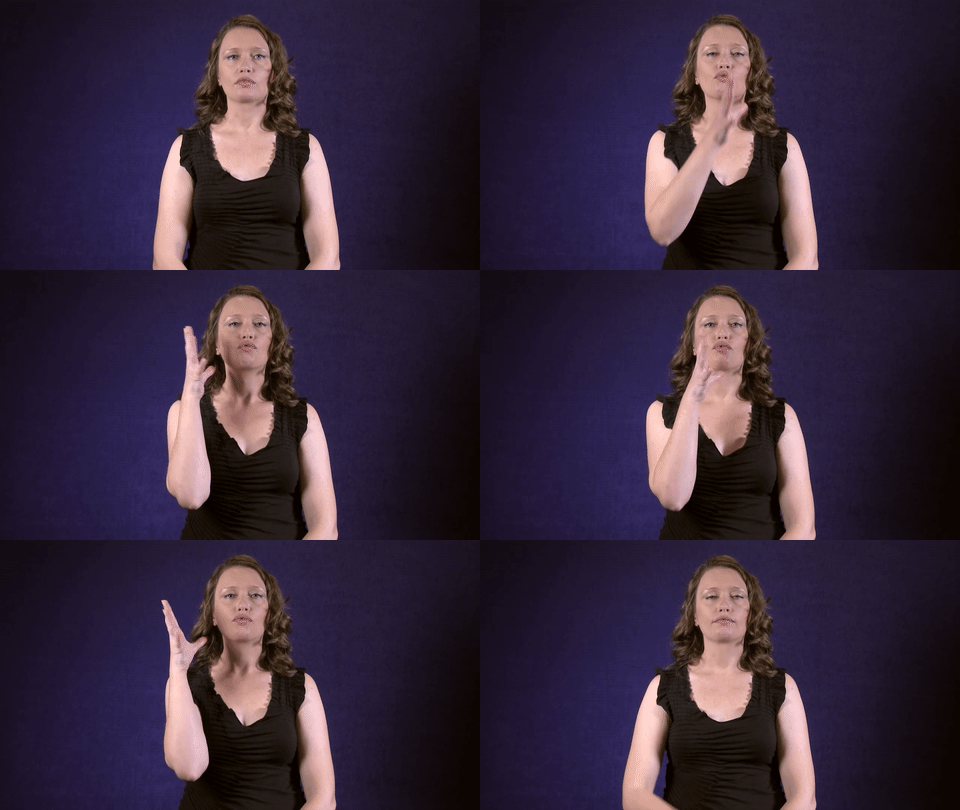
Sign for FARM in ASL | ‍ ASL Dictionary

Definition: An area of land used for growing crops and raising animals.

Sign for FARM in ASL

YouTube player

Practice Activities:

To practice the sign for FARM in ASL, begin by signing it in front of a mirror. Repeat the motion slowly and then at a more conversational pace. Focus on handshape, placement near the chin, and movement across the face. Do the sign ten times while watching your form and then ten times without the mirror to build muscle memory.

After becoming comfortable with it in isolation, try using the sign for FARM in ASL within simple sentences. Practice phrases like “I live on a FARM,” “My uncle works on a FARM,” or “We visited a FARM.” Sign each sentence slowly, then increase your speed to a natural rhythm while keeping clarity. Create a list of five sentences and review them daily for a week.

Involve storytelling to deepen your learning. Describe a visit to a FARM using at least three signs you’ve previously learned. Start with signs like COW, HORSE, or CORN along with FARM to paint a simple visual story. For example, “Yesterday, I saw a HORSE on the FARM eating CORN.” Retell the story multiple times, adding new details each time to challenge your signing fluency.

Create a two-person dialogue using the sign for FARM in ASL. One person can ask questions like “Do you like the FARM?” or “What animals live on a FARM?” while the other responds in full ASL sentences. This partner activity helps reinforce receptive and expressive skills with real-time feedback.

Watch videos online featuring native signers talking about rural life or agriculture. Try to identify each time they use the sign for FARM in ASL. Pause and mimic what they do to match their speed, clarity, and facial grammar. Keep a vocabulary journal to track your progress and build connections between new signs and the theme of farming.

Cultural Context:

In American Sign Language (ASL), signs for concepts are deeply rooted in cultural and historical context. The sign for FARM in ASL connects not only to the literal meaning of agriculture and farming but also to the broader cultural significance of rural life in the Deaf community. The concept of farming is more than just working on land; it’s about lifestyle, tradition, and connection to nature—values that often resonate within Deaf culture.

When learning the sign for FARM in ASL, it’s important to recognize its visual representation. ASL is a visual language, and many signs, including FARM, are iconic in nature, meaning they resemble what they represent. The sign for FARM typically makes use of movements that mimic a gesture of rubbing the chin or jaw area with a flat hand, a nod to the beards often associated with farmers historically. This visual cue adds depth to the sign, grounding it in common imagery.

Farming has played an important role in Deaf history, especially in the United States. Many Deaf schools in the 19th and early 20th centuries included vocational training in farming. Deaf students learned agricultural skills as part of their education, and some went on to run successful farms. Because of this, the sign for FARM in ASL might resonate deeply with older generations or those familiar with Deaf education history.

Rural deaf communities have also used farming as a way to remain self-sufficient and connected. This sense of independence aligns with many core values in the Deaf community. Understanding the cultural context behind the sign for FARM in ASL helps deepen the appreciation of how language evolves to reflect real-life experiences.

The sign for FARM in ASL can also appear in idiomatic uses or storytelling in Deaf culture. Storytelling is a rich tradition in ASL, and farming analogies often appear, drawing on shared experiences of work, harvest, and connection to the land. Recognizing these references can help learners better understand not just vocabulary but the rich cultural fabric of the Deaf world.

Farmers are often viewed as symbols of hard work and perseverance. Within Deaf culture, these traits are admired and can parallel the resilience found in the Deaf community. This connection helps reinforce why the sign for FARM in ASL holds meaning beyond its basic definition.

In regional dialects of ASL, slight variations in signing FARM may occur. Local sign differences are common, and farm-related signs may shift slightly in different Deaf regions with strong agricultural ties. This reflects how ASL adapts based on community needs while keeping cultural relevance intact

Extended Definition:

The sign for FARM in ASL is a descriptive gesture that captures the concept of farming, agriculture, and rural life. In American Sign Language, this sign typically mirrors the motion of a farmer wiping sweat across the chin with the open hand, symbolizing the physical work often associated with farm life. It often conveys ideas connected to land cultivation, harvesting, and the agricultural profession.

Using the sign for FARM in ASL allows users to talk about locations like family farms, ranches, or agricultural fields. It incorporates a blend of location and action, reflecting how ASL uses facial expressions and body placement to add depth to meaning. By understanding this sign, you’re able to express concepts related to farming communities and rural environments more accurately.

The sign for FARM in ASL is widely used not only in everyday conversation but also in educational settings, especially when teaching children about food sources, environmental science, and sustainability. It’s an essential sign for discussing where food comes from and how agriculture impacts daily life. Whether you’re signing about local farming, livestock care, or growing crops, this gesture plays a key role in communication.

There are different ways to teach and learn the sign for FARM in ASL. ASL learners often find it useful to watch videos or participate in interactive lessons that show hand movements in detail. The process of learning visual language like ASL benefits greatly from repetition, storytelling, and connection to real-world objects or places.

When teaching the sign for FARM in ASL, instructors may incorporate visuals of barns, tractors, or open fields to help learners understand the context of the word. These visual aids help reinforce how agricultural concepts connect to the sign. It’s also helpful to use the sign within full sentences, allowing learners to practice fluency and comprehension.

The sign for FARM in ASL is not just practical—it’s cultural. Many Deaf communities have strong ties to rural areas and agricultural professions, so using accurate and respectful signs is crucial to maintaining cultural relevance and honoring those experiences. The sign represents more than a place; it also reflects a way of life centered on hard work and connection to the land.

The motion involved in the sign for FARM in ASL can vary slightly based on regional dialects or teacher preferences. However, the general idea remains consistent and is understood across most ASL communities. As with many ASL signs, clarity and expression are essential components to ensure the message is understood.

In conversation, you might pair the sign for FARM in ASL with signs for animals, vegetables, or daily chores

Synonyms: farm, ranch, homestead, plantation, estate

Educational resources: Find related learning materials in our course bank!

Want more? Check out some of our popular learning activities on the homepage!

Need to look up a sign? Use our highly rated dictionary: https://aslinteractive.com/best-asl-dictionary/

Follow us on tiktok: https://www.tiktok.com/@aslinteractive. More social media links at the bottom of this page!

Long-tail Keywords: What is the sign for Farm in ASL, How do you sign Farm in ASL, ASL sign for Farm

Categories:

tags: farm in American Sign Language, ASL sign for farm, how to sign farm in ASL, farm sign meaning in ASL, learn ASL farm sign

Parameters

*Handshape*:

The handshape for the sign for FARM in ASL uses the open B-handshape ️ on the dominant hand. The fingers are extended and held together with the thumb tucked against the palm.

To create the sign for FARM in ASL, place the base of the open B-handshape at one side of the chin and move it across to the other side, mimicking the shape of a farmer’s beard. This sign visually connects to farming culture while maintaining clear ASL structure.

*Palm Orientation*:

The palm orientation for the sign for FARM in ASL begins with the dominant hand open and flat. The palm faces inward toward the signer’s body, with the fingers extended and the thumb extended away from the fingers. The hand moves in a horizontal arc across the lower face, typically from one cheek to the other under the chin. The posture mimics the expanse of land, which helps convey the concept in the sign for FARM in ASL .

*Location*:

The sign for FARM in ASL is typically located around the lower face and jaw area. The dominant hand, formed in the open “5” shape, starts at one side of the chin and moves across to the other side, mimicking the motion of wiping across the chin.

This location near the face reflects how the sign for FARM in ASL connects to the natural world, symbolizing the breadth of land a farm might cover. The chin-level movement gives the sign its distinct agricultural reference .

*Movement*:

To produce the sign for FARM in ASL, use your dominant hand in the open “5” shape. Start with the thumb touching one side of your chin and then sweep the thumb across to the other side of the chin in a smooth arc. This motion mimics the shape of a farmer’s beard, symbolizing the rural or agricultural origin.

The sign for FARM in ASL is fluid and always made with a clear motion across the face. Maintain a neutral facial expression unless context adds emotion. This movement is widely recognized and easy to differentiate from other signs.

*Non-Manual Signals*:

When using the sign for FARM in ASL, the non-manual signals generally include a calm, neutral facial expression that conveys the concept of a location or occupation. If emphasizing size or pride in the farm, the eyebrows may lift slightly and the eyes widen to show importance or scale.

Context affects facial signals—discussing someone’s job as a farmer might involve a nod or slight head tilt. Overall, non-manual cues support the sign for FARM in ASL by matching its tone and context naturally.

*Prosody, Dominant/Non-Dominant Hand*:

The sign for FARM in ASL uses the dominant hand in a spread-5 handshape, fingers extended and separated. The base of the thumb touches one side of the chin and then swings in an arc to the other side of the chin in a single fluid motion, representing the wide stretch of farmland.

The non-dominant hand is not involved in the sign for FARM in ASL. Facial expressions can support the sign’s meaning by conveying size or expanse.

Tips for Beginners:

When learning the sign for FARM in ASL, it’s important to pay close attention to the handshape and movement. The sign uses a dominant open “5” handshape and sweeps it from one side of the chin to the other, mimicking the motion of a farmer wiping their face. Make sure your hand stays open and flat, which helps with clarity.

One of the most common mistakes beginners make with the sign for FARM in ASL is not keeping the hand relaxed and the motion smooth. If your hand stiffens or the movement is choppy, it can confuse the sign or make it look similar to other signs. Practicing in front of a mirror can help build fluid motion and improve muscle memory.

Another helpful tip is to think about the context in which you’re signing. Because the sign for FARM in ASL could be part of a larger conversation about crops, animals, or rural life, having expressive facial grammar adds clarity. Don’t forget to match your facial expressions with the topic you’re discussing to convey meaning more effectively.

For those just starting out, it’s useful to watch native signers or fluent users demonstrating the sign for FARM in ASL, preferably in slow motion. Videos offer valuable perspective on the pace and motion that a still image can’t provide. Repetition and mimicking real examples will make your signing more natural over time.

Lastly, don’t get discouraged if your movements feel awkward at first. Building precision takes time, and the sign for FARM in ASL becomes easier with routine practice. Pair it with related agricultural vocabulary to improve retention and fluency over time. Confidence and consistency are key .

sign for FARM in ASL, ASL sign for FARM, how to sign farm in ASL, American Sign Language sign for FARM, FARM ASL translation

Connections to Other topics:

The sign for FARM in ASL connects closely to signs that describe locations and land use, such as RANCH, GARDEN, and COUNTRY. Each of these signs uses spatial referencing and classifiers to show land area or function, helping to build nuanced expressions about rural life. Learners exploring the sign for FARM in ASL can better understand how environmental or job-related signs are often visually based.

This sign also ties into professions and chores such as FARMER, which takes the sign for FARM and adds the agent marker—a downward movement at the torso that designates someone completing the action. Similarly, compound signs like FARM-HOUSE or FARM-ANIMAL use the base sign to communicate more specific ideas. Using these structured combinations allows for a more dynamic conversation about places, occupations, or daily life on a farm.

The sign for FARM in ASL is often paired with animals to describe various aspects of farming. For instance, users may sign FARM COW or FARM HORSE to discuss livestock responsibilities. This combination provides richer detail and context, allowing signers to effectively explain settings, tasks, or events related to rural experiences.

Spatial classifiers also commonly co-occur with the sign for FARM, particularly when talking about the layout or size of a farm. Classifiers like CL:3 (for vehicles or animals) or CL:5 (to show groups or fields) help provide visual specificity. Signers utilizing these grammatical tools show not only what a farm is, but how it functions and what exists within those boundaries.

ASL learners who understand the versatility of the sign for FARM in ASL also enhance their cultural fluency when discussing regional life, traditional professions, and the balance between nature and labor. Discussing farming in ASL is often a doorway into broader topics like sustainability , food systems , and hard-working lifestyles .

Summary:

The sign for FARM in ASL is iconic and rooted in the cultural imagery of agriculture. This sign directly ties the movement of the hands to a visual representation of a farmer wiping across an apron or the area of the chest. It gives a strong physical metaphor for the manual labor associated with farming.

To produce the sign for FARM in ASL, one uses the dominant open hand, palm down, with the thumb extended. The thumb sweeps from one side of the chin to the other, mimicking the motion of wiping the lower face or neck. This movement reflects the traditional image of a farmer wearing an apron or overalls, often seen in agricultural settings.

This iconic sign is one of many related to the concept of rural life, manual labor, or agricultural production. It is visually intuitive, making it easier for non-native signers or those new to ASL to remember. The simplicity of its structure contributes to its ease of learning and reproduction.

The sign for FARM in ASL holds both a linguistic and cultural weight. It encapsulates a rich historical backdrop of American rural communities and the critical role farming has played in the country’s development. This makes the sign resonate with broader themes of sustenance, community, and labor.

In grammatical usage, FARM often appears as a noun and is commonly paired with classifiers or directional signs. For example, you might describe the expansiveness of a farm using spatial referencing in the signing space around the signer. The use of space here demonstrates the spatial-visual nature of ASL that sets it apart from spoken English.

Classifiers can also extend the meaning of the sign for FARM in ASL. For example, a classifier representing a tractor could be shown driving through a field space after the sign for FARM is made. This visually constructed scene builds more specific context and conveys information more richly than a series of discrete words would.

The concept of FARM also connects to other ASL signs like GARDEN, ANIMAL, TRACTOR, or FIELD. Each of these signs supports and contextualizes the broader semantic theme of agriculture and rural existence. There’s a commonality in the visual lexicon used to build meaningful, interconnected discourses in ASL.

ASL users often adapt the sign situationally. For instance, regional variations or modifications based on discourse context may affect the speed or motion breadth of the sign. In fast-paced discussions or among fluent signers, the motion might be shortened without compromising meaning.

The sign for FARM in ASL is not fingerspelled unless used for emphasis or clarification in unique contexts, such as differentiating the word from similar concepts or when teaching English equivalents. Conventionally, the concept is represented with the traditional sweeping thumb movement.

Culturally, this sign places strong emphasis on the role of traditional labor in American life. For Deaf communities connected to agriculture, it serves as a descriptive term for livelihood and identity. In stories or narratives shared in ASL, signs like FARM function as anchor points for visual storytelling.

In narratives, especially folklore or historical recountings in ASL, FARM serves as a base from which events expand. Signing FARM is often followed by gestures showing rain, animals, crops, or the harvesting motion. These narratives become fully embodied experiences for viewers and signers alike.

Applied linguistics fields studying ASL often focus on how signs like FARM, which are visually motivated, support cognitive processing in spatial and kinetic ways. Psycholinguistic studies have observed how this kind of iconicity facilitates memory retention and learning, particularly for young learners and second-language learners.

The educational use of the sign for FARM in ASL is also widespread in ASL curriculum development. It is frequently taught alongside other environmental vocabulary like RIVER, MOUNTAIN, and FIELD to create thematic units. These allow students to discuss nature, geography, and food systems in sign language.

The agricultural theme also gives context to discussions about sustainability and food justice within the Deaf community. Using signs like FARM enables deeper engagement with ecological issues and highlights the community’s relationship to land and food systems. This contributes to language being a tool not only of communication but also of activism.

Iconicity plays a large role in the memorability of the sign for FARM in ASL. The sweeping motion across the chest stands among top examples cited in sign language pedagogy. In teaching settings, such signs are often prime examples when introducing the concept of iconic versus arbitrary signs.

Despite its visual clarity, FARM still holds potential for abstract or metaphorical extensions. In poetic ASL, for instance, a signer might use FARM to initiate a metaphor about cultivation, growth, human labor, or even emotional planting. This aesthetic layer shows the dynamic possibilities of ASL expression.

The sign for FARM in ASL is part of a broader system where environment, place, and community are tightly interlinked. Signs indicating WORK, HOUSE, or BARN frequently follow it, building richer depictions of daily life. The connection reflects a shared cultural responsiveness inherent in Deaf storytelling traditions.

Dialectal variation

Want more? Check out some of our popular learning activities!

ASL Interactive Resources

ASLInteractive YouTube Channel

Follow us on tiktok: @aslinteractive.com

Follow us on Instagram: aslinteractive

Facebook page: aslinteractive

Facebook group: aslinteractive

LInkedIn: ASL Interactive LLC

Twitter: @ASL_interactive

*Some information on this page is AI-generated. AI can make mistakes. Please check the information.


Responses