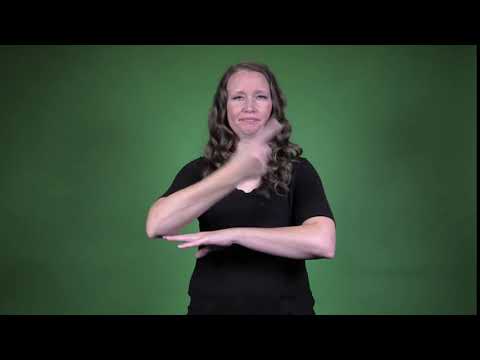
Sign for FLAG DAY in ASL | ️ ASL Dictionary

Definition: A day for celebrating the national flag.

Sign for FLAG DAY in ASL

YouTube player

Practice Activities:

To build fluency with the sign for FLAG DAY in ASL, start by practicing the sign in isolation. Use a mirror to check your handshape and movement, ensuring the flag motion and the sign for day are produced clearly and smoothly. Repeat the full sign slowly, then increase your speed as you become more comfortable.

Practice incorporating the sign for FLAG DAY in ASL into short, seasonal sentences. For example, sign “I love FLAG DAY,” or “We celebrate FLAG DAY in June.” Try using different subjects and dates, like “My school has a FLAG DAY event,” or “FLAG DAY is an important holiday.” This will help reinforce sentence structure in ASL and improve your fluidity.

Pair up with a learning partner and ask each other questions using the sign for FLAG DAY in ASL. Take turns signing questions like “Do you celebrate FLAG DAY?” or “What do you do on FLAG DAY?” Respond using complete ASL sentences to strengthen your expressive and receptive skills. You can also record these dialogues for review.

Use storytelling to expand practice. Create a short story about how you or someone celebrates FLAG DAY. Include details like where the event takes place, who is involved, and what activities happen, all while incorporating the sign for FLAG DAY in ASL naturally within your narrative.

Try a matching game with flashcards that include other American holidays. When you pick a holiday card, sign it in ASL and describe one tradition associated with it. Pay special attention to the sign for FLAG DAY in ASL and compare how it differs or connects to days like Memorial Day or Independence Day. This comparison can strengthen your recall and association.

Finish your practice session by recording yourself signing a few sentences or a paragraph about FLAG DAY. Watch your clip to observe clarity, handshape accuracy, and facial expressions. ‍♀️

Cultural Context:

Flag Day is a special observance in the United States that celebrates the adoption of the American flag. The sign for FLAG DAY in ASL is often used in classrooms, patriotic events, and community gatherings where Deaf and hard-of-hearing individuals come together to show national pride.

Understanding the cultural significance of the sign for FLAG DAY in ASL helps deepen our awareness of how Deaf culture honors American traditions. In Deaf communities, visual representations of national holidays are meaningful in both educational and social settings.

When teaching children about American history, the sign for FLAG DAY in ASL becomes an essential tool in bilingual classrooms. Teachers who use ASL often incorporate holidays into their lesson plans to build vocabulary tied to specific cultural values.

In the Deaf community, celebrations often include storytelling, signed poetry, and historical narratives, all incorporating the sign for FLAG DAY in ASL. These cultural practices ensure that everyone has access to shared American values regardless of hearing status.

FLAG DAY is also a time to discuss the meaning and history behind the American flag. When using the sign for FLAG DAY in ASL, educators and signers can connect the visual gesture to broader conversations about freedom, independence, and national identity.

The history behind FLAG DAY dates back to 1777, and its celebration became official in the early 20th century. Knowing the correct sign for FLAG DAY in ASL helps promote inclusive participation in these kinds of events.

Community centers and ASL programs often host summer activities where the sign for FLAG DAY in ASL plays a part in themed events. These may involve signing the Pledge of Allegiance or performing songs and skits related to American symbols.

On social media platforms and in Deaf vlogs, you may also see references to the sign for FLAG DAY in ASL during June as families and groups prepare for the observance. Sharing videos of the correct sign helps spread cultural knowledge and affirms identity within ASL-speaking spaces.

When introducing the sign for FLAG DAY in ASL to new learners, it’s important to contextualize the holiday and explain why it’s celebrated. This gives the sign more depth than just a visual representation—it becomes a symbol of civic pride in the Deaf experience.

Every signed holiday term, including the sign for FLAG DAY in ASL, helps show how American Sign Language reflects mainstream culture while maintaining its own unique perspective. The Deaf community continues to affirm its place in national traditions through expressive and meaningful signs like this one.

The sign for FLAG DAY in ASL is typically used alongside other holiday

Extended Definition:

The sign for FLAG DAY in ASL reflects both the concept of a physical flag and the observance of the national holiday. American Sign Language captures this idea by combining the sign for “flag” with a time-related sign or context that suggests celebration or a day of importance. When signing FLAG DAY in ASL, the movement and facial expression play a critical role in expressing the cultural importance of the holiday.

FLAG DAY in the United States commemorates the adoption of the American flag on June 14, 1777. This day is recognized with ceremonies, parades, and educational events across the country. When sharing this concept in ASL, it’s important to convey not just the term but the patriotic value it holds to many Americans.

The ASL sign for “flag” usually involves a waving motion symbolizing a flag moving in the wind. To sign the full term FLAG DAY in ASL, users typically start with “flag” and then add a sign that represents a day or holiday, depending on context. A common approach uses the sign for “day,” formed by resting the non-dominant arm horizontally while bringing the dominant arm’s elbow to rest on it, pointing upward with the hand and bringing it in an arc to horizontal.

Cultural and historical awareness is helpful when interpreting or teaching the sign for FLAG DAY in ASL. In classroom settings or public discussions about national holidays, including the sign within broader ASL narratives about U.S. history helps deepen understanding. Interpreters often use this sign during ceremonies or announcements to celebrate the meaning behind FLAG DAY.

In some signed versions, non-manual markers like body positioning, eye gaze, or facial expressions emphasize that FLAG DAY is a notable occasion. The way one signs this term can change depending on the formality or emotional tone of the conversation. A festive tone might be shown with lively facial expressions, while an educational setting might use a more neutral expression for clarity.

When learning the sign for FLAG DAY in ASL, it’s beneficial to see variations used by native signers or educators familiar with holiday expressions. Videos, in-person lessons, and ASL dictionaries offer useful examples of how signs adapt based on regional or cultural usage. Social media clips featuring holiday-themed signing can also be an engaging resource.

Understanding and correctly using the sign for FLAG DAY in ASL allows signers to participate more fully in discussions about civic identity and national culture. It is often used during school events, government recognitions, and online community gatherings during mid

Synonyms: Flag Holiday, National Flag Celebration, Flag Commemoration Day, Banner Day, National Flag Recognition Day

Educational resources: Find related learning materials in our course bank!

Want more? Check out some of our popular learning activities on the homepage!

Need to look up a sign? Use our highly rated dictionary: https://aslinteractive.com/best-asl-dictionary/

Follow us on tiktok: https://www.tiktok.com/@aslinteractive. More social media links at the bottom of this page!

Long-tail Keywords: What is the sign for Flag Day in ASL, How do you sign Flag Day in American Sign Language, Learn how to sign Flag Day in ASL

Categories:

tags: Flag Day in American Sign Language, ASL Flag Day celebration, how to sign Flag Day in ASL, learning Flag Day in ASL, Flag Day vocabulary in ASL

Parameters

*Handshape*:

The handshape for the Sign for FLAG DAY in ASL uses a combination of specific shapes to convey both FLAG and DAY. Begin with your dominant hand in an “F” handshape to represent the concept of FLAG, holding it near a vertical flat palm of the non-dominant hand, simulating a flag on a pole. Then transition into the sign for DAY, using the dominant hand in a flat “B” shape representing the sun setting over the horizon, which is your non-dominant arm. The coordination of these handshapes together clearly communicates the meaning behind the Sign for FLAG DAY in ASL .

*Palm Orientation*:

The palm orientation for the sign for FLAG DAY in ASL begins with the dominant hand mimicking a small flag waving on a pole. The non-dominant hand remains upright, palm facing the body, acting as an anchor or flagpole while the dominant hand moves side to side with the palm facing out or slightly inward.

For the DAY portion in the sign for FLAG DAY in ASL, the non-dominant arm stays horizontal with palm down, while the dominant hand, in a flat shape, rests and then moves across it. The palm of the dominant hand generally faces down as it moves across the stationary arm, symbolizing the passage of the day.

*Location*:

The location for the sign for FLAG DAY in ASL involves two main areas of the body. For the sign FLAG, the dominant hand waves at the top of the non-dominant hand, which is positioned in front of the torso, mimicking a flag on a pole. The action occurs in the neutral space in front of the upper chest.

For DAY, the base hand rests horizontally at chest height while the dominant arm forms an “L” shape and moves from upright to rest on the base arm, representing the sun going down. Both components of the sign for FLAG DAY in ASL are performed in front of the body at chest level.

*Movement*:

To show the sign for FLAG DAY in ASL, begin with the dominant hand in a “flag” shape (thumb and index finger extended), placed on top of the non-dominant hand, forming a pole. Wave the “flag” hand gently side to side, mimicking a flag in the wind.

Next, fingerspell D-A-Y to complete the phrase. The sign for FLAG DAY in ASL combines a symbolic gesture with fingerspelling to represent the event clearly. ️ ️

*Non-Manual Signals*:

While signing the sign for FLAG DAY in ASL, maintain an alert and respectful facial expression, similar to attending a ceremonial or patriotic event. Raise your eyebrows slightly to show emphasis or importance, aligning with the national significance of the day. Slight nodding can enhance the meaning.

Keep a clear, focused gaze on your signing space and use a slight smile to express positivity. The facial expression should remain engaged to reflect the celebratory nature of the sign for FLAG DAY in ASL .

*Prosody, Dominant/Non-Dominant Hand*:

The sign for FLAG DAY in ASL uses the dominant hand to create the motion of a waving flag. Form a “5” handshape, palm facing out, and wave it slightly back and forth from the dominant side while the non-dominant arm acts as a pole, held vertically in front of the body.

To complete the sign for FLAG DAY in ASL, follow by signing DAY: place the dominant hand in a “D” handshape, resting its elbow on the non-dominant arm, which is extended horizontally, then arc the “D” hand down like the setting sun. This sign sequence emphasizes both the symbol of the flag and the commemorative aspect of the day .

Tips for Beginners:

When learning the sign for FLAG DAY in ASL, it’s helpful to break it into components—FLAG and DAY—since these are signed separately and then combined to express the full concept. FLAG is typically demonstrated by using a flat, dominant hand (like a waving motion) brushing up and off the non-dominant forearm, which is held horizontally. DAY is usually signed by holding your non-dominant arm flat in front of you to represent the horizon, while the dominant arm (in an L-shape) moves from vertical to horizontal, mimicking the sun setting.

Make sure your movements are fluid and not stiff. One common mistake when signing the sign for FLAG DAY in ASL is rushing through the components without clearly establishing each individual sign. Take time to practice each part separately before blending them seamlessly. Focus on the motion and consistency of handshape, especially the wave of the flag—it should be expressive but not exaggerated.

Watch your facial expressions too. For holidays like FLAG DAY, a slight expression of pride or celebration adds depth to your communication. In ASL, facial expressions are just as important as hand signs for conveying the full message.

Practice in front of a mirror . This helps you become aware of your angles and hand placements. Sign from the viewer’s perspective—remember that clarity comes from both correct hand movement and positioning within your signing space.

Finally, if you’re unsure whether you’ve signed the sign for FLAG DAY in ASL correctly, ask a Deaf signer or fluent ASL user for feedback. Attending Deaf events or community classes can give you real-life practice. The more you expose yourself to authentic signing, the more confident and accurate you’ll become. Keep practicing—it’s key to fluency ✋

Connections to Other topics:

The sign for FLAG DAY in ASL connects closely to the signs for “flag” and “day,” both of which are basic vocabulary in American Sign Language. The sign for “flag” generally involves a waving motion, mimicking a flag on a pole, while “day” typically depicts the sun going across the sky, symbolizing daylight or a 24-hour period. Combining the two forms a compound concept representing the celebration of a patriotic observance.

FLAG DAY connects with other national and historical observance days in ASL, such as the signs for INDEPENDENCE DAY, MEMORIAL DAY, and VETERANS DAY. These signs often use combinations of time and event-related concepts, and frequently incorporate patriotic elements like flag or military references. Understanding how these compound signs are formed helps learners grasp how ASL builds complex topics using foundational vocabulary.

The sign for FLAG DAY in ASL also leads naturally into conversations about U.S. culture, history, and civics within the Deaf community. It provides an opportunity for learners to practice using signs related to government, respect, symbols, and national identity. This makes the sign useful in educational settings where cultural awareness is being taught.

In expressive use, the sign for FLAG DAY in ASL might be accompanied by facial expressions or additional contextual signs to emphasize celebration, history, or remembrance. For example, signs like CELEBRATE, REMEMBER, or AMERICA are often used alongside the phrase. This demonstrates how ASL users often layer meaning through context and emotion.

The sign also relates to vocabulary around holidays and calendar-based concepts. It’s particularly valuable for learning how to link specific dates with events using ASL’s visual-spatial grammar. As learners become familiar with signs like FLAG DAY, they grow more adept at discussing a variety of observances and commemorative dates. ️

Summary:

The sign for FLAG DAY in ASL combines two distinct concepts: “flag” and “day.” Each is signed separately in sequence using signs typically recognized in the ASL lexicon. The sign for “flag” involves a brush movement representing a waving cloth, anchored to an imaginary pole, while “day” is signed using a non-dominant flat arm as a base and the dominant hand moving downward in an arc from elbow to wrist. Together, the signs convey the idea of a commemorative event related to a flag.

FLAG DAY in American culture refers specifically to June 14th, recognizing the adoption of the U.S. flag in 1777. This observance holds patriotic significance and is embedded into civic lessons and rituals. When used in ASL, the sign for FLAG DAY may carry additional expressive qualities to reflect the respect and pride associated with this historical event.

In typical ASL grammar, the term “FLAG DAY” might appear at the beginning or end of a sentence for focus. ASL syntax often follows a topic-comment format, so FLAG DAY would act as the topic, followed by information like ceremonies, parades, or flag-raising events. Facial expressions and non-manual signals add emotional and contextual depth during storytelling.

The sign for “flag” is important culturally and linguistically, symbolizing more than just a cloth banner. In ASL, it can represent national identity, community events, or even metaphorical ideas such as unity or tradition. It is often used during lessons about American government or during holiday celebrations.

“Day” is a foundational time-related sign in ASL, used widely in contexts such as schedules, celebrations, and narratives. Its simplicity provides a clear visual depiction of the sun crossing the sky, which is universally understood. When combined with signs for national days, it adopts a more formal tone and is often emphasized with respectful acknowledgment.

ASL relies heavily on context and shared cultural understanding. So the sign for FLAG DAY in ASL may also involve the signer incorporating contextual clues like red, white, and blue colors through clothing, background, or classifiers. These contextual features visually support the interpretation when discussing a patriotic event.

Fingerspelling may be used in some situations, especially when talking about specific holiday names like FLAG DAY in formal or educational settings. However, the use of established signs speeds up communication and adds expressive depth. The hybrid use of conceptual signs and fingerspelling is common in discussions involving events and public commemorations.

In Deaf schools or classrooms, the sign for FLAG DAY in ASL is often part of curriculum during discussions of American history or civics. Students might sign the Pledge of Allegiance or discuss its meaning using rich visual language. Special assemblies sometimes incorporate visual displays coordinated with signing to mark the holiday.

FLAG DAY also prompts broader conversations in ASL about what the flag represents in various cultures. The sign helps to initiate deeper dialogue about freedom, identity, and the values symbolized through flags. With signed discussions, Deaf individuals build strong awareness and inclusivity by linking visual language with cultural symbolism.

When forming compound signs like FLAG DAY in ASL, linguistic principles such as movement assimilation can occur. The motion for “day” may be slightly modified to flow smoothly after “flag,” especially in rapid signing. This is an example of how ASL is a dynamic and flexible language adapting for fluent communication.

The use of classifiers adds more expressivity to a FLAG DAY discussion. For example, a classifier handshape may represent a waving flag or crowds gathered at a ceremony. These visual tools allow signers to portray activities and settings around FLAG DAY with clarity and motion.

FLAG DAY is not as widely celebrated as holidays like Independence Day, yet it carries deep meaning for many Americans. Deaf communities observe such dates with their own events, which often include storytelling in sign, visual arts, and heritage appreciation. The signs used carry the weight and implication of shared cultural pride.

The sign for “flag” alone features a movement pattern unique to ASL—mirroring the physics of a flag flapping in wind. This reflects how ASL incorporates naturalistic motion to support understanding visually. For learners, mastering such distinctive motions is crucial to capturing the essence of the term.

Grammar particles and spatial referencing help develop conversations around FLAG DAY. When talking about a nation’s flag, the signer can locate it in sign space to refer back to it during discourse. This reflects ASL’s use of spatial grammar to track topics efficiently across a conversation.

Translation of FLAG DAY from English to ASL requires consideration beyond word-for-word equivalence. Interpreters must assess intent, emotional tone, and context. Deciding when to use fingerspelling versus conceptual signs depends on audience familiarity and discourse type.

In storytelling, the sign for FLAG DAY in ASL can appear with dramatized directionality, where community members gather at landmarks or veterans salute. These elements enhance the impact of the signed story, evoking visual-rich scenes that underscore national pride. Emotive

Want more? Check out some of our popular learning activities!

ASL Interactive Resources

ASLInteractive YouTube Channel

Follow us on tiktok: @aslinteractive.com

Follow us on Instagram: aslinteractive

Facebook page: aslinteractive

Facebook group: aslinteractive

LInkedIn: ASL Interactive LLC

Twitter: @ASL_interactive

*Some information on this page is AI-generated. AI can make mistakes. Please check the information.


Responses