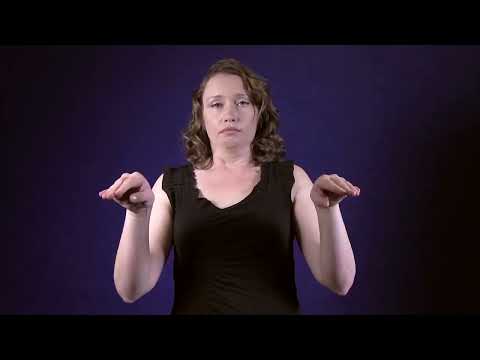
Definition: The number assigned to a floor.
Sign for FLOOR NUMBER in ASL
Practice Activities:
To practice the sign for FLOOR NUMBER in ASL, begin by reviewing how ordinal numbers are signed using a twisting downward motion with your dominant hand. Practice forming numbers from first to tenth, linking each one with the concept of a level in a building. For example, sign “third floor” by signing “3rd” using the twisting ordinal motion, followed by the sign for FLOOR, which resembles brushing one flat hand over the top of the other.
Create flashcards with various floor numbers, like “5th floor” or “10th floor,” and take turns drawing them and signing the full expression fluently. Include signs for contexts such as “She lives on the seventh floor” or “The elevator stops at the fourth floor.” Practice making up your own floor-based directions, like “Go to the 2nd floor and turn right.”
Try storytelling exercises where a character explores a tall building. Describe what happens on every level, using the sign for FLOOR NUMBER in ASL to guide the narrative. For instance, your story might begin on the first floor in a lobby, move to a cafeteria on the fourth floor, and end in a conference room on the tenth.
Work with a partner to play a “Guess the floor” game. One person describes what’s on a certain floor—like “library with big windows”—and the other guesses and signs the correct floor number. Include a variety of floor-related vocabulary like elevator, stairs, or apartment to deepen context.
Practice fingerspelling addresses or hotel room numbers and then converting them to signed floor numbers when appropriate. Repetition in different settings will help solidify how to use the sign for FLOOR NUMBER in ASL in everyday conversations and real-world navigation tasks.
Cultural Context:
Learning the sign for FLOOR NUMBER in ASL helps deepen understanding of how Deaf culture navigates shared spaces like office buildings, schools, and hospitals. In American Sign Language, specifying a floor number is essential for giving clear directions and helping others locate the right area. The sign for FLOOR NUMBER in ASL combines number signs with a classifier to indicate levels or stories in a building.
Deaf and hard-of-hearing individuals rely on visual language, so the sign for FLOOR NUMBER in ASL plays a vital role in everyday communication. Whether discussing elevators, announcing room changes, or describing floor plans, this sign is frequently used in both formal and casual conversations. It helps prevent confusion and supports inclusion in physical environments.
The sign for FLOOR NUMBER in ASL is also taught early in educational settings because it is useful in classrooms and administrative offices. From kindergarten through college, students and teachers use this sign to clarify where meetings, classes, or events are happening. It is especially helpful in emergency drills, where knowing the correct floor quickly becomes a matter of safety.
In the workplace, the sign for FLOOR NUMBER in ASL aids Deaf employees, customers, and visitors in navigating professional environments. In Deaf-friendly offices, visual cues and ASL interpreters often use this sign during tours or meetings. It helps streamline communication and boosts accessibility for everyone involved.
Culturally, the ability to use the sign for FLOOR NUMBER in ASL reflects the visual-spatial aspect of ASL. Deaf culture values clear visual access, and identifying specific locations like floor levels reinforces that. Using this sign shows awareness of Deaf communication norms and the importance of physical context.
In Deaf events or community spaces, the sign for FLOOR NUMBER in ASL is widely recognized and easily understood. Since many Deaf gatherings are held in large venues or multi-story buildings, this sign ensures smooth coordination. Volunteers and organizers often rely on it to support navigation and inform attendees about locations.
When traveling, the sign for FLOOR NUMBER in ASL becomes helpful in hotels, airports, and transit hubs. Deaf travelers use it to confirm room assignments or ask for directions. Situations that may be confusing for signers are eased by familiar vocabulary such as this key directional sign.
Parents of Deaf children use the sign for FLOOR NUMBER in ASL in daily routines, from apartment living to visiting multi-story stores or malls. Consistent use of signs like this helps nurture strong early language development. It gives children the tools to describe their environment with confidence.
Interpreters also commonly use the
Extended Definition:
The sign for floor number in ASL is an important vocabulary term used to indicate different levels or stories in a building. This sign is useful in various settings such as schools, offices, hospitals, hotels, and residential buildings. When talking about elevators, directions, or room locations, knowing the sign for floor number in ASL ensures clear communication.
To express the sign for floor number in ASL, you typically use the sign for floor and follow it with the specific number. The sign for floor is made by moving flat, open hands outward horizontally, as if showing the surface of a level or plane. Then, the number is signed using the proper ASL number sign.
In some contexts, people shorten the sign depending on how many floors they’re referring to. For example, if someone says the third floor, they might streamline it with just the number three after the floor motion. Still, the full form of the sign is often preferred for clarity, especially in formal or educational environments.
The sign for floor number in ASL is also visually descriptive, which makes it easier for learners to remember. Since ASL is a visual language, showing levels and numbers makes the concept intuitive. If you’re pointing out a specific floor, you can include directional signs with the number and location to show whether it’s above, below, or at ground level.
This sign is often used when teaching spatial awareness and locations within buildings. In ASL classes, students might practice explaining where a person is, which floor an event happens, or how to find a specific floor using elevators or stairs. The consistent use of the sign for floor number in ASL helps reinforce vocabulary and directional language.
Parents, teachers, interpreters, and Deaf professionals use the sign for floor number in ASL daily to communicate clearly. It’s also common in emergency situations, such as reporting which floor a fire is on or where someone needs help. Because of this, it’s a key sign to know and use correctly.
Modern usage may also be influenced by technology and signage. Video calls, virtual tours, and real-time interpreting benefit from accurate use of this sign to prevent confusion. As ASL continues to adapt to digital communication, standard signs like the sign for floor number in ASL maintain their relevance.
For learners, it’s helpful to practice this sign with real-world scenarios like hotel check-ins, building tours, or giving directions. Signing the correct floor number in ASL can make communication smoother and more efficient in shared spaces.
Synonyms: level, story, tier, deck, mezzanine
Educational resources: Find related learning materials in our course bank!
Want more? Check out some of our popular learning activities on the homepage!
Need to look up a sign? Use our highly rated dictionary: https://aslinteractive.com/best-asl-dictionary/
Follow us on tiktok: https://www.tiktok.com/@aslinteractive. More social media links at the bottom of this page!
Long-tail Keywords: what is the sign for floor number in ASL, how do you sign floor number in ASL, learn the ASL sign for floor number
Categories:
tags: ASL floor numbers, floor number sign in ASL, how to sign floor numbers in ASL, American Sign Language floor numbers, ASL vocabulary floor number
Parameters
*Handshape*:
The handshape for the sign for FLOOR NUMBER in ASL typically involves both hands using flat B handshapes, with fingers together and extended straight. Palms face downward and the hands start one above the other, then move apart horizontally to indicate a level or surface, representing the concept of “floor.”
To include the number, the non-dominant hand remains in the flat B position while the dominant hand shifts to a number representation just above or near the flat hand. This integration completes the sign for FLOOR NUMBER in ASL and clearly conveys both floor and numeric information.
*Palm Orientation*:
For the sign for FLOOR NUMBER in ASL, the palm orientation typically starts with both hands in a flat “B” handshape, palms facing downward. The dominant hand is placed above the non-dominant hand, and both hands move apart horizontally to indicate a level or floor.
When incorporating the numerical part of the sign for FLOOR NUMBER in ASL, fingerspelling or specific number signs follow, with palms usually facing outward or slightly angled depending on the number. The consistency in palm orientation helps clearly convey the concept of levels or stories in a building.
*Location*:
The sign for FLOOR NUMBER in ASL is typically produced in the neutral space in front of the torso, around chest to shoulder height. This location allows for clear visibility, especially when incorporating number signs in sequence.
Since FLOOR NUMBER often involves both the general sign for “floor” and a following number, maintaining consistency in hand placement in front of the body ensures the sign remains fluid and easy to read. Using this central location highlights the meaning and structure of the sign for FLOOR NUMBER in ASL clearly .
*Movement*:
To show the sign for FLOOR NUMBER in ASL, hold both flat hands, palms facing down, at about chest level. Move them away from each other horizontally in opposite directions, mimicking the surface of a floor.
Then, immediately follow by fingerspelling the number using the appropriate handshape. The sign for FLOOR NUMBER in ASL combines the concept of physical space with numerical reference, commonly used to describe levels in a building .
*Non-Manual Signals*:
When using the sign for FLOOR NUMBER in ASL, maintain a neutral facial expression unless the context requires emphasis, such as surprise or confusion about a specific floor. Eyebrows should be slightly raised if asking a question involving a floor number, helping distinguish between a declarative and interrogative sentence.
Head movement may subtly follow hand motion to support clarity when signing the floor number. Keep eye gaze focused and consistent to match the direction or placement indicated by the sign for FLOOR NUMBER in ASL .
*Prosody, Dominant/Non-Dominant Hand*:
To produce the sign for FLOOR NUMBER in ASL, use both hands flat and facing each other horizontally, palms down, representing a “floor” space. Move the hands apart slightly, indicating a level or surface. Then transition into the number portion by fingerspelling or signing the specific number using the dominant hand. The sign for FLOOR NUMBER in ASL may vary depending on regional usage or context but often uses this base structure.
Tips for Beginners:
When learning the sign for FLOOR NUMBER in ASL, it’s important to remember that this concept is usually expressed using number signs in combination with an initialized movement that can indicate levels. Many signers will use the sign for FLOOR, which involves holding both flat hands palm-down (like the sign for SAME LEVEL) and moving them apart horizontally from the center. Then the appropriate number is signed, often with a slight upward movement to suggest levels in a building.
Beginners often struggle with how to combine the concepts of “floor” and “number” fluently. A helpful trick is to sign FLOOR first and then immediately follow with the number that corresponds to the level. Make sure the number sign is held clearly in front of the body, not too low or too close to your chest, for better visibility and understanding.
Facial expressions matter! To indicate question forms like “What floor number?” raise your eyebrows slightly while signing. Avoid looking at your hands; instead, keep your eyes on the person you are communicating with for more natural interaction.
Another tip is to pay attention to context. The sign for FLOOR NUMBER in ASL can vary slightly based on whether you are talking about a hotel, apartment building, or parking garage. Watch how native signers handle it in each situation through videos or immersion techniques.
Practice counting different floor numbers in progression so your transitions from FLOOR to number become smooth and automatic. Use mirrors ️ during practice sessions to self-correct posture and hand placement.
Don’t forget to review all number signs consistently, especially numbers above 5, which involve more finger movement. Mastering the sign for FLOOR NUMBER in ASL will become second nature with repetition, focused observation, and consistent usage in real-life scenarios.
Connections to Other topics:
The sign for FLOOR NUMBER in ASL connects directly to numerical sequencing and space-specific vocabulary used in navigation and architecture. It combines the sign for FLOOR, often shown with a flat B-hand moving horizontally to indicate a level, and then is followed by a number to indicate which level. This makes the concept highly modular and easily integrated into directional or descriptive dialogue about buildings .
Understanding the sign for FLOOR NUMBER in ASL can be enhanced by exploring related signs like BUILDING, ELEVATOR, STAIRS, and ROOM. These spatial and structural concepts often occur when giving or receiving directions in ASL. For instance, when someone says “third floor library,” the sign for FLOOR NUMBER is paired sequentially with the number “3” followed by the sign for LIBRARY, constructing a clear and efficient reference.
Compound signs related to locations within buildings often rely on the structure patterned by the sign for FLOOR NUMBER in ASL. For example, the phrase “meet on the fifth floor” combines MEET with the sign for FLOOR followed by “5.” These layered visual and numerical cues reinforce how ASL organizes space and numeracy, which is foundational to Deaf culture’s use of visual spatial references.
The sign for FLOOR NUMBER in ASL also relates to ordinal number signs like FIRST, SECOND, and THIRD, used in contexts such as competitions, rankings, or any ordered items. While FLOOR NUMBER focuses on physical vertical location, ordinal numbers express sequence or priority, making both categories crucial in storytelling and instruction.
ASL classifiers play a role here too; they help describe people’s movement between floors. For instance, you can use classifiers to show someone walking upstairs from the first to the second floor, enhancing the impact of signing FLOOR NUMBER in ASL by providing motion and context . This reinforces how deeply intertwined spatial awareness and numeracy are within ASL grammar and conversation.
Summary:
The sign for FLOOR NUMBER in ASL incorporates both numerical representation and a spatial element that conveys levels. It usually begins with the sign for FLOOR, a flat B-hand moving horizontally away from the body. This motion mimics a floor surface and helps establish the base meaning.
After the FLOOR sign is shown, the signer includes the specific floor using a cardinal number like 1st, 2nd, or 10th. This is typically done right after signing FLOOR, merging number incorporation into a smooth expression. The number comes either signed separately or as a modified version of the number, depending on the context.
Locational grammar in ASL supports this concept because numbers expressing specific spatial areas must agree directionally. Signers often raise their signing plane or tilt their body to suggest an increasing height. This visual hierarchy makes the FLOOR sequence intuitive and spatially logical.
Cultural context affects how the sign for FLOOR NUMBER in ASL is used. In the U.S., it’s common for floor counts to start at 1, unlike some other cultures where the ground floor is considered floor 0. Signers adopt the dominant U.S. understanding unless they adapt to international ASL use or code-switch with Deaf users from other countries.
The sign for FLOOR NUMBER in ASL is frequently used in discussions about buildings, elevators, hotels, and hospitals. In these conversations, precise floor identification supports navigation and can convey urgency in emergency settings. The clarity of mixing FLOOR with a number helps ensure understanding across varied real-world scenarios.
The numerical part of the sign relies on ASL’s cardinal numbers. These are numbers that express quantity or order plainly, with no additional markings unless needed. In FLOOR NUMBER, these cardinal elements suggest “which” floor in a direct reference.
Handshape is critical when executing the FLOOR portion of the sign. A B-hand (fingers held together, palm down) is commonly used to represent a flat surface. That handshape combined with the motion away from the body embodies the concept of a horizontal stage or level.
In some dialects of ASL, the sign may incorporate facial expressions to add specific sentiment—like urgency or questioning. For instance, a furrowed brow or raised eyebrows may attach urgency or inquiry to the FLOOR NUMBER phrase. This facial grammar aids the fluency and expressiveness of the sign.
Grammatically, the sign for FLOOR NUMBER in ASL often functions as a locative marker or indicator within a sentence. For example, a user might sign “OFFICE FLOOR 4” or “DOCTOR FLOOR 2” to clarify spatial references. These phrases show the noun-modifier structure common in ASL syntax.
The sign may also intersect with classifier usage. For buildings, signers sometimes use a classifier to show the structure, then indicate a specific floor. This spatial representation supports clarity and narrative flow when communicating physical navigation.
Linguistically, the FLOOR portion is conceptual rather than borrowed. This means its handshape and motion relate to its referent image—flat and level. Meanwhile, the number component attaches explainable counting-regulated morphology, evident in number incorporation.
Number incorporation in ASL allows for efficient expression. Within the sign for FLOOR NUMBER in ASL, an efficient combination can often show FLOOR + 3 (for third floor) as one compound sign without pausing. This type of incorporation enhances fluency and compression in fast-paced dialogues.
From an applied linguistics angle, teaching the sign for FLOOR NUMBER in ASL encourages learners to merge cardinal numbers with semantic classifiers. It’s a great example of lexical layering in ASL, combining base settings with concrete details. Floor numbering also gives learners a chance to integrate temporal logic with spatial language.
When Deaf individuals communicate complex navigational directions in public settings, FLOOR NUMBER becomes vital. Websites and apps that target Deaf audiences often incorporate floor labels using ASL videos. It enables seamless accessibility for users who depend on visual language navigation.
Digital design increasingly features the sign for FLOOR NUMBER in ASL in filmed navigation aids in public architecture. For example, ASL videos in hospital lobbies or elevators often show someone signing the FLOOR NUMBER to orient Deaf clients. This reflects the widening inclusion of ASL in wayfinding systems.
Floor-related concepts like LEVEL, ROOF, or BASEMENT relate closely. These signs also utilize spatial abstraction, mimicking vertical positioning in three-dimensional space. The sign for FLOOR NUMBER in ASL nestles within this suite of locational descriptors commonly used in dialogues about movement or location.
In familial settings, the sign emerges when describing tasks like “LAUNDRY BASEMENT FLOOR” or bedtime routines involving “BEDROOM FLOOR 2.” Children who grow up learning ASL quickly grasp the concept of vertical arrangement of rooms using this compound sign. This helps establish early spatial cognition through language.
In storytelling, the FLOOR NUMBER can serve as a dramatic or comic tool. For example, in narratives about lost characters or elevator malfunctions, the shift from floor to floor carries both linguistic and storytelling weight.
Want more? Check out some of our popular learning activities!
ASL Interactive Resources
ASLInteractive YouTube Channel
Follow us on tiktok: @aslinteractive.com
Follow us on Instagram: aslinteractive
Facebook page: aslinteractive
Facebook group: aslinteractive
LInkedIn: ASL Interactive LLC
Twitter: @ASL_interactive
*Some information on this page is AI-generated. AI can make mistakes. Please check the information.


Responses