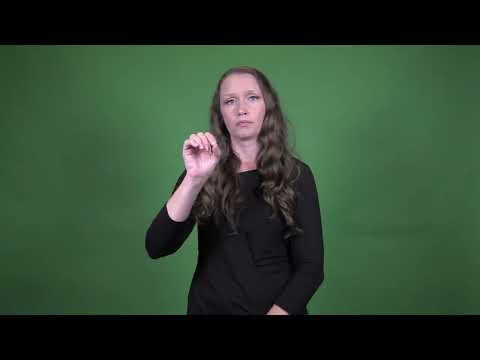
Sign for FOOT HAND in ASL | ASL Dictionary

Definition: A representation of the foot using the hand.

Sign for FOOT HAND in ASL

YouTube player

Practice Activities:

To begin learning the sign for FOOT HAND in ASL, start by practicing each part individually. Use a mirror to check your handshape and positioning while signing “foot,” then do the same for “hand.” Repeat them slowly, then progress to combining both signs in sequence. Say the English words quietly or in your head as you sign to build recall.

Use flashcards with images of a foot and a hand on one side and the sign description on the other. Quiz yourself regularly. You can also use an ASL learning app or video to see native signers demonstrate the sign for FOOT HAND in ASL and mimic their movement and pacing.

Try integrating the phrase into context by describing your body or someone else’s. For example, you might sign, “My foot hurts, but my hand is okay,” or “The baby grabbed my foot with his hand.” This helps reinforce how each sign fits naturally into communication.

Tell simple stories or scenarios involving both body parts. For instance, narrate a day at the beach: “I walked on the hot sand with my bare foot. Then I brushed the sand off with my hand.” You can also discuss sports like soccer or basketball where these body parts are often mentioned.

Practice with a partner by taking turns identifying and signing body parts. One person can point to their foot or hand, and the other responds using the sign for FOOT HAND in ASL. Then switch roles. You can also play a memory or matching game using cards labeled with body parts that require you to sign each when flipped.

Integrating the sign into storytelling, conversation, and games not only reinforces understanding but also builds fluency and comfort using the sign for FOOT HAND in ASL in daily interactions.

Cultural Context:

In American Sign Language (ASL), the sign for FOOT HAND in ASL presents a unique opportunity to explore how signs are formed based on physical and visual characteristics. Both body parts, the foot and the hand, have distinct but related signs in ASL that mimic their function and shape. Understanding the sign for FOOT HAND in ASL helps learners appreciate how the language connects body movement with meaning.

The ASL sign for FOOT typically uses one hand to represent the sole of the foot, moving it against the other hand to depict a stepping motion. For HAND, the sign generally involves holding up a flat hand to show the shape and function of a human hand. When referring to both parts together as FOOT HAND in ASL, it’s essential to understand their individual meanings and how they might appear together in teaching or anatomy-related contexts.

FOOT HAND in ASL might come up during conversations involving body parts, injuries, medical settings, or while teaching children about their bodies. In Deaf culture, it’s common to use physical representation in ASL to express body parts, often with a visual cue that mirrors their real-world counterparts. This makes signs like FOOT HAND in ASL not only practical but also deeply intuitive.

Across different ASL users and regions, slight variations in how the signs for FOOT HAND in ASL are performed can occur. These variations are typically influenced by local signing traditions or educational settings. However, the core features remain recognizable, ensuring consistency in understanding.

In Deaf schools and early education settings, the sign for FOOT HAND in ASL is frequently taught alongside other body parts as part of basic vocabulary acquisition. This makes it an essential component in foundational ASL learning. Incorporating these signs helps promote body awareness and communication skills from a young age.

The concept of combining the signs for foot and hand may also appear in storytelling, particularly in visual or tactile storytelling common in Deaf culture. ASL often uses classifiers that represent the shape or function of body parts, and signs like FOOT HAND in ASL may be creatively adapted during performance or narrative signing. This reflects ASL’s rich visual-spatial grammar and flexibility.

Medical professionals who work with Deaf or hard-of-hearing patients also benefit from knowing how to correctly sign FOOT HAND in ASL. Being able to communicate body parts clearly aids in diagnosis, treatment, and establishing trust with patients. This highlights the everyday usefulness of signs like FOOT HAND in ASL beyond the classroom or home.

In family settings, parents raising Deaf children often use ASL signs

Extended Definition:

The sign for FOOT HAND in ASL is a compound phrase that typically references signs for both body parts: the foot and the hand. In American Sign Language, it’s important to distinguish between signs for individual body parts because each has its own unique handshape, location, and movement.

To sign FOOT in ASL, you usually use a flat hand to tap the top of the opposite foot or motion toward your foot, depending on your position. The context often helps clarify whether you mean the literal body part or are using the word in a more figurative sense.

The sign for HAND in ASL involves showing an open palm and sometimes gesturing to or with your own hand, depending on the context. Since ASL is a visual language, the signer’s body plays an important role in conveying meaning, especially when referring to body parts like the hand.

When signing a compound term like FOOT HAND in ASL, interpreters and communicators often sign both body parts in sequence. There isn’t a single blended sign for FOOT HAND in ASL, so the two are usually shown individually for clarity. This approach ensures that each sign is understood independently before forming a combined idea.

In ASL storytelling or dramatic contexts, FOOT and HAND might be signed in close succession to create a visual relationship between the two. For example, describing injury, movement, or coordination may call for signing FOOT and HAND with expressive facial cues and body posture.

It’s also important to note that the ASL sign for FOOT HAND may change based on the grammar and intent of the sentence. ASL uses non-manual signals, facial expressions, and body shifts to convey additional meanings, so the way you sign these words together may vary dramatically.

Some learners may confuse the positioning or handshape when first learning the sign for FOOT HAND in ASL. Practicing in front of a mirror or with a partner can help improve accuracy and fluency. Video dictionaries and interactive ASL learning tools offer great visuals to reinforce proper technique.

The phrase FOOT HAND might also be used in more abstract concepts within ASL conversations, especially in educational or medical settings. Knowing how to sign both words clearly gives signers greater communication flexibility. This is especially useful when describing physical tasks or exercises.

The sign for FOOT HAND in ASL doesn’t have a single movement or meaning on its own. Instead, it’s a practical way to refer to both concepts together, commonly used in descriptions of anatomy or gross motor functions. Awareness of ASL’s grammar ensures your meaning doesn’t get

Synonyms: Unfortunately, “Foot Hand” doesn’t appear to be a standard term or concept in ASL or SEO contexts. Could you clarify its meaning or usage? This will help me provide better synonyms or suggestions. If it’s meant to imply the physical foot or hand, I can offer alternatives for those terms.

Educational resources: Find related learning materials in our course bank!

Want more? Check out some of our popular learning activities on the homepage!

Need to look up a sign? Use our highly rated dictionary: https://aslinteractive.com/best-asl-dictionary/

Follow us on tiktok: https://www.tiktok.com/@aslinteractive. More social media links at the bottom of this page!

Long-tail Keywords: what is the sign for Foot Hand in ASL, how do you sign Foot Hand in ASL, Foot Hand sign language meaning

Categories:

tags: Foot in ASL, Hand in ASL, Foot and Hand signs in ASL, Body part signs in ASL, Learn ASL vocabulary

Parameters

*Handshape*:

The handshape for the sign for FOOT HAND in ASL involves using a flat hand, also known as the “B” handshape . To indicate “foot,” the dominant hand in the “B” handshape taps or brushes the top of the non-dominant extended foot. For the sign for FOOT HAND in ASL, the hands move in a natural way to show the body parts involved, with clear, flat fingers that represent the planar surface of the foot or hand.

In both cases, the use of the flat “B” handshape helps clearly depict the body part being referenced. When conveying the sign for FOOT HAND in ASL, hand orientation and placement help add contextual meaning, showing the difference between the lower and upper extremities without changing the basic structure of the handshape.

*Palm Orientation*:

The palm orientation for the sign for FOOT HAND in ASL differs based on each concept’s representation. For FOOT, the dominant palm typically faces sideways or slightly down, showing the base or sole of the foot. In contrast, the HAND sign features a forward-facing palm or downward angle to reflect the hand’s surface.

When combining the two, the palm orientations remain distinct to reflect clarity—the FOOT sign may involve the dominant hand tapping the non-dominant hand’s palm, while the HAND sign visually mimics the shape of a real hand. This contrast helps maintain the integrity of the sign for FOOT HAND in ASL.

*Location*:

The sign for FOOT HAND in ASL uses two distinct placements on the body to convey meaning. For FOOT, the location is typically near the ankle or lower leg area, with the dominant hand gesturing around or pointing toward the foot. For HAND, the location centers in front of the torso or near the chest, where the dominant hand demonstrates the shape or movement related to the hand.

Both signs in the sign for FOOT HAND in ASL rely on contextual body parts as their location references. These placements help visually represent the concepts accurately while maintaining spatial clarity between the foot and hand elements. ️

*Movement*:

The sign for FOOT HAND in ASL involves making separate signs for each word. For “foot,” extend your non-dominant hand flat, palm down, and tap the heel of your dominant bent hand onto the back of the non-dominant hand twice. For “hand,” hold up your dominant hand flat, palm down, and brush the fingertips of the non-dominant hand underneath the dominant hand.

Each sign is performed distinctly and sequentially to complete the sign for FOOT HAND in ASL. There is no blending of movements; each concept is represented with its standard, individual sign to ensure clarity. ✋

*Non-Manual Signals*:

Facial expressions for the sign for FOOT HAND in ASL should be neutral and attentive, with brows relaxed and eyes focused on the area of the body being referenced. Slight head tilting may occur depending on which word is being emphasized. Maintain a natural mouth posture unless used in a specific context or classifier.

If contextual meaning is needed, raise your eyebrows slightly to indicate a WH-question or demonstrate engagement. The sign for FOOT HAND in ASL is typically accompanied by minimal non-manual markers unless contextual emphasis is required.

*Prosody, Dominant/Non-Dominant Hand*:

The sign for FOOT HAND in ASL uses both the dominant and non-dominant hands. To show “foot,” use your dominant hand in a flat B-handshape and tap it on the side of your non-dominant hand, representing the heel making contact. For “hand,” extend the non-dominant hand palm-up while the dominant hand brushes over it lightly, mimicking the outline of a hand. The sign for FOOT HAND in ASL visually distinguishes each body part through clear spatial referencing. ️

Tips for Beginners:

When learning the sign for FOOT HAND in ASL, it’s essential to remember that both “foot” and “hand” are signed separately. Since these are basic body parts, they are commonly used in conversations, so clarity and precision are key. Start by practicing each individual sign slowly in front of a mirror to ensure your palm orientation and handshape are accurate.

For “foot”, use your dominant hand in a flat shape and tap the top of your non-dominant foot or mimic this action in the air if sitting. For “hand”, use an open palm and gesture or point to your own hand. Consistency in placement and context will help reinforce meaning. Every sign should be clean and deliberate to keep it understandable to others.

Beginners sometimes rush or blend the signs too closely together. Avoid this by isolating each sign until you’re confident with your transitions. It’s also important to maintain a neutral facial expression unless the context suggests otherwise — nuanced expressions can sometimes shift meaning in ASL. Practicing in natural, everyday conversations can help build fluency faster.

Don’t forget non-manual signals. Although the sign for FOOT HAND in ASL does not require heavy facial grammar, making sure your eyes follow and support the direction of movement is helpful. Stay relaxed, and make sure your movements are not stiff or robotic.

Recording yourself can also be beneficial. Replaying your video allows you to catch common mistakes like placement inconsistency or unclear handshapes. Repetition is your friend, especially when practicing the sign for FOOT HAND in ASL. The more you expose yourself to native signers using it, the better your retention and understanding.

sign for foot hand in asl, asl body part signs, learn basic asl foot and hand signs, asl sign for feet and hands, how to sign body parts in american sign language

Connections to Other topics:

The sign for FOOT HAND in ASL connects directly to fundamental body part vocabulary, which is critical in early ASL learning. These signs encourage anatomical understanding and help in forming compound signs when discussing parts of the body, injuries, or activities involving physical movement. For example, signs like WASH-HANDS or FOOTBALL use the base signs HAND and FOOT as components, enhancing vocabulary breadth.

This combination can also support visual-spatial orientation in ASL, as signs involving body parts often require placement on or near specific parts of the signer’s body. Understanding the location and context of the sign for FOOT HAND in ASL reinforces accuracy in positioning and perspective—a key component of ASL grammar. It also promotes clarity when describing symptoms, exercises, clothing, or even animals with distinctive features.

In discussions about sports or activities, such as PLAY-FOOTBALL, WALK, CLIMB, or HAND-STAND, the signs for FOOT and HAND often appear. These vocabulary items become part of a larger network relating to action verbs and descriptions of motion. This context helps learners understand how to construct sentences describing physical routines or injuries. For example, one might combine USE with FOOT or HAND to mean using a foot pedal or hand tool.

The sign for FOOT HAND in ASL is also useful when discussing balance, mobility, and accessibility. In medical or therapy settings, body part signs are often used with modifiers like HURT, STRONG, or WEAK. This allows fluent communication about pain, progress, or limitations and leads to further compound use.

Finally, the sign for FOOT HAND in ASL can appear in educational contexts while teaching children body awareness or in games such as SIMON-SAYS. These situations show how the signs integrate into both structured learning and everyday play, expanding both language and conceptual understanding.

Summary:

The sign for FOOT HAND in ASL involves a combination of two individual, concrete noun signs: one for FOOT and one for HAND. Each of these has its own precise motion, placement, and handshape, making the compounded concept both visually descriptive and functionally direct in ASL grammar. When signed together, they serve to denote the body parts in sequence.

To sign FOOT, one typically uses a flat hand, either the dominant or non-dominant side, to tap or brush along the instep or toes of the opposite foot. This sign can vary slightly depending on visibility and context. Some users prefer a fixed tap motion near the ankle or along the top of the foot with a neutral facial expression.

The sign for HAND commonly uses the dominant hand showing the open flat B-handshape, palm turned to the side or slightly up, and then brushes or touches the palm of the non-dominant hand, which rests open and flat. This motion illustrates the physical structure of the hand. Precision in hand orientation and contact is essential for clarity.

When combined, the signs form a conceptual set rather than a single compound. ASL allows for signs like the sign for FOOT HAND in ASL to be presented sequentially for emphasis, especially when referring specifically to body positions, injuries, or anatomical references. It helps give spatial understanding between body parts.

Grammatically, presenting these two signs together often implies a list or drawing attention to specific physical attributes. ASL has spatial advantages where classifiers and indexing play large roles. Signers may point to their own body while signing to give further context.

The sign for FOOT HAND in ASL is not standardized as a single object or idiomatic expression, but rather used more situationally. For example, it could appear in medical, sports, dance, or children’s educational contexts. The pragmatics of ASL allow for such flexibility in combining signs.

ASL tends to use listing or body indexing when identifying parts, which provides another layer of visual clarity. A signer referring to the sign for FOOT HAND in ASL might point to their foot and hand while signing to emphasize location or sensation. Such physical referencing is common in signed languages.

Culturally, body parts carry relevance in many deaf narratives and storytelling techniques. Storytelling in ASL incorporates vivid body expression, where references like the sign for FOOT HAND in ASL can help paint scenes. Including these terms supports engagement in visual storytelling.

The use of signs like the sign for FOOT HAND in ASL also appears in early childhood education. Teachers working with deaf or hard-of-hearing children may use these signs while singing songs or naming body parts. This supports language acquisition through repetition and contextual usage.

Clinically, the sign for FOOT HAND in ASL can be vital in medical interpretation. Communicating physical issues accurately depends on being able to differentiate body regions. For instance, describing symptoms or injuries requires exact references like these.

Linguistically, the signs for both foot and hand use distinct handshapes and formations that closely align with the physical characteristics of each part. These iconic signs demonstrate the visual-manual modality’s ability to express form and function. The sign for FOOT HAND in ASL benefits from this iconic relationship.

In applied linguistics, signs like these are used to track vocabulary acquisition and handshape development in ASL learners. Students learning ASL are often introduced to body part signs early because they are tangible, visible, and contextually easy to incorporate in daily language. Repetition helps concretize form and meaning.

The sign for FOOT HAND in ASL is useful in compound expressions. While not a compound word itself, the use of both signs can contribute to discussions about coordination, limbs, or physical interactions. For example, it can arise in conversations about balance, movement, or physical gestures.

Use of the sign for FOOT HAND in ASL also arises in sports or rehabilitation settings. Describing movement drills, limb coordination, or injuries involving both extremities utilizes these foundational signs. This is a reminder of how functional vocabulary feeds into diverse domain-specific communication.

Children’s songs like “Head, Shoulders, Knees and Toes” have ASL adaptations that often include foot and hand as repeated signs. Signing along helps children anchor vocabulary. The sign for FOOT HAND in ASL appears frequently in such activities for inclusion and engagement.

Within Deaf culture, body awareness through sign language is an important part of self-expression. The ability to name and express sensations or actions tied to foot and hand movements supports empowerment in everyday communication. Understanding the sign for FOOT HAND in ASL bridges this kind of self-advocacy.

The physicality of ASL means signs often mirror or mimic real-world dimensions or placements. The foot sign is typically low and the hand sign is mid-level, aligning with true body orientation. This visual logic is both intuitive and effective for communication.

Analyzing the sign for FOOT HAND in ASL through morphophonemic dimensions reveals how handshape, location, palm orientation, movement

Want more? Check out some of our popular learning activities!

ASL Interactive Resources

ASLInteractive YouTube Channel

Follow us on tiktok: @aslinteractive.com

Follow us on Instagram: aslinteractive

Facebook page: aslinteractive

Facebook group: aslinteractive

LInkedIn: ASL Interactive LLC

Twitter: @ASL_interactive

*Some information on this page is AI-generated. AI can make mistakes. Please check the information.


Responses