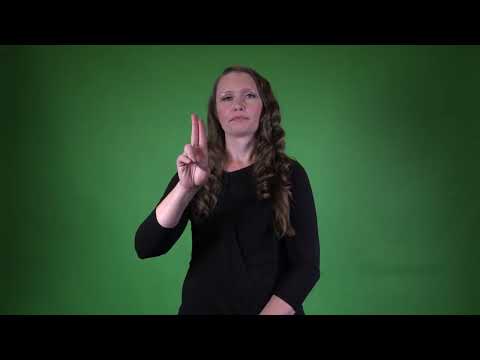
Definition: Used to introduce a phrase or clause contrasting with what has already been mentioned.
Sign for FS_BUT in ASL
Practice Activities:
To build confidence with the sign for FS_BUT in ASL, start by practicing fingerspelling the word slowly and clearly. Focus on correct handshapes and smooth transitions between the letters B-U-T. Use a mirror or record yourself to check for accuracy and clarity. You can also try speeding up slightly as your confidence grows, always keeping the movement clean.
Next, try using the sign for FS_BUT in ASL in short phrases to get familiar with its use in contrastive statements. Sign two ideas, then insert FS_BUT to show contrast. For example, sign “I WANT ICE CREAM FS_BUT I’M ON A DIET.” Rehearse other sentence pairs like “HE’S FUNNY FS_BUT LOUD” or “IT’S RAINING FS_BUT I LIKE IT.” Repeating phrases like these will help reinforce the use of the FS_BUT sign in natural conversation.
As a storytelling activity, tell a short personal anecdote that involves a contrast or change in expectation. For instance, “I THOUGHT CLASS WAS CANCELLED FS_BUT THE TEACHER SHOWED UP.” Keep the story simple and focus on inserting FS_BUT to indicate the contrast. Practicing this adds fluency and helps integrate the sign smoothly into your expressions.
Work with a partner by taking turns giving statements that your partner has to respond to with a contrast using the sign for FS_BUT in ASL. For example, one partner signs, “I LIKE SUSHI,” and the other must respond with a contrasting statement using FS_BUT, such as “I LIKE PIZZA FS_BUT NOT SUSHI.”
Finally, play a quick-reaction game by flashing cards with two contrasting ideas. Your goal is to respond using the sign for FS_BUT in ASL accurately and quickly. The more spontaneous your responses become, the more conversational your fingerspelling skills will be.
Cultural Context:
In American Sign Language, the sign for FS_BUT in ASL represents more than just a simple conjunction. The “FS_” prefix indicates that the word is finger spelled, rather than represented by a unique sign. When using the sign for FS_BUT in ASL, Deaf and signing communities rely on finger spelling because there might not be a commonly accepted or widely understood sign for the term.
The use of FS_BUT in ASL shows the flexibility and adaptability of the language. It reflects how ASL incorporates English words by finger spelling them when a specific sign doesn’t exist or isn’t commonly used. This happens often with short English conjunctions, where precise meaning and context matter.
When someone uses the sign for FS_BUT in ASL, they are often setting up a contrast or introducing a counterpoint, just like in spoken English. This aligns with how we structure conversations, shifting from one idea to another. The pause and hand movement that accompany FS_BUT in ASL are just as expressive and important as the letters being spelled.
FS_BUT in ASL is especially common in formal or educational settings where clarity is important. It allows the signer to clearly convey opposition or contrast, which might be less precise using more generalized hand signs. The accuracy of finger spelling adds a layer of specificity that ASL users appreciate and rely on.
Youth and new signers often learn the sign for FS_BUT in ASL early in their signing journey. It’s introduced as part of foundational vocabulary when learning to sign complete sentences and express more complex thoughts. Because it’s so frequently used in both expressive and receptive language, mastering the sign for FS_BUT in ASL is key for fluency.
The cultural importance of finger spelling in ASL cannot be overstated. Finger spelling connects ASL users to written English, helping to bridge two linguistic worlds. The sign for FS_BUT in ASL works as one of many examples of how that bridge is built and maintained.
In Deaf culture, using finger spelling correctly signifies respect and fluency in communication. Whether it’s a proper noun, a technical term, or a conjunction like FS_BUT, using finger spelling naturally is a marker of skilled language use. That makes the sign for FS_BUT in ASL not only practical but also culturally significant.
Socially, the placement and pacing of finger spelling contribute to tone and meaning. The way FS_BUT in ASL is signed can change the emotion or urgency behind a statement. This level of nuance
Extended Definition:
The sign for FS_BUT in ASL refers to the fingerspelled version of the English word “but.” In American Sign Language, fingerspelling is often used for English words that don’t have a standardized sign or when emphasizing a specific word. FS_BUT indicates that the signer is spelling out the word B-U-T letter by letter using the ASL manual alphabet.
Fingerspelling plays a key role in ASL communication, especially when expressing words with no direct sign or when clarity is essential. The sign for FS_BUT in ASL may be used in educational settings, when learning new vocabulary, or during conversations where the signer prefers to distinguish the word for accuracy. It distinguishes the word from the standard ASL sign for “but,” which involves a hand gesture rather than spelling.
The use of FS_BUT helps add emphasis to the word in a sentence. For instance, if someone wants to draw attention to a contrast or contradiction, they may choose to fingerspell FS_BUT rather than use the common ASL sign. This allows the signer to underline the importance of the contrast being communicated.
In many cases, the sign for FS_BUT in ASL will appear in formal speech or academic discussions where exactness is necessary. Fingerspelling is generally slower than using a sign, so using FS_BUT shows intentional effort on the part of the signer. It can also reflect a teaching environment where learners are still becoming familiar with the sign vocabulary.
The visual structure of the fingerspelled sign for FS_BUT involves forming the handshapes for each of the letters B, U, and T in sequence. Each letter is formed clearly and fluently, making it easy for the other person to recognize. Practice helps improve both speed and clarity when using fingerspelling in ASL.
Deaf and hard-of-hearing individuals may use fingerspelling to introduce English words that are not easily represented in sign. FS_BUT is especially helpful when engaging with English content like books, articles, or online videos. It acts as a bridge between English and ASL, offering more flexibility in conversation.
ASL learners may come across FS_BUT while studying American Sign Language from textbooks, courses, or online dictionaries. Understanding the reason for using FS_BUT instead of the common sign builds a deeper appreciation for the language’s structure. It also enhances communication when interacting with a diverse ASL-speaking audience.
Some situations may call explicitly for the sign for FS_BUT in ASL,
Synonyms: however, yet, although, still, nevertheless
Educational resources: Find related learning materials in our course bank!
Want more? Check out some of our popular learning activities on the homepage!
Need to look up a sign? Use our highly rated dictionary: https://aslinteractive.com/best-asl-dictionary/
Follow us on tiktok: https://www.tiktok.com/@aslinteractive. More social media links at the bottom of this page!
Long-tail Keywords: What is the sign for but in ASL?, How do you sign but in ASL?, What does fs_but mean in ASL?
Categories:
tags: fs_but in ASL, fingerspelling but in American Sign Language, how to sign fs_but, ASL dictionary fs_but, learn fs_but in ASL
Parameters
*Handshape*:
The handshape for the Sign for FS_BUT in ASL involves using the dominant hand in a neutral position with fingers slightly apart to begin the fingerspelling sequence. Each letter—B, U, and T—is distinctly formed with clarity, keeping the hand steady in the signing space while transitioning smoothly between letters.
When producing the Sign for FS_BUT in ASL, the signer typically maintains fingerspelling precision by ensuring palm orientation remains forward. The handshape transitions accommodate each letter’s formation, aiding in easy recognition of the fingerspelled word.
*Palm Orientation*:
The palm orientation for the sign for FS_BUT in ASL involves both hands held in the dominant and non-dominant positions with fingerspelling. Each hand forms the handshapes for B, U, and T using the dominant hand, palms generally facing forward or in a neutral position relative to the signer’s body.
Since the sign for FS_BUT in ASL is fingerspelled, the orientation of each letter remains consistent with standard fingerspelling protocol. This ensures clarity and accuracy when using the sign. ️
*Location*:
The sign for FS_BUT in ASL is produced in the neutral space directly in front of the chest, slightly below chin level. Because it is a fingerspelled word, each letter is articulated clearly with one hand, maintaining a steady rhythm and minimal movement.
This location allows clear visibility of each letter in the sign for FS_BUT in ASL, ensuring the fingerspelling is easily understood by the viewer . Neutral space helps keep the sign distinct and easy to follow.
*Movement*:
To produce the sign for FS_BUT in ASL, each letter of the word “BUT” is fingerspelled individually using the dominant hand. Begin by shaping the hand into the B-handshape, followed by transitioning smoothly into the U-handshape and then into the T-handshape.
The hand stays in front of the body at chest height, with clear and deliberate movements between each letter. The sign for FS_BUT in ASL requires precise articulation and steady pacing to ensure full clarity.
*Non-Manual Signals*:
When using the sign for FS_BUT in ASL, the brows are typically neutral or slightly raised to indicate contrast or exception. The mouth remains relaxed or may form a slight movement resembling the word “but” to align with the fingerspelling.
Facial expression can subtly emphasize surprise, clarification, or contradiction depending on the context of the sign for FS_BUT in ASL. Eye gaze may briefly shift side to side to show contrasting ideas.
*Prosody, Dominant/Non-Dominant Hand*:
The sign for FS_BUT in ASL involves fingerspelling the word B-U-T using the dominant hand only. The non-dominant hand does not participate and remains at rest during the production. Each letter is clearly articulated in sequence with a slight outward flick of the wrist to indicate contrast or exception. This movement helps highlight meaning when using the sign for FS_BUT in ASL in sentence structure.
Because FS_BUT is fingerspelled, clarity and speed are essential for understanding. Native signers often use the sign for FS_BUT in ASL when emphasizing a contradiction or an alternative in their discourse flow.
Tips for Beginners:
The sign for FS_BUT in ASL is a fingerspelled word, meaning each letter of the word “but” is signed using the ASL alphabet. When fingerspelling, it’s important to keep your hand steady, within the signing space, and close to shoulder level for best visibility. Practice makes perfect—start slowly and gradually build up speed as your handshapes become more automatic .
For the sign for FS_BUT in ASL, make sure your fingers are clearly differentiating between B, U, and T. The B handshape requires all fingers extended with the thumb tucked across the palm. Then, for U, raise the index and middle fingers together. Finally, T is made by placing the thumb between the index and middle fingers. Each letter should flow fluidly into the next without bouncing or jerking.
A common mistake beginners make is either fingerspelling too fast or slurring the shapes so they aren’t easily recognizable. It’s better to go slow and clear than fast and messy—clarity builds confidence . Always angle your hand slightly outward so your conversation partner can easily see what you’re signing.
When practicing the sign for FS_BUT in ASL, try using a mirror or recording yourself to see if each letter is visible and precise. Don’t forget to use mouthing or facial cues when appropriate, as that adds context and helps with understanding. Even though it’s fingerspelled, expressive cues can reinforce what you’re signing and make your communication smoother.
In real-world settings, the sign for FS_BUT in ASL can substitute when the lexical sign “but” isn’t used. It’s frequently used when emphasizing or spelling out a title, brand, or concept. Keep your fingers close together and move directly from one letter to the next to reduce lag. Continuous practice will improve flow and comprehension .
sign for FS_BUT in ASL, sign for FS_BUT in ASL grammar, fingerspell FS_BUT in ASL, how to sign FS_BUT in ASL, ASL fingerspelling FS_BUT
Connections to Other topics:
The sign for FS_BUT in ASL is fingerspelled, meaning that each letter—B-U-T—is signed using the manual ASL alphabet. This is a common strategy for incorporating conjunctions or less frequently used words in ASL that may not have specific lexical signs. Since conjunctions like “but” are frequently used in English, learners often begin with the sign for FS_BUT in ASL before transitioning to more conceptual or signed renditions as they build fluency.
FS_BUT closely relates to concepts of contrast or opposition, making it useful when constructing ASL narrative or discourse. It often appears in storytelling or explanations when two ideas need to be negated or compared. For example, it might be used when expressing a sentence like “I want to go, but I’m tired,” where FS_BUT is fingerspelled quickly and clearly to connect the clauses.
As signing skills advance, learners may substitute fingerspelling with a conceptual sign like the one-hand “but” sign, which uses both index fingers pointing forward, then crossing and moving apart in opposite directions. However, the sign for FS_BUT in ASL remains essential for clarity, especially in formal or academic settings, or when emphasizing the word itself rather than its meaning.
Compounds and context-specific expressions may use FS_BUT in unique ways. For instance, in jokes, debates, or persuasive arguments in ASL, fingerspelling FS_BUT can add emphasis or introduce contrast with more dramatic flair. This makes the sign important not just for grammar, but also for tone and communication style.
Understanding the sign for FS_BUT in ASL can help learners navigate more complex sentence structures and learn how ASL handles transitions and logical connections. It also ties in with other discourse markers such as FS_AND, FS_OR, and FS_SO, offering a broader understanding of how ASL crafts relationships between thoughts .
Summary:
The sign for FS_BUT in ASL is a fingerspelled version of the English word “but.” This form is used when clarity, specificity, or proper naming is necessary. It also appears in contexts where signing the concept “but” with the traditional sign would cause confusion.
FS_BUT is typically fingerspelled using a quick, fluid motion with the dominant hand. The signer uses the letters B-U-T in sequence, generally keeping the hand close to the side of the body. This fingerspelling is done at normal speed unless emphasis is required, in which case the signer might slow down or make a deliberate pause after each letter.
Grammatically, FS_BUT in ASL is employed when one wants to convey the contrast or exception present in a sentence. While ASL has a standard sign for “but” made by using index fingers drawn apart in opposite directions horizontally, the sign for FS_BUT in ASL emphasizes the English representation, formality, or uniqueness of the word.
This is particularly important in academic discussions, legal conversations, or when educating ASL learners about discourse connectors. It helps provide a link between ASL and English literacy. In this way, the sign for FS_BUT in ASL builds a bridge between the two languages.
The sign also shows up when citing from written material. In reciting essays, dialogue, or books, using FS_BUT reinforces that the word is coming directly from a text source. This adds another layer to the message, suggesting the precise wording matters.
The use of FS_BUT can help disambiguate overlapping meanings. For example, “but” sometimes functions almost like “except” or “however,” and spelling it out provides a clearer signal in conversations that might include nuanced phrasing.
This choice may also reflect a signer’s preference for code-switching. Deaf individuals or signers with strong bilingual identity (ASL and English) may use FS_BUT more when shifting their language register to accommodate English-oriented audiences.
Linguistically, fingerspelling represents an essential component of ASL, functioning somewhat like loanwords in spoken languages. The sign for FS_BUT in ASL illustrates this perfectly, offering a way to insert precise English terms into ASL flow. This supports both cohesion and clarity within signed content.
The sign for FS_BUT in ASL carries significance in language learning environments. Teachers might use it when introducing conjunctions to ASL students or when discussing how signers deal with rhetorical construction. It acts as a clear example of mixing visual-spatial grammar with English-based elements.
Emotionally, FS_BUT sometimes brings a sense of seriousness or importance. Because fingerspelling tends to cue the brain that something “foreign” is being introduced, the appearance of FS_BUT may signal added weight to what follows. This can affect interpretation and impression.
In everyday use, people may shift between the lexical sign “but” and FS_BUT depending on speed and context. During fast dialogue, most will revert to the standard sign unless they need to emphasize written language or avoid ambiguity. This flexibility demonstrates ASL’s rich capacity for nuance.
The broader theme tied to FS_BUT is the dynamic interface between English and ASL. Since ASL is not a direct translation of English, these kinds of signs preserve specificity when needed. Individuals who use both languages fluidly often rely on fingerspelling to add flavor and clarity.
Technology has also influenced the frequency and visibility of the sign for FS_BUT in ASL. Deaf professionals, video content creators, and educators may use it more often in visually recorded material where syncing to English scripts matters. FS_BUT ensures alignment with captions and interpretations.
In alignment with applied linguistics, FS_BUT illustrates how ASL handles conjunctions in complex sentence-building. Students studying syntax and semantics often observe how fingerspelling replaces or supplements standard signs to maintain English textual integrity during transcription.
When exploring the cultural impact, FS_BUT connects to a long-standing tension and coexistence between ASL and English. Historically, education systems pushed for English dominance, quelling native sign languages. The continued use of FS_BUT in such contexts reflects both resistance and adaptation by the Deaf community.
The sign for FS_BUT in ASL also reflects sociolinguistic variation. Regionally, some signers might default to the lexical sign while others instinctively fingerspell. Generational differences also come into play, as older signers might use FS_BUT more during formal storytelling or debates.
Role shifting in ASL performances may also lead to increased use of FS_BUT. When quoting written material or portraying characters switching languages, using fingerspelling helps the audience visually identify code changes. It acts like quotation marks for the visual modality.
When analyzed under cognitive linguistics, the sign for FS_BUT in ASL shows how language processing allows for switching between iconic signs and abstract representations. Fingerspelling is less spatial than most signs and requires linear processing, reflecting unique strengths
Want more? Check out some of our popular learning activities!
ASL Interactive Resources
ASLInteractive YouTube Channel
Follow us on tiktok: @aslinteractive.com
Follow us on Instagram: aslinteractive
Facebook page: aslinteractive
Facebook group: aslinteractive
LInkedIn: ASL Interactive LLC
Twitter: @ASL_interactive
*Some information on this page is AI-generated. AI can make mistakes. Please check the information.


Responses