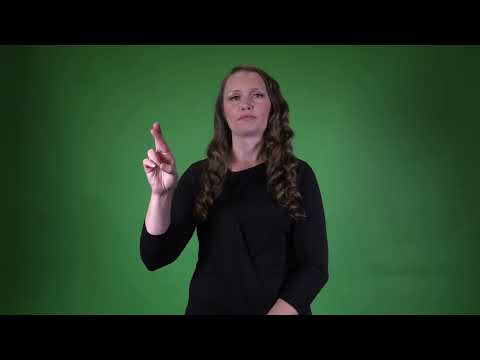
Sign for FS_DOOR in ASL | ASL Dictionary

Definition: A hinged, sliding, or revolving barrier at the entrance to a building, room, or vehicle.

Sign for FS_DOOR in ASL

YouTube player

Practice Activities:

To build fluency with the sign for FS_DOOR in ASL, start by practicing the fingerspelling of D-O-O-R clearly and smoothly. Use a mirror to check handshape clarity and spacing, making sure each letter is distinct. Repeat the sign slowly, then increase your speed while keeping accuracy.

Once comfortable with the sign for FS_DOOR in ASL, integrate it into short phrases. For example, practice signing: I OPEN D-O-O-R, or I CLOSE D-O-O-R. Take turns with a partner, prompting each other to sign simple actions involving the door, like “Please D-O-O-R OPEN” or “Who D-O-O-R CLOSE?” Use expressive facial grammar to show emotion or emphasis in each sentence.

Create a mini-story where the door plays a key role. For instance, describe someone arriving at a house, walking up to the front, and knocking on the door. Then fingerspell D-O-O-R while using classifiers to show how it opens. This encourages storytelling and context use of the sign for FS_DOOR in ASL.

Set up a practice scene with props or visuals—a drawing of a house or school building—and identify different types of doors. Ask yourself or a partner questions like: Which D-O-O-R is locked? Who is behind the D-O-O-R? Act out corresponding situations using fingerspelling and ASL classifiers.

Play a matching game with vocabulary cards, mixing common building-related signs such as WINDOW, WALL, and D-O-O-R. Have learners pick a card, fingerspell the word, and sign a sentence. This helps with retention and reinforces fingerspelling as a natural part of conversation, especially when using the sign for FS_DOOR in ASL within diverse ASL contexts.

Cultural Context:

The sign for FS_DOOR in ASL reflects more than just a physical object; it represents access, transition, and boundaries in cultural and social contexts. In the Deaf community, doors can symbolize both the literal and metaphorical entrance into spaces that are safe, inclusive, and communication-rich. Knowing the correct sign for FS_DOOR in ASL helps promote clearer visual language communication in daily interactions, especially in conversations about home, school, and public spaces.

FS_DOOR in ASL is a fingerspelled version of the English word “door,” typically used when no established sign exists or for emphasis. Fingerspelling is a vital part of ASL and is used frequently for proper names, locations, or when introducing new words. Understanding when to use the sign for FS_DOOR in ASL versus a more conventional sign speaks to a deeper cultural awareness within ASL users.

In Deaf culture, spatial awareness and physical environment are heavily emphasized. Describing layouts, buildings, and room setups is essential. For example, when explaining a room or building layout, using the sign for FS_DOOR in ASL allows the signer to focus on specific entry and exit points, showing how the physical world interacts with communication needs.

Knowing the sign for FS_DOOR in ASL is especially useful in educational settings. When Deaf students learn about architecture, emergency procedures, or follow directional cues, this vocabulary becomes part of their functional independence. FS_DOOR in ASL connects them to greater awareness of their surroundings and the language needed to navigate spaces confidently.

In storytelling and visual narratives, a door often represents opportunity, change, or danger. Translating those metaphorical meanings into sign language means choosing signs thoughtfully. The use of FS_DOOR in ASL in these situations might emphasize a specific item’s English name for clarity or emphasis, enhancing the visual and conceptual impact of the story.

Community involvement in churches, events, and residential meetings often includes navigation through many physical doors and private or public spaces. Using FS_DOOR in ASL ensures access and inclusivity. Making clear references to locations like “main door” or “back door” using fingerspelling helps maintain clarity when a standardized sign may not apply.

The importance of identifying and signing architectural elements, including doorways, helps maintain communication flow in emergency scenarios. Being able to correctly sign FS_DOOR in ASL during a fire drill or evacuation drill supports not only safety but mutual understanding across community members. It enriches the crucial interaction between Deaf and hearing

Extended Definition:

The sign for FS_DOOR in ASL is a fingerspelled version of the word “door.” FS stands for fingerspell, indicating that each letter of the word is spelled out using the American Sign Language alphabet. This method is commonly used for words that don’t yet have an established sign or when clarity is important.

When signing FS_DOOR in ASL, each letter—D, O, O, and R—is signed individually in sequence. It’s important to maintain proper handshapes and smooth transitions to ensure accuracy and readability. Fluent fingerspelling takes practice, as clarity and speed both play a role in communication.

Fingerspelling is used in many situations, such as spelling names, brands, or English words without a standard ASL sign. FS_DOOR in ASL might be used in settings where a signer wants to emphasize the English word or introduce a new term that hasn’t yet become common in ASL vocabulary. This is especially helpful in formal or educational contexts.

Sometimes, fingerspelled words like FS_DOOR in ASL eventually evolve into their own unique signs if they are used frequently. However, until then, spelling out the word ensures that the meaning is conveyed clearly. The use of FS_DOOR maintains a strong connection to the English word, especially for learners transitioning between ASL and written English.

In classrooms or ASL learning settings, teachers might introduce the sign for FS_DOOR in ASL when discussing parts of a building or types of furniture. Visual aids are often helpful because they reinforce comprehension and memory. Learners are encouraged to watch the hand movements closely and practice daily.

Signers should remember that fingerspelling in ASL uses the dominant hand and follows smooth movement patterns. Over-articulating can confuse the meaning, so it’s better to keep the hand slightly relaxed. When using the FS_DOOR in ASL, avoid bouncing or making jerky motions between letters.

In storytelling or conversational narratives, fingerspelling adds emphasis or helps avoid ambiguity. The sign for FS_DOOR in ASL can be used alongside gestures or classifier signs that show size, shape, or the action of opening a door. Combining fingerspelling and classifiers creates a richer visual message.

For digital platforms, such as video calls or online classes, signing FS_DOOR in ASL may require adjusting hand placement to stay in view. Lighting and camera angle also help ensure that each letter is seen clearly. Practicing on-screen can prepare signers for effective digital communication.

Using

Synonyms: entrance, gate, portal, doorway, entry

Educational resources: Find related learning materials in our course bank!

Want more? Check out some of our popular learning activities on the homepage!

Need to look up a sign? Use our highly rated dictionary: https://aslinteractive.com/best-asl-dictionary/

Follow us on tiktok: https://www.tiktok.com/@aslinteractive. More social media links at the bottom of this page!

Long-tail Keywords: what is the sign for door in ASL, how do you sign door in ASL, ASL sign for door

Categories:

tags: fs_door in ASL, fingerspelling door in ASL, how to sign door in ASL, ASL alphabet door, ASL door fingerspelled

Parameters

*Handshape*:

The handshape for the Sign for FS_DOOR in ASL involves fingerspelling each letter of the word “door” using the American manual alphabet. Each handshape forms the distinct letters D-O-O-R with the dominant hand in a clear, deliberate manner.

This method ensures clarity and comprehension, which is essential when using the Sign for FS_DOOR in ASL. Keep the hand in a neutral space near shoulder or chest height, and maintain consistent hand orientation throughout.

*Palm Orientation*:

When producing the sign for FS_DOOR in ASL, which is a fingerspelled word, the palm orientation is typically forward or slightly turned outward. Each handshape during fingerspelling is made with the palm facing the viewer or slightly to the side, depending on hand comfort and clarity.

In the sign for FS_DOOR in ASL, the palm remains relatively stable through the sequence. This palm orientation helps ensure each letter in the sign for FS_DOOR in ASL is clear and legible to the receiver .

*Location*:

The sign for FS_DOOR in ASL is fingerspelled, and its location takes place in the neutral signing space in front of the upper torso. Both hands are generally used to spell out D-O-O-R, with each letter clearly formed near chest level, slightly below the chin.

When using the sign for FS_DOOR in ASL, ensure your hands and fingers remain visible and within the central visual field of the viewer. Facial clarity and steady pacing are also important for accurate fingerspelling of FS_DOOR. ‍♂️

*Movement*:

To produce the sign for FS_DOOR in ASL, first fingerspell the word D-O-O-R using clear, deliberate handshapes. Each letter is formed in sequence with your dominant hand, staying within the neutral signing space in front of your chest.

Keep your arm relaxed as you transition smoothly between letters, emphasizing clarity in each handshape. The sign for FS_DOOR in ASL relies on precise finger articulation rather than broad movement.

*Non-Manual Signals*:

When using the sign for FS_DOOR in ASL, maintain a neutral yet attentive facial expression, indicating focus while fingerspelling clearly. Your eyes should follow the hand movement slightly to aid understanding and clarity.

Mouth movements may stay neutral or slightly mimic the shape of the beginning sound of the fingerspelled word. Because the sign for FS_DOOR in ASL is fingerspelled, clear articulation and steady pacing with minimal emotional expression are essential for comprehension.

*Prosody, Dominant/Non-Dominant Hand*:

The sign for FS_DOOR in ASL is produced using the fingerspelled letters D-O-O-R. The dominant hand fingerspells each letter clearly, with the non-dominant hand staying relaxed by the side or neutral.

When performing the sign for FS_DOOR in ASL, make sure each letter transitions smoothly using the dominant hand only. Maintain appropriate facial expressions to match the context, especially if emphasizing urgency or formality .

Tips for Beginners:

When learning the sign for FS_DOOR in ASL, it’s essential to remember that this sign is fingerspelled. Begin by practicing the individual letters D-O-O-R slowly and clearly. Fingerspelling requires precision, so focus on forming each letter distinctly without rushing. Use a steady hand and consistent orientation to ensure each letter is recognizable to the viewer.

A common pitfall for beginners is blending letters together or moving the hand too quickly. For the sign for FS_DOOR in ASL, clarity is more important than speed. It’s perfectly fine to go slow as you build muscle memory. Make sure your dominant hand is the one you use, with your palm facing outward and slightly forward for visibility. Practicing in front of a mirror can be helpful for monitoring hand shape and fluid motion.

Another tip is to maintain eye contact with your conversation partner while fingerspelling. Don’t look at your hand—instead, trust your body’s learning process. The better your posture and confidence, the clearer your signing will be. It’s also helpful to practice with native ASL users or fluent signers who can give feedback on your form and clarity.

For spelling out frequently used words like the sign for FS_DOOR in ASL, repetition is key . Set aside just a few minutes each day to go through the letters. Try fingerspelling common words and then add FS_DOOR into those sessions to reinforce your comfort level. Engaging with visual aids or fingerspelling apps can also support your learning process .

Finally, don’t get frustrated if it takes time to master the sign for FS_DOOR in ASL. Fluency comes with patience and practice. Stay consistent, and your fingerspelling skills will improve steadily as you become more confident in your sign language abilities.

Connections to Other topics:

The sign for FS_DOOR in ASL, being a fingerspelled word, provides a strong foundation for understanding how fingerspelling is used when a specific lexicalized sign isn’t widely adopted or when context requires clarity. Fingerspelling is essential not only for proper nouns but also for technical terms, loanwords, or items with no standard sign. FS_DOOR can be a starting point for understanding how objects in a physical space are labeled in ASL when no universal sign is established.

FS_DOOR often appears in compound signs related to housing, building navigation, or safety. For instance, FS_DOOR combined with signs like OPEN, CLOSE, or KNOCK shows how functional or action-based descriptions evolve. These compound signs provide context in storytelling, location descriptions, and instructional settings, such as in fire drills or describing a room layout .

In conversations about homes or buildings, FS_DOOR can be used in composite signs like FS_FRONT + FS_DOOR or FS_BACK + FS_DOOR to distinguish between entryways. This is helpful when giving directions or describing where events take place in narratives. These types of combinations reinforce spatial referencing and help learners develop more complex sentence structures in ASL.

The use of FS_DOOR connects to broader ASL topics such as classifiers and spatial awareness. While FS_DOOR identifies the object, classifiers can then represent it in space. For instance, a handshape representing a flat object may gesture the swinging motion of the door, integrating movement and space to enrich the conversation .

Additionally, the sign for FS_DOOR in ASL allows students to explore individuality in sign usage across regions and age groups. Some communities may accept shorthand versions or signs influenced by initialized vocabulary. This invites awareness of language variation and evolution within the deaf community while anchoring the importance of fingerspelling for clarity and precision.

Summary:

The sign for FS_DOOR in ASL is a fingerspelled sign, which means that each letter of the English word “door” is individually represented using the manual alphabet. This construction is often used to introduce new or specific concepts, technical terms, or proper nouns that don’t have widely recognized lexical signs. When fingerspelling FS_DOOR, it’s important to maintain clear handshapes, consistent rhythm, and precise spacing to ensure legibility.

In the Deaf community and in ASL discourse, fingerspelling serves a unique and vital function. The choice to fingerspell instead of using a formal sign can indicate that a term is less commonly signed or that the user wants to emphasize the English representation. In the case of FS_DOOR, this may occur in more technical contexts, or when distinguishing a literal door from metaphorical or idiomatic uses.

Fingerspelling FS_DOOR typically consists of forming the letters D-O-O-R with the dominant hand using the ASL alphabet. The movement is fluid but deliberate, showing each letter without rushing. Visual clarity is key, especially with the double “O,” which can be visually challenging for beginners.

This fingerspelled term allows for integration with other signed elements, often used in combination. For example, a signer might fingerspell FS_DOOR and then mime the opening or closing motion, combining linguistic and iconic strategies to convey meaning. This mix reflects ASL’s rich layering and expressive possibilities .

The sign for FS_DOOR in ASL draws attention to how ASL users adapt their language dynamically. Fingerspelling is not merely a one-way translation from English. It occupies its own linguistic space and comes with nuances, such as rhythm, hand positioning, and even the signer’s attitude or intent.

Culturally, FS_DOOR may be used in environments where a new or specialized meaning is being introduced—such as in education, architecture, or technology-related discussions. It could also emerge in storytelling where a literal door is described in detail, differentiating it from the standard lexical sign that depicts opening or closing a door.

The frequency of using FS_DOOR instead of a more generalized sign might also depend on region and setting. In academic or professional settings, FS_DOOR may be more common when naming architectural elements. In contrast, informal contexts may lean on classifier constructions or initialized signs.

The use of FS_DOOR can be instructive when teaching fingerspelling fluency. It’s a relatively short word, yet contains a repeated vowel and ends in a consonant burst, showcasing unique phonological elements of ASL fingerspelling. Practicing the sign enhances not only clarity but also cognitive processing of fingerspelled input.

In relation to grammatical usage, FS_DOOR behaves like a noun and is commonly modified by adjectives or verbs provided either lexical or spatially. For example, the signer may indicate whether the FS_DOOR is heavy, creaky, or shut by incorporating facial expressions and classifier handshapes along with the spelled-out base.

In ASL linguistics, the fingerspelling of FS_DOOR exists within a spectrum: from precise alphabetic representation to lexicalized forms. Some signs evolve from frequent fingerspelling into single-movement signs over time. Although FS_DOOR is likely not yet lexicalized widely, its presence reflects ASL’s evolving lexicon and hybrid nature of signs.

From an applied linguistics perspective, the fingerspelled form of FS_DOOR makes it a strong candidate for comparing receptive skills among different groups of learners. Non-native signers may struggle with recognition speed or the double letter, making this sign ideal for instructional scaffolding.

There is also an embodied cognition aspect to how FS_DOOR is perceived and understood. Because doors aren’t only linguistic concepts but physical ones, the act of metaphorically forming the word with one’s body lines up with cognitive schema built around spatial navigation and boundaries ⛩️. This bodily experience complements the conceptual understanding of the term.

FS_DOOR also touches on broader themes of access and transition in the Deaf community. A door may symbolize opportunity or limitation depending on the context, which is relevant in Deaf storytelling, poetry, and visual art. The literal term fingerspelled can later bridge metaphorical meanings, giving it deeper interpretive power.

The sign for FS_DOOR in ASL interacts intertextually with signs for OPEN, CLOSE, LOCK, and KEY. These signs may follow or precede FS_DOOR smoothly in narrative or instructional signing. Signers often sequence them to build rich, layered explanations that engage both physical and conceptual elements of space and access.

In childhood language development, FS_DOOR can be a teachable moment for introducing written English equivalents while also promoting spatial understanding. The accessibility of a real-world referent—a door—allows children to anchor the abstract letters to tangible experiences, reinforcing cross-modal language learning.

Grammatically, FS_DOOR is used predominantly within noun phrases. For instance, in a sentence like “I paint the red door

Want more? Check out some of our popular learning activities!

ASL Interactive Resources

ASLInteractive YouTube Channel

Follow us on tiktok: @aslinteractive.com

Follow us on Instagram: aslinteractive

Facebook page: aslinteractive

Facebook group: aslinteractive

LInkedIn: ASL Interactive LLC

Twitter: @ASL_interactive

*Some information on this page is AI-generated. AI can make mistakes. Please check the information.


Responses