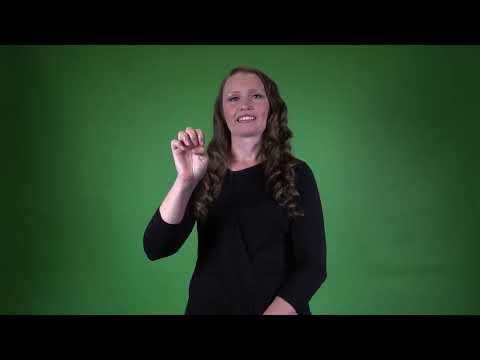
Definition: An establishment providing accommodations, meals, and other services.
Sign for FS_HOTEL in ASL
Practice Activities:
Start by fingerspelling the word slowly: H-O-T-E-L. Practice this in front of a mirror, focusing on clear handshapes and fluid transitions between each letter. Repeat it several times a day to build muscle memory and improve your speed without sacrificing clarity.
Say the word aloud as you fingerspell it to reinforce the connection between English and ASL. Try fingerspelling the sign for FS_HOTEL in ASL both sitting and standing to simulate different real-life communication situations. Video yourself and then review to identify areas for improvement in handshape or transitions.
Create five example sentences using the sign for FS_HOTEL in ASL. For example, “I stay H-O-T-E-L weekend” or “Family go H-O-T-E-L vacation.” Practice signing these with smooth transitions and clear non-manual markers like raised eyebrows when asking questions.
Use the sign in a storytelling activity. Pretend you’re planning a road trip and include various locations. Describe which city you went to, show the sign for FS_HOTEL in ASL when talking about accommodations, and add details like the quality of the room or breakfast options using classifiers and descriptive signs.
For a partner activity, take turns describing travel scenarios. One person gives a destination while the other signs a full response about finding lodging and includes the fingerspelled word. Swap roles and give feedback to help each other improve clarity and fluency.
Try a receptive practice drill. Watch someone else fingerspell the sign for FS_HOTEL in ASL at different speeds and write down what you see. This builds comprehension and prepares you for real-time conversations.
Practice fingerspelling the word within categories, like types of buildings or places you visit when traveling. Include hotel and other similar words to build your vocabulary and understand how the sign fits into broader discussions.
Cultural Context:
Understanding the sign for FS_HOTEL in ASL involves more than just learning fingerspelling. In Deaf culture, the use of fingerspelled words like FS_HOTEL represents how certain English words are adapted naturally into American Sign Language when no unique sign exists or when clarity is essential. This shows how ASL users value clear communication, particularly when sharing names of businesses or locations.
The sign for FS_HOTEL in ASL is especially common in urban or travel conversations where people talk about accommodations. Fingerspelling FS_HOTEL in ASL ensures the specific name or concept of “hotel” is understood, especially when referring to well-known hotel brands or when exact pronunciation matters. This is part of why fingerspelling is an essential feature in ASL vocabulary.
In Deaf culture, pointing out a hotel or giving directions while using the sign for FS_HOTEL in ASL allows for accuracy. Hotels often do not have standardized signs because there are so many different ones by name or chain. Using the fingerspelled version gives flexibility while still fitting naturally into fluent ASL signing.
ASL often adopts fingerspelled words like FS_HOTEL for formal settings or when a specific term doesn’t yet have a widespread iconic sign. This enriches the language and allows Deaf signers to keep up with evolving vocabulary, especially when traveling, booking rooms, or discussing locations with friends and family. Using FS_HOTEL in ASL creates a clear mental picture for those in the conversation.
In everyday use, the sign for FS_HOTEL in ASL is often employed while giving travel advice or telling stories about vacation experiences. It also shows up when Deaf people attend business conferences or large gatherings that involve overnight stays. Because of that, FS_HOTEL in ASL is a versatile and functional part of modern sign language conversations.
Culturally, the use of FS_ before hotel highlights the blending of Deaf and hearing worlds. Deaf people adapt English words into ASL while still maintaining the linguistic structure of their native language. The sign for FS_HOTEL in ASL is one example of how efficient and adaptive the language can be without losing cultural identity.
FS_HOTEL in ASL also allows beginner learners to link English vocabulary and ASL structure, making it useful in classrooms or interpreted settings. Important interactions, like checking in to a hotel or looking for directions, often require this sign to make communication smooth. It plays a practical role in real-life social and travel situations
Extended Definition:
The sign for FS_HOTEL in ASL uses the fingerspelled approach, meaning the word H-O-T-E-L is spelled out using the manual alphabet in American Sign Language. This technique is often used when there’s no commonly accepted iconic sign for a specific word, especially for names of businesses, brands, or proper nouns. In the case of FS_HOTEL, the fingerspelling makes the concept clear and specific, particularly useful in diverse contexts.
To produce the sign for FS_HOTEL in ASL, you begin by signing each letter fluidly while keeping your hand steady and in clear view of your conversation partner . Fingerspelling requires precision in handshape and motion, and the letters must be done in succession without blending them together. Speed and clarity are both important because this ensures the word is easily understood by others.
Using the sign for FS_HOTEL in ASL is especially common among Deaf travelers, interpreters, and anyone communicating about accommodations or travel plans. You might use this sign while booking a room, asking for directions, or sharing travel experiences. You can also pair the sign with facial expressions or additional signs to add context, like location, price, or amenities ️.
Fingerspelling words like hotel is part of a broader ASL grammar system. It complements the language’s visual-gestural nature and helps include words that are newer or don’t have a widely accepted sign yet. The sign for FS_HOTEL in ASL is clear to those fluent in the language and is an essential tool in ASL vocabulary for discussing hospitality services.
In instructional settings, ASL learners are often taught fingerspelling very early because it allows them to communicate even when they don’t yet know all the signs. The sign for FS_HOTEL in ASL is an excellent example of this principle. When signs for specific terms haven’t yet been memorized or standardized, fingerspelling fills the gap effectively.
Cultural and regional variation can impact the way FS_HOTEL is fingerspelled. Some signers may emphasize individual letters more explicitly, while others move quickly through the letter sequence. Regardless of the pacing, clarity and proper form are key to accuracy and understanding between conversation partners.
The use of fingerspelling to represent FS_HOTEL in ASL can also serve as a bridge to multilingual understanding. Since the English alphabet is commonly used for fingerspelling, it makes communication smoother in multilingual settings or when sharing specific and
Synonyms: hotel, inn, lodge, resort, accommodation
Educational resources: Find related learning materials in our course bank!
Want more? Check out some of our popular learning activities on the homepage!
Need to look up a sign? Use our highly rated dictionary: https://aslinteractive.com/best-asl-dictionary/
Follow us on tiktok: https://www.tiktok.com/@aslinteractive. More social media links at the bottom of this page!
Long-tail Keywords: what is the sign for hotel in ASL, how do you sign hotel in ASL, ASL sign for hotel
Categories:
tags: fs_hotel in ASL, fingerspelled hotel in ASL, American Sign Language hotel sign, how to sign hotel in ASL, hotel in ASL meaning
Parameters
*Handshape*:
The handshape for the Sign for FS_HOTEL in ASL uses standard fingerspelling rules, where each letter of the word “HOTEL” is formed using distinct handshapes from the manual alphabet. Your dominant hand will spell out each letter sequentially: H, O, T, E, and L. Each handshape must be clear and fluid while maintaining a smooth transition from one letter to the next.
When producing the Sign for FS_HOTEL in ASL, the palm typically faces slightly outward or maintains a neutral orientation, depending on signer preference. Keep the hand at chest level with relaxed fingers to ensure visibility and readability. Proper technique ensures clarity and enhances the effectiveness of the overall sign.
*Palm Orientation*:
When producing the sign for FS_HOTEL in ASL, the palm orientation remains mostly forward or slightly turned outward depending on the signer’s comfort. Each letter in the fingerspelled word is formed clearly, with the hand typically facing outward so the viewer can easily read the movement.
Maintaining a consistent palm orientation ensures the sign for FS_HOTEL in ASL is understood quickly. Clarity and precision are key when fingerspelling this word in real-time conversations.
*Location*:
The sign for FS_HOTEL in ASL is a fingerspelled word, so it takes place in the neutral space in front of the body, usually at chest or shoulder level. The dominant hand moves smoothly from one letter to the next, maintaining a steady pace for clarity.
When using the sign for FS_HOTEL in ASL, the location remains steady in this neutral space to ensure the handshape transitions are visible. This positioning helps the viewer clearly recognize each letter being signed.
*Movement*:
To perform the sign for FS_HOTEL in ASL, begin by fingerspelling H-O-T-E-L smoothly with your dominant hand. Each letter should be produced clearly using standard ASL fingerspelling positions, keeping your hand steady at shoulder height.
The movement for fingerspelling is fluid and left to right in a small, natural arc in front of the torso. The sign for FS_HOTEL in ASL relies on precise letter formation without large or exaggerated motion.
*Non-Manual Signals*:
While producing the sign for FS_HOTEL in ASL, maintain neutral facial expressions unless context demands a change in emotion, such as excitement or urgency. Mouth the word “hotel” softly to complement the fingerspelling for clarity .
Keep your eyes focused on your dominant hand, ensuring clear visibility during each letter formation. The non-manual signals play an essential role in reinforcing the accuracy and clarity of the sign for FS_HOTEL in ASL.
*Prosody, Dominant/Non-Dominant Hand*:
The sign for FS_HOTEL in ASL is produced using fingerspelling. The dominant hand spells out the letters H-O-T-E-L in a clear and fluid motion, using standard ASL fingerspelling techniques. The non-dominant hand remains at rest or slightly stabilizes, but does not participate in the motion.
Accuracy and pacing are essential to make the sign for FS_HOTEL in ASL easily understood. Make sure each letter is distinct and that the hand remains in a comfortable shoulder-height position for clarity .
Tips for Beginners:
When learning the sign for FS_HOTEL in ASL, it’s important to remember that this is a fingerspelled word, not a standard sign. That means each letter—H-O-T-E-L—is spelled out using the ASL alphabet. Smooth, fluid hand movement and correct handshape are key. Beginners should take extra time mastering the individual letter signs before attempting to string them together quickly.
A common challenge for newbies is speed. Don’t rush. Clarity is more important than speed when spelling FS_HOTEL. Make sure each letter is distinct and visible to help your conversation partner understand you easily. Practice in front of a mirror or with a friend to get feedback on your form.
Focus on consistent hand positioning. Keep your signing space steady around chest or shoulder height to make your fingerspelling readable. Avoid moving your hand around too much—it distracts viewers and reduces clarity. FS_HOTEL should be spelled in one smooth direction, not with jerky or disjointed hand motions.
It’s also helpful to practice transitions between letters, especially from “H” to “O” and then from “T” to “E.” Those shifts can be clunky for beginners, but repetition builds muscle memory. Using common place names like hotel chains in your practice can make the sign for FS_HOTEL in ASL feel more natural.
Try to observe experienced signers fingerspelling in real contexts. You’ll notice that native signers spell FS_HOTEL fluidly yet clearly. Watch these models and mimic their pacing. Use slow-motion video if needed to break down their movement.
Last tip: relax your hand and keep your fingers loose, not stiff—it leads to a more natural look and less fatigue. With time, you’ll find the sign for FS_HOTEL in ASL becomes second nature . Practice daily, and don’t be discouraged by early struggles. Keep signing!
Connections to Other topics:
The sign for FS_HOTEL in ASL connects directly to a broader category of travel-related vocabulary, which often features fingerspelled words. Since FS_HOTEL is fingerspelled, it aligns with other fingerspelled concepts such as FS_RESTAURANT, FS_RESORT, and FS_AIRBNB. These words are typically fingerspelled due to the lack of a standard lexical sign or because they are proper nouns, recognizable by their English spelling.
Using fingerspelling helps build literacy and familiarity with English orthography alongside ASL fluency. The sign for FS_HOTEL in ASL is often incorporated into longer signed conversations about travel plans, lodging options, or giving directions. Learners will often see FS_HOTEL used in combination with signs like RESERVE, CHECK-IN, and ROOM, reinforcing the structure and flow of typical conversations in everyday or formal settings.
In many signed sentences, FS_HOTEL might be preceded or followed by location markers such as CITY names or directional terms that further establish context. For example, a signer might say “GO FS_HOTEL NEW YORK CITY” to mean traveling to a hotel in New York. This demonstrates how the sign for FS_HOTEL in ASL interacts syntactically with other category-specific signs to convey complete meanings.
From a cultural standpoint, knowing how to sign concepts like FS_HOTEL is useful when navigating Deaf events or making travel arrangements while using ASL interpreters. It is also meaningful in professional interpreting settings, especially when interpreting for business trips, conferences, or hospitality-related environments.
This sign also helps learners distinguish between commonly fingerspelled locations and those with established signs. Understanding the sign for FS_HOTEL in ASL encourages broader vocabulary development and supports better comprehension when watching or participating in fluent signing exchanges related to lifestyle, travel, and logistics.
Summary:
The sign for FS_HOTEL in ASL typically involves fingerspelling the word H-O-T-E-L using the American manual alphabet. This strategy is often used for proper nouns, titles, or specific places that don’t have a conventional sign. Fingerspelling communicates that the word is used as a specific name or concept rather than a category.
Using FS_HOTEL is especially common when referring to a particular establishment, like “Marriott Hotel” or “Hilton Hotel.” It gives clarity that you’re not talking about just any hotel, but one with a fixed, recognized brand name. This specificity is important in both casual and professional conversations within the Deaf community.
Fingerspelling the sign for FS_HOTEL in ASL requires clear handshapes and consistent movement through the letters. Each letter—H, O, T, E, and L—needs to be articulated cleanly to avoid confusion with similar-looking hand formations. Speed and accuracy matter most when fingerspelling longer or unfamiliar words.
In ASL conversations, native signers may fingerspell FS_HOTEL quickly, often omitting or blurring some of the internal letters. This natural variation comes with fluency and experience. Still, clarity triumphs over speed in most settings, especially educational or interpreting contexts.
Context helps indicate whether FS_HOTEL is being used as a noun or part of another phrase. For example, FS_HOTEL might be used in a sentence like “I stayed at the FS_HOTEL last night,” where it holds the role of a location. The grammatical structure in ASL may shift with the use of classifiers, spatial referencing, and facial expressions.
The use of the keyword phrase within ASL shows the influence of Deaf culture and linguistic economy. Rather than creating a new sign for every place, fingerspelling preserves accuracy while integrating seamlessly into fluid ASL communication. The sign for FS_HOTEL in ASL showcases one way ASL incorporates external terminology.
ASL users employ fingerspelling to bridge concepts from English to Sign, which is particularly relevant when discussing business names or terms without standardized signs. FS_HOTEL fits this usage well, especially since hotel names and brands can vary across regions and languages. This method keeps communication detailed yet adaptable.
From a linguistic standpoint, FS_HOTEL represents a borrowing method where spoken or written language enters ASL lexicon through fingerspelling. This form of lexical borrowing reinforces ASL’s dynamic nature. It also highlights how fingerspelling functions both as a linguistic element and a social tool in signing environments.
Applied linguistics sees this fingerspelled sign as part of a broader interaction between language use, setting, and identity. For Deaf travelers, for instance, being able to spell and recognize hotel names can be essential for accessing accommodations. Location names carry more than functional meaning—they also express autonomy and experience.
The visual and motor components of fingerspelling FS_HOTEL in ASL engage different cognitive processes than producing standard signs. Signers must simultaneously encode spelling, spatial rhythm, and visual awareness to complete the word. That level of coordination makes fingerspelling a rich topic in cognitive linguistics.
Alongside FS_HOTEL, related signs such as FS_MOTEL, FS_INN, or FS_RESORT may be used interchangeably depending on the setting. Each is also commonly fingerspelled, though variations or initialized signs might exist regionally. ASL accommodates different types of lodging through this cohesive fingerspelling approach.
When discussing hospitality-related themes in ASL, FS_HOTEL contributes to conveying ideas about travel, tourism, and customer service. Deaf professionals in related industries rely on this and other signs to interpret, communicate, and navigate within an accessible cultural framework. It’s part of a visual lexicon that intersects with everyday needs.
Culturally, hotels represent more than just places to sleep. In Deaf culture, hotels are often central to conferences, Deaf expos, and national gatherings. Therefore, FS_HOTEL is a word that comes up frequently in community announcements, travel planning, and event logistics.
Storytelling in ASL often includes references to locations like FS_HOTEL as important narrative touchpoints. Signers will construct the storyline around a hotel using space, classifiers, and facial expressions to establish setting. Fingerspelling FS_HOTEL at the beginning of a story helps situate the action realistically.
Fingerspelling FS_HOTEL in ASL is typically accompanied by a slight pause before continuing with the next sign to ensure understanding. The signer may shift eye gaze or place a spatial marker for later reference. These subtle markers support ASL’s spatial grammar and cohesion.
Technology also plays a role in how FS_HOTEL is used in contemporary sign language interaction. On video platforms like Zoom or VRS, fingerspelling must be clear and within the visual frame. Some signers may even preemptively inform their audience that an upcoming term will be fingerspelled for
Want more? Check out some of our popular learning activities!
ASL Interactive Resources
ASLInteractive YouTube Channel
Follow us on tiktok: @aslinteractive.com
Follow us on Instagram: aslinteractive
Facebook page: aslinteractive
Facebook group: aslinteractive
LInkedIn: ASL Interactive LLC
Twitter: @ASL_interactive
*Some information on this page is AI-generated. AI can make mistakes. Please check the information.


Responses