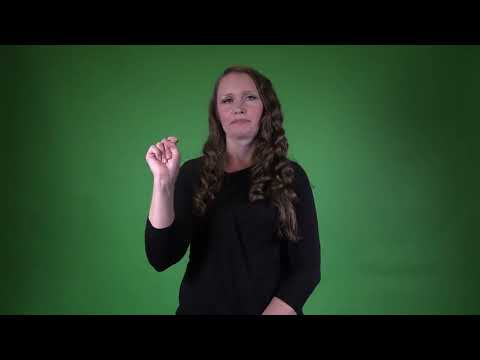
Sign for FS_OT in ASL | ASL Dictionary

Definition: Overtime, work done beyond regular hours.

Sign for FS_OT in ASL

YouTube player

Practice Activities:

To practice the sign for FS_OT in ASL, begin by slowly and clearly fingerspelling each letter: O and T. Make sure your palm faces forward, and keep your hand at shoulder height. Repeat the fingerspelling a few times in front of a mirror, focusing on clarity and speed as you grow more confident.

Once you’re comfortable, try transitioning in and out of the sign for FS_OT in ASL while fingerspelling common surrounding words such as certified, therapist, or clinic. For example, practice phrases like “I am FS_OT,” “My friend is FS_OT,” or “FS_OT helps with movement.” Fingerspelling in sequence helps build fluency in live conversations.

Use storytelling to reinforce the sign for FS_OT in ASL. Start with simple narratives like “Yesterday, I went to see an FS_OT,” then expand by explaining why and what happened. Creating your own mini-stories will improve both fingerspelling flow and content structure in ASL.

In a group or with a partner, create role-play settings. One person acts as the patient, the other as the FS_OT. Use common vocabulary such as stretch, exercise, help, pain, or progress. Switch roles to experience different perspectives, and be sure to fingerspell FS_OT each time the professional is referenced.

Watch videos or vlogs about occupational therapy and pause at points where the person might introduce a therapist. This gives you a prompt to insert the sign for FS_OT in ASL in the appropriate places. You can also record yourself fingerspelling the term and replay it to self-correct and build confidence.

By increasing your exposure and intentional use of the sign for FS_OT in ASL, both your receptive and expressive speed will grow, making professional or medical ASL terminology feel more natural in everyday use.

Cultural Context:

The sign for FS_OT in ASL represents the fingerspelled letters O and T. In American Sign Language, fingerspelling is commonly used for acronyms, abbreviations, brand names, or when no specific sign exists for a word. FS_OT uses the manual alphabet and is typically used when referring to the abbreviation “OT,” often meaning occupational therapy or overtime, depending on the context.

Understanding the sign for FS_OT in ASL depends largely on the setting. In medical or therapeutic environments, FS_OT is most frequently associated with occupational therapists. These professionals are key members of multidisciplinary care teams and often work with Deaf clients. As a result, the abbreviation OT is fingerspelled during conversations when discussing therapy plans, roles, or scheduling appointments.

The use of fingerspelling, like FS_OT in ASL, reflects a strong value in the Deaf community of clear and precise communication. Since some concepts don’t have a standardized sign—or may be too new to have one—fingerspelling allows people to engage in meaningful, direct dialogue without relying on spoken language. It also shows linguistic flexibility, allowing Deaf signers to talk about all types of specialized topics. ️

In casual settings, FS_OT in ASL might refer to overtime in work-related discussions. For Deaf professionals, fingerspelling commonly appears in workplace conversations, especially around shifts, work hours, or payroll. In these contexts, FS_OT in ASL helps clarify time-specific references that might lack an exact ASL sign.

Culturally, fingerspelling has an important and respected place in ASL. The use of fingerspelling, including FS_OT in ASL, demonstrates English borrowing into a visual language, used when the signer wants to be exact. It’s also useful for code-switching between English and ASL, depending on the speaker and the audience. This bilingual flexibility strengthens communication across different communities.

FS_OT is also useful for learners of ASL who are just getting comfortable with fingerspelling. Because it’s short and uses only two letters, the sign for FS_OT in ASL gives beginners a chance to increase their fluency and reception skills. Teachers may deliberately introduce abbreviations like this early in the language-learning journey to help build confidence.

In professional interpreters’ work, the sign for FS_OT in ASL may show up during real-time interpreting when “OT” is mentioned, especially in hospitals, schools

Extended Definition:

The sign for FS_OT in ASL is a fingerspelled word. In ASL, the abbreviation FS stands for “fingerspelled,” which means that the word is spelled out using the manual alphabet rather than represented by a single gesture. OT, in this case, is typically used as an abbreviation for “occupational therapy,” “overtime,” or depending on context, other less common meanings.

When signing FS_OT in ASL, each letter—O and T—is formed individually using the standard ASL fingerspelling alphabet. The motion is smooth and clear, with no breaks between the letters. This sign is often used in conversations about work, therapy, or healthcare, where acronyms and abbreviations are common.

The fingerspelled sign for FS_OT in ASL is usually accompanied by contextual clues, either visual or spoken, to clarify its meaning. For example, if someone is talking about a hospital setting or a job environment, FS_OT would likely stand for occupational therapist. In different settings, such as payroll discussions, it might refer to overtime work hours.

Fingerspelling FS_OT helps to maintain clarity in conversations where no standard sign yet exists. In ASL, not all medical or professional terms have unique sign representations, so abbreviations like FS_OT are vital for communication. As fingerspelling is frequently used for uncommon words, brand names, and acronyms, FS_OT is an easy and flexible option.

The speed at which FS_OT is fingerspelled may vary depending on the signer’s fluency. Experienced signers might spell it quickly while maintaining clarity, whereas beginners may need more time to produce the letters accurately. It’s important to keep the hand within the sightline between the signer and the viewer for better understanding.

This sign allows flexibility within the Deaf community to express nuanced terms that haven’t been established as standard signs. Using FS_OT in ASL protects the accuracy of communication when discussing professional roles like occupational therapists or contexts involving overtime. The fingerspelled form serves as a bridge to spell-specific language that may not be widely adapted into ASL lexicon yet.

In casual or formal ASL conversation, FS_OT is best understood in a full sentence. Adding context supports the meaning and makes communication smoother, especially between signers of different experience levels. Despite being a fingerspelled abbreviation, FS_OT reflects natural ASL usage in settings involving technical or specialized vocabulary.

FS_OT is usually signed using the dominant hand and with consistent finger shapes. Consistency

Synonyms: overtime

Educational resources: Find related learning materials in our course bank!

Want more? Check out some of our popular learning activities on the homepage!

Need to look up a sign? Use our highly rated dictionary: https://aslinteractive.com/best-asl-dictionary/

Follow us on tiktok: https://www.tiktok.com/@aslinteractive. More social media links at the bottom of this page!

Long-tail Keywords: what is the sign for fs_ot in ASL, how do you sign fs_ot in ASL, fs_ot sign language translation

Categories:

tags: fingerspelling ot in ASL, how to fingerspell ot in ASL, ASL fingerspelling practice ot, ot in American Sign Language, learning fingerspelling ot in ASL

Parameters

*Handshape*:

The handshape for the Sign for FS_OT in ASL involves forming the individual letters “O” and “T” using standard American fingerspelling techniques. Start with the “O” handshape by touching the fingertips of all fingers to the thumb to form an oval shape. Transition smoothly to the “T” handshape by tucking the thumb between the index and middle finger in a closed fist .

Both letters in the Sign for FS_OT in ASL are clearly articulated in sequence, and the wrist remains relaxed throughout. Facial expression and eye contact help reinforce clarity and context when fingerspelling words like this. Proper speed and precision are key when signing FS_OT.

*Palm Orientation*:

For the sign for FS_OT in ASL, both hands take on the fingerspelled form of each letter. The palm orientation for each letter shifts slightly as needed to clearly show the handshape. Typically, the palm faces outward for the “O” and may turn slightly to the side for the “T” to maintain clarity.

Because this is fingerspelled, the palm orientation is primarily outward and slightly angled depending on the signer’s comfort and the viewer’s position. Clarity is key when producing the sign for FS_OT in ASL .

*Location*:

The sign for FS_OT in ASL is a fingerspelled sign, so it typically takes place in the neutral space in front of the signer’s dominant shoulder or slightly to the center. The signer keeps the hand at chest level, with the palm facing outward or slightly to the side depending on visibility and comfort.

Because the sign for FS_OT in ASL involves individual letter articulation, the hand remains relatively stationary with smooth transitions between each letter. It’s important to maintain clarity and precision in this location for legibility .

*Movement*:

To produce the sign for FS_OT in ASL, begin by forming the manual alphabet letters “O” and then “T” in succession. Move your dominant hand into each handshape smoothly, pausing slightly between each letter to allow clarity.

This movement is part of fingerspelling and should be done neatly at shoulder height. The sign for FS_OT in ASL emphasizes precision and fluidity, making each letter distinct while maintaining a steady rhythm. ️

*Non-Manual Signals*:

When producing the sign for FS_OT in ASL, maintain a neutral facial expression unless contextual emphasis is required. Since this is a fingerspelled sign, clarity and precision with the mouth are essential while keeping your eyes on the hand to support comprehension.

For fingerspelling the sign for FS_OT in ASL, your lips should remain neutral with no mouthing of the letters. Slight brow raise may accompany the sign if used in a question or referencing a title.

*Prosody, Dominant/Non-Dominant Hand*:

The Sign for FS_OT in ASL uses both hands, following standard fingerspelling protocol. The dominant hand forms the individual letters O and T in succession, using small, deliberate wrist movements to ensure clarity. The non-dominant hand remains stationary at the side or relaxed in a neutral space.

Maintain steady eye contact and a moderate tempo to make the Sign for FS_OT in ASL easily readable. This approach supports proper prosodic flow and articulation for fingerspelled words.

Tips for Beginners:

When learning the sign for FS_OT in ASL, remember that this is a fingerspelled version of a title or abbreviation. That means each letter—O and T—is signed individually using the manual alphabet. Since fingerspelling clarity is crucial for comprehension, make sure each letter is clearly formed and held steady for just a moment before transitioning to the next. Avoid blending letters together or rushing through them.

To master the sign for FS_OT in ASL, practice isolating your hand signs for “O” and “T,” taking care that your hand remains within your signing space and at a proper height near your shoulder or lower chin level. Practicing in front of a mirror can help you make sure your handshape is accurate and the movement between the letters is smooth and clear. Use frequent repetition but don’t speed up too early—accuracy matters more than speed.

A common mistake when producing the sign for FS_OT in ASL is collapsing the shape of the “O” or misforming the “T” by not placing the thumb correctly between the index and middle fingers. These small errors can cause confusion for your conversation partner. Focus on controlling the movement of your dominant hand and maintaining consistent hand position with relaxed but precise motions.

Watching native signers fingerspell terms like FS_OT will help you see the tempo and rhythm of fluent users. Try pausing videos and mimicking the signs—then record your version and compare. Patience is key since mastering fingerspelling takes time and muscle memory to build.

This sign may also come up in medical or professional conversation, so understanding it and using it confidently can boost your communication skills in those areas. The sign for FS_OT in ASL may seem simple, but precision and consistency are what make it truly effective in conversation.

Connections to Other topics:

The sign for FS_OT in ASL is a clear example of how fingerspelling is used to represent abbreviations, acronyms, or less commonly standardized words in American Sign Language. Since FS_OT stands for “occupational therapy” and does not have a widely recognized established sign, ASL users typically rely on fingerspelling to maintain clarity and precision when discussing medical, academic, or professional contexts. This usage supports the broader principle in ASL of integrating clear communication strategies when specific vocabulary is not part of the core lexicon.

FS_OT also connects to the broader topic of professional signs in ASL, such as FS_PT for “physical therapy” and FS_RN for “registered nurse.” These abbreviated terms often rely predominantly on fingerspelling, especially in formal, technical, or interdisciplinary conversations. In casual conversations, signers familiar with the medical setting may develop short-form or initialized signs based on these abbreviations, showing how fingerspelling can lead to derived signs that increase fluency and expressiveness.

The use of FS_OT in ASL highlights the importance of understanding the rhythm, pacing, and articulation of fingerspelled terms. This is a skill often developed in intermediate and advanced learning stages. Because many medical and academic terms rely on fingerspelling at first exposure, learners become more equipped to decode and produce complex terms with exposure to constructs like FS_OT.

Additionally, fingerspelled signs such as FS_OT are often used in compound or contextual signs, like combining with WORK or HELP to express “occupational therapy work” or “receiving OT help.” These constructions demonstrate how ASL allows layering of information through combination of signs. The sign for FS_OT in ASL, therefore, connects deeply to core themes in ASL structure—modularity, adaptability, and clarity—as well as bridging professional vocabulary into the visual language environment.

Summary:

The sign for FS_OT in ASL is a fingerspelled representation of the individual letters O and T. To form it, the signer uses the dominant hand to spell out each letter in sequence—starting with the O, shaped by curling the fingers to form a circular or oval shape, followed by the T, where the thumb is tucked between the index and middle fingers. Each letter is signed smoothly, with a slight pause between them to allow for clarity.

FS_OT in ASL generally serves as an abbreviation, and this affects how it’s perceived and used. Within fingerspelling, abbreviations like FS_OT stand out because they’re often used in fields with specific terminology like medicine, sports, or education. Its meaning is context-dependent, and the signer must be aware of their audience’s familiarity with the term.

This sign is not conceptual in the usual ASL sense because it’s fingerspelled. There’s no visual metaphor or classifier used in this case. Instead, FS_OT in ASL relies solely on the linguistic knowledge shared by deaf and signing communities who encounter this abbreviation in professional or technical contexts.

Because it is abbreviated, there’s an assumption that both signer and receiver understand what FS_OT stands for. In occupational settings, such as physical therapy or medical environments, FS_OT often stands for “occupational therapy.” This places a burden on background knowledge rather than contextual visual clues.

Finger spelling plays a crucial role in ASL, particularly for proper nouns, new concepts, or technical terms. FS_OT in ASL fits perfectly into this linguistic niche, where the cochlear world overlaps with signing environments. This makes the use of this abbreviation both practical and deeply rooted in ASL expansion and adaptation.

The fingerspelled sign does not change based on grammatical mood or syntax. Still, speakers often use facial expressions or slight pauses to show emphasis, to indicate that it’s an abbreviation, or to differentiate it from similar signs. This subtle non-manual marking brings dimension to seemingly straightforward FS signs.

Fingerspelling like FS_OT in ASL is fluid in natural speech and can be signed quickly in everyday conversation, though clarity is always preferred over speed. Certain environments allow for shorthand among frequent signers, but FS_OT is typically signed at a careful pace due to its disambiguation need.

Culturally, FS_OT in ASL has significance in health and rehabilitation circles. For Deaf individuals working in the allied health fields, signing FS_OT may signal membership in or familiarity with occupational therapy and its role in physical rehabilitation and developmental work. Signing it accurately shows professional respect.

It also reflects how Deaf professionals adapt and include mainstream or hearing-centric concepts into ASL through fingerspelling. FS_OT in ASL is a great example of a lexical borrowing from English, a form of language blending that illustrates ASL’s multilayered linguistic identity.

The sign for FS_OT in ASL is not standardized with a visual concept, unlike signs like “doctor” or “therapy.” It remains a direct fingerspelled form, often indicating a relatively new or borrowed term that hasn’t yet been fully nativized into the ASL lexicon. As community use increases, sometimes these terms evolve into signed forms.

Unlike iconic signs, where the sign mimics the physical aspect of the word it represents, FS_OT carries no iconicity. It must be understood through print literacy or environmental familiarity. Yet, it still finds a comfortable place within natural ASL conversation due to the flexibility of signing practices.

When teaching FS_OT in ASL to learners, instructors emphasize handshape accuracy and smooth transitions. Common pitfalls include misshaping the T or confusing O with A due to curled fingers. These minor errors can significantly change the meaning or lead to misunderstandings.

Contextual cues are especially important when using FS_OT in ASL. In a conversation about recovery, health care, or special education, the abbreviation makes sense. But outside those topics, it could confuse receivers, especially if they have no prior exposure to occupational terminology.

In terms of applied linguistics, FS_OT in ASL is a fascinating case study. It shows how bilingual users—fluent in both English and ASL—manage lexical gaps and translational mismatches. Using fingerspelling to fill those gaps reflects cognitive strategy and linguistic innovation.

Fingerspelling like FS_OT showcases how ASL incorporates English-language abbreviations to communicate quickly and precisely, especially in multicultural or professional spaces. This is an example of how ASL exhibits high lexical permeability—accepting and adapting foreign constructs for effective signing.

There’s a pedagogical angle here as well. Teachers may use FS_OT to instruct students on both professions and fluency in fingerspelling. Because FS_OT must be fingerspelled correctly, it becomes an opportunity to drill handshape control, rhythm, and reading back fingerspelled content.

Deaf professionals in occupational therapy also bring a layer of cultural legitimacy to FS_OT in ASL. When used among colleagues and clients, the sign can become a point of

Want more? Check out some of our popular learning activities!

ASL Interactive Resources

ASLInteractive YouTube Channel

Follow us on tiktok: @aslinteractive.com

Follow us on Instagram: aslinteractive

Facebook page: aslinteractive

Facebook group: aslinteractive

LInkedIn: ASL Interactive LLC

Twitter: @ASL_interactive

*Some information on this page is AI-generated. AI can make mistakes. Please check the information.


Responses